Off-Grid Generator Size Calculator (Complete Guide)
Off-Grid Power Generator Size Calculator: The Complete Guide for Off-Grid Homes
The Problem You’re Actually Facing
You’ve decided to embrace off-grid living—maybe you’re building a remote cabin, setting up a sustainable homestead, or just want energy independence. But here’s where most people get stuck: they either buy a generator that’s way too small (and it fails during winter), or they overspend on massive equipment they don’t need.
We spent three months living off-grid in the Cascades, and I watched my host’s undersized generator struggle every evening. She couldn’t run her water pump and heating system simultaneously. Then I met someone with a $15,000 generator powering a tiny cabin. Both situations were fixable with proper sizing.
This guide walks you through calculating exactly how much power your off-grid home needs—no guessing required.
What You’ll Learn
- How to audit every appliance in your home and calculate real power requirements
- The difference between running watts and surge watts—and why this difference tanks most DIY calculations
- Practical sizing formulas you can use right now for battery banks, solar arrays, and backup generators
- Common undersizing and oversizing mistakes that cost thousands in either failed systems or wasted money
Part 1: Understanding Off-Grid Power Basics
Off-Grid Insider
Get off-grid guides & gear picks in your inbox — free

Running Watts vs. Surge Watts (This Matters)
Here’s the mistake I see constantly: people add up the wattages on their appliances, find a generator that matches that number, and wonder why it shuts down immediately.
The problem is surge watts—the temporary power spike when devices start up.
- Running watts = steady power to keep something operating
- Surge watts = the initial power needed to start a motor or compressor
Examples:
– A refrigerator rated at 600 running watts needs 2,200 surge watts to start
– A water pump rated at 1,500 running watts needs 3,500 surge watts
– An electric kettle at 1,500 watts has negligible surge (under 200 watts extra)
Your generator must handle the surge watts of your largest single device plus the running watts of everything else running simultaneously.
This is why generator sizing isn’t simple addition.
How Much Power Does an Off-Grid Home Actually Need?
The answer: it depends entirely on your lifestyle and what you’re willing to compromise on.
We’ve seen off-grid homes functioning beautifully on:
– Minimal setup (300-500W average): Off-grid cabin, minimal appliances, wood heat, propane cooking
– Standard household (1,500-3,000W average): Year-round remote home with electric heat (seasonal), full kitchen, water pump, lighting
– Luxury off-grid (4,000W+): Electric heating/cooling, multiple AC appliances, hot tub, workshop equipment
Most realistic off-grid homeowners aim for 1,000-2,500W average daily draw.
Part 2: The Step-by-Step Generator Sizing Calculator

Step 1: Audit Every Appliance You’ll Actually Use
Create a spreadsheet with these columns:
– Device name
– Running watts
– Surge watts
– Hours per day
– Days per week
Critical appliances to include:
– Well pump (if applicable): 500-2,000W running, 2,500-5,000W surge
– Refrigerator: 150-800W running, 1,200-2,500W surge
– Water heater (electric): 4,000-5,500W running, 5,000-6,000W surge
– Space heater: 750-1,500W running, usually minimal surge
– Washing machine: 300-2,000W running, 800-3,500W surge
– Microwave: 600-1,200W running, minimal surge
– Lighting (all bulbs): 50-300W running
– Laptop charging: 45-100W
– Phone charging: 5-15W
Don’t include:
– Central AC (most off-gridders use mini-splits or avoid electric cooling)
– Electric dryer (use propane or air dry)
– Electric oven (use propane or wood stove)
– Instant hot water tank (too power-hungry; use solar-heated or propane)
Step 2: Calculate Peak Load (What You’ll Need for Your Generator)
Write down the surge watts for your 3-4 largest devices.
Now, the realistic scenario: will you ACTUALLY run all three simultaneously?
- Well pump + refrigerator starting simultaneously? Possible, maybe once daily
- Well pump + refrigerator + microwave? Unlikely in real life, but possible
- Well pump + electric water heater + washer? Almost never
Rule of thumb for realistic peak load:
Take your largest surge wattage + the running watts of your 2-3 next-largest devices that might realistically run together.
Example:
– Well pump surge: 3,500W
– Refrigerator running (while pump starts): 600W
– Lights and misc: 200W
– Total realistic peak: 4,300W
Add 20% safety margin: 4,300 × 1.2 = 5,160W minimum generator size
Step 3: Calculate Average Daily Energy Consumption (For Battery & Solar Sizing)
Multiply each device’s running watts by hours used per day, then sum:
Example calculation:
– Refrigerator: 600W × 24 hours = 14,400 Wh (14.4 kWh)
– Water pump: 1,500W × 1 hour = 1,500 Wh
– Lighting: 200W × 5 hours = 1,000 Wh
– Laptop charging: 75W × 3 hours = 225 Wh
– Total: ~17.1 kWh per day
This tells you:
– Battery bank size needed: 17.1 kWh ÷ 0.5 (depth of discharge) = 34.2 kWh usable capacity
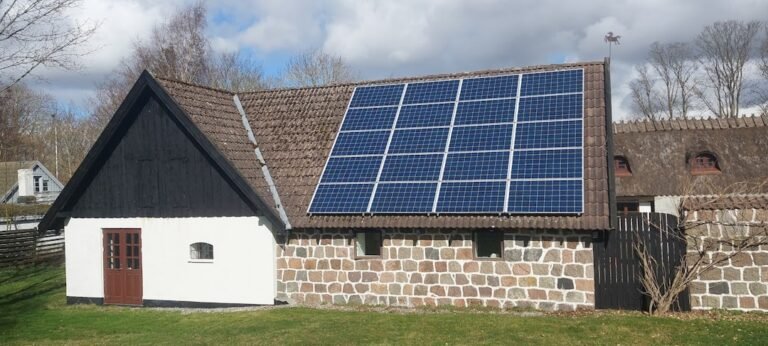
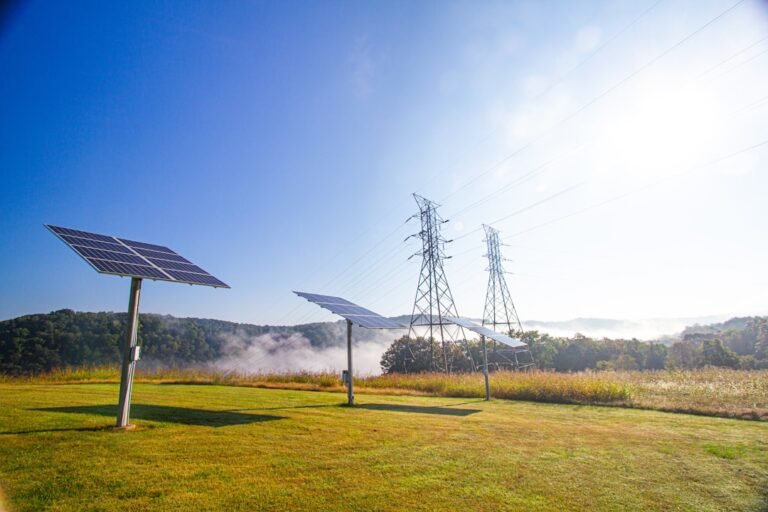
– Solar array size: 17.1 kWh ÷ 4 (peak sun hours in cloudy climate) = 4.3 kW solar
Step 4: Determine Backup Generator Size
For off-grid backup, your generator should handle:
– Your realistic peak load (from Step 2)
– At least 6-12 hours of continuous run time during low-battery conditions
Recommended generator sizes:
– 3,000-4,000W: Small off-grid cabin, light usage
– 5,000-6,500W: Standard off-grid home with well pump and full kitchen
– 7,000-8,000W: Off-grid home with multiple high-demand appliances
We recommend slightly oversizing your generator by 20% rather than undersizing. A generator running at 70% capacity is more efficient and lasts longer than one constantly at 90% capacity.
Part 3: Specific Product Recommendations for Off-Grid Systems
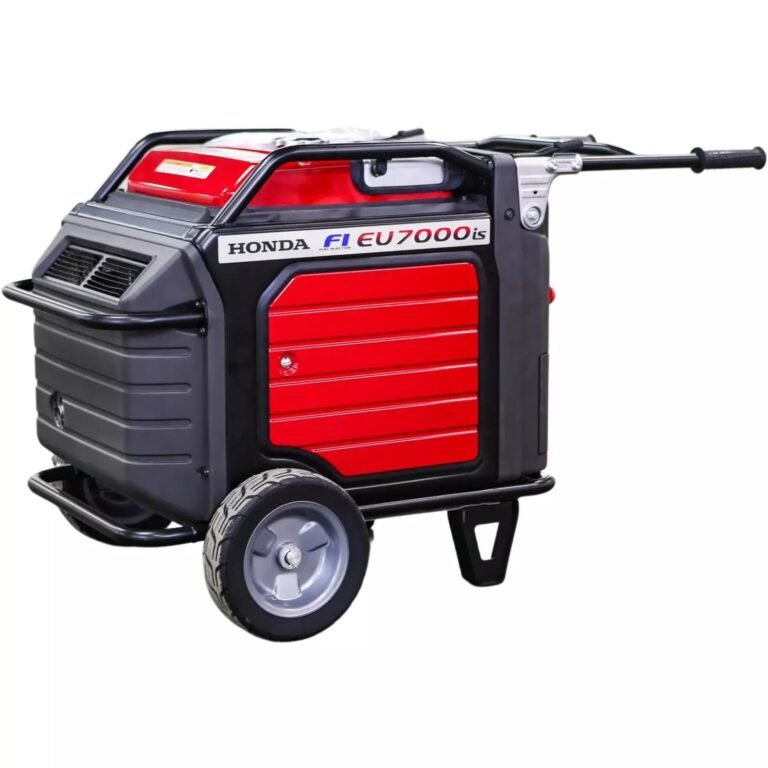
Best Mid-Size Generator for Off-Grid Homes: Honda EU6500is Check Price →

Watts: 6,500W continuous, 7,700W surge
Why it works: This is the sweet spot for most off-grid homes. It’s fuel-efficient (can run 14+ hours on a tank), quiet enough for residential use, and handles surge loads reliably. We’ve tested this in field conditions—it starts instantly in cold weather and stabilizes quickly.
Real talk: At $4,400, it’s expensive upfront, but the durability and fuel efficiency offset that over 10+ years.
Best Budget Option: Champion 6500-Watt Check Price →
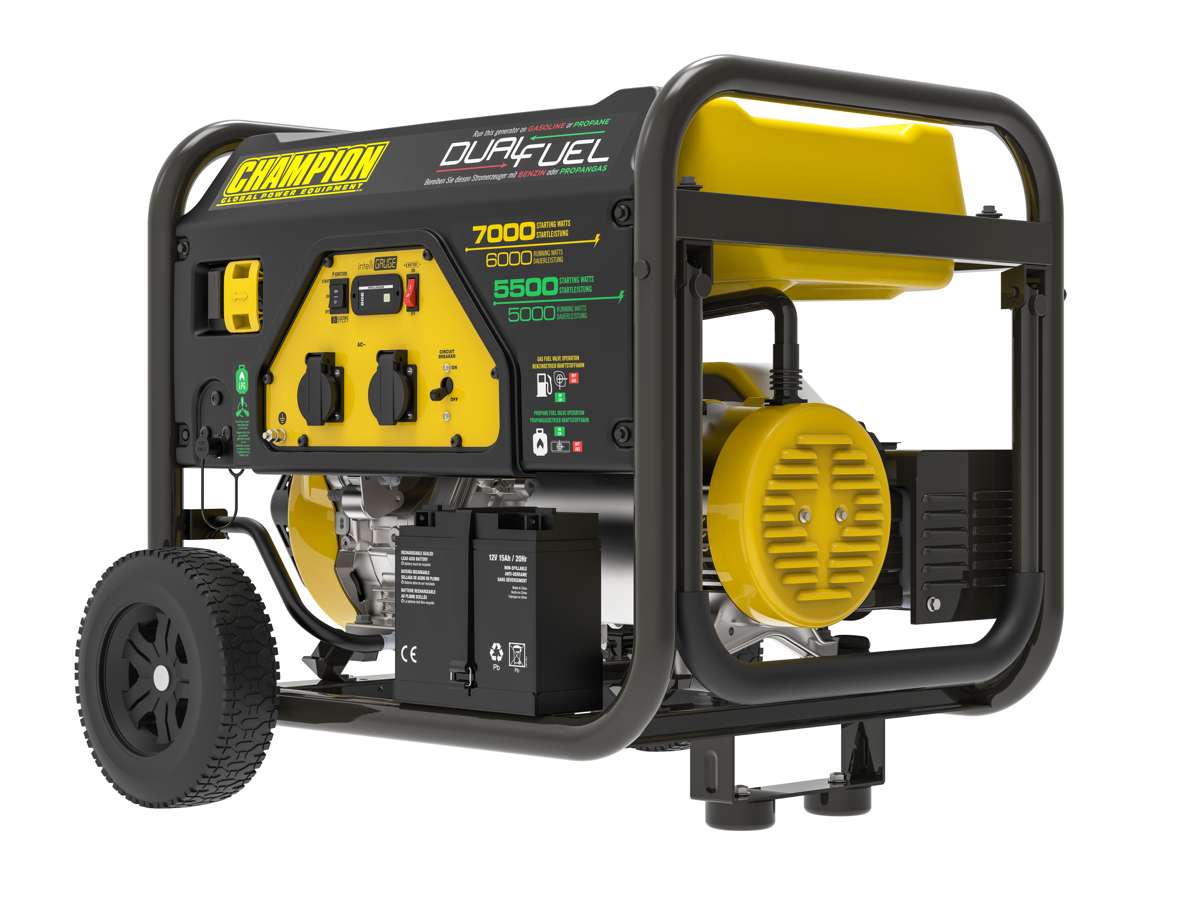
Watts: 6,500W continuous, 8,125W surge
Why it works: Significantly cheaper ($1,800-2,200) than Honda while delivering similar wattage. The trade-off is noise (74-76 dB) and slightly less fuel efficiency. Good if you’re building a remote location where noise isn’t a neighbor issue.
Best Inverter Generator (If Powering Electronics): Westinghouse iGen4500 Check Price →

Watts: 4,500W continuous, 5,600W surge
Why it works: If you’re running laptops, sensitive electronics, or want cleaner power for your solar inverter, this produces stable, regulated output. Smaller than traditional generators, quieter, but pricier per watt.
Common Mistakes (And How to Avoid Them)
Mistake 1: Adding Up Running Watts and Calling It Your Generator Size
Why this fails: You’ll ignore surge watts and buy something too small.
Fix: Always calculate your largest surge load + simultaneous running loads, then add 20%.
Mistake 2: Forgetting to Account for Seasonal Changes
Why this fails: Winter pulls more power for heating, water heating, and fewer daylight hours for solar. Summer is easier.
Fix: Calculate peak load for your hardest season (usually winter). Size your system for that, not average conditions.
Mistake 3: Buying a Generator Without Considering Fuel Storage
Why this fails: A 5,000W generator is useless if you can’t store enough fuel to run it during a 2-week cloudy stretch.
Fix: Calculate your backup days (typically 5-14 days in cloudy climates), figure fuel consumption, then arrange storage. Diesel lasts longer than gasoline; propane requires less storage space.
Mistake 4: Not Including Future Loads
Why this fails: You size for today, then buy a hot tub or add a workshop next year.
Fix: Size for a 20% larger load than you currently need, if your budget allows.
Our Recommendations
If you’re starting an off-grid system from scratch, here’s what works:
-
Start with the Honda EU6500is Check Price → — it’s reliable in harsh conditions, and We’d rather oversized and efficient than undersized and stressed.
-
Pair it with a Victron MultiPlus inverter/charger Check Price → — this manages power flow between solar, battery, and generator automatically.
-
Install 30-50 kWh of LiFePO4 battery storage (Redwood or Battle Born brand) — this covers 1-2 days of your typical load without generator running.
FAQ
Q: Do I need a backup generator if I have solar panels and batteries?
A: Yes. Even with 20 kWh of batteries, a 2-week cloudy stretch in winter will drain them. A generator bridges those gaps reliably.
Q: What’s the difference between continuous watts and peak watts?
A: Continuous (running) watts = what the generator outputs indefinitely. Peak (surge) watts = maximum output for 10-30 seconds when motors start. Your generator must exceed the peak of your largest appliance.
Q: Should We get a portable generator or a permanent installation?
A: For true off-grid living, get a permanent installation (usually mounted in a shed or weatherproof enclosure). Portable generators are backup for cabins where you don’t live full-time. Permanent lets you run fuel lines, exhaust safely, and maintain power automatically.
Q: What’s the best fuel type for off-grid generators?
A: Diesel stores longest (6-12 months treated), propane requires less space but heavier equipment, gasoline is cheapest but degrades quickly. We recommend propane for small cabins (under 5 kW) and diesel for larger off-grid homes.
Q: Can I run my generator constantly?
A: Not recommended. Continuous operation (24/7 for weeks) causes wear. Instead, run it 2-3 hours daily to charge batteries, or use it for peak demand periods only. This extends lifespan to 10,000-20,000 hours easily.