5 Best Off-Grid Power Monitors 2026
If your off-grid system doesn’t have real-time monitoring, you’re flying blind. You won’t know your batteries are being over-discharged until they’re damaged, won’t catch a failing charge controller until your fridge defrosts, and won’t understand where your watts are actually going. A proper battery monitor off-grid setup turns guesswork into data — and data keeps expensive lithium banks alive longer.
We spent weeks digging through spec sheets, firmware changelogs, community forums, and verified buyer feedback to find the monitors that actually deliver reliable solar system monitoring off-grid. Most options fall into two camps: simple shunt-based battery monitors and full-system hubs that track every circuit. Here are the ones worth your money.
Our top pick: Victron Cerbo GX — the most capable real-time monitoring hub for serious off-grid systems.
Best battery monitor: Victron SmartShunt — accurate SOC tracking at a fair price.
Best built-in display: Simarine Pico Rev2 — gorgeous multi-circuit dashboard you mount in your panel.
Best budget: EG4 Battery Monitor — gets the basics right for under $100.
Our Picks
Victron Cerbo GX
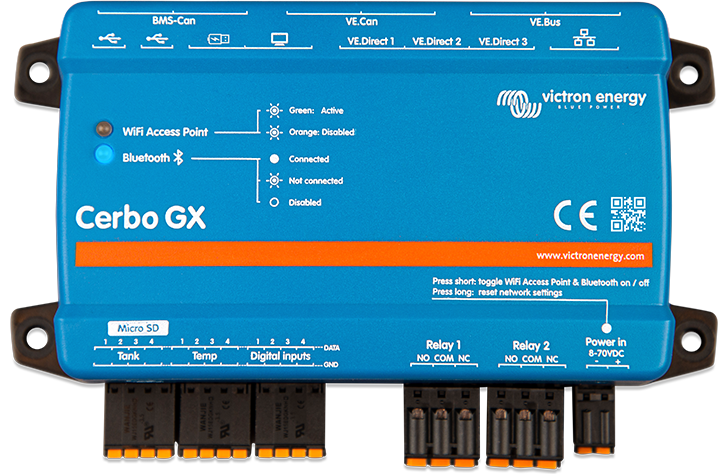
The Cerbo GX is the brain of a Victron-based off-grid system, pulling real-time data from every connected device — inverters, charge controllers, battery shunts, temperature sensors — and presenting it through the VRM online portal or an optional touchscreen. If you want a true energy management system off-grid that shows total production, consumption, and battery state at a glance, this is the benchmark.
Best for: Owners of mid-to-large off-grid systems (2kW+ solar) who want full-system visibility and remote access.
Pros:
– Aggregates data from dozens of Victron and third-party devices over VE.Bus, VE.Direct, USB, and Bluetooth
– Free VRM cloud portal with historical logging, email alerts, and remote firmware updates (requires internet connection)
– Supports MQTT, Node-RED, and Modbus TCP for custom automations and local dashboards without cloud dependency
Cons:
– Only reaches full potential in Victron-heavy systems — mixing brands limits what it can pull
– The unit itself has no display; you need to add the GX Touch 50/70 ($150–$200 extra) or use a phone/browser
Victron SmartShunt 500A
Off-Grid Insider
Get off-grid guides & gear picks in your inbox — free
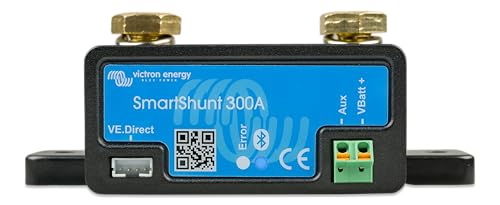
The SmartShunt is a display-less battery monitor that connects to the VictronConnect app over Bluetooth. It tracks voltage, current, state of charge, time remaining, and historical charge cycles with a ±0.5% current accuracy shunt. For the price, nothing else gives you this level of SOC accuracy in a battery monitor off-grid setup.
Best for: Anyone who wants accurate battery state-of-charge tracking and is comfortable using a phone app instead of a panel-mounted display.
Pros:
– Accurate midpoint voltage monitoring catches cell imbalance early on series-connected batteries
– Built-in Bluetooth with 10m range; optional VE.Direct cable connects to Cerbo GX or other GX devices for logging
– Compact form factor installs on the negative bus bar with minimal wiring
Cons:
– No built-in screen — you need your phone or a GX device to see data
– Bluetooth range can struggle through metal enclosures common in off-grid electrical cabinets
Simarine Pico Rev2
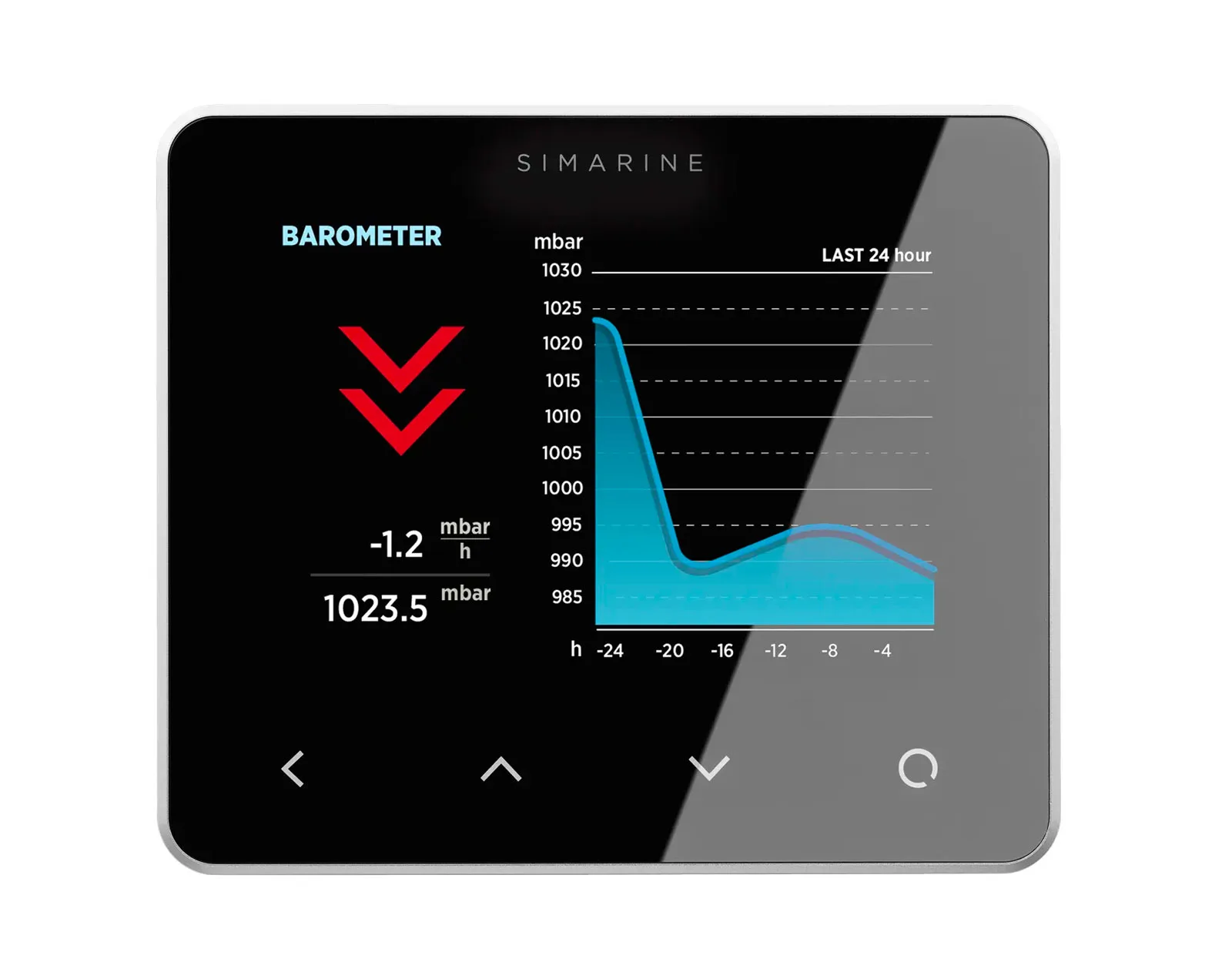
The Pico Rev2 is a panel-mounted touchscreen monitor that tracks up to four battery banks and multiple DC circuits simultaneously. The 3.5-inch IPS display is readable in direct sunlight, and the wireless shunt/sensor modules mean you’re not pulling signal wires across your cabin. For real-time solar system monitoring off-grid with a display you can glance at from across the room, nothing else comes close.
Best for: Cabin and van builders who want a clean, professional-looking dashboard without relying on a phone or laptop.
Pros:
– Wireless sensor architecture — shunt modules, tank sensors, and temperature probes all communicate wirelessly to the display
– Tracks individual circuit consumption so you can see exactly which loads draw the most
– Highly customizable display layouts with bar graphs, gauges, and numerical readouts
Cons:
– Premium price ($350–$500+ depending on sensor count) — significantly more than a basic shunt monitor
– Locked into Simarine’s sensor ecosystem; you can’t pull data from third-party charge controllers or inverters
Renogy One Core (M1)

Renogy’s One Core is an all-in-one monitoring hub designed to talk to Renogy charge controllers, inverters, and batteries over RS-485 and Bluetooth. The companion app and optional display show solar input, battery SOC, load consumption, and historical data. If your system is already Renogy gear, this is the simplest path to a unified energy management system off-grid.
Best for: Users already invested in Renogy hardware who want integrated monitoring without piecing together multiple brands.
Pros:
– Auto-discovers compatible Renogy devices and pulls data without manual configuration
– Built-in Wi-Fi for optional cloud monitoring and push notifications through the Renogy app
– Relay outputs allow automated load control based on battery voltage or SOC thresholds
Cons:
– Essentially useless if you’re mixing Renogy with non-Renogy components — the ecosystem is walled off
– The cloud platform and app have received mixed reviews for reliability and slow bug fixes
Victron BMV-712 Smart

The BMV-712 is the SmartShunt’s older sibling with one critical addition: a panel-mounted display. It provides the same precision shunt-based SOC tracking plus a built-in relay for programmable alarms (low voltage cutoff, high voltage, etc.). If you want real-time numbers on a physical screen without going full Simarine, this is the move.
Best for: Off-gridders who want a dedicated screen showing battery data at all times without pulling out a phone.
Pros:
– Clear backlit LCD shows voltage, current, SOC, power, consumed Ah, and time remaining at a glance
– Programmable relay triggers automated generator start or load disconnect based on your rules
– Bluetooth built in — still pairs with VictronConnect for deeper configuration and historical trends
Cons:
– Only monitors one battery bank (no multi-bank or multi-circuit tracking without adding more units)
– The display unit requires a standard round panel cutout — not as flexible for custom installations as the screenless SmartShunt
EG4 Battery Monitor
At under $100, the EG4 monitor delivers voltage, current, power, SOC, and consumed amp-hours through a compact display with a 500A shunt. It won’t win any awards for connectivity — no Bluetooth, no app, no cloud — but the accuracy is respectable for the price, and it installs in minutes. This is the right battery monitor off-grid setup for small systems or as a secondary monitor on a sub-panel.
Best for: Budget-conscious builders, small systems (under 1kW solar), or anyone who just wants basic battery health data without ecosystem lock-in.
Pros:
– Hard to beat the price-to-function ratio — SOC, voltage, current, and power for under $100
– Simple two-wire shunt installation with no configuration software required
– Compact display fits in tight electrical panels common in van and RV builds
Cons:
– No wireless connectivity — you have to physically walk to the display to check readings
– No data logging or historical trends; it only shows current state
How We Chose
We started with every power monitoring product commonly discussed in off-grid forums (r/OffGrid, r/SolarDIY, DIYSolarForum.com), manufacturer spec sheets, and aggregated verified buyer reviews across major retailers. We filtered for products that report real-time data (voltage, current, SOC minimum), have been on the market long enough for firmware stability to be assessed, and have documented accuracy specs. We weighted accuracy, connectivity options, ecosystem flexibility, and price-to-feature ratio. Products with consistent reports of firmware bugs, SOC drift, or abandoned software support were excluded.
Buying Guide: What Actually Matters
Shunt Accuracy and SOC Algorithm
The entire point of a battery monitor is knowing your true state of charge. Cheap monitors use voltage-only estimation, which is wildly unreliable for lithium batteries (the voltage curve is nearly flat between 20% and 80%). Coulomb-counting shunt monitors — like every pick on this list — measure actual current flow in and out. Look for ±1% accuracy or better on the shunt. Victron’s ±0.5% shunt is the current standard to beat.
SOC accuracy also depends on periodic synchronization. Most monitors detect a “full” battery when voltage hits a set point and current drops below a threshold, then reset the counter. If your system never fully charges (common in winter), SOC drift accumulates. Better monitors like the Victron units let you tune synchronization parameters to match your battery chemistry and charge profile.
Connectivity: Bluetooth, Wi-Fi, or Wired
How you access your data matters more than people expect. Bluetooth-only monitors (SmartShunt, BMV-712) are fine if your electrical panel is within 30 feet and not inside a metal enclosure. Wi-Fi-capable hubs (Cerbo GX, Renogy One Core) unlock remote monitoring and alerts — critical if you’re away from your property. Wired protocols like VE.Direct and RS-485 are the most reliable for permanent installations where wireless signals struggle. For serious solar system monitoring off-grid, we recommend at minimum a Bluetooth-capable monitor, and ideally something with Wi-Fi or Ethernet for remote access and data logging.
Multi-Circuit vs. Single-Bank Monitoring
A basic shunt monitor tells you what’s happening at the battery. That’s necessary but not sufficient for a full energy management system off-grid. If you want to know that your well pump draws 800W every cycle or that your fridge compressor is running too frequently, you need multi-circuit monitoring — either through a system hub like the Cerbo GX (which aggregates data from individual devices) or a multi-sensor system like the Simarine Pico.
For systems under 2kW with a few loads, a single shunt monitor is usually enough. Once you’re running a full cabin with multiple high-draw appliances, multi-circuit visibility pays for itself by identifying waste and predicting shortfalls before they hit.
Data Logging and Alerts
Real-time numbers are helpful. Trends over time are powerful. Data logging lets you see that your batteries have been dropping 5% lower each night over the past week — a pattern you’d never catch glancing at a live readout. The Victron VRM portal is the gold standard here, with free unlimited historical data and configurable email/push alerts. Simarine logs locally to the display. Budget monitors like the EG4 don’t log at all. If you’re designing a system you want to optimize over months and years, logging capability should be a hard requirement.
FAQ
What is the best way to monitor an off-grid solar system in real time?
Install a shunt-based battery monitor (like the Victron SmartShunt or BMV-712) for accurate state-of-charge tracking, and pair it with a system hub (like the Cerbo GX) if you want to see solar input, inverter output, and individual loads on a single dashboard. The combination gives you complete real-time visibility.
Do I need Wi-Fi for off-grid power monitoring?
No. Bluetooth monitors work well for on-site monitoring through a phone app. Wi-Fi or cellular connectivity is only necessary if you want to check your system remotely or receive alerts when you’re away from the property. Some users add a cellular hotspot specifically for remote monitoring.
How accurate are battery monitors for lithium batteries?
Shunt-based coulomb counters (all our picks) are very accurate — typically ±1% or better when properly calibrated and synchronized. Voltage-only monitors are unreliable for lithium because LiFePO4 voltage stays nearly flat across most of the usable SOC range. Always use a shunt-based monitor with lithium batteries.
Can I monitor multiple battery banks with one device?
The Simarine Pico supports up to four banks with separate wireless shunts. The Victron Cerbo GX can aggregate data from multiple SmartShunts. Most single-shunt monitors (BMV-712, EG4) only track one bank per unit. If you have separate battery banks for different systems, plan on either a multi-bank monitor or multiple individual units.
What size shunt do I need for my off-grid system?
Match the shunt rating to your maximum possible current draw, not your typical draw. Most residential off-grid systems work fine with a 500A shunt. If you’re running a large inverter (5kW+) that could pull 400A+ from a 12V battery bank, consider whether you need a higher-rated shunt. For 48V systems, 500A is more than sufficient for most setups since current is proportionally lower at higher voltage.
Our Verdict
For most off-grid systems, the Victron Cerbo GX paired with a Victron SmartShunt is the monitoring setup we recommend. The Cerbo gives you full-system real-time visibility with remote access and historical logging, while the SmartShunt delivers the accurate battery SOC data that actually keeps your bank healthy. If your budget is tight or your system is small, the SmartShunt alone with the free phone app gets you 80% of the value at a fraction of the cost. Whatever you choose, stop guessing and start measuring — your batteries will last years longer for it.