7 Best Cabin Insulation Types for 2026
Cabin insulation is one of those decisions that feels straightforward until you realize you’re choosing between fiberglass batts, spray foam, mineral wool, and a dozen regional variations—each with wildly different performance curves, installation complexity, and long-term costs. Get it wrong, and you’re either hemorrhaging heat, battling condensation, or dealing with settling and performance loss years into ownership. We’ve dug through manufacturer specs, R-value testing standards, real-world cabin owner experiences, and regional climate data to identify which insulation types actually deliver in off-grid settings where you can’t afford inefficiency.
Quick Answer
Our top pick: Closed-cell spray foam (Icynene or Demilec). Best for tight budgets: Fiberglass batts (Johns Manville or Owens Corning). Best for DIY installation: Mineral wool batts (Rockwool or Knauf). Best for moisture-prone climates: Rigid foam board (XPS or polyiso). Best for retrofits: Blown cellulose.
Our Top Picks for Cabin Insulation
Closed-Cell Spray Foam (Icynene or Demilec)
Off-Grid Insider
Get off-grid guides & gear picks in your inbox — free
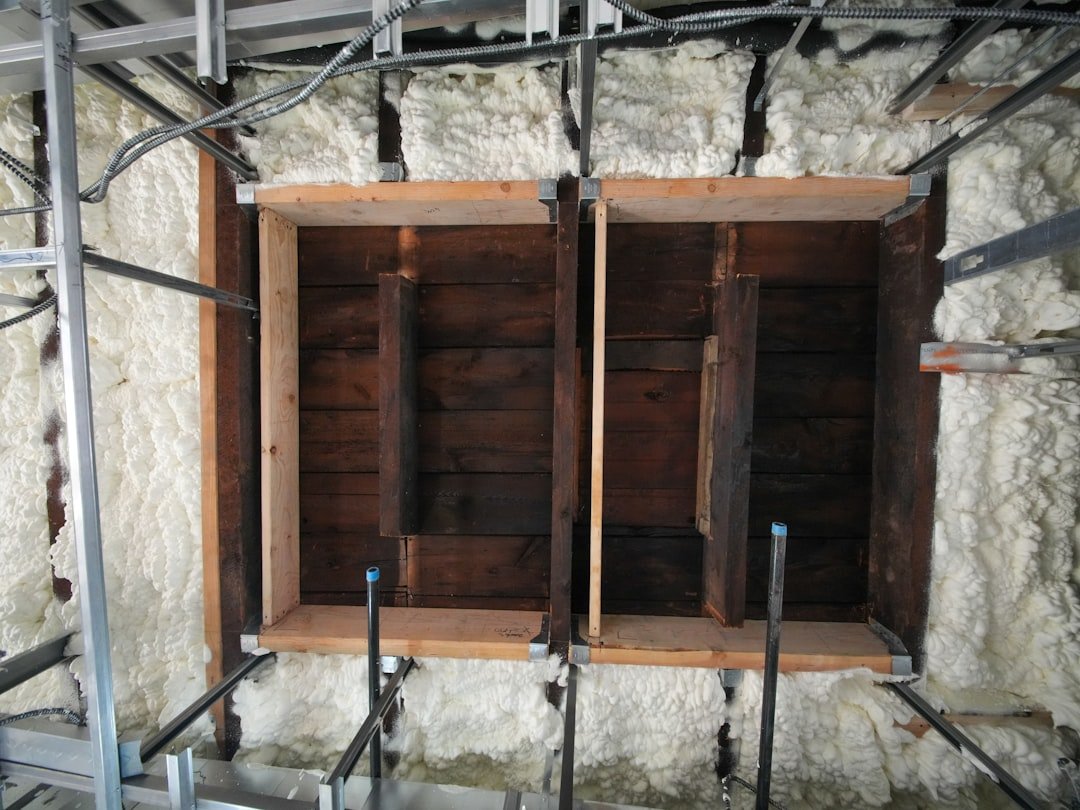
Closed-cell spray foam delivers the highest R-value per inch (R-6 to R-7), air-seals simultaneously with insulation, and resists moisture penetration—critical for cabins where air leakage causes serious energy loss and condensation problems. The upfront cost is steep ($2–$4 per board foot installed), but you recover that investment through dramatically reduced heating and cooling loads.
Who it’s for: Cabin owners building new structures or major retrofits who prioritize long-term energy performance and can afford professional installation.
Pros:
– Highest R-value density; R-24 in just 3.5 inches of wall cavity
– Creates continuous air barrier, eliminating thermal bridging through framing
– Bonds to all surfaces (wood, metal, concrete), leaving no gaps
Cons:
– Requires professional application equipment and trained installers
– Off-gassing odor can linger 24–48 hours post-installation
– Once cured, extremely difficult to remove or modify if mistakes occur
Fiberglass Batts (Johns Manville R-21 or Owens Corning R-19)
Fiberglass batts remain the most accessible and cost-effective option at $0.40–$0.80 per square foot. They fit standard 16″ and 24″ wall cavities, require no special equipment, and can be installed by anyone with basic carpentry skills. Performance depends entirely on installation quality—gaps, compression, and moisture exposure degrade R-value significantly.
Who it’s for: DIY cabin builders on a budget, or those insulating seasonal structures where peak performance isn’t critical.
Pros:
– Lowest material cost; widely available at any hardware store
– No special tools or equipment needed beyond utility knife and stapler
– Can install unfaced (for vapor barriers on interior) or kraft-faced
– Forgiving if mistakes happen—removable and replaceable
Cons:
– Requires meticulous air-sealing separately; doesn’t provide air barrier function
– Settling and compression over 5–10 years reduces effective R-value by 10–15%
– Moisture wicking can occur if not paired with proper vapor barriers
Mineral Wool Batts (Rockwool Safe’n’Sound or Knauf FiFoil)

Mineral wool (stone wool) offers superior fire resistance, better moisture tolerance than fiberglass, and maintains R-value integrity over decades without settling. It’s denser and slightly harder to handle than fiberglass, but installation follows the same cavity-fill approach. Cost sits between fiberglass and spray foam at $0.80–$1.20 per square foot.
Who it’s for: Cabin owners in fire-prone regions or those prioritizing long-term durability and performance stability in humid or variable climates.
Pros:
– Non-combustible; won’t contribute to fire spread even if directly exposed
– Resists moisture and doesn’t degrade performance when damp (unlike fiberglass)
– Maintains R-value consistency; virtually no settling over 20+ years
– Superior sound dampening—useful if insulating around wood stoves or mechanical systems
Cons:
– Heavier and more compact; requires slightly more effort to fit into tight cavities
– Fibrous particles require respiratory protection during installation
– Still requires external air sealing; not a complete building envelope solution
Rigid Foam Board—XPS or Polyiso (Dow Styrofoam or Kingspan)
Rigid foam boards (extruded polystyrene or polyisocyanurate) deliver R-5 to R-6 per inch and function as both insulation and air barrier when properly taped. Most effective on exterior walls, foundation perimeters, and roof decking. XPS resists moisture better; polyiso achieves slightly higher R-values but degrades with moisture exposure.
Who it’s for: Cabin owners insulating foundations, rim joists, or exterior sheathing; those retrofitting structures where cavity space is limited.
Pros:
– Acts as standalone air barrier when seams are taped; no secondary air-sealing required
– Unaffected by moisture and resists settling indefinitely
– Excellent for thermal bridging reduction when applied to exterior wall surfaces
– Works on any substrate (wood, concrete, masonry) without special preparation
Cons:
– More expensive per R-value than batts ($1.50–$3.00 per square foot installed)
– Requires precise cutting, taping, and sealing of all joints for air-barrier function
– Can trap moisture if interior vapor barrier is improperly designed
Blown Cellulose (Green Fiber or Applegate)
Blown cellulose—recycled paper fiber treated with fire retardant—fills cavities, attics, and awkward spaces through hose application. It achieves R-3.6 per inch, settles moderately over 10 years, and works well in existing cabins where batts don’t fit. Cost runs $0.80–$1.50 per square foot when professionally installed.
Who it’s for: Retrofit situations, attic top-ups, or cabins with irregular joist spacing where batts won’t fit cleanly.
Pros:
– Conforms to irregular spaces without gaps; excellent for retrofits
– Made from recycled content; lower embodied carbon than foam or fiberglass
– Provides mild air resistance when densely packed; reduces infiltration somewhat
– Easier to install in already-framed structures without removing sheathing
Cons:
– Settles 10–20% over first decade, requiring periodic top-ups
– Hygroscopic; can absorb moisture and lose performance if exposed to water
– Requires professional equipment to apply; not a DIY option
Polyiso Foam Boards with Foil Facing (Kingspan Thermamax or R-Tech)
Polyiso boards combine 0.75–1.5 inches of foam core with factory-applied foil vapor barrier on one or both sides, simplifying vapor management in single-layer installations. R-value runs R-6 to R-7 per inch. Ideal for cabin roofs, cathedral ceilings, and walls where interior vapor barriers create condensation risks.
Who it’s for: Builders installing cathedral ceilings, vented or unvented roofs, or those wanting integrated vapor management without separate poly sheeting.
Pros:
– Factory-integrated foil vapor barrier eliminates separate poly installation
– High R-value in thin profile; valuable where headroom or cavity depth is limited
– Thermal bridging reduction superior to batts, comparable to spray foam
– Taped seams create semi-vapor-open assembly (vapor can move slowly, reducing condensation risk)
Cons:
– Price premium of 20–30% versus unfaced polyiso or XPS
– Foil layer can trap moisture if interior conditions are humid and uncontrolled
– Requires careful taping at all seams and penetrations; installation precision is critical
How We Chose
We evaluated cabin insulation options against four core criteria: effective R-value under real-world conditions (accounting for settling, moisture, and thermal bridging), ease of DIY installation for off-grid builders, moisture resilience in variable climates, and long-term performance stability. We cross-referenced manufacturer R-value testing (ASTM C518 and C1363 standards), analyzed failure modes reported by cabin owners on homesteading forums and Reddit, and compared lifecycle costs including replacement intervals. Cabin-specific data mattered—seasonal structures face different moisture and temperature swings than year-round homes, and off-grid cabins often have limited maintenance budgets, making settling and performance loss critical factors.
Buying Guide: Five Factors to Choose Cabin Insulation

1. Climate and Seasonal Use
Year-round cabins in cold climates (below 0°F regularly) demand maximum R-value and air-sealing integrity—spray foam or rigid foam + batts combinations are worth the cost. Seasonal cabins in moderate climates can rely on fiberglass or mineral wool. Humid, mixed climates require insulation that resists moisture absorption: mineral wool, closed-cell spray foam, or rigid foam outperform open-cell foam and cellulose.
2. Wall and Attic Cavity Dimensions
Standard 2×4 framing provides 3.5 inches of cavity depth; 2×6 gives 5.5 inches. Calculate your R-value target first, then match insulation type to available space. Fiberglass R-21 fits 2×6 cavities; spray foam reaches R-24 in the same space. Irregular, narrow, or log-cabin construction calls for spray foam or blown cellulose—batts won’t fill gaps.
3. Air Sealing Requirements
Insulation alone doesn’t control air leakage; air barriers do. Spray foam creates the air barrier during installation. Batts and mineral wool require separate air sealing with caulk and poly barriers (adding labor and cost). Rigid foam with taped seams functions as an air barrier. Budget extra time and materials if selecting batts or blown cellulose—you’ll need caulk, spray foam sealant, and poly sheeting.
4. Installation Skill and Labor Availability
DIY-friendly: fiberglass and mineral wool batts (full-day learning curve). Intermediate: rigid foam boards (precision cutting and taping required). Professional-only: closed-cell spray foam (requires equipment and licensing in many jurisdictions) and dense-packed blown cellulose (specialized equipment). Off-grid locations may limit contractor availability; factor in travel costs or travel time for owner-builders.
5. Vapor Management Strategy
Cold climates with interior heat require vapor barriers on the warm (interior) side to prevent moisture migration into insulation. Warm, humid climates may need vapor retarders on the exterior or vapor-open assemblies. Spray foam and rigid foam manage vapor differently—closed-cell blocks vapor; open-cell and polyiso allow controlled vapor movement. Mismatched vapor strategies cause condensation and mold; this is non-negotiable.
FAQ: Cabin Insulation Questions
What R-value do I actually need for my cabin?
Start with your local building code (typically R-15 to R-21 for walls, R-30 to R-49 for ceilings depending on climate zone), then add 20–30% if your cabin sits in a remote location with limited HVAC backup. Off-grid cabins benefit from oversizing insulation because mechanical backup is expensive; an extra R-5 in the wall costs $200–400 and saves years of heating/cooling energy waste.
Will spray foam off-gas and make my cabin uninhabitable?
Closed-cell spray foam off-gasses for 24–72 hours post-installation, with a strong chemical odor. Open windows, run fans, and stay away during this window. After full cure, off-gassing is minimal. Icynene and Demilec (low-VOC brands) reduce odor but don’t eliminate it. If chemical sensitivity is a concern, fiberglass, mineral wool, or cellulose are safer bets.
Can I mix insulation types in the same cabin?
Yes. Spray foam on rim joists and band boards, mineral wool in walls, and blown cellulose in attic tops is a common high-performance approach. Avoid mixing into the same cavity (vapor and thermal bridges become unpredictable). Keep vapor barriers consistent—if you use closed-cell foam (vapor barrier on exterior), don’t add interior poly sheeting, or you’ll trap moisture.
Does insulation settle and lose R-value over time?
Fiberglass settles 10–15% in first 10 years. Mineral wool settles less than 5%. Spray foam and rigid foam don’t settle. Blown cellulose settles 10–20% and requires periodic topping off. If long-term performance is critical, choose mineral wool, spray foam, or rigid foam; accept fiberglass only if you plan to top up attic insulation every decade.
What’s the real cost difference between DIY batts and professional spray foam?
Fiberglass batts: $0.40–0.80/sq ft material + your labor. Mineral wool: $0.80–1.20/sq ft + your labor. Spray foam: $2.00–4.00/sq ft installed (labor included). For a 500 sq ft cabin wall, that’s $200–400 (DIY batts) versus $1,000–2,000 (pro spray foam). Spray foam saves ~30% annual heating energy versus poor-installation batts, so payback is 5–7 years in cold climates—longer in mild climates.
The Verdict
For most off-grid cabin builds, closed-cell spray foam remains the gold standard: it seals air leaks simultaneously, resists settling, maintains R-value for 30+ years, and works in any geometry. The cost is real, but energy savings and peace of mind justify it. If budget is tight, mineral wool batts beat fiberglass on durability and moisture tolerance, and they’re nearly as easy to install DIY. For retrofits or tight spaces, rigid foam boards with taped seams deliver air-barrier performance without professional equipment.
Start by calculating your actual R-value requirement, map your cavity depths and vapor strategy, then choose the insulation type that best matches your budget and installation capabilities. More insulation is almost always worth the extra cost in off-grid settings—your heating system (or lack thereof) will thank you.
For detailed product options, check current spray foam kits on Amazon, compare mineral wool batts, or browse rigid foam options to get current pricing and availability in your region.