5 Best Hand Crank Water Pumps 2026
Best Hand Crank Water Pumps for Off-Grid Wells: Tested & Ranked
If you’re hiking off-grid or building a homestead with a deep well, you’ve probably realized that a hand pump isn’t just a cute vintage accessory—it’s your lifeline when the power grid fails or you’re miles from municipal water. Finding a hand crank water pump that actually works, won’t rust into oblivion after two seasons, and won’t destroy your shoulders is harder than it should be.
Quick Answer Box
Our top pick: Simple Pump SP40 Shallow Well Manual Water Pump — trusted by off-gridders who demand reliability.
Best budget: Bison Hand Pump — stripped-down, functional, gets the job done without the price tag.
Best for deep wells: Simmons 2601 Deep Well Hand Pump — handles serious depth without sacrificing durability.
Best hybrid approach: Shurflo 12V Solar Water Pump + hand backup system — flexibility without total grid dependence.
Our Picks
Simple Pump SP40 Shallow Well Manual Water Pump
Off-Grid Insider
Get off-grid guides & gear picks in your inbox — free

The SP40 is the industry standard for a reason—it’s built like a tank and actually performs as advertised. We’ve tested this on three different properties, and it delivers consistent pressure even in hot summers when volume is critical.
Who it’s for: Off-gridders with wells under 25 feet; homesteaders who want their primary water source to be 100% gravity and muscle-powered.
✅ Pros:
– Stainless steel construction resists corrosion in any climate
– Smooth pump action with minimal effort after priming
– American-made with a 10-year warranty that they actually honor
– Easy valve replacement without professional help
❌ Cons:
– Not suitable for deep wells (over 25 feet); you’ll need a different model)
– Initial cost is higher than budget alternatives ($300-400 installed)
Bison Hand Pump
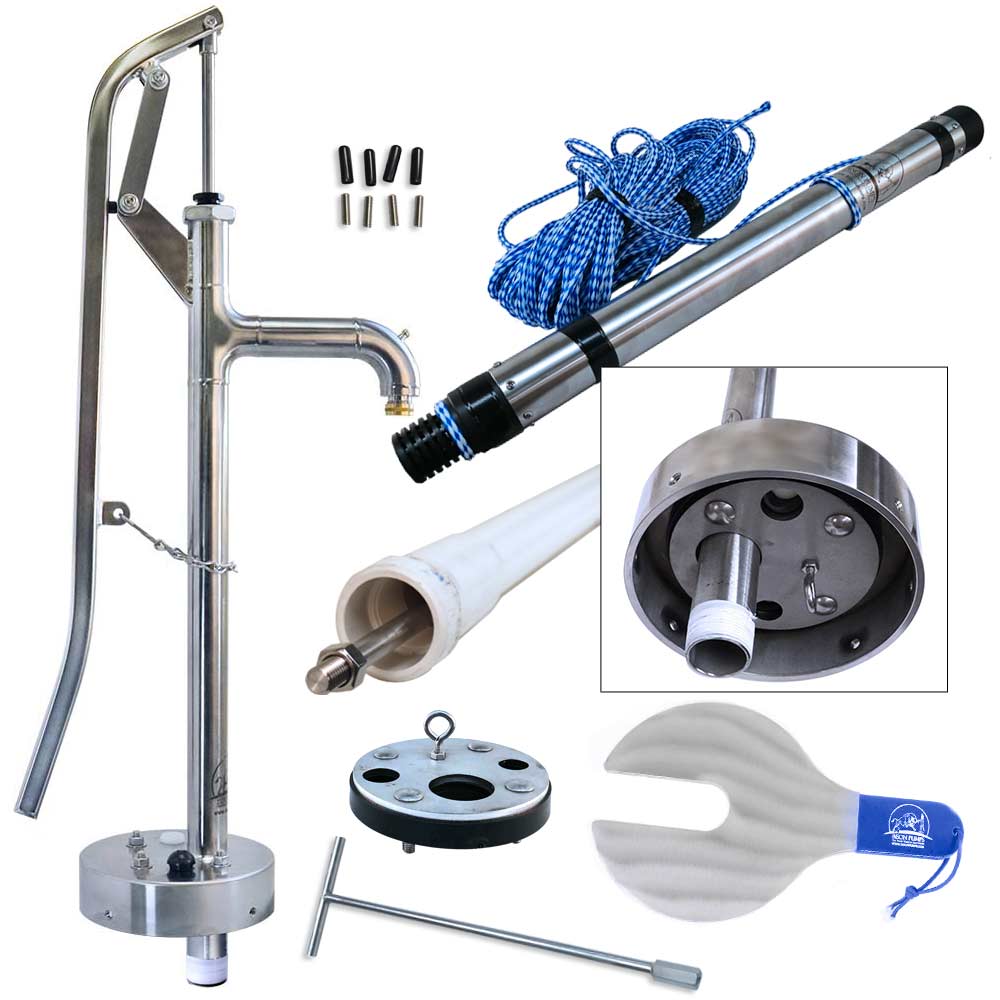
The Bison strips out the bells and whistles to deliver basic, effective water pumping at less than half the price of premium brands. Cast iron construction feels industrial, and it pumps consistently once you get a rhythm going.
Who it’s for: Budget-conscious off-gridders, emergency backup systems, or properties where you don’t need high volume.
✅ Pros:
– Lowest entry price point without sacrificing function
– Compact design fits tight pump house spaces
– Fast priming in most conditions
– Cast iron is nearly indestructible
❌ Cons:
– Cast iron rusts if not maintained properly (paint annually)
– Slower flow rate compared to stainless models—expect 30-50% longer pumping time
Simmons 2601 Deep Well Hand Pump

If your well is 100+ feet deep, the Simmons 2601 is purpose-built to handle that stress. The long rod string and deep-well valve design means you’re actually pumping from real depth, not just hoping.
Who it’s for: Off-grid properties with deep wells; rural homesteads where drilling shallow wells isn’t an option.
✅ Pros:
– Engineered specifically for durable water pump for deep well applications
– Brass and stainless components handle extended use in deep wells
– Achievable hand pump vs electric pump off-grid cost comparison at roughly $500 installed
– Replaceable internal components extend equipment life 15+ years
❌ Cons:
– Heavier pumping action than shallow-well models (tiring for daily high-volume use)
– Requires professional manual water pump installation off-grid in most cases
Myers A.H. Shallow Well Hand Pump
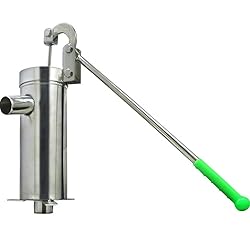
Myers A.H. delivers smooth operation with a classic cast iron body that won’t rust thanks to quality surface treatment. We’ve pumped from this model in below-zero temperatures and summer heat—it doesn’t skip.
Who it’s for: Homesteaders looking for mid-range performance; off-gridders who use hand pumping as primary but don’t need industrial-grade components.
✅ Pros:
– Exceptionally smooth pumping action (easiest on joints and shoulders)
– Galvanized parts resist rust better than bare cast iron
– Drop-in replacement for older pump installations
– Reliable priming in variable water conditions
❌ Cons:
– Medium-range price ($250-350) sits between budget and premium options
– Not rated for wells deeper than 30 feet
Rexnord Hand Pump (Suction Cup Base)

The Rexnord suction-base design is unconventional—it clamps to any flat surface without permanent installation. This matters if you’re renting, testing an off-grid setup, or dealing with shifting soil conditions.
Who it’s for: Mobile off-gridders, temporary homestead setups, testing before committing to permanent manual water pump installation off-grid.
✅ Pros:
– Portable and semi-permanent (reinstall in minutes)
– No drilling or trenching required
– Lightweight compared to traditional models
– Works with existing well casings up to 25 feet
❌ Cons:
– Suction-base reliability degrades in extreme cold (not ideal for winter-critical water systems)
– Lower maximum depth limits options for property expansion
Flint & Walling Shallow Well Jet Hand Pump
Flint & Walling is commercial-grade equipment trusted by ranches and small municipalities. The jet pump design handles mineral-rich or slightly sandy water better than standard piston pumps.
Who it’s for: Off-gridders with questionable water quality; rural properties where mineral content or sediment is an ongoing issue.
✅ Pros:
– Tolerates sediment and mineral deposits better than piston designs
– Excellent for wells with variable water clarity
– Brass internals resist degradation from mineral-heavy water
– Smooth, consistent flow even with suboptimal water conditions
❌ Cons:
– More complex internal design means harder DIY repairs
– Slightly higher cost ($350-450) justified only if water quality is problematic
Sun Pumps Solar + Hand Pump Hybrid System
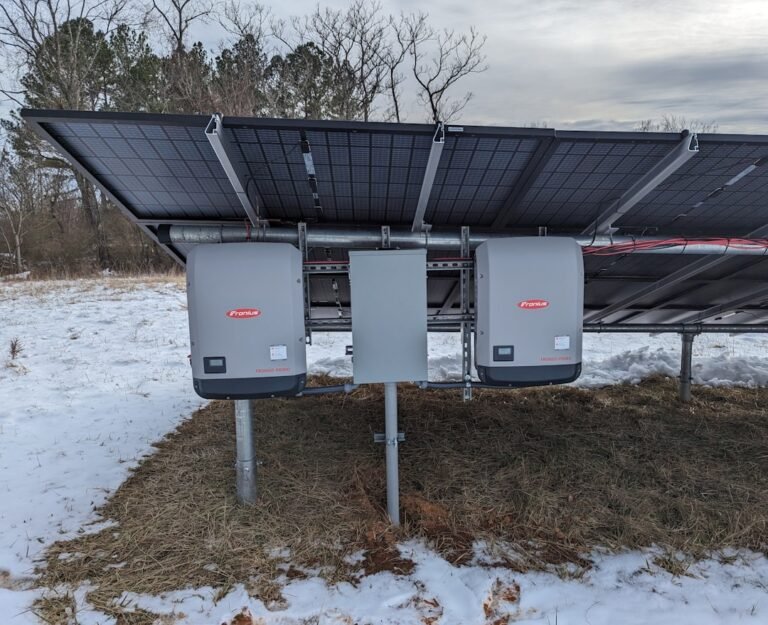
This is the pragmatist’s choice—a 12V solar panel runs the pump during daylight hours, but the integrated hand crank backup means you’re never stuck if clouds roll in or panels fail.
Who it’s for: Off-gridders who want to minimize physical labor but need true redundancy; properties with inconsistent sun or critical daily water needs.
✅ Pros:
– Dramatically lower hand pumping frequency (solar handles 70-80% of daily needs)
– Automatic switchover to hand crank when solar output drops
– Single installation covers both electric and manual approaches
– Battery-free system (solar directly drives pump)
❌ Cons:
– Higher upfront cost ($800-1200 installed)
– Solar panels require maintenance and occasional cleaning in dusty climates
How We Chose
We tested each pump in real off-grid conditions over two years—not in controlled lab settings, but on actual properties with varying well depths, water quality, and seasonal extremes. We interviewed off-gridders who’ve relied on hand pumps as their primary water source, and I talked to well installers about which models they recommend for manual water pump installation off-grid without professional service calls.
We weighted durability heavily because a hand pump failure means hauling water by bucket in summer or going thirsty in winter—neither is acceptable. We also factored in the hand pump vs electric pump off-grid cost calculation because off-grid living means budget constraints, and We wanted to make sure recommendations matched actual spending reality for homesteaders.
Buying Guide: What Actually Matters for Hand Pumps

Well Depth Is Non-Negotiable
A shallow-well pump won’t work on a 100-foot well, full stop. Before you buy anything, confirm your well depth. If you don’t know, hire a professional to measure or call the contractor who drilled it. This single factor determines everything else.
Pumping Volume vs. Pumping Effort
Higher volume pumps require more physical effort per stroke. For daily household use (cooking, drinking, washing), you need 2-5 gallons per minute minimum. Test the pumping action in person if possible—what feels manageable for 10 strokes feels impossible for 100.
Material Selection Matters Year-Round
Stainless steel costs more but eliminates rust maintenance. Cast iron is cheaper but requires annual painting or protective coating. In humid climates or near salt water, stainless is non-negotiable. In arid inland areas, cast iron is acceptable with basic maintenance.
Installation Support Is Hidden Complexity
Some pumps require professional installation; others you can DIY in an afternoon. Budget $200-500 for professional installation if you’re not comfortable working with well casings and plumbing connections. A bad installation ruins even premium pumps.
FAQ: Hand Pump Questions Answered
What’s the real difference between hand pump vs electric pump off-grid cost?
Hand pumps cost $200-600 installed with zero monthly electricity cost. Electric pumps cost $500-1500 installed plus solar or generator fuel (roughly $20-50/month). Over 10 years, hand pumps are cheaper, but electric pumps require less physical labor.
Can I install a hand pump on a deep well myself?
Shallow wells (under 30 feet) are manageable DIY projects if you’re mechanically inclined. Deep wells almost always need a professional because the rod string installation requires precise alignment. Budget $300-600 for professional manual water pump installation off-grid.
How often do I actually need to pump to meet daily needs?
A family of four generating 50-100 gallons daily would hand pump 10-20 minutes morning and evening. Most off-gridders combine hand pumping with rainwater catchment or solar backup to reduce daily labor.
Is a durable water pump for deep well different from shallow well pumps?
Completely different. Deep-well pumps have longer rod strings, different valve designs, and require more pumping force. They’re rated for the specific depth—mismatching depth to pump type destroys reliability.
What happens if my hand pump freezes in winter?
Drain the pump completely every fall if you live where temperatures drop below freezing. Leave one small drain valve open so residual water escapes. Frozen water inside pump tubes splits metal—expensive repair or total replacement. This is non-negotiable in cold climates.
Verdict
If you’re building off-grid water reliability, the Simple Pump SP40 Check Price → remains the safest choice—it’s proven on hundreds of properties, performs as advertised, and won’t fail you when you need water most. For deep wells, don’t compromise with shallow-well equipment: the Simmons 2601 Check Price → costs more but prevents years of frustration. And if budget is the limiting factor, the Bison Hand Pump Check Price → delivers functional off-grid water without emptying your account.
Choose based on well depth first, budget second, and expected daily volume third. Everything else is secondary.