Build an Off-Grid Septic System (Complete Guide)
If you’re moving off-grid, you’ve probably spent hours planning your solar array and water supply — but waste management? That’s the system most homesteaders underplan and regret first. A failed or undersized off-grid sewage waste disposal setup means backed-up pipes, contaminated groundwater, and costly emergency fixes miles from the nearest plumber. We’ve dug into building codes, manufacturer specs, and years of homesteader community feedback to put together the guide we wish existed when we started researching this topic.
What You’ll Learn
- The four main off-grid waste management systems and which fits your land, budget, and household size
- How to size a septic or composting system correctly so you’re not rebuilding in two years
- Greywater vs. blackwater separation — when it’s worth the extra plumbing
- The permitting realities most “off-grid living” articles skip entirely
Understanding Your Waste Streams
Before picking a system, you need to understand the two categories of household wastewater:
Blackwater comes from toilets — it contains human waste and requires the most careful treatment. This is the primary concern of any off-grid sewage waste disposal plan.
Greywater comes from sinks, showers, and washing machines. It’s far easier to treat and reuse, and separating it from blackwater dramatically reduces the load on your primary system.
A typical household of four produces roughly 80–100 gallons of wastewater per day. About 25–30% of that is blackwater. Separating these streams means your blackwater system can be smaller, cheaper, and longer-lasting.
The Four Main Off-Grid Waste Systems
Off-Grid Insider
Get off-grid guides & gear picks in your inbox — free
Conventional Septic System
A standard septic tank (typically 1,000–1,500 gallons for a 3-bedroom home) with a drain field is still the most common off-grid sewage waste disposal method. Wastewater flows into the tank, solids settle and decompose anaerobically, and liquid effluent percolates through a leach field into the soil.
Best for: Homesteads with adequate land (you’ll need 2,500–10,000+ sq ft for the drain field depending on soil type), relatively flat terrain, and soil that percolates at 1–60 minutes per inch on a perc test.
Realistic costs: $5,000–$15,000 installed for a basic gravity-fed system. Mound systems on poor-perc soil run $15,000–$30,000.
Key specs to know:
– Tank size: 1,000 gallons minimum for 1–3 bedrooms; 1,250 gallons for 4 bedrooms
– Drain field setback: typically 50–100 feet from any well or water source (varies by county)
– Pump-out interval: every 3–5 years at roughly $300–$500 per service
Composting Toilet Systems

Composting toilets eliminate blackwater entirely by aerobically decomposing human waste into a humus-like material. This is the most popular choice for small homesteads and cabins because it removes the need for a septic tank altogether — you only need a greywater system for sinks and showers.
Best for: Small households (1–4 people), homesteads where septic installation is impractical due to rocky soil, high water tables, or steep terrain, and anyone wanting to minimize water use.
Two main categories:
-
Self-contained units like the Nature’s Head Composting Toilet ($960–$1,100) or Sun-Mar Excel ($2,000–$2,500) sit in your bathroom and handle everything in one unit. The Nature’s Head uses a crank agitator and separates urine from solids — for a household of two using it full-time, the solids bin needs emptying roughly every 4–6 weeks based on manufacturer data and consistent owner reports.
-
Central/remote systems like the Sun-Mar Centrex series ($1,800–$3,500) sit below the bathroom floor (in a basement or crawl space) and connect to a standard-looking toilet upstairs. These handle higher capacity — the Centrex 3000 is rated for a family of up to 9 people in residential use.
Critical detail: Composting toilets need a vent pipe (typically 2–4 inch diameter) and most benefit from a small 12V fan to maintain airflow and prevent odor. Budget for this during your bathroom build.
Constructed Wetlands
An engineered wetland uses gravel beds planted with species like bulrush, cattails, or reeds to naturally filter wastewater through biological processes. Water flows through the root zone where microorganisms break down contaminants.
Best for: Homesteads with space (you’ll need roughly 50–100 sq ft of wetland area per bedroom), a relatively warm climate or one where you can insulate the beds, and landowners who want a zero-energy treatment system.
Realistic sizing: For a family of four, plan on a two-cell system totaling 200–400 sq ft of wetland area. The first cell handles primary treatment; the second polishes the effluent. A settling tank or septic tank upstream is still recommended to catch solids.
Costs: $3,000–$8,000 DIY; $10,000–$20,000 professionally designed and installed.
Incinerating Toilets
Units like the Incinolet ($2,000–$2,800) burn waste to sterile ash using electric heating elements. No water, no plumbing, no composting.
Best for: Extremely small cabins, seasonal-use properties, or sites where composting isn’t practical (very cold climates with no heated space for a composter). Not ideal for full-time family use — each cycle takes 60–90 minutes and uses roughly 1.5–2 kWh of electricity per cycle.
Setting Up a Greywater System
Regardless of which blackwater solution you choose, a separate greywater system lets you reuse 70–75% of your household water for irrigation. The basic setup:
- Separate your plumbing during construction — run sink, shower, and laundry drains to their own outlet, not into the septic or composting system
- Install a surge tank (55-gallon drum works fine) to buffer flow peaks from showers and laundry loads
- Use a branched drain or gravity distribution system to spread greywater across landscape plants or food-forest trees via mulch basins
- Switch to biodegradable soaps — products like Dr. Bronner’s Castile Soap or Oasis Biocompatible Laundry Detergent won’t harm soil biology
Important: Greywater should never pool on the surface, contact edible plant parts directly, or be stored for more than 24 hours. It goes sour fast.
Permitting — The Part Nobody Wants to Talk About
Here’s the reality: most counties regulate on-site sewage disposal regardless of how far off-grid you are. Before you buy a single component:
- Call your county health department and ask about on-site wastewater permits. Many require an engineered septic design and a licensed installer.
- Get a perc test ($200–$500) — this determines what systems your soil can support and is required almost everywhere.
- Ask specifically about composting toilets — some states (Oregon, Colorado, Arkansas, and others) explicitly permit them; others require a septic system in addition to a composting toilet for the greywater. Don’t assume.
- Setback requirements from wells, property lines, and waterways vary wildly. Get these numbers before you site anything.
Ignoring permits doesn’t just risk fines — it can make your property unsellable and create genuine public health problems for downstream neighbors.
Common Mistakes
Undersizing the System
The number-one failure we see reported in homesteading forums is a system sized for “just us two” that collapses when guests visit, kids arrive, or a laundry day coincides with showers. Size your system for peak use, not average use. If the manufacturer says a composting toilet handles two people full-time, and you have two people — you’re at the edge, not safely in the middle.
Ignoring Soil Conditions
Installing a drain field in clay soil or over a high water table is throwing money into a hole that will literally back up into your house. The perc test isn’t optional — it’s the single most important data point in your entire off-grid sewage waste disposal plan.
Skipping the Greywater Separation

Running all your wastewater into one system when you could separate greywater means your septic or composting system works 3–4x harder than necessary. The plumbing separation costs a few hundred dollars during construction. Retrofitting it later costs thousands.
Neglecting Maintenance Schedules
Composting toilets need regular bulking material additions and proper moisture management. Septic tanks need pumping. Constructed wetlands need occasional plant management. No off-grid waste management system is install-and-forget.
Our Recommendations
Best Composting Toilet for Most Homesteads
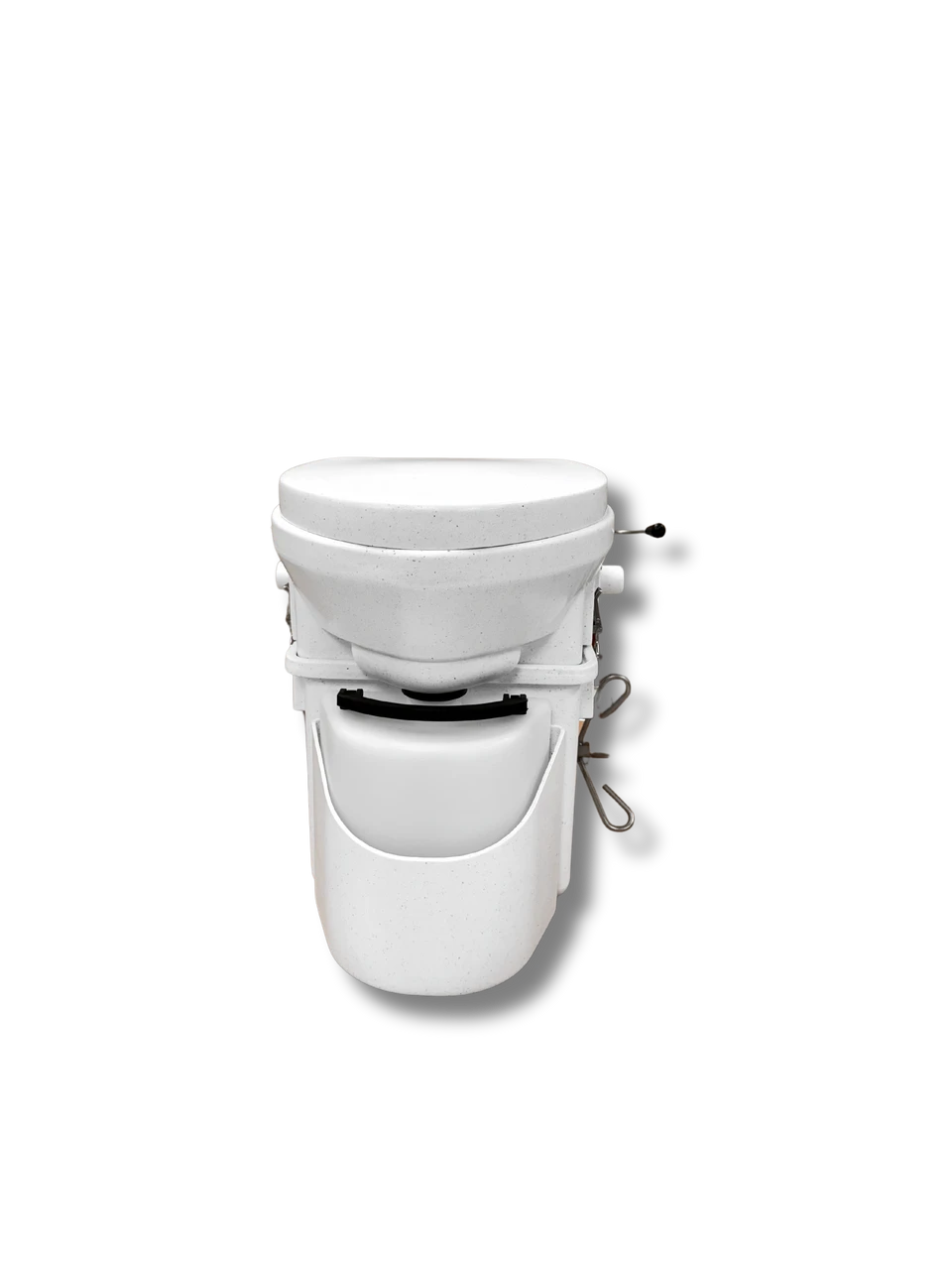

Nature’s Head Composting Toilet (~$960–$1,100) — The most widely reviewed composting toilet in the off-grid community, with thousands of verified owners across marine, RV, and cabin applications. Urine-diverting design, stainless steel hardware, and a standard 12V fan. Rated for two adults full-time. If your household is larger than two, look at a central system instead.
Best High-Capacity Composting System

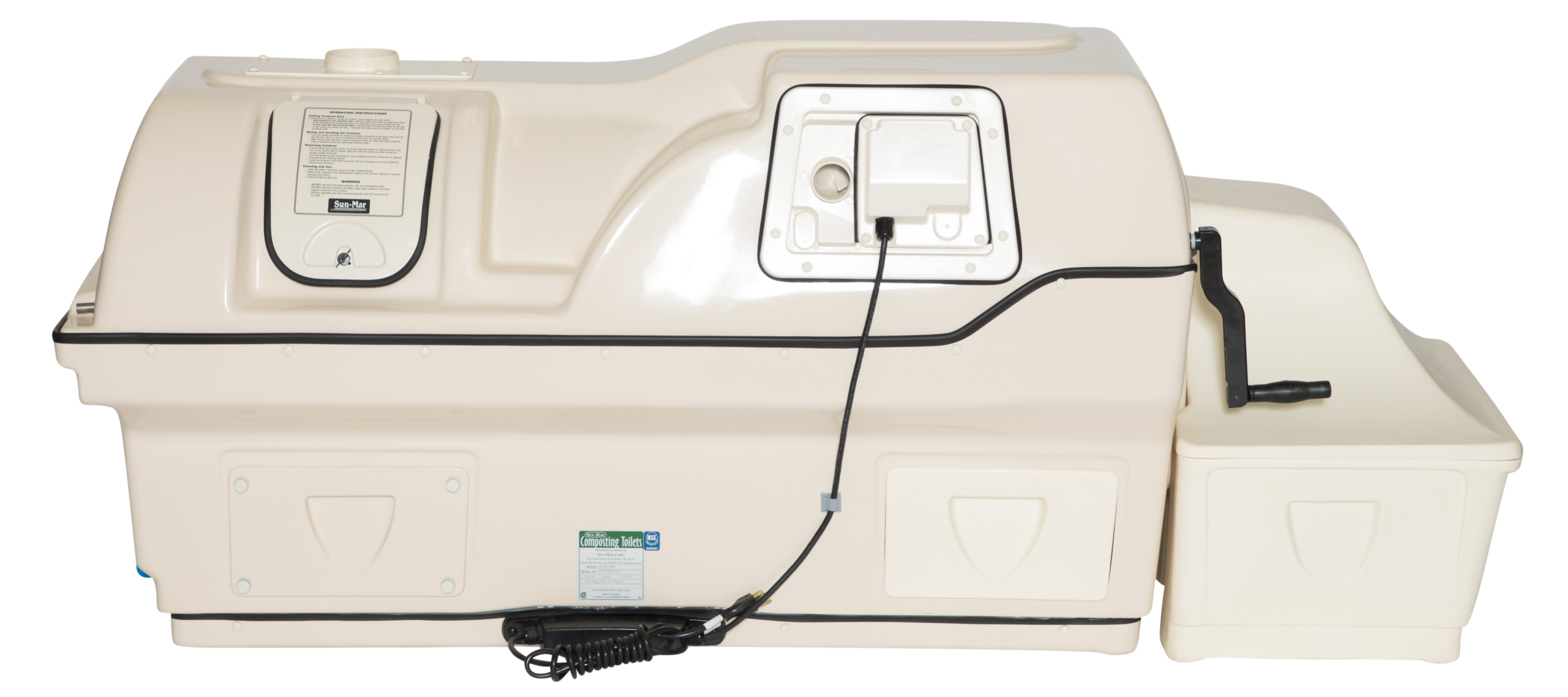

Sun-Mar Centrex 3000 (~$2,500–$3,500) — Remote-mount system that installs below-floor and connects to a conventional-looking toilet in your bathroom. Rated for residential use up to a family of nine. Requires a below-floor space (basement or crawl space) with at least 30 inches of clearance. Includes a bio-drum for aeration.
Best Greywater-Safe Detergent


Oasis Biocompatible All-Purpose Cleaner (~$15–$20) — Specifically formulated for greywater irrigation systems. No sodium, boron, or chlorine — the three ingredients in conventional soaps that damage soil structure over time.
FAQ
Do composting toilets smell?
A properly maintained composting toilet with adequate ventilation (12V fan and vent pipe) should have no noticeable odor in the bathroom. The overwhelming consensus from long-term owners is that the urine-diverting designs like the Nature’s Head are effectively odor-free when the crank is used regularly and coco coir or peat moss is kept at the right moisture level. If it smells, something is wrong — usually a blocked vent, overfull solids bin, or too-wet mixture.
How far should a septic drain field be from a well?
This varies by jurisdiction, but the most common minimum setback is 100 feet from a private well. Some counties require 150 feet or more, especially for shallow wells. Your county health department sets the local requirement — do not rely on generic internet answers for this one.
Can I use a composting toilet in freezing climates?
Yes, but the composting process slows dramatically below 55°F and essentially stops below freezing. The toilet still functions — it just becomes a holding system until temperatures rise. Most cold-climate homesteaders keep composting toilets in heated living spaces, which solves this problem. Central systems in unheated crawl spaces will need insulation or supplemental heating in winter.
Is it legal to dump greywater on the ground?
Legality varies enormously by state and county. Arizona, California (with restrictions), Montana, New Mexico, Texas, and Wyoming have relatively permissive greywater laws. Other states require permits or prohibit surface discharge entirely. Check your state’s specific greywater regulations — the Water Policy organization maintains a state-by-state guide that stays reasonably current.
How often do you pump a septic tank off-grid?
The EPA recommends every 3–5 years for a typical household. If you’ve separated greywater and only blackwater enters the tank, you can often extend that interval since the volume is significantly reduced. A 1,000-gallon tank serving two people with greywater diverted might go 5–7 years, though annual inspections are still wise. Keep records of pump-outs — they’re required for property sales in most areas.