Build an Off-Grid Medical Kit for Remote Emergencies
When you’re miles from the nearest hospital — or the nearest hospital is hours away even on a good day — a generic drugstore first aid kit isn’t going to cut it. Most off-grid medical supplies emergency preparedness kit options sold online are stuffed with cheap adhesive bandages and alcohol wipes but missing the trauma gear, wound closure supplies, and medications that actually matter when you can’t dial 911 and get a fast response. We dug into dozens of kits to find the ones worth your money.
Our top pick: Surviveware Large First Aid Kit — best all-around off grid first aid kit for homesteads.
Best premium: MyMedic MyFAK — serious trauma supplies in an organized package.
Best budget: Be Smart Get Prepared 250 Piece First Aid Kit — solid basics at a price that lets you buy multiples.
Our Picks
Surviveware Large First Aid Kit

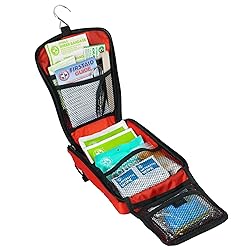
This is the kit we recommend to most people building out their off-grid medical supplies emergency preparedness kit for the first time. It strikes the right balance between comprehensive coverage and practical organization — 200+ pieces sorted into labeled compartments so you’re not digging through a jumbled bag while someone’s bleeding.
Who it’s for: Homesteaders and off-grid families who want a single, well-organized kit that covers everyday injuries and moderate emergencies.
Pros:
– MOLLE-compatible bag with clearly labeled inner compartments — you can find what you need fast under stress
– Includes trauma shears, CPR mask, splint material, and Israeli-style bandage alongside the standard wound care supplies
– Water-resistant 600D polyester shell holds up in sheds, trucks, and anywhere you’d actually store a kit
Cons:
– No tourniquet included — you’ll want to add a CAT tourniquet separately for serious limb trauma
– Some of the included medications (single-dose packets of ibuprofen, aspirin) run out fast with a family and need regular restocking

MyMedic MyFAK
Off-Grid Insider
Get off-grid guides & gear picks in your inbox — free
MyMedic builds kits with actual emergency medical scenarios in mind, not just box-checking. The MyFAK includes a CAT-style tourniquet, chest seal, compressed gauze, and nasopharyngeal airway — gear you won’t find in most consumer first aid kits but that could save a life during a chainsaw accident or fall from a roof.
Who it’s for: Anyone who’s done at least basic first aid or stop-the-bleed training and wants a kit that matches their skill level.
Pros:
– Includes a genuine tourniquet, chest seal, and hemostatic gauze — real trauma intervention tools
– Well-built MOLLE bag with a layout that mirrors how medical professionals organize their gear
– Available in multiple color options and configurations (standard, pro, advanced) so you can scale to your training
Cons:
– Significantly more expensive than basic kits — the advanced version pushes past $150
– The trauma components require training to use safely; without it, you’re carrying gear you can’t deploy
Adventure Medical Kits Mountain Series Weekender
Adventure Medical Kits has been supplying wilderness medicine professionals for decades, and their Mountain Series reflects that lineage. The Weekender model is built for scenarios where help is hours or days away — exactly the reality of off-grid living. It includes wound closure strips, irrigation syringes, EMT shears, and a comprehensive guide written by wilderness medicine physicians.
Who it’s for: Remote homesteaders, backcountry property owners, and anyone whose nearest medical facility is 60+ minutes away.
Pros:
– Includes a detailed wilderness medicine guidebook — useful for people without formal medical training
– DryFlex bags inside keep supplies waterproof even if the outer bag gets soaked in a flood or storm
– Wound irrigation syringe and closure strips enable you to properly clean and close wounds when stitches aren’t an option
Cons:
– Lighter on trauma-specific gear (no tourniquet or chest seal) compared to tactical-oriented kits
– The soft-sided pouch isn’t as durable as rigid or MOLLE-style bags for rough storage environments
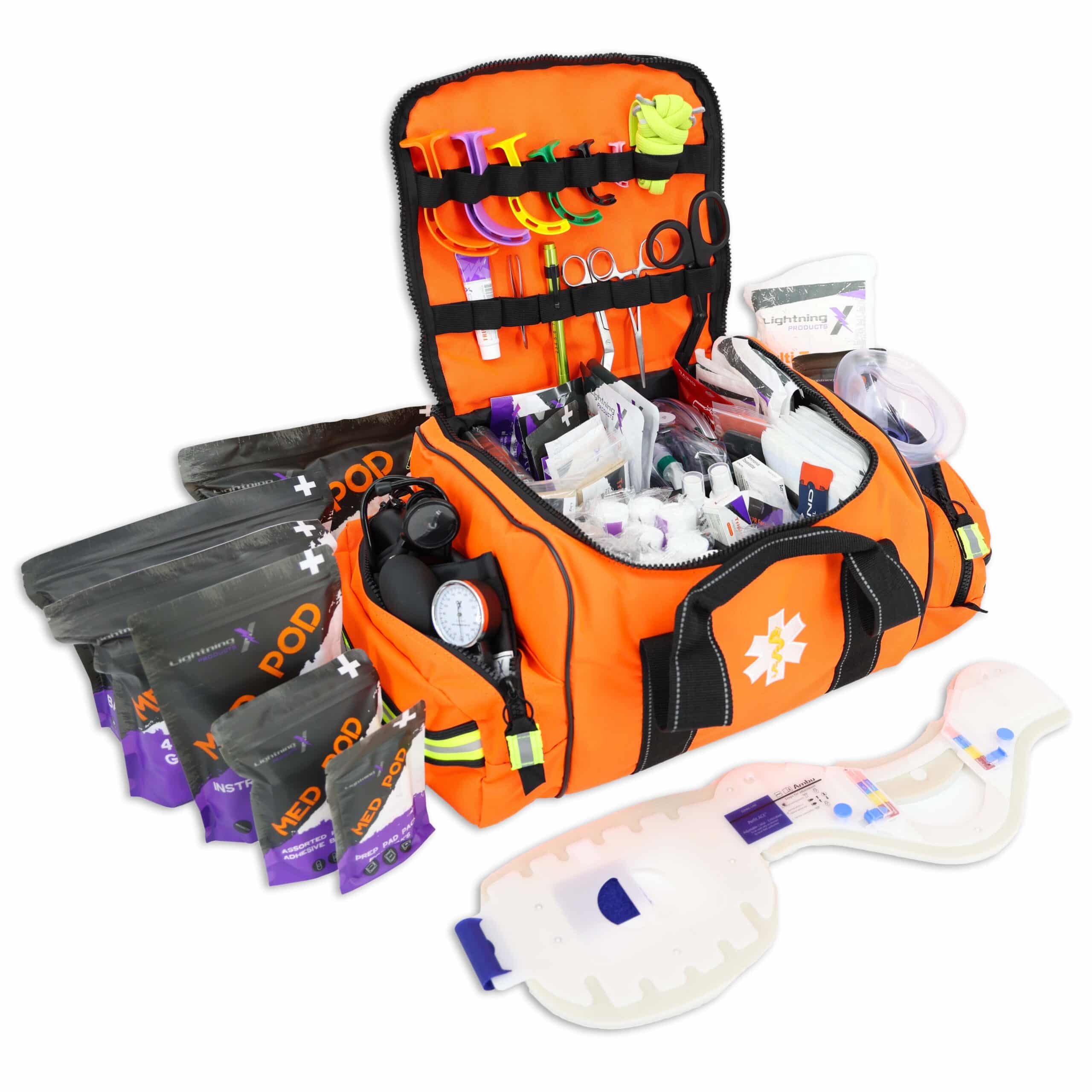
Lightning X Products Stocked Medic First Responder Trauma Bag
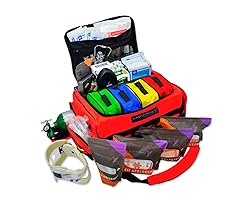
If you want one bag that covers everything from splinter removal to stabilizing a serious injury, this is it. Lightning X stocks this with over 400 pieces including SAM splints, a full CPR kit, burn dressings, and a blood pressure cuff. It’s the closest thing to what an EMT carries without needing a prescription for anything inside.
Who it’s for: Families or small off-grid communities who want a single comprehensive off grid first aid kit that multiple people can access and understand.
Pros:
– Massive inventory — 400+ items covering trauma, burns, fractures, CPR, wound care, and basic diagnostics
– Professional-grade bag with reinforced zippers, multiple compartments, and shoulder strap for portability
– Includes diagnostic tools (BP cuff, penlight, stethoscope) that let you assess someone’s condition before deciding whether to evacuate
Cons:
– The sheer size and weight (over 10 lbs fully stocked) means this stays at your base — it’s not a grab-and-go kit
– Some included items (like the stethoscope) are low-quality and better replaced if you plan to rely on them
Doom and Bloom STOMP Supreme Kit
Built by Dr. Joe Alton (a well-known voice in austere/disaster medicine), the STOMP kits are designed explicitly for scenarios where professional medical help isn’t coming. This is one of the few kits on the market that includes suture kits, hemostatic agents, and a dental emergency module alongside standard first aid supplies. The companion book, “The Survival Medicine Handbook,” is sold separately but pairs perfectly.
Who it’s for: Serious preppers and off-gridders who’ve invested in medical training and want supplies that match a true grid-down, long-term scenario.
Pros:
– One of the only kits that includes suture materials, skin stapler, and dental emergency tools — designed for extended austere situations
– Hemostatic gauze (QuikClot or equivalent) included for severe bleeding control
– Organized by injury type with color-coded compartments, making it usable under stress
Cons:
– Premium price point — the Supreme version runs $300+ depending on configuration
– Many components (suturing, skin staples) require real training; this is not a kit for beginners
Be Smart Get Prepared 250 Piece First Aid Kit
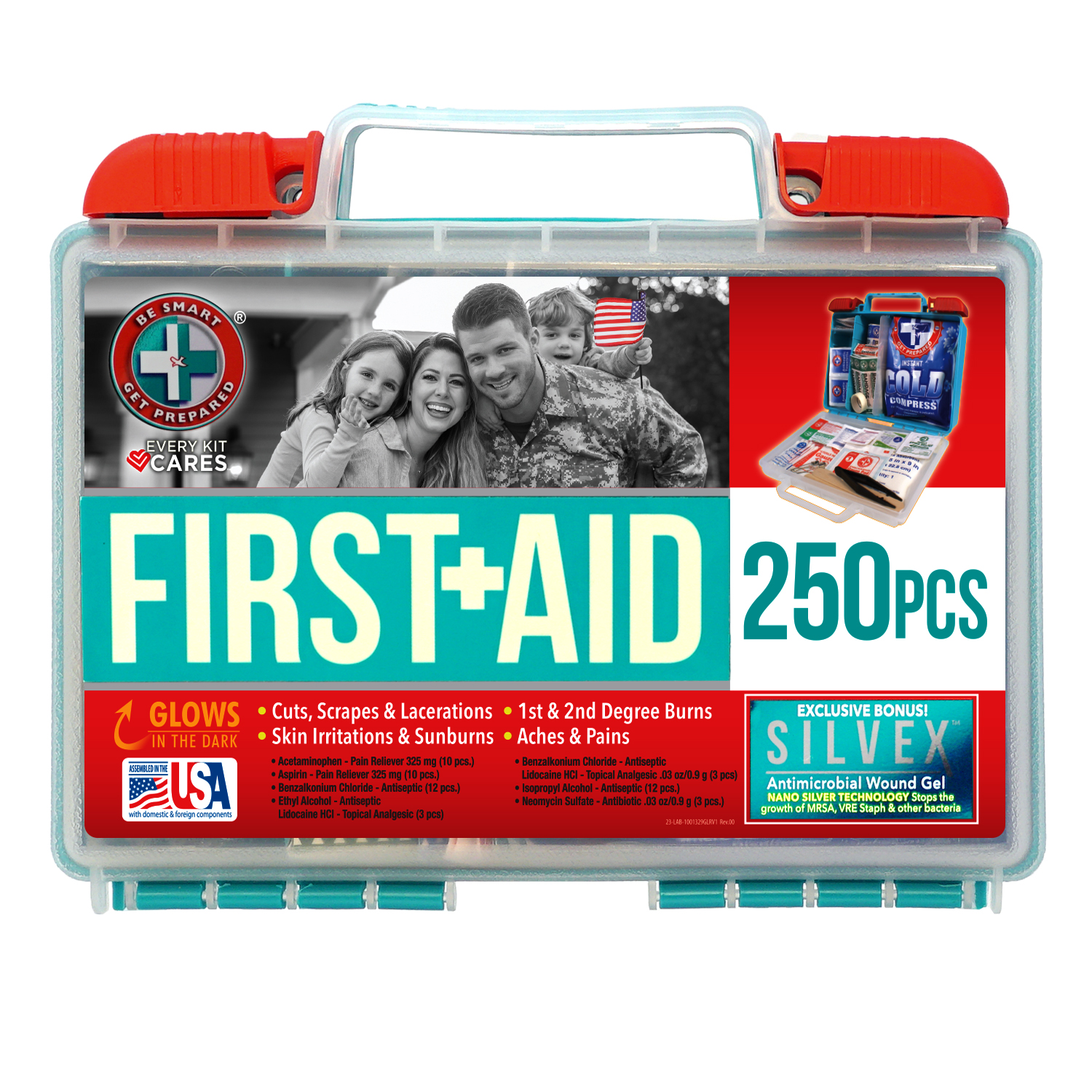
Not everyone needs a $300 trauma bag. If you’re just getting started with off-grid living and want to cover the basics — cuts, burns, sprains, blisters, headaches — this FDA-registered kit does the job for under $25. The hard-shell case is useful for workshop and vehicle storage. We recommend buying two or three: one for the cabin, one for the truck, one for the shop.
Who it’s for: Budget-conscious beginners, or anyone who wants to scatter basic first aid across multiple locations on their property.
Pros:
– Hard-shell case with a solid latch — more durable than the soft pouches that come with most budget kits
– FDA-registered facility production, which means consistent quality control on bandages and medications
– Low price lets you buy multiples for truck, barn, cabin, and workshop without wincing
Cons:
– No trauma gear whatsoever — this handles everyday injuries only
– Many of the 250 “pieces” are small adhesive bandages and single-use wipes, so the count is a bit inflated
How We Chose
We evaluated over 30 kits against criteria that matter specifically for off-grid and remote living: trauma capability, waterproofing, shelf-stable medication inclusion, organization under stress, and bag durability in non-climate-controlled storage. We cross-referenced manufacturer contents lists against the Wilderness Medical Society’s recommended supply guidelines and the Stop the Bleed national consensus. We also dug through hundreds of verified buyer reviews and community forums (r/preppers, r/homesteading, and several off-grid Facebook groups) to identify real-world durability issues and restocking pain points that don’t show up on product pages.
Buying Guide: What to Look For in an Off-Grid Emergency Medical Kit

Trauma Capability vs. Everyday First Aid
This is the most important distinction. A kit full of adhesive bandages and antibiotic ointment handles daily scrapes. A kit with tourniquets, hemostatic gauze, chest seals, and pressure bandages handles the accidents that can kill you — chainsaw kickback, falls from height, animal encounters. Most off-grid households need both layers. If you can only afford one kit, lean toward a mid-range option like the Surviveware or MyMedic that covers both, then supplement with a dedicated tourniquet and chest seal.
Organization and Accessibility
When someone is injured and bleeding, you don’t have time to dump everything on the ground and sort through it. Labeled compartments, color-coded sections, and logical grouping (all bleeding control together, all burn supplies together) matter more than total piece count. Buyer reviews consistently cite poor organization as the #1 frustration with cheap kits. Every off-grid medical supplies emergency preparedness kit you buy should let you find a pressure bandage in under 10 seconds in low light.
Durability and Storage Conditions
Off-grid storage is harsh. Your kit might live in an unheated barn, a truck cab that hits 140°F in summer, or a root cellar with humidity issues. Look for water-resistant or waterproof outer bags, sealed inner compartments, and medications stored in foil-backed blister packs rather than loose bottles. Hard-shell cases resist crushing but can crack in cold; MOLLE-style fabric bags flex but may absorb moisture. Consider where you’ll actually keep the kit before choosing.
Training Compatibility
The best kit in the world is useless if you don’t know how to use what’s inside. Match your kit to your training level, then grow both together. If you haven’t taken a Stop the Bleed class or a Wilderness First Aid course, start with a basic to mid-range kit and invest the savings in training. A $30 kit plus a $200 weekend course will serve you better than a $400 kit you can’t effectively deploy.
FAQ
What should be in an off-grid first aid kit?
At minimum: a tourniquet, pressure bandages, hemostatic gauze, wound closure strips, an irrigation syringe, trauma shears, a CPR mask, SAM splint, burn dressings, a variety of adhesive bandages, antibiotic ointment, and OTC pain and allergy medications. For extended off-grid living, add suture kits, dental emergency supplies, and a blood pressure cuff if you have the training to use them.
How often should you replace supplies in an emergency preparedness medical kit?
Check your kit every six months. Medications expire — typically in 1-3 years — and adhesive products lose their stick over time, especially in hot or humid storage. Hemostatic gauze and chest seals also have expiration dates. Set a calendar reminder and do a full inventory twice a year, replacing anything expired, damaged, or previously used.
Do you need medical training to use an off-grid emergency kit?
You need training to use trauma-specific tools like tourniquets, chest seals, and hemostatic agents safely. For basic wound care, burns, and splinting, a good wilderness medicine guidebook and online courses from organizations like NOLS or the Red Cross can get you functional. We strongly recommend at minimum a Stop the Bleed course (free, widely available) and ideally a Wilderness First Aid certification for anyone living off-grid full time.
What is the best way to store medical supplies off-grid?
Keep your primary kit in a cool, dry, dark location — ideally between 50°F and 77°F. Avoid uninsulated attics, direct sunlight, and anywhere with high humidity. Use desiccant packets inside the kit bag. For vehicle and outbuilding kits, inspect more frequently since temperature swings accelerate degradation. Vacuum-sealed bags extend shelf life for gauze and bandage supplies stored long-term.
How much should you spend on an off-grid medical emergency kit?
A solid mid-range kit runs $50-$100 and covers most homestead scenarios. Adding a quality tourniquet ($25-$30) and hemostatic gauze ($15-$25) separately brings you to about $100-$150 total. Premium kits with advanced trauma and austere medicine supplies range from $200-$400. We think the sweet spot for most off-grid families is a $70-$100 primary kit supplemented with a few individual trauma items — total investment around $130-$170.
Our Verdict
For most off-grid households, the Surviveware Large First Aid Kit is the right starting point — well-organized, reasonably comprehensive, and durable enough for real-world storage conditions. Add a CAT tourniquet and a chest seal separately, take a Stop the Bleed class, and you’ll have a capable off grid first aid kit for under $150. If you have advanced training or live in a truly remote location, step up to the MyMedic MyFAK or Doom and Bloom STOMP — they carry gear that matches the reality of being your own first responder.