
7 Best Grain Mills for Homesteading 2026
Finding reliable flour grinding equipment for a homestead is harder than it should be. Half the mills on the market are flimsy cast-aluminum units that strip their burrs after a season, and the other half cost as much as a used tractor. When your food independence depends on turning whole grain into usable flour — whether or not the grid is up — you need something built to last decades, not months.
We spent weeks digging through manufacturer specs, teardown videos, and hundreds of verified buyer reports across homesteading forums and retailer reviews to find the grain mills actually worth your money. Here’s what we landed on.
Our top pick: Country Living Grain Mill — the gold standard hand crank grain mill that can also be motorized.
Best electric: WonderMill Electric Grain Mill — fast, fine flour with zero effort.
Best budget: Victoria Cast Iron Corn Mill — under $50 and useful.
Best premium: GrainMaker Model No. 99 — overbuilt in the best possible way.
Best stone mill: NutriMill Harvest — beautiful flour texture from real stones.
Our Picks
Country Living Grain Mill

This is the hand crank grain mill that homesteaders have trusted for over 30 years, and the community consensus is clear — it’s the one to beat. The aircraft-grade aluminum body and hardened steel burrs handle wheat, corn, oats, rice, and legumes without complaint, and the optional flywheel and motorization kit mean you can scale from arm-powered to belt-driven as your operation grows.
Who it’s for: Serious homesteaders who want one mill for life, grid or no grid.
Pros:
– All-metal construction with replaceable hardened steel burrs rated for tens of thousands of pounds of grain
– Can be hand-cranked, flywheel-assisted, or connected to a motor or bicycle — true off-grid food processing flexibility
– Large hopper holds roughly 4–5 cups of grain, reducing reload frequency during long milling sessions
Cons:
– Price point around $400–$500 puts it out of reach for casual users
– Hand-cranking fine pastry flour takes real effort and time — expect around 1 cup per minute for fine settings
WonderMill Electric Grain Mill
Off-Grid Insider
Get off-grid guides & gear picks in your inbox — free
If you have reliable power (solar system, generator, or grid), the WonderMill is the fastest path from whole grain to baking-ready flour. Its high-speed impact milling head produces remarkably fine flour at up to 100 pounds per hour, and the self-cleaning design means minimal maintenance between sessions.
Who it’s for: Homesteaders with a power source who mill in bulk and want speed.
Pros:
– Mills up to 100 lbs/hour — unmatched throughput for a home-scale unit
– Produces flour as fine as store-bought (down to pastry grade) in a single pass
– Enclosed design keeps dust contained, which matters in a small kitchen
Cons:
– Requires electricity — not a standalone off-grid food processing solution without a solar or generator setup
– Impact milling generates heat, which can degrade some nutrients compared to slow stone or burr grinding
GrainMaker Model No. 99
Made in Montana from cast iron and stainless steel, the GrainMaker is the premium hand crank grain mill for people who refuse to compromise. The helical-cut steel burrs self-sharpen with use, the double-sealed bearings keep grit out, and the entire unit weighs a substantial 27 pounds — this thing is furniture-grade solid.
Who it’s for: Homesteaders who want heirloom-quality flour grinding equipment and don’t mind paying for it.
Pros:
– Cast iron and stainless steel construction — built to outlast the homestead itself
– Self-sharpening helical burrs maintain consistent grind quality over years of heavy use
– Integrated clamp and bolt-down base options make permanent mounting straightforward
Cons:
– Price typically runs $700–$900, making it the most expensive manual option on this list
– Heavy and bulky — not something you’d bring to a temporary camp setup
Victoria Cast Iron Corn Mill (No. 500)
At under $50, the Victoria is the entry-level mill that actually works. It’s a traditional cast iron plate mill made in Colombia, and while it won’t produce ultra-fine pastry flour, it handles cornmeal, cracked wheat, coarse flour, and nut butters capably. For homesteaders just getting started with grain processing, this is where to begin.
Who it’s for: Budget-conscious beginners who want to start milling without a big investment.
Pros:
– Typically under $50 — lowest barrier to entry for any functional grain mill
– Solid cast iron body with tin-coated grinding plates that hold up to moderate use
– Handles corn, wheat, rice, spices, and even wet grinding for masa
Cons:
– Grind consistency is noticeably rougher than hardened steel or stone burr mills — multiple passes needed for finer flour
– Tin coating on burr plates wears over time, requiring eventual replacement for food-safe use
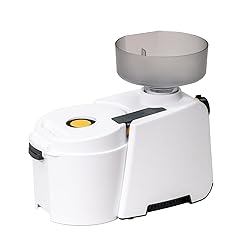
NutriMill Harvest Stone Grain Mill

Stone milling produces a different flour — cooler grinding temperatures preserve more nutrients and the texture has a quality that steel burrs can’t quite replicate. The NutriMill Harvest uses corundum ceramic stones at a controlled low speed to deliver exactly that. It’s electric, compact, and surprisingly quiet for a stone mill.
Who it’s for: Bakers and health-focused homesteaders who prioritize flour quality and nutrition over raw speed.
Pros:
– Corundum ceramic stones grind cool, preserving heat-sensitive vitamins and oils in whole grain flour
– Quieter operation than impact mills — listed around 60 dB, roughly normal conversation level
– Compact countertop footprint fits kitchens where space is tight
Cons:
– Electric-only — no hand-crank option means it’s grid-dependent
– Stone burrs can clog with oily seeds (flax, sunflower); best suited to dry, hard grains

KoMo Fidibus 21 Grain Mill
German-engineered with a solid beechwood body and corundum-ceramic burrs, the Fidibus 21 is the best compact electric mill for small households. It produces excellent fine flour at around 4 ounces per minute and looks good enough to leave on the counter permanently. Build quality is a clear step above most consumer electrics in its price range.
Who it’s for: Smaller homesteads or households that mill moderate quantities and value build quality in a compact package.
Pros:
– Solid beechwood and corundum-ceramic construction — durable, attractive, and functional
– Produces very fine flour suitable for bread, pastry, and all-purpose baking
– 12-year manufacturer warranty on the milling stones signals genuine confidence in longevity
Cons:
– Throughput of ~4 oz/minute is adequate for household use but slow for bulk processing
– At $300–$350, it’s a significant spend for what is strictly an electric, non-off-grid unit
How We Chose
We evaluated over 20 grain mills across manual and electric categories, focusing on burr material and longevity, grind consistency across settings, throughput rates, and real-world durability reports from homesteading communities. We cross-referenced manufacturer specs against long-term user reviews on retailer sites, homesteading forums like Homesteading Today and Permies, and YouTube teardowns. No mill made this list unless it had a strong track record of multi-year reliability in verified buyer reports. We specifically weighted our picks toward flour grinding equipment that can handle the diverse grains homesteaders actually grow — not just wheat, but corn, oats, rye, rice, and legumes.
Buying Guide: What Actually Matters in a Homestead Grain Mill
Burr Material and Lifespan

This is the single most important factor. Steel burrs (especially hardened or stainless) handle the widest range of grains and last the longest under heavy use. Stone and ceramic burrs produce superior flour texture but can chip on very hard grains or foreign objects. Cast iron plate mills are affordable but wear faster. For a primary homestead mill, prioritize hardened steel or high-quality ceramic.
Manual vs. Electric (and Convertibility)
If your homestead runs on solar, you need to think about whether your panels and battery bank can support an electric mill’s draw (typically 300–1200 watts). A dedicated hand crank grain mill guarantees flour production regardless of power status. The best middle ground: a manual mill with a motorization option, like the Country Living or GrainMaker, which gives you both capabilities from a single investment.
Grind Range and Consistency
Not all mills produce fine flour. Budget plate mills often max out at a coarse meal, requiring multiple passes to approach bread-flour fineness. If you bake regularly, you need a mill that can produce consistent fine flour in a single pass. Check whether the adjustment mechanism is stepless (infinitely adjustable) or uses fixed detents — stepless gives you more control over texture.
Throughput and Hopper Size
How much grain do you process weekly? A small household baking a few loaves might be fine with 3–4 ounces per minute. A family of six living fully off-grid and processing all their own grain needs something closer to the WonderMill’s 100-lb/hour capacity, or at minimum a manual mill with a large hopper and flywheel. Match the mill to your actual volume, not aspirational volume.
FAQ
What is the best grain mill for off-grid homesteading?
The Country Living Grain Mill is the most recommended option for fully off-grid use. It works by hand crank, can be fitted with a flywheel for easier operation, and accepts motorization for days when you have power. Its hardened steel burrs handle every common homestead grain and are rated for extremely long service life.
Can you grind flour without electricity?
Absolutely. A hand crank grain mill like the Country Living or GrainMaker lets you produce flour with nothing but arm power. Expect to grind about 1 cup of fine flour per minute by hand — slower than electric, but completely grid-independent. Adding a flywheel or bicycle-power adapter significantly reduces the effort.
How fine can a hand grain mill grind flour?
High-quality hand mills with hardened steel or ceramic burrs can produce flour fine enough for sandwich bread and most baking. Ultra-fine pastry flour is harder to achieve by hand — you’ll typically need multiple passes or a very slow, deliberate crank speed. For consistent pastry-grade flour, an electric stone mill like the NutriMill Harvest is more practical.
What grains can you mill at home on a homestead?
Most quality grain mills handle hard and soft wheat, corn, rye, oats, barley, rice, spelt, millet, buckwheat, and dried legumes like chickpeas and lentils. Oily seeds (flax, sunflower, sesame) can clog stone burrs, so steel burr mills are better for those. Always check your specific mill’s manual — some budget models aren’t rated for the hardest grains like field corn or dried beans.
How much does a good homestead grain mill cost?
Budget cast iron mills start around $40–$50 and are functional for coarse grinding. Mid-range electric mills run $250–$400. Premium hand crank mills built for multi-generational use cost $400–$900. For most homesteaders, the $400–$500 range (Country Living) hits the best balance of durability, versatility, and off-grid capability. Think of it as flour grinding equipment you buy once.
The Verdict
For most homesteaders, the Country Living Grain Mill is the right call. It’s the most versatile hand crank grain mill on the market — works by hand, accepts a flywheel, converts to motor drive — and the hardened steel burrs will outlast just about anything else in your kitchen. If you need raw electric speed and have the power for it, the WonderMill is the move. And if you’re just starting out and want to try off-grid food processing without a major investment, the Victoria No. 500 at under $50 gets you grinding today.