Run Oxygen Concentrator Off-Grid (Solar Setup)
Running an oxygen concentrator off-grid isn’t a convenience project — it’s a life-support question. If you or someone in your household depends on supplemental oxygen, your power system has zero margin for failure. A grid-tied home gets utility backup and maybe a generator. Off-grid, you’re the utility. That means sizing your solar, batteries, and inverter specifically around the concentrator’s demands and building in redundancy that accounts for cloudy days, equipment failure, and nighttime operation.
We’ve dug into the power specs of the most common home and portable oxygen concentrators, cross-referenced real-world solar and battery setups from off-grid communities, and put together this guide so you can build a system that keeps the oxygen flowing — day and night, rain or shine.
What You’ll Learn
- Exactly how much power different oxygen concentrators draw and how to calculate your daily energy needs
- How to size a solar panel array and battery bank for 24/7 concentrator operation
- Which inverter type is mandatory for medical equipment (and why cheap ones can destroy your machine)
- How to build backup layers so a single failure never cuts off your oxygen supply
Know Your Concentrator’s Power Draw
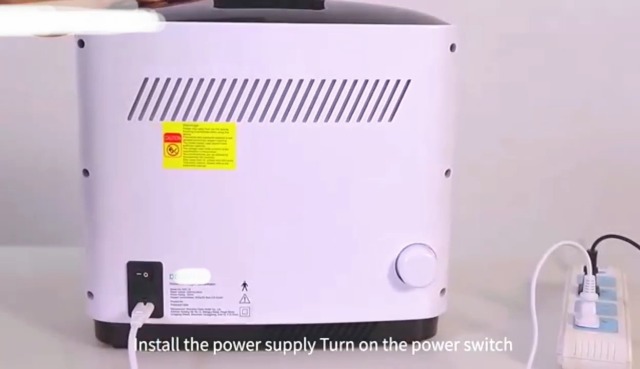
Before you buy a single panel or battery, you need one number: your concentrator’s continuous wattage at your prescribed flow rate. This varies dramatically by model and type.
Stationary (Home) Concentrators
Off-Grid Insider
Get off-grid guides & gear picks in your inbox — free
These are the workhorses — they deliver 5-10 LPM (liters per minute) of continuous flow oxygen. They also draw the most power:
- DeVilbiss 5-Liter (525DS): ~315W at 5 LPM
- Invacare Perfecto2: ~350W at 5 LPM
- Respironics EverFlo: ~350W at 5 LPM
- DeVilbiss 10-Liter: ~600W at 10 LPM
Portable Oxygen Concentrators (POCs)
These use pulse-dose delivery (oxygen only on inhale) and draw far less power — but they’re not suitable for everyone, especially during sleep:
- Inogen One G5: ~40W
- Caire FreeStyle Comfort: ~40W
- Inogen Rove 6: ~48W
Critical point: If your prescription calls for continuous flow (common with higher flow rates or sleep use), a portable unit won’t cut it. Confirm with your pulmonologist before planning your power system around a POC.
Calculate Your Daily Energy Need
Multiply your concentrator’s wattage by 24 hours. For a typical 350W stationary unit:
350W × 24 hours = 8,400 Wh (8.4 kWh) per day
That’s just the concentrator. Add 15% for inverter inefficiency losses:
8.4 kWh × 1.15 = 9.66 kWh per day
This is your baseline. Everything else — lights, fridge, phone charging — stacks on top.
Sizing Your Solar Panel Array
Your panel array needs to produce that 9.66 kWh daily, but solar panels only produce at full capacity during peak sun hours (PSH). This varies by location:
| Region | Average Peak Sun Hours |
|---|---|
| Desert Southwest (AZ, NM) | 6-7 |
| Southeast (GA, FL) | 4.5-5.5 |
| Midwest (OH, IN) | 3.5-4.5 |
| Pacific Northwest (OR, WA) | 3-4 |
Formula: Daily kWh needed ÷ Peak Sun Hours = Required array size in kW
For the Southeast at 5 PSH:
9.66 kWh ÷ 5 = 1.93 kW array
But you need a weather margin. We recommend sizing 1.5× to account for cloudy stretches:
1.93 kW × 1.5 = ~2.9 kW (round to 3 kW)
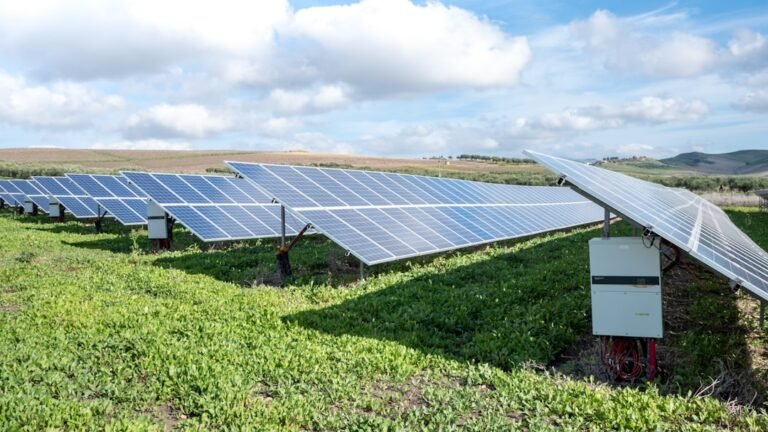
That’s roughly seven to eight 400W panels or ten 300W panels. Monocrystalline panels from Renogy, Rich Solar, or BougeRV are solid choices for off-grid medical setups.
Renogy 400W Monocrystalline Solar Panels
Sizing Your Battery Bank
Your battery bank needs to carry the concentrator through the night and through consecutive cloudy days. For a medical load, we recommend a minimum of two days of autonomy — meaning the batteries alone can run your concentrator for 48 hours with zero solar input.
9.66 kWh × 2 days = 19.32 kWh usable capacity
Lithium Iron Phosphate (LiFePO4) Is the Only Serious Option
Lead-acid batteries should only be discharged to 50%, which means you’d need double the rated capacity. LiFePO4 batteries can safely discharge to 80-90%, last 4,000-6,000 cycles, and don’t off-gas. For a medical application, the math and safety both favor lithium.
Usable capacity at 80% DoD: 19.32 kWh ÷ 0.80 = 24.15 kWh total rated capacity
Popular off-grid battery options:
- EG4 LifePower4 server rack batteries (5.12 kWh each): You’d need five units — a common and well-supported setup
- SOK 206Ah 12V LiFePO4: Stackable, with solid BMS and community reputation
- Ampere Time / LiTime 200Ah 12V: Budget-friendlier option, good for modular builds
EG4 LifePower4 Lithium Battery
LiTime 200Ah LiFePO4 Battery 12V
Your Inverter: Pure Sine Wave, No Exceptions

Oxygen concentrators contain compressors and sensitive electronics. A modified sine wave inverter will damage or destroy them. You need a pure sine wave inverter — period.
Sizing the Inverter

Your concentrator’s startup surge can be 2-3× its running wattage. A 350W concentrator may surge to 900-1,050W on startup. Size your inverter to handle that:
- Minimum for a single 5L concentrator: 2,000W pure sine wave inverter
- If running other loads simultaneously: 3,000W+
Look for inverters with automatic transfer switching if you’re incorporating a generator backup. The Victron MultiPlus 3000 and Aims Power 3000W are both well-regarded in off-grid medical setups.
Victron MultiPlus 3000VA Pure Sine Wave Inverter
Build In Redundancy — Your Life Depends On It

A single-point-of-failure system is not acceptable for life-support equipment. Here’s what a properly redundant off-grid oxygen power setup looks like:
Layer 1: Solar + Battery (Primary)
Your main system as sized above. Install a battery monitor (Victron BMV-712 or similar) and set low-voltage alarms well above your minimum threshold.
Layer 2: Generator with Auto-Start
A propane or dual-fuel generator with automatic start capability kicks in when battery voltage drops below a set point. The Champion 4375W Dual Fuel with a remote start kit is a popular choice. Keep a minimum of two weeks of fuel on hand.
Champion 4375W Dual Fuel Generator
Layer 3: Portable Oxygen Tanks

Keep a 48-72 hour supply of compressed oxygen tanks as your absolute last resort. Coordinate with your oxygen supplier for delivery schedules and emergency refills. This is non-negotiable — no electrical system is 100% failure-proof.
Layer 4: Battery-Powered POC for Mobility
Even if your prescription is continuous flow, discuss a portable pulse-dose unit with your doctor for short-term backup during system maintenance or evacuation scenarios.
Common Mistakes
Using a modified sine wave inverter. This is the most common and most expensive mistake. The compressor in a stationary concentrator needs clean AC power. Modified sine wave causes overheating, erratic operation, and premature failure. Some concentrators won’t even turn on. Always confirm pure sine wave.
Sizing batteries for one night only. One calm, sunny day followed by one clear night is the best-case scenario. Weather systems can park over your area for three to five days. Two days of autonomy is the minimum; three is better if your budget allows.
No generator backup. Solar-plus-battery alone is not sufficient reliability for life support. Even the best-designed systems can experience inverter failure, charge controller issues, or a week of heavy overcast. A generator bridges the gap.
Ignoring altitude and temperature. Concentrator power draw increases at higher altitudes, and battery capacity drops in cold temperatures. If you’re above 5,000 feet or in a climate with sub-freezing winters, add 20% to both your solar and battery sizing calculations.
Our Recommendations
Best All-in-One Power Station for Backup Use

EcoFlow Delta Pro Ultra — 6 kWh expandable to 90 kWh, pure sine wave output, solar input up to 5,600W. Not a primary system for 24/7 concentrator use at the base unit size, but excellent as a secondary backup or for portable concentrators. Smart app monitoring alerts you to low battery.
EcoFlow Delta Pro Ultra Power Station
Best Component System for Full-Time Use
Victron EasySolar-II with EG4 batteries — The Victron ecosystem (SmartSolar MPPT charge controller, MultiPlus inverter, Cerbo GX monitoring) is the gold standard for off-grid medical-grade power. Pair with EG4 LifePower4 server rack batteries for a system you can monitor remotely and that auto-starts your generator when needed.
Best Budget-Friendly Entry Point
Rich Solar 400W panels + SOK 206Ah batteries + Aims Power 3000W inverter — If the Victron ecosystem is out of budget, this combination gets strong marks from the off-grid community. You lose some of the smart monitoring features, but the core power delivery is reliable and properly sized.
FAQ
Can I run an oxygen concentrator on a portable power station?
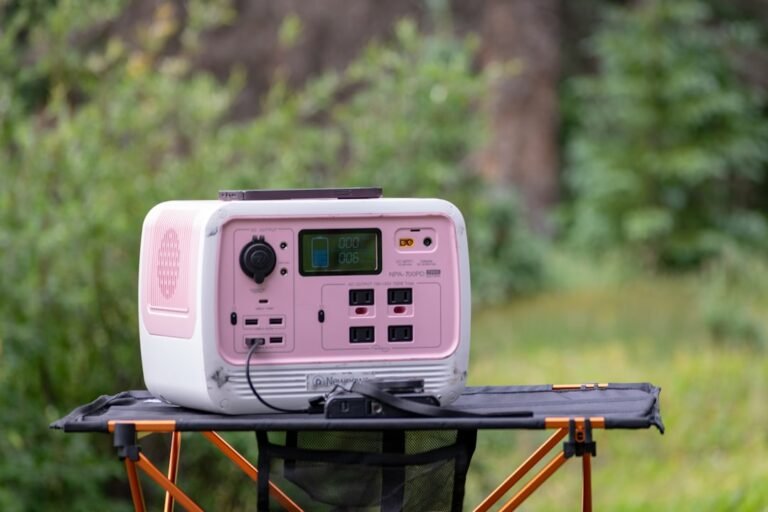
For portable (pulse-dose) concentrators drawing 40-50W, yes — a quality power station like the EcoFlow Delta 2 or Bluetti AC200MAX can run one for 10-20+ hours on a charge. For stationary concentrators drawing 300-600W, portable power stations are backup devices only, not a 24/7 solution. The battery capacity is too small.
How many solar panels do I need just for an oxygen concentrator?
For a typical 350W stationary concentrator running 24/7 in a location with 5 peak sun hours: approximately 3 kW of panels (eight 400W panels) when you factor in inverter losses and a weather margin. Fewer panels in the Southwest, more in the Pacific Northwest.
What happens to my concentrator during a cloudy week?
This is exactly why redundancy matters. Your battery bank should carry you through two days minimum, and your generator should auto-start before batteries reach critical levels. If you’ve sized correctly and maintain fuel reserves, a cloudy week is a non-event — your generator picks up the slack while solar trickle-charges what it can.
Do I need to notify my power company or county about a medical off-grid setup?
If you’re fully off-grid, there’s no utility to notify — but you should register with your local emergency services so they know your address has a medically dependent occupant. Some states also have programs for medical-priority generator fuel delivery during emergencies. Contact your county emergency management office.
Is it safe to run an oxygen concentrator and a generator in the same room?
Absolutely not. Generators produce carbon monoxide and must be operated outdoors, at least 20 feet from any window, door, or vent. Your generator should charge your battery bank, and your inverter (inside, in a ventilated space) supplies clean power to the concentrator. Never run a generator in any enclosed or semi-enclosed space.