5 Best Off-Grid Solar Systems 2026
Choosing your first off-grid solar power system feels overwhelming — hundreds of kits, conflicting specs, and marketing that makes everything sound perfect. Most beginners either overspend on capacity they don’t need or buy a cheap kit that can’t run anything useful. We’ve spent weeks comparing specs, digging through verified buyer feedback, and cross-referencing manufacturer data to find the beginner solar system off grid setups that actually deliver.
Our top pick: Renogy 400W Solar Kit — best all-around system for cabin and shed installs.
Best portable setup: Bluetti AC200P with PV200 — plug-and-play, no wiring knowledge needed.
Best budget: ECO-WORTHY 400W Solar Panel Kit with Lithium Battery — solid entry point under $800.
Our Picks


Renogy 400W Solar Kit
This is the kit we point most beginners toward, and it’s not close. Renogy includes the panels, an MPPT charge controller, mounting hardware, and wiring — everything except the battery, which lets you choose your own lithium or AGM bank based on budget.
Who it’s for: First-time builders setting up a cabin, shed, or small off-grid home who want a real, expandable system.
Pros:
– MPPT controller included (Rover 40A) — roughly 15-25% more efficient than PWM controllers bundled with cheaper kits
– Expandable up to 800W on the same controller, so you’re not replacing gear as your needs grow
– Massive community support — Renogy’s forums and YouTube install guides make troubleshooting easy
Cons:
– Battery sold separately adds $400-$1,000+ depending on chemistry and capacity
– Monocrystalline panels are 65×39 inches each — you need real roof or ground-mount space for four panels
Bluetti AC200P with PV200
Off-Grid Insider
Get off-grid guides & gear picks in your inbox — free
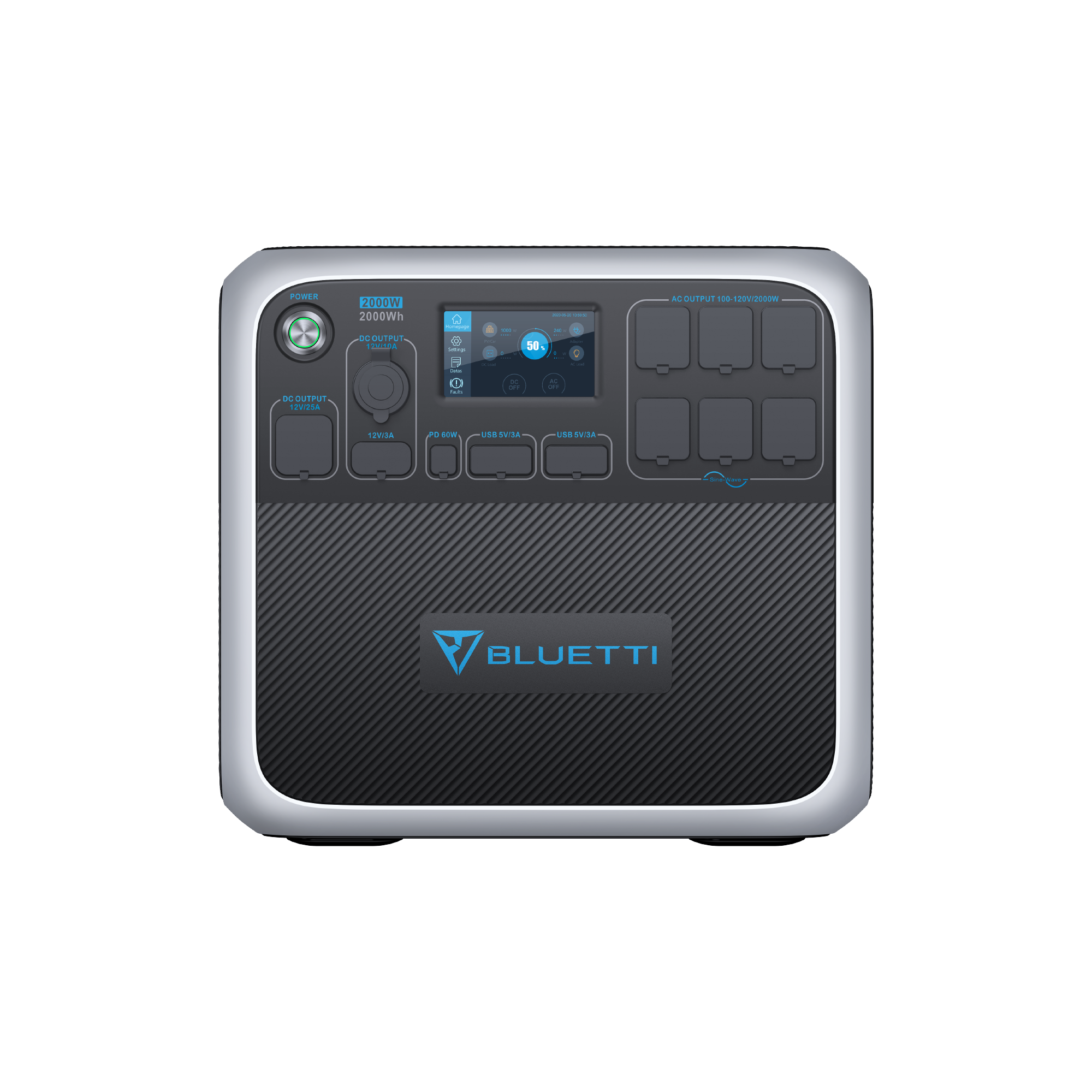
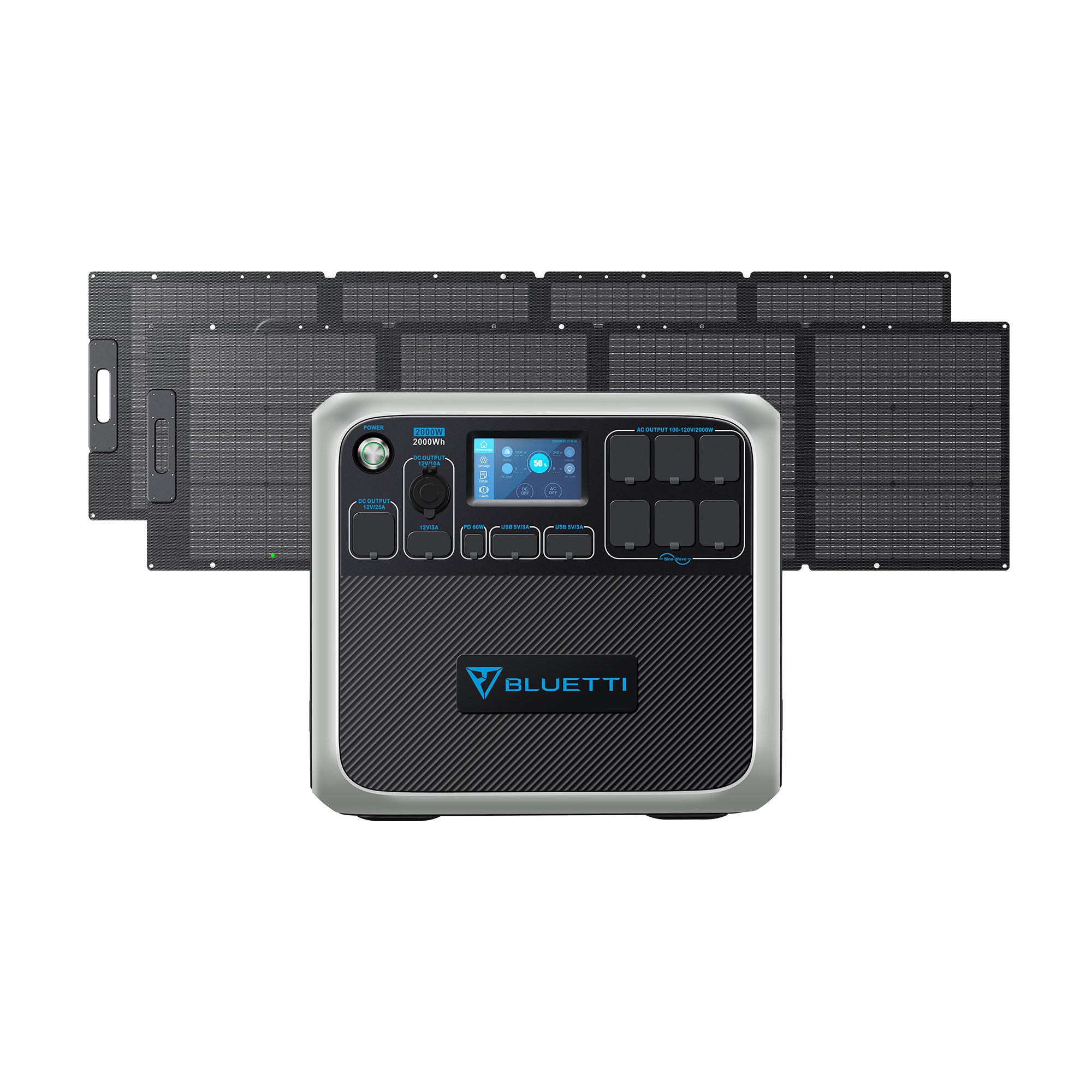
If wiring a charge controller to a battery bank sounds like a nightmare, this is your answer. The AC200P is a 2,000Wh portable power station with a built-in inverter, and the PV200 panel folds out and connects with a single cable. Zero electrical knowledge required.
Who it’s for: Beginners who want off-grid power now without learning electrical systems — great for van life, camping, or emergency backup.
Pros:
– True plug-and-play: unfold panel, plug in one cable, done
– 2,000W pure sine wave inverter runs full-size appliances including a small fridge, CPAP, or power tools
– LiFePO4 battery rated for 3,500+ charge cycles — this thing lasts years
Cons:
– At roughly $1,800 for the station plus panel, you’re paying a heavy premium for convenience
– 200W of solar input is slow — expect 8-10 hours of direct sun to fully charge from zero


ECO-WORTHY 400W Solar Panel Kit with Lithium Battery
ECO-WORTHY undercuts nearly everyone on price while still shipping a complete system — panels, PWM charge controller, a 100Ah lithium battery, and an inverter. For a beginner solar system off grid where budget is the primary constraint, this is the one.
Who it’s for: Budget-conscious beginners who want a complete, ready-to-install kit without sourcing individual components.
Pros:
– Everything included — panels, controller, battery, 1,100W inverter, cables, and mounting brackets
– Total system cost typically under $800, which is hard to beat for 400W with lithium storage
– 100Ah LiFePO4 battery is solid for lights, phone charging, a laptop, and a small 12V fridge
Cons:
– PWM charge controller is less efficient than MPPT — you lose 15-20% of potential harvest compared to Renogy’s kit
– Inverter is modified sine wave, not pure sine — some sensitive electronics may not run cleanly
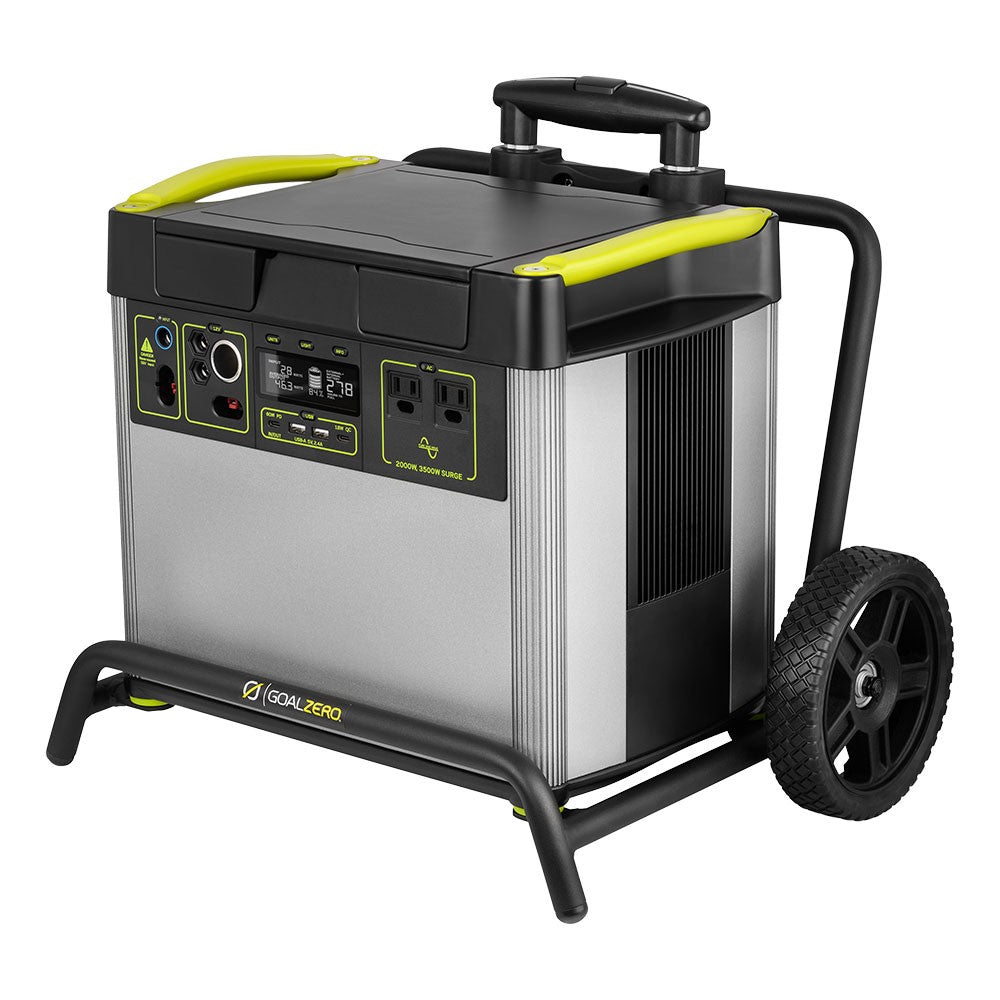
Goal Zero Yeti 3000X
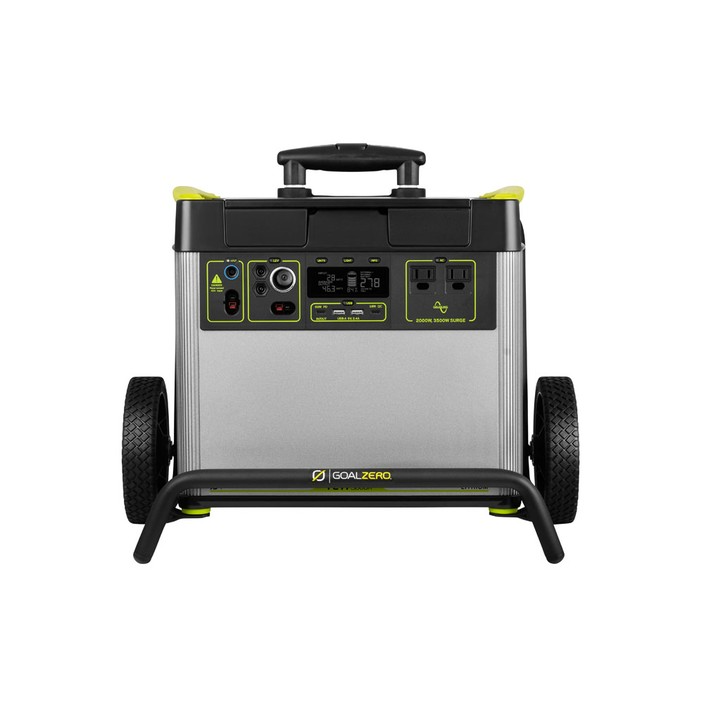
Goal Zero built the premium end of the portable solar generator market, and the Yeti 3000X is their flagship workhorse. Pair it with the Boulder 200 panel and you’ve got a premium, ultra-reliable system with the best app ecosystem in the space.
Who it’s for: Beginners who value polish, reliability, and brand support over raw value — or anyone already in the Goal Zero ecosystem.
Pros:
– Outstanding build quality and a useful smartphone app for monitoring charge state, output, and usage history
– 2,982Wh capacity with a 2,000W inverter handles most off-grid essentials
– Chainable with additional Yeti batteries for expansion without rewiring
Cons:
– Premium pricing — expect $2,500+ for the station and panel combo
– Proprietary ecosystem means you’re locked into Goal Zero panels for optimal charging speeds


Jackery Explorer 1000 Pro
The Explorer 1000 Pro hits a sweet spot between portability and capacity that makes it a favorite among van lifers and weekend off-gridders. At 25.4 pounds, it’s one of the lightest 1,000Wh stations available, and it charges from the SolarSaga 200 in about 5.5 hours of good sun.
Who it’s for: Mobile off-gridders — van dwellers, RV travelers, and weekend cabin users who move their power system frequently.
Pros:
– 25.4 lbs with a 1,002Wh capacity — best weight-to-energy ratio in its class
– Quiet operation with no fan noise under light loads
– 1,000W pure sine wave output handles most small appliances cleanly
Cons:
– 1,000Wh isn’t enough for a full-time off-grid home — this is a supplemental or mobile system
– Single SolarSaga 200 panel costs nearly as much as the station itself


Rich Solar 400W 12V Panel Kit
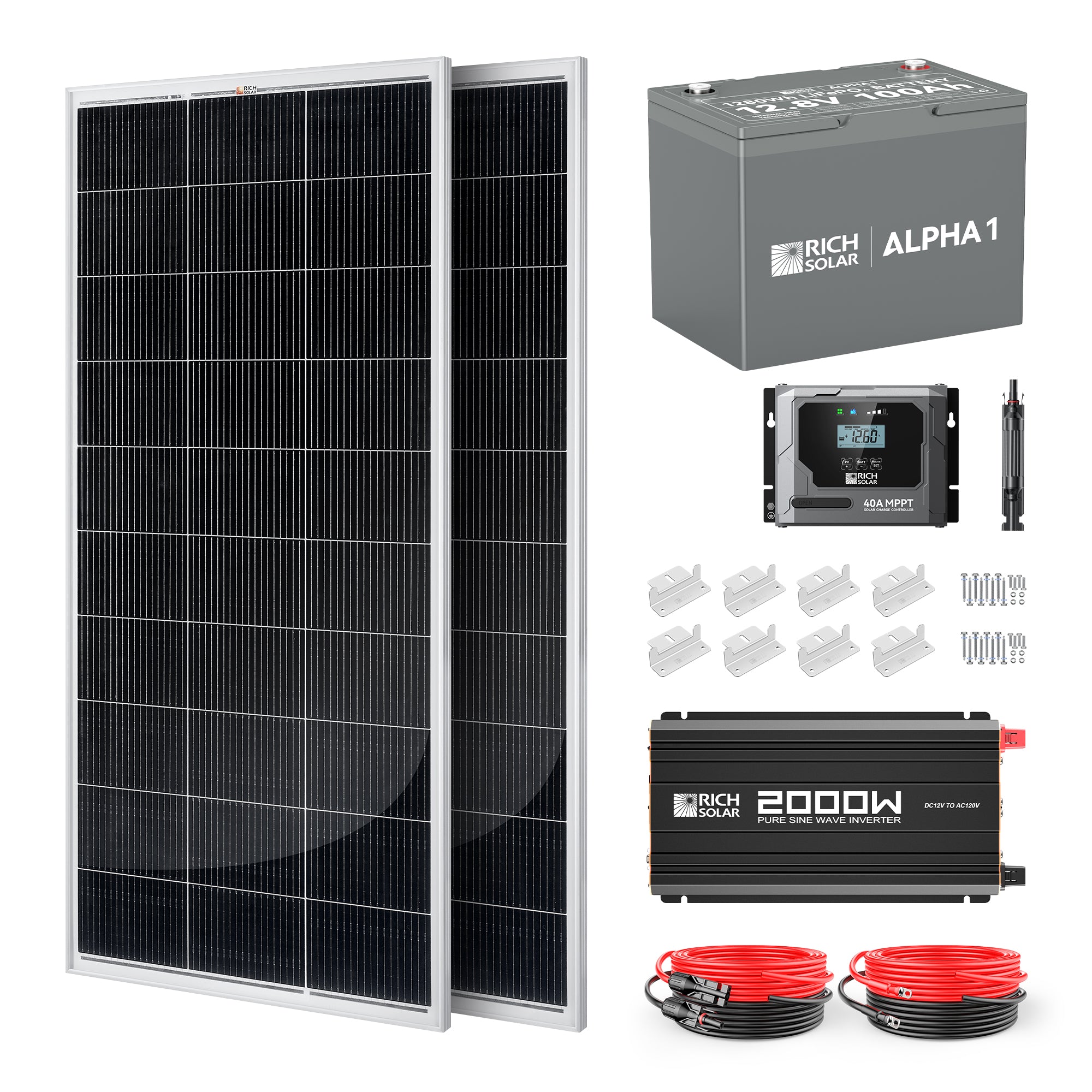
Rich Solar flies under the radar, but their 400W kit offers excellent panel efficiency (over 21% cell efficiency) at a lower price point than Renogy. You get four 100W monocrystalline panels, a 30A PWM controller, and all necessary cabling and connectors.
Who it’s for: DIY-minded beginners who already have a battery or want to choose their own — and who want to save $50-$100 over Renogy’s panels.
Pros:
– High-efficiency monocrystalline cells deliver strong output even in partial shade conditions
– Panels use standard MC4 connectors, compatible with virtually any charge controller or battery setup
– Competitive pricing for the panel wattage — often $50-$100 less than comparable Renogy kits
Cons:
– PWM controller included is basic — most serious builders will want to upgrade to MPPT separately
– Less community documentation and fewer install guides compared to Renogy


BougeRV 200W Portable Solar Kit with 30A Controller

For beginners who just need to power the basics — LED lights, phone charging, a radio, maybe a small fan — 200W is plenty and keeps costs minimal. BougeRV’s kit is a clean entry point with two 100W panels, a 30A PWM controller, and mounting hardware.
Who it’s for: Absolute beginners with minimal power needs — a small shed, a hunting cabin, or a first experiment with solar before scaling up.
Pros:
– Total cost under $250 makes this the cheapest way to get real solar power running
– Two compact 100W panels are manageable for a solo installer — each weighs about 15 lbs
– Good starter kit for learning the basics of solar wiring before committing to a larger system
Cons:
– 200W is limited — don’t expect to run a fridge or anything with a compressor
– No battery or inverter included, so total system cost depends heavily on what you pair it with
How We Chose
We evaluated over 30 solar kits and portable power stations marketed to beginners, cross-referencing manufacturer specifications with verified buyer reviews on Amazon, Reddit communities like r/OffGrid and r/SolarDIY, and independent testing data where available. We weighted four factors most heavily: completeness of the kit (how much you need to buy separately), real-world reliability based on owner reports after 6+ months of use, expandability for growing power needs, and total cost per usable watt-hour. We excluded any product with fewer than 200 verified reviews or a pattern of reports about failed charge controllers or swelling batteries.
Buying Guide: What Actually Matters for Your First Off-Grid Solar System
System Size: How Many Watts Do You Actually Need?
Start by listing every device you’ll run and how many hours per day. A typical small cabin running LED lights, phone charging, a laptop, and a 12V fridge needs roughly 200-400W of panels and 100-200Ah of lithium battery storage. Don’t overbuy — you can always add panels later if your charge controller supports it.
Battery Chemistry: Lithium vs. Lead-Acid
Lithium iron phosphate (LiFePO4) costs more upfront but lasts 3,000-5,000 cycles versus 300-500 for lead-acid. Over a five-year span, lithium is actually cheaper per cycle. For beginners, we strongly recommend LiFePO4 — it’s lighter, maintenance-free, and you can discharge to 80-90% depth without damage, versus only 50% for lead-acid.
Charge Controller: MPPT vs. PWM
MPPT (Maximum Power Point Tracking) controllers cost $80-$200 more than PWM but harvest 15-25% more energy from the same panels, especially in cloudy conditions or when panels are cold. If your budget allows, always choose MPPT. If you’re running a small 200W system and every dollar counts, PWM works fine — just know you’re leaving power on the table.
Expandability
This is where beginners get burned most often. A kit with a 10A PWM controller maxes out at about 160W of panels — you can’t grow without replacing the controller entirely. Look for kits with controllers rated for at least double your starting panel wattage, or buy a standalone MPPT controller rated for your eventual target system size.
FAQ
How much does a beginner off-grid solar system cost?
A basic beginner solar system off grid setup runs between $500 and $2,500 depending on capacity and whether you choose a portable power station or a panel-and-battery kit. Budget kits like ECO-WORTHY come in under $800 complete, while premium plug-and-play stations like the Bluetti AC200P with panels run closer to $2,000.
Can a 400W solar system run a refrigerator off-grid?
Yes — a 400W panel array paired with a 100Ah or larger lithium battery can run a standard 12V off-grid refrigerator (like a Dometic or Engel) that draws 30-50W continuously. You’ll produce roughly 1,200-1,600Wh per day in good sun, which comfortably covers the fridge plus lights and small electronics.
What is the best beginner solar system for a cabin off-grid?
For a permanent cabin install, we recommend the Renogy 400W Complete Solar Kit paired with a 100Ah LiFePO4 battery. It covers essential loads, uses an MPPT controller for maximum efficiency, and expands to 800W when you need more power — all without replacing any components.
Do I need an electrician to install an off-grid solar system?
Not for most beginner kits. Systems under 800W at 12V or 24V are low-voltage and don’t require permits or licensed electricians in most jurisdictions. Portable power stations need no installation at all. That said, if you’re mounting panels on a roof or wiring into a cabin’s existing electrical panel, consulting a qualified installer is smart.
How long do off-grid solar panels last?
Most monocrystalline solar panels are warranted for 25 years and typically degrade at only 0.5-0.7% per year. The panels will far outlast every other component in your system. Batteries last 5-15 years depending on chemistry, and charge controllers and inverters typically last 10-15 years.
The Verdict
For most beginners building their first off-grid solar setup, the Renogy 400W Solar Kit is the system to buy. It gives you efficient MPPT charging, room to expand, and a massive community of other beginners who’ve documented every step of the install process. If you’d rather skip the wiring entirely and just plug in, the Bluetti AC200P with PV200 gets you running in minutes — you’ll pay more, but the convenience is real. And if budget is everything, the ECO-WORTHY 400W Kit delivers a complete system for under $800 that works.