Off-Grid Lighting That Lasts Years (Complete Guide)
Finding reliable lighting when you’re completely off the electrical grid is one of those problems that sounds simple until you’re standing in a dark cabin with a dead flashlight. Between underpowered solar gadgets that barely light a closet, oil lamps that eat through fuel, and cheap LEDs that die after one season, most off-grid folks waste real money before landing on what actually works. We dug into specs, manufacturer data, and hundreds of verified buyer reports to find the solar LED lighting systems homestead owners actually keep using — and a couple of trusted non-solar backups for when the sun doesn’t cooperate.
Our top pick: Goal Zero Lighthouse 600 — bright, solar-rechargeable, built to last.
Best budget: MPOWERD Luci Base Light — inflatable, waterproof, under $25.
Best security light: Aootek 182 LED Solar Motion Sensor Light — wide-angle motion sensor LED solar lights off-grid owners swear by.
Best fuel backup: Dietz #76 Original Oil Lantern — the classic that still earns its spot.
Our Picks
Goal Zero Lighthouse 600
The Lighthouse 600 puts out up to 600 lumens on high — enough to light an entire cabin room — and charges via its integrated solar panel, USB, or Goal Zero’s own solar panels. The built-in hand crank gives you emergency backup when everything else is dead, which is the kind of redundancy that actually matters off-grid.
Who it’s for: Primary cabin or homestead lighting where you need real room-filling brightness every night.
Pros:
– 600 lumens on high with a dimmer dial for fine-tuning; 48-hour runtime on low (at ~70 lumens)
– Charges from built-in solar panel, USB-C, or compatible Goal Zero panels — three paths to power
– Integrated hand crank generates usable light in minutes with no sun and no stored charge
Cons:
– Built-in solar panel is small — full solar charge takes 20+ hours of direct sun without an external panel
– At roughly $80, it’s a premium price point compared to basic solar lanterns
MPOWERD Luci Base Light
Off-Grid Insider
Get off-grid guides & gear picks in your inbox — free

This is the solar lantern that keeps showing up in off-grid forums for a reason: it’s dirt cheap, packs flat, weighs almost nothing, and puts out a legitimate 360-degree spread at up to 360 lumens. The integrated solar panel charges it in about 7 hours of direct sun, and the thing is IP67 waterproof — submersible, not just splash-proof.
Who it’s for: Budget-conscious homesteaders who want reliable task lighting without fussing over batteries or fuel.
Pros:
– Collapses to one inch flat for dead-simple storage and transport
– IP67 waterproof rating handles rain, mud, and accidental dunking
– Up to 50 hours of runtime on the lowest setting; no consumables ever
Cons:
– 360 lumens max isn’t enough for whole-room illumination in a larger space
– The inflatable design isn’t as durable as hard-shell lanterns if you’re rough on gear
Aootek 182 LED Solar Motion Sensor Light
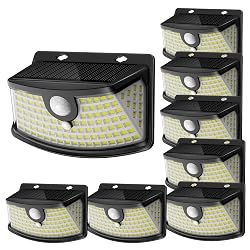
If you need exterior security and pathway lighting that runs itself, these are the workhorses. With 182 LEDs and a 270-degree detection angle, they throw a wide flood when triggered and sip power the rest of the time. These motion sensor LED solar lights off-grid properties use are typically sold in multi-packs, making it cheap to cover a barn, coop entrance, and back door in one order.
Who it’s for: Anyone who needs hands-free outdoor security and pathway lighting around outbuildings, driveways, or animal enclosures.
Pros:
– 270-degree wide-angle motion detection covers large areas without multiple units
– Three modes: motion-only, dim-to-bright on motion, and always-on — flexible for different use cases
– IP65 weatherproof and completely self-contained; no wiring, no maintenance beyond occasional panel cleaning
Cons:
– Motion sensor range (about 26 feet) may not cover very large open areas
– Battery capacity is modest — consecutive nights of heavy cloud cover can drain them before dawn
BioLite AlpenGlow 500

BioLite built this one for ambiance as much as function, and it delivers on both. At 500 lumens on high with a warm color temperature option, it’s one of the better indoor solar-compatible lanterns for people who actually live in their off-grid space and don’t want to feel like they’re camping every night. It charges via USB-C, which pairs cleanly with any small solar panel setup you already run.
Who it’s for: Full-time off-gridders who want warm, adjustable indoor lighting that doesn’t feel like a survival tool.
Pros:
– 500 lumens with warm/cool color modes and a smooth dimmer for pleasant indoor light
– USB-C charging plays well with modern portable solar panels and power stations
– Solid 200-hour runtime on low; sturdy build quality with a hang loop and flat base
Cons:
– No built-in solar panel — requires an external USB power source or solar panel
– At around $70, it’s pricey for a single-room lantern if you’re outfitting a whole homestead
Dietz #76 Original Oil Burning Lantern

This is where the gas lamps vs solar lights conversation gets real. The Dietz #76 has been in continuous production for over a century, burns standard lamp oil or kerosene for roughly 11 hours per fill, and works when there’s been zero sun for a week straight. It produces about 7 candlepower — not bright by modern standards, but enough for close task work and navigation. Every serious off-grid setup should have at least one fuel-based backup, and this is the most proven option at under $20.
Who it’s for: Anyone who wants a dead-reliable, no-battery, no-sun backup light — or a primary light source where simplicity matters most.
Pros:
– No batteries, no solar, no charging — fill it with lamp oil and light it, period
– 11+ hours burn time per fill on roughly 1 oz of fuel per hour; incredibly cheap to operate
– Bombproof simplicity — replacement wicks cost pennies and the lantern itself is nearly indestructible
Cons:
– 7 candlepower is dim compared to any modern LED; not suitable for whole-room illumination
– Open flame means real fire risk, soot buildup, and the need for ventilation — not ideal in tight spaces
UCO Candlelier Deluxe Candle Lantern

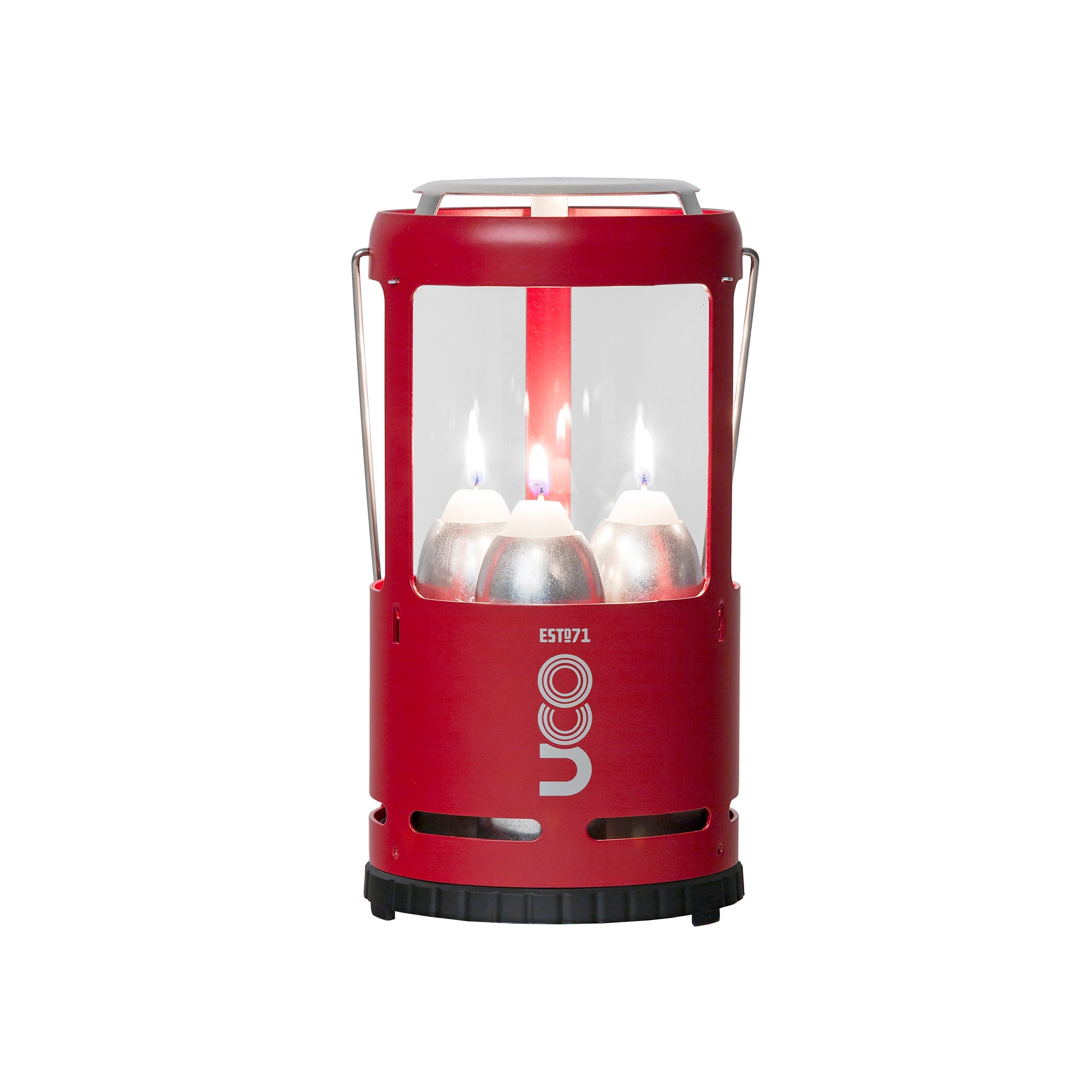
Another strong entry in the non-electric backup category. The Candlelier burns three candles simultaneously, producing meaningful warmth alongside about 18 lumens of light. It’s spring-loaded to push candles up as they burn, uses UCO’s long-burn 9-hour candles, and collapses for storage. For small cabins and emergency kits, it’s a zero-infrastructure light source with no expiration date on its fuel.
Who it’s for: Minimalists and preppers who want a compact, no-tech backup that doubles as a small heat source.
Pros:
– Three-candle design produces more light and noticeable warmth compared to single-candle lanterns
– Spring-loaded feed keeps flame height consistent as candles burn down
– Collapses compact; uses standard or specialty long-burn candles — fuel is shelf-stable indefinitely
Cons:
– 18 lumens is functional but dim for anything beyond close-range tasks
– Replacement UCO candles cost more per hour of light than lamp oil in the Dietz
LITOM 120 LED Solar Pathway Lights (4-Pack)

For dedicated outdoor pathway and perimeter lighting, these stake-mounted solar units do their job quietly. Each unit runs 120 LEDs, charges all day, and lights up automatically at dusk. They’re IP67 rated and designed to be installed once and ignored — which is exactly what you want from exterior solar LED lighting systems homestead walkways and garden paths need.
Who it’s for: Homesteaders who want permanent, maintenance-free pathway and perimeter lighting around their property.
Pros:
– Dusk-to-dawn automatic operation with no switches, timers, or wiring to manage
– IP67 waterproof with stainless steel construction holds up across seasons
– Sold in multi-packs, bringing per-unit cost down significantly for whole-property coverage
Cons:
– Fixed stake mount limits placement options — not practical for steps, walls, or elevated surfaces
– Light output is pathway-level, not security-level; won’t illuminate large open areas
How We Chose
We evaluated over 30 off-grid lighting products by cross-referencing manufacturer specifications (lumen output, battery capacity, solar charge times, IP ratings, burn times) with patterns in verified buyer reviews across Amazon, off-grid homesteading forums, and Reddit communities like r/OffGrid and r/preppers. We specifically filtered for products with at least 500 verified reviews and a consistent track record over multiple production years — not just new launches with inflated early ratings. Our focus was on solutions that work as primary or permanent lighting, not emergency-only gadgets. We weighted real-world reliability, total cost of ownership, and how well each product integrates into a broader off-grid system.
Buying Guide: What Actually Matters
Lumen Output vs. Runtime Tradeoff
This is the single most important spec to understand. Every solar lantern and LED light advertises its peak lumens, but peak brightness eats battery fast. What matters for off-grid use is usable brightness at a sustainable runtime. A lantern rated at 600 lumens but only lasting 2 hours on high is less useful than one doing 150 lumens for 20 hours. Look for products that publish runtime at multiple brightness levels, and plan around the medium setting — that’s where you’ll actually live.
Charging Redundancy
Any solar LED lighting systems homestead setups rely on need at least two charging paths. A built-in solar panel is table stakes, but units that also accept USB-C input let you charge from a power station, vehicle, or larger panel array on cloudy days. The Goal Zero Lighthouse 600’s hand crank adds a third path. If a product only charges from its own small integrated panel, it will eventually leave you in the dark during extended overcast weather. Plan for that.
Fuel-Based Backups: The Gas Lamps vs Solar Lights Question

The gas lamps vs solar lights debate isn’t either/or — it’s about layered redundancy. Solar is your daily driver: free fuel, no smoke, no fire risk. But fuel-based lighting (oil lanterns, candle lanterns, propane) is your insurance policy for multi-day cloud cover, winter short days, or panel failure. We recommend at least one fuel-based option per household, stored with a season’s worth of fuel. Lamp oil is shelf-stable for years, cheap, and widely available. That Dietz lantern sitting on a shelf costs you almost nothing until the day you need it.
Weatherproofing and Build Quality
Outdoor solar lights need a minimum IP65 rating to survive real weather. For anything that might get submerged, splashed during storms, or buried in snow, look for IP67. Indoor lanterns are less critical, but off-grid environments are rough on gear — hard plastic housings and metal frames outlast rubberized or inflatable designs if your space gets knocked around. Check whether the solar panel is integrated or exposed, too — an unprotected panel on a pathway light will degrade faster if it collects grime or gets scratched.
FAQ
What is the best off-grid lighting without any electricity?
Solar-rechargeable LED lanterns are the best primary lighting for most off-grid situations. The Goal Zero Lighthouse 600 gives you 600 lumens with solar, USB, and hand-crank charging — it’s our top pick for indoor off-grid lighting that requires zero grid connection.
How do gas lamps compare to solar lights for off-grid use?
Solar lights win on daily convenience — free fuel, no smoke, no fire risk. Gas and oil lamps win on reliability during extended cloudy periods and require zero charging infrastructure. The best off-grid lighting setup uses solar as a daily driver and keeps a fuel-based lantern like the Dietz #76 as a backup.
Do solar motion sensor lights work in winter with less sunlight?
Yes, but with reduced performance. Most motion sensor LED solar lights off-grid owners install will function in winter, but shorter days and lower sun angles mean less charge. Look for models with larger solar panels and position them facing south at an optimal angle. Units like the Aootek 182 LED in motion-only mode conserve power well through darker months.
How many lumens do you need for off-grid cabin lighting?
For a single room, 200–400 lumens provides comfortable general lighting. For task work like reading or cooking, you want at least 300 lumens directed at the work surface. Whole-cabin illumination for an open floor plan typically needs 500+ lumens or multiple distributed light sources.
How long do solar lanterns last before they need replacing?
Quality solar lanterns like the Goal Zero Lighthouse or MPOWERD Luci typically last 3–5 years of regular use before battery degradation noticeably affects runtime. The LEDs themselves are rated for 50,000+ hours. The battery is almost always the first component to fade — some units allow battery replacement, which extends usable life significantly.
Our Verdict
For most off-grid homes, the Goal Zero Lighthouse 600 is the lighting solution we’d grab first — 600 lumens, triple charging paths, and a hand crank for true last-resort power make it the most versatile single lantern you can own. Pair it with a set of Aootek motion sensor lights for hands-free exterior security, a few LITOM pathway lights for the walkways, and a Dietz #76 on the shelf for when the sun disappears for a week, and you’ve got a complete, resilient lighting system with zero grid dependence.