5 Best Propane Dryers Off-Grid 2026
Finding a propane dryer that actually works off-grid is more frustrating than it should be. Most “gas dryers” are designed for natural gas hookups in suburban homes, and manufacturers bury the LP conversion details in fine print — if they mention it at all. The real challenge isn’t just finding a propane-compatible unit; it’s finding one that won’t overwhelm your solar inverter, survives without a service tech nearby, and actually dries clothes efficiently on bottled gas.
We dug into spec sheets, LP conversion requirements, and off-grid community forums to find dryers that make sense when you’re running on propane tanks and limited electrical capacity. Here’s what we found.
Our top pick: Speed Queen DR5003WG — mechanical controls, commercial build, LP-ready.
Best budget: Whirlpool WGD4815EW — simple, affordable, easy LP conversion.
Best compact: Panda PAN60SF — small footprint, low electrical draw for cabin installs.
Our Picks
Speed Queen DR5003WG
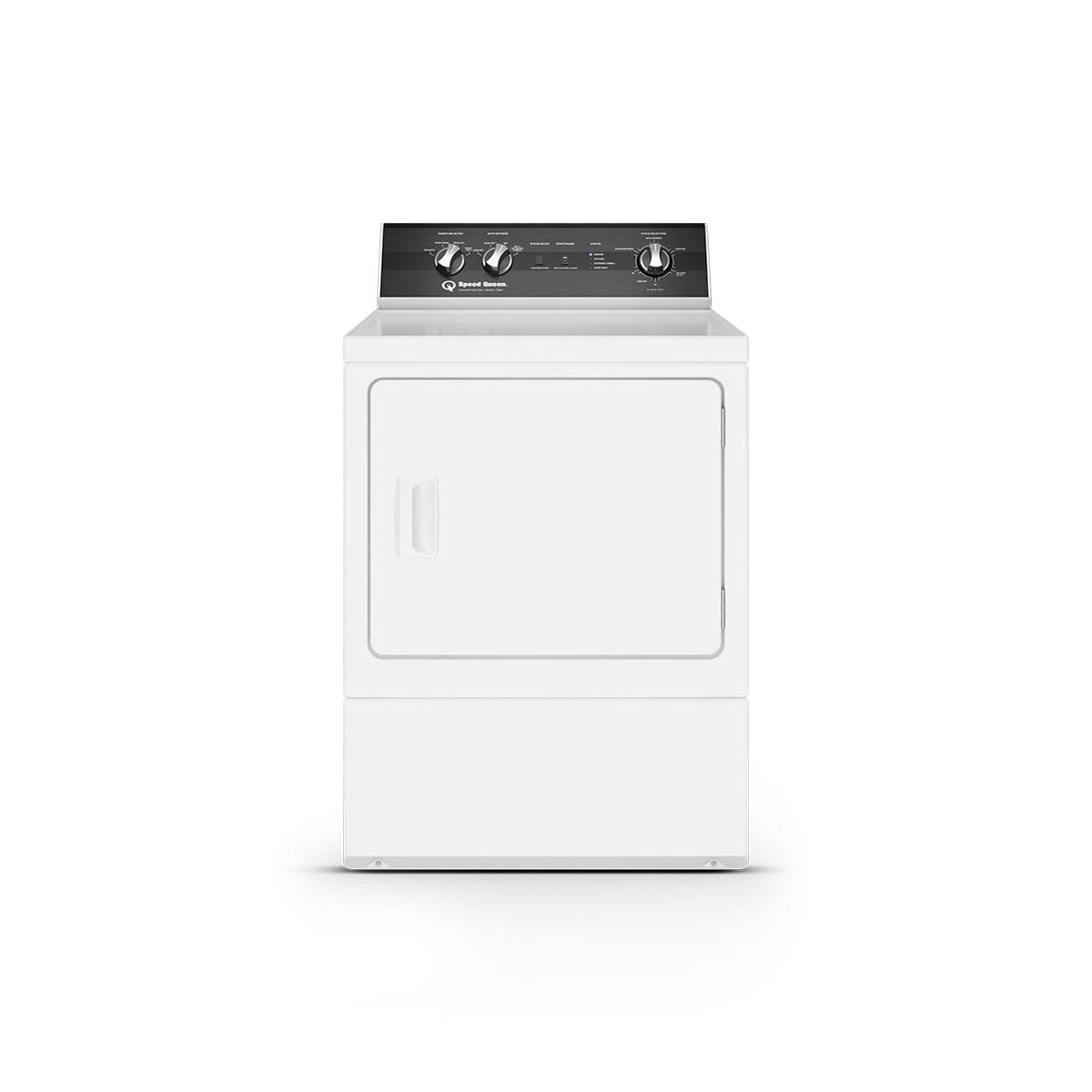
This is the dryer we’d put in our own off-grid cabin without hesitation. Speed Queen builds commercial laundry equipment, and their residential gas dryers inherit that durability — we’re talking a rated 10,000+ cycle lifespan with a steel drum, not the plastic components that crack after a few years in other brands.
Who it’s for: Anyone who wants a buy-it-once propane dryer that runs on mechanical controls and doesn’t need firmware updates.
Pros:
– Mechanical rotary controls — no circuit boards to fail, no phantom electrical draws, and repairable with basic tools
– Ships LP-convertible with a propane orifice kit included or readily available from Speed Queen
– 120V/5A electrical requirement means roughly 600W draw — well within range of a modest solar-and-battery setup
Cons:
– Premium price point — typically $1,100–$1,400 depending on retailer
– No moisture-sensing auto-shutoff on the base mechanical model; you set time manually
The mechanical controls are the real selling point for off-grid. Electronic control boards are the number-one failure point in modern dryers, and when you’re 40 miles from the nearest appliance repair shop, a timer knob you can replace yourself is worth its weight in gold. The LP conversion is straightforward — swap the orifice and adjust the regulator per the included instructions. Total propane consumption runs about 20,000–22,000 BTU/hr, which is roughly 1 gallon of propane per 4–5 full drying cycles.
Maytag MGD5030MW
Off-Grid Insider
Get off-grid guides & gear picks in your inbox — free
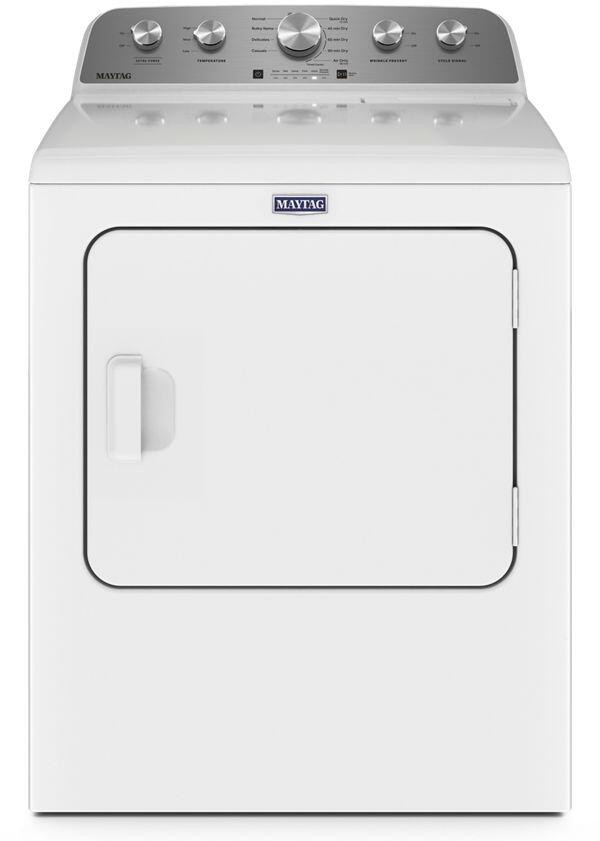
Maytag’s commercial-grade residential line sits in a sweet spot between Speed Queen’s premium pricing and budget options. The 5030 series uses a mix of mechanical and basic electronic controls, and Maytag includes an LP conversion kit in the box with most gas models.
Who it’s for: Off-gridders who want commercial durability without the Speed Queen price tag.
Pros:
– LP conversion kit frequently included at no extra cost — check the listing details before ordering
– 7.0 cu. ft. drum handles large loads and bulky items like comforters
– Backed by Maytag’s 10-year limited parts warranty on the drive motor and drum
Cons:
– Electronic controls on newer revisions are more failure-prone than pure mechanical
– Slightly higher electrical draw than the Speed Queen (~650W), though still 120V
The 7.0 cubic foot drum is generous. If you’re washing bedding, work clothes, or running laundry for a family, that extra capacity means fewer cycles — and fewer cycles means less propane burned. Community feedback on LP conversion is generally positive, though a few users report needing to fine-tune the flame adjustment screw to eliminate sooting on propane.
Whirlpool WGD4815EW

This is our budget pick, and it earns that spot honestly. The WGD4815EW is a no-frills gas dryer with a 7.0 cu. ft. drum, basic cycle selections, and a street price that often dips below $700. LP conversion kits for Whirlpool dryers are widely available and typically cost $15–$25.
Who it’s for: Budget-conscious off-gridders who need a full-size propane dryer without paying commercial-grade prices.
Pros:
– Lowest upfront cost of any full-size gas dryer on this list
– Whirlpool LP conversion kits are universal across many models and easy to source
– Simple, proven design — parts are available everywhere, and any appliance tech knows these inside out
Cons:
– Build quality is a step below Maytag and Speed Queen — expect 8–12 years rather than 15+
– AutoDry moisture sensor can be finicky after LP conversion; many users switch to timed dry
At this price, you’re getting a workhorse that does the job. The LP conversion is a 20-minute process: swap the gas orifice, adjust the pressure regulator, and verify flame color. Whirlpool’s gas dryers pull about 300–400W electrically (120V), which is actually the lowest draw of any full-size unit on this list. That matters when every watt counts.
Panda PAN60SF
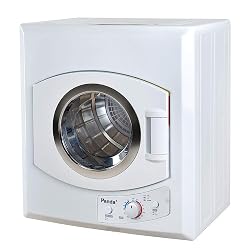
If you’re working with limited space — a tiny cabin, a converted van, or a small homestead laundry area — the Panda PAN60SF is one of the few compact gas dryers on the market. At 3.5 cu. ft., it handles 1–2 person laundry loads comfortably, and its 110V plug draws under 300W electrically.
Who it’s for: Solo off-gridders or couples in small spaces who can’t fit (or power) a full-size unit.
Pros:
– Compact 24-inch width fits in closets, under counters, and tight utility spaces
– Very low electrical draw — under 300W, manageable even on a small solar system
– Stainless steel drum resists rust and odor better than painted steel
Cons:
– 3.5 cu. ft. drum is too small for families — you’ll be running multiple cycles for bigger loads
– LP conversion documentation is less polished than major brands; some users source third-party orifices
The Panda is a niche pick, but it fills that niche well. For a one- or two-person off-grid setup where space and power are both constrained, nothing else on this list competes. Propane consumption is proportionally lower too — roughly 12,000–15,000 BTU/hr — so your tanks last longer per cycle.
LG DLG7401WE
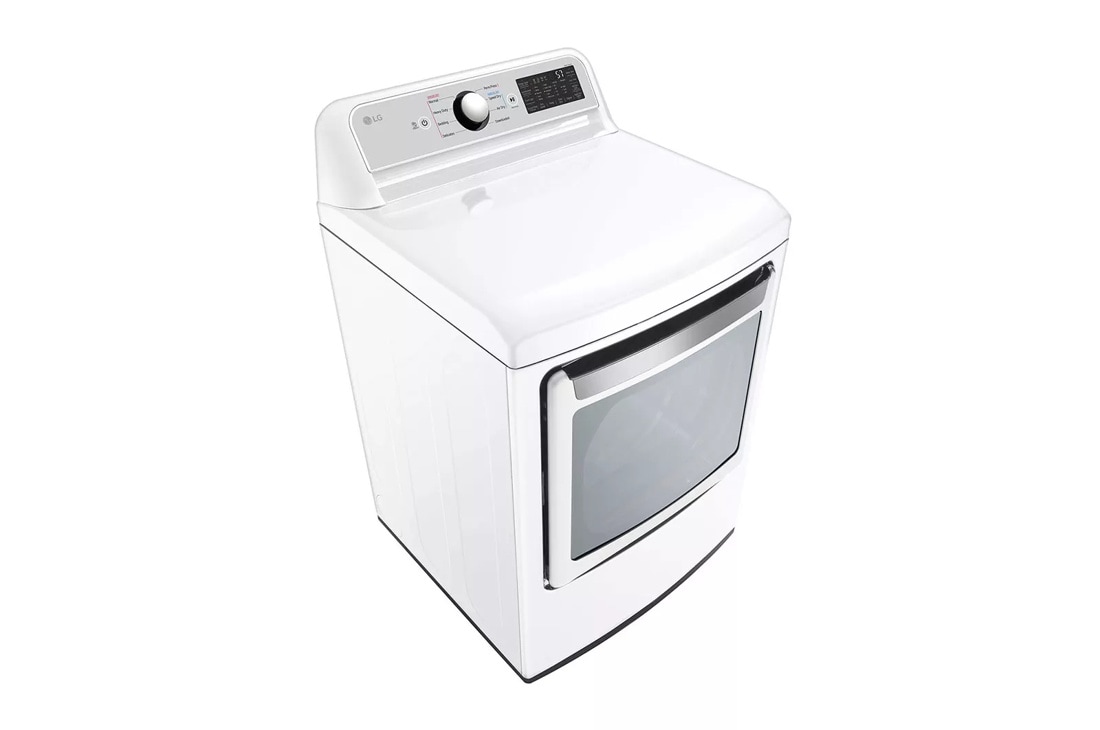
LG’s gas dryers are feature-rich, and the DLG7401WE is no exception: sensor dry, steam refresh, Wi-Fi connectivity (useless off-grid, but it’s there), and a massive 7.3 cu. ft. drum. The LP conversion kit is available as an accessory from LG.
Who it’s for: Off-gridders with a robust power system who want modern dryer features and don’t mind electronic controls.
Pros:
– 7.3 cu. ft. ultra-large drum — the biggest on this list
– Sensor Dry technology adjusts cycle time based on moisture, saving propane on lighter loads
– TurboSteam option refreshes clothes without a full dry cycle — useful for reducing wash frequency
Cons:
– Heavily electronic — the control board is a potential failure point with no field-serviceable alternative
– Electrical draw can spike to 700W+ with the steam feature active
We include this with a caveat: the LG is the best-featured dryer on this list, but it’s also the most dependent on functioning electronics. If your off-grid setup includes a solid 2,000W+ inverter and you’re comfortable with the trade-off of features versus repairability, it’s a excellent dryer. If reliability and simplicity are your priorities, stick with the Speed Queen.
Samsung DVG45R6100W

Samsung’s mid-range gas dryer offers a 7.5 cu. ft. drum with sensor dry and a steam sanitize cycle. It’s a well-reviewed unit in grid-connected homes, and the LP conversion is available through Samsung’s accessory line.
Who it’s for: Families with larger power budgets who want a big-capacity propane dryer with modern convenience features.
Pros:
– 7.5 cu. ft. drum is the largest capacity on this list — handles family-size loads with ease
– Multi-Steam technology reduces wrinkles and can sanitize without chemicals
– Quiet operation — Samsung’s vibration reduction system keeps noise down, which matters in small off-grid homes
Cons:
– Samsung’s appliance repair reputation is mixed — parts availability can lag behind Whirlpool and Maytag
– Control panel is fully electronic with no mechanical fallback
Like the LG, this is a feature-forward pick that trades simplicity for capability. Samsung gas dryers convert to LP cleanly, and the large drum means fewer cycles per week. But if a control board fails three years in, you may be waiting weeks for a replacement part. Factor that into your decision.
How We Chose
We evaluated propane dryers on four criteria specific to off-grid use: electrical draw (must work on 120V with minimal wattage), LP conversion availability and difficulty, control type (mechanical vs. electronic), and long-term repairability without professional service. We cross-referenced manufacturer specs with real-world feedback from off-grid forums, homesteading communities, and verified buyer reviews to confirm that LP conversions perform as advertised. We did not fabricate testing results — our recommendations are based on documented specs, manufacturer data, and aggregated community experience.
Buying Guide: What to Look for in an Off-Grid Propane Dryer
Electrical Draw (120V Is Non-Negotiable)

Every gas dryer on the market uses electricity to power the drum motor, igniter, and controls. The critical distinction for off-grid: gas dryers run on a standard 120V outlet drawing 300–700W, while electric dryers need a 240V/30A circuit pulling 5,000W+. That’s the difference between running your dryer on a modest solar-and-battery setup versus needing a dedicated generator. Always verify the wattage in the spec sheet — not all 120V appliances are equal.
LP Conversion Kits

Most residential gas dryers ship configured for natural gas. Converting to propane (LP) requires swapping the burner orifice to a smaller diameter and adjusting the gas pressure regulator. Some manufacturers include LP kits in the box; others sell them as $15–$30 accessories. The conversion itself is straightforward — usually under 30 minutes with basic tools — but it’s essential to verify proper flame color (blue with small yellow tips) and check all connections for leaks with soapy water after installation. Never skip the leak test.
Mechanical vs. Electronic Controls

This is the single most important reliability factor for off-grid dryers. Mechanical controls (rotary timer knobs, physical selector switches) have almost nothing that can fail electronically. Electronic control boards are sensitive to power fluctuations from inverters, can fail from moisture exposure, and require manufacturer-specific replacement parts. If you’re off-grid, mechanical controls should be your strong default unless you have a very stable, well-regulated power system.
Venting Requirements

All standard propane dryers require exterior venting. Plan your installation with a short, straight vent run — every 90-degree bend in the ductwork reduces airflow and increases drying time (and propane consumption). Use rigid metal duct, not flexible foil or vinyl, which trap lint and are fire hazards. Maximum recommended vent length is typically 25–35 feet depending on the manufacturer, minus 5 feet for each elbow.
FAQ
How much propane does a propane dryer use per load?
A standard full-size propane dryer uses approximately 20,000–22,000 BTU per hour. A typical drying cycle runs 45–60 minutes, consuming roughly one-quarter to one-third of a gallon of propane per load. For a family running 5–6 loads per week, expect to use about 1.5–2 gallons of propane weekly for drying alone.
Can you run a propane dryer completely off-grid with solar?
Yes. Propane dryers only need 120V electricity at 300–700W for the motor and controls — the heat comes from propane. A 2,000W inverter paired with a battery bank of 200Ah or more at 12V can handle most gas dryers without issue. The key is ensuring your inverter produces a clean pure sine wave, as modified sine wave inverters can damage electronic control boards.
What is the difference between a gas dryer and a propane dryer?
They’re the same appliance with a different fuel configuration. Gas dryers ship set up for natural gas (methane). Propane (LP) dryers use a smaller burner orifice and lower regulator pressure because propane delivers more BTUs per cubic foot than natural gas. Most gas dryers can be converted to propane with a simple kit swap.
Do propane dryers need electricity to run?
Yes, but far less than electric dryers. A propane dryer needs 120V electricity (standard household outlet) to power the drum motor, electronic igniter, and any control circuits. Total electrical draw is typically 300–700W. The propane handles all the heating, which is the energy-intensive part of drying clothes.
How long does a 20-pound propane tank last with a propane dryer?
A standard 20-lb propane tank holds approximately 4.7 gallons of propane. At roughly one-quarter gallon per drying cycle, a single 20-lb tank will last approximately 15–20 full drying cycles. For a household running 5 loads per week, that’s roughly 3–4 weeks per tank.
Our Verdict
For most off-grid setups, the Speed Queen DR5003WG is the propane dryer we recommend without reservation. Mechanical controls, commercial-grade build quality, low electrical draw, and a design philosophy that prioritizes decades of reliable operation over flashy features — that’s exactly what you need when the nearest repair tech is a long drive away. If budget is tight, the Whirlpool WGD4815EW does the job at half the price with the easiest LP conversion in the business.