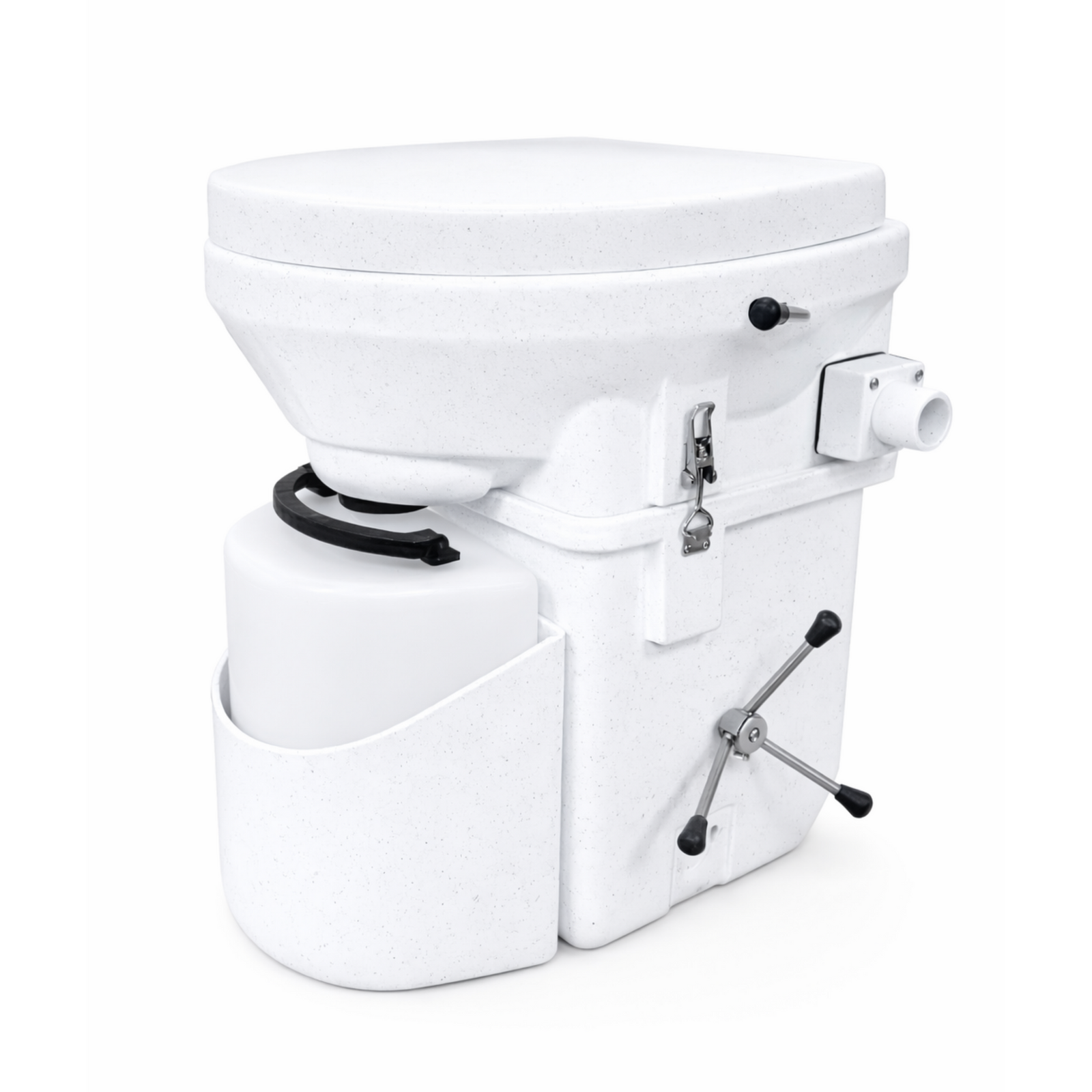
Nature’s Head Toilet: Worth It in 2026?
Nature’s Head Composting Toilet Review — 2025: The Off-Grid Standard Bearer (With Real Caveats)
If you’re building a tiny home, fitting out a van, living aboard a boat, or developing an off-grid cabin, the Nature’s Head composting toilet will appear on almost every shortlist you find. It’s been the dominant self-contained composting toilet for the better part of a decade — not by accident, and not without competition. What makes it worth its nearly $1,000 price tag, where it struggles, and whether it’s the right fit for your specific situation: that’s what this review covers, drawing on years of real-world owner reports from live-aboards, full-time RV travelers, tiny house families, and desert homesteaders.
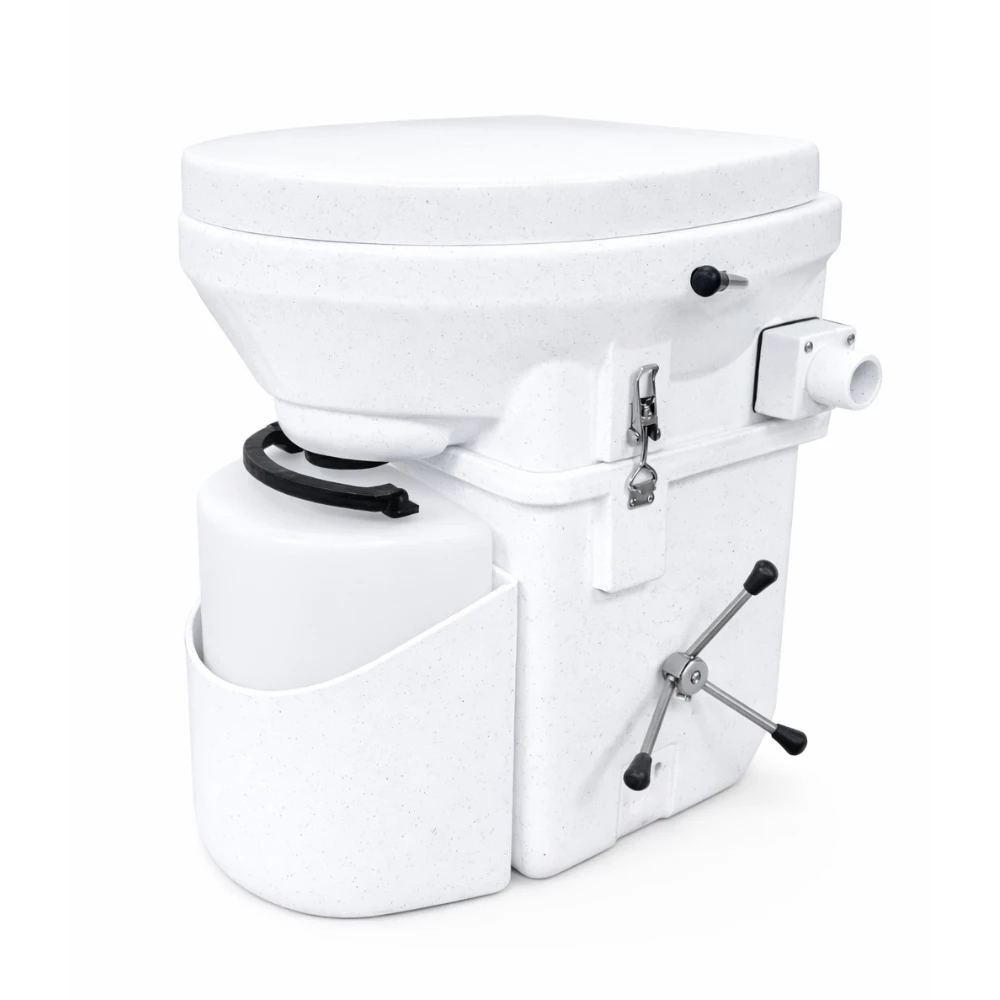
| Best For | Off-grid cabins, live-aboard boats, van builds, full-time RV (1–3 people) |
| Avoid If | Families of 4+, sub-freezing year-round climates, anyone averse to hands-on maintenance |
| Street Price | ~$965 (natureshead.net) / ~$960 (Amazon) |
| Warranty | 5 years |
Check Current Price on Amazon →
As an Amazon Associate, OffGridFoundry earns from qualifying purchases.
The Nature’s Head has earned its reputation. When it’s maintained properly — and “properly” is a real qualifier here — it delivers on its core promise: no sewage smell, no plumbing, negligible water use, and years of reliable operation in demanding environments. The five-year warranty backs real-world durability, and the Georgia-made unit has proven itself in saltwater marine conditions, 110°F desert summers, and bouncing down gravel roads in full-time RVs. Where it falls short is in ergonomics and maintenance frequency, particularly for larger households. For solo travelers and couples, it’s the benchmark. For families, the calculus gets harder fast.
What We Like
- odor-free when properly maintained. The most consistent finding across hundreds of owner reports: zero sewage smell. The continuous 12V fan draws air through the base and out the vent hose, while coco coir or peat moss neutralizes odors before they can escape. One desert ranch owner living in 110°F summer heat: “No smell at all when properly maintained.” A longtime boat owner’s wife, previously skeptical, said it smelled “like we are gardening in here.” That’s the ceiling — earthy at worst, nothing at best.
- Negligible power draw. At approximately 0.1 amps continuous draw (~1.7 amp-hours per day), the fan adds essentially nothing to your solar budget. For off-grid systems where every watt-hour is planned, this matters.
- No plumbing required. Installation requires only a floor bolt-down and a 1.5-inch vent hole through a wall or roof. Reported installation time is around one hour. No black tank, no holding tank, no connection to any drain system.
- Proven long-term reliability. Multiple owners report three-plus years of full-time use without structural failures. When components do fail — fan burnouts and broken agitator handles are the documented failure modes — the manufacturer ships replacements promptly. One owner: “Three years in, absolutely amazing and totally worth the investment.”
- Industry-leading warranty. Five years versus two years for the closest competitor (AirHead). For a $965 investment, that gap matters.
- Real water savings. Estimated at 16,000 gallons per person annually compared to a conventional flush toilet. In water-scarce off-grid setups, this isn’t an environmental talking point — it’s a system design necessity.
- Made in the USA. Manufactured in Georgia with stainless steel hardware and polyethylene body. The stainless resists corrosion in marine environments where lesser hardware fails quickly.
What We Don’t Like
- Urine diversion is failure-prone. The most common complaint across forums and Amazon reviews is the same: urine ends up in the solids bin when it shouldn’t. This happens two ways. First, female users who lean back slightly too far during use bypass the urine diverter entirely — a positioning issue that requires adjustment and habit formation. Second, calcium deposits from urine gradually block the drain holes, causing urine to pool and eventually overflow into the solids. The fix (spray vinegar-water into drain holes after every use) works, but it requires consistent discipline. When it fails, the result is a wet, soupy, foul-smelling compost bin that smells like sewage, not soil.
- Urine bottle requires frequent emptying — and the access design is bad. For one to two people, the 2.2-gallon urine bottle needs emptying every two to four days. For heavier use, that can mean daily. The bigger problem: accessing the urine bottle requires opening the toilet’s main hinge, which exposes the solids bin compartment. Unlike the AirHead, which allows independent urine bottle access, the Nature’s Head forces you to briefly open the composting section every time. One family-of-six reviewer said they would have “plumbed the urine diverter straight into the gray tank” if they’d known how often they’d be accessing it.
- Insect infestations. Multiple owners report fungus gnat and fruit fly infestations, especially with peat moss as the composting medium. Coco coir appears to attract fewer insects, and two cups of diatomaceous earth added to the compost medium largely resolves existing infestations — but the issue is common enough that the manufacturer has a dedicated troubleshooting page for it.
- Seat comfort is below average. The Nature’s Head uses a molded plastic seat rather than a residential-style round seat. Multiple reviewers specifically called this out as uncomfortable for extended use. The AirHead uses a conventional round seat, and this ergonomic difference is a genuine reason several otherwise-interested buyers chose the competitor.
- Handle gets hard to turn. Indicates either too much waste relative to composting medium, excess moisture from urine intrusion, or conversely — a compost bin that’s dried solid from an extended period of fan-only operation. This is manageable with proper maintenance, but it catches first-time users off guard and can lead to forcing the handle (which can cause damage).
- Cold weather limitations. Composting biology stops below 55°F. The toilet still functions as a dry-separation unit in colder conditions, but active decomposition pauses. Sustained sub-freezing exposure can freeze the solids bin solid, making the handle impossible to turn. Both chambers should be fully emptied before extended subzero storage.
Specs That Matter
Off-Grid Insider
Get off-grid guides & gear picks in your inbox — free
| Spec | Value |
|---|---|
| Dimensions | 21″H × 20″W × 19″D |
| Weight (empty) | 23 lbs |
| Urine bottle capacity | 2.2 gallons |
| Solids bin capacity | 60–80 solid uses |
| Solids bin service interval | ~3–5 weeks (1–2 people full-time) |
| Power requirement | 12V DC, ~0.1A continuous (~1.7 Ah/day) |
| Vent hose size | 1.5 inches |
| Body material | Polyethylene |
| Hardware | Stainless steel |
| Operating temperature | 55°F minimum for active composting |
| User weight capacity | 500 lbs |
| Warranty | 5 years |
| Origin | Georgia, USA |
| Weekender model dimensions | 18″W × 16.75″H × 18″D / 20 lbs (same price) |
Real-World Performance
The single most validated data point across years of owner reports is this: when the urine diverter works correctly, the Nature’s Head is effectively odorless. This isn’t marketing copy — it’s what you consistently find from long-term live-aboards, desert cabin owners, and full-time RVers who’ve been using these units for multiple years. The composting medium does the work, the fan handles venting, and the separation design means liquid waste — which accounts for the vast majority of toilet odor — never contacts the composting material under ideal conditions. Real owners in hostile environments (saltwater corrosion, extreme heat, high use frequency) report the same: maintained properly, there’s nothing to complain about from a smell perspective.
The honest flip side: “maintained properly” requires building new habits, and the Nature’s Head punishes neglect faster than most appliances will. The organic chemistry of composting is unforgiving. Urine in the solids bin — from positional errors or a clogged drain — turns the compost anaerobic within days, producing genuine sewage odor. Overly wet compost medium from improper initial preparation does the same. Inexperienced users who don’t establish the vinegar-spray habit for drain maintenance will encounter partial blockages and the downstream consequences. A meaningful share of the negative Amazon reviews and forum complaints trace back to these first-month setup mistakes rather than hardware failures. The unit’s troubleshooting page on the manufacturer’s website addresses seven distinct failure categories — handle won’t turn, fan not working, insects, odor, staining, leaking, agitator bar failure — because all of these happen with enough frequency to require official documentation.
For scale context: at full-time use by two adults, the solids bin needs emptying roughly every three to five weeks, a task that takes 20 minutes and involves transferring decomposed material to a compost pile, garden bed, or waste bag depending on local regulations. The urine bottle empties every two to four days. For a family of six running the toilet full-time (documented by Tiny Shiny Home over three years), solids service dropped to roughly two weeks and urine emptying became a daily task — at which point the maintenance burden becomes a genuine household chore load rather than an occasional inconvenience. Nature’s Head is widely recommended for one to three people; for larger households, the math on frequency and access ergonomics starts working against you.
Who Should Buy This
The Nature’s Head is purpose-built for people who need a self-contained, no-plumbing toilet solution in a space-constrained environment without reliable sewer or septic access. The ideal buyer is a solo traveler or couple doing full-time van life, a live-aboard sailor who needs to stay off holding tanks, or a tiny home or off-grid cabin owner with an existing small-scale solar system (anything capable of 1.7 Ah/day handles the fan load without modification). If you’re in any of these situations and you’re willing to build a short routine — crank the handle after each use, spray the drain holes, empty the urine bottle regularly — you’ll get years of essentially trouble-free operation with no smell and dramatically reduced water use.
The five-year warranty provides real coverage for what is a significant investment, and the Nature’s Head’s long market history means the support infrastructure, spare parts availability, and community troubleshooting knowledge base are more developed than any competitor’s. If you’re new to composting toilets and nervous about the learning curve, that depth of documentation and responsive customer service matters more than it might seem.
Who Should Look Elsewhere
If urine bottle access is going to be a daily operation — heavy household use, a family with multiple children — look seriously at the AirHead Composting Toilet (~$1,029). The AirHead’s independent urine bottle access (no need to open the solids compartment) is a genuine ergonomic advantage at that service frequency, and its residential-style round seat improves daily comfort. You give up $64 in price savings and three years of warranty coverage relative to the Nature’s Head, but you gain meaningfully better day-to-day usability for higher-volume households. AirHead’s rounder base also fits tighter alcoves and marine heads where the Nature’s Head’s squarer footprint is a problem.
If budget is the primary constraint and you’re comfortable with a less-established product, the Cuddy Lite (~$650) is gaining traction in the van life community as a capable alternative at a lower entry price — though it lacks the track record of either premium option. For permanent structures with reliable AC power and no particular water constraint, the Sun-Mar Compact Electric is a category unto itself, but at $1,792 and with significantly more owner complaints around mold and customer service, it’s hard to recommend over the Nature’s Head in any scenario where off-grid capability is relevant.
Bottom Line
The Nature’s Head is the composting toilet that actually works — not because it’s magic, but because its core engineering is sound and it’s been refined over more than fifteen years in real-world marine and off-grid use. At $965 with a five-year warranty, it’s a significant investment that pays for itself quickly in avoided septic costs, RV dump station fees, or marina pump-out charges. The learning curve is real, the maintenance is hands-on, and the ergonomics leave room for improvement — but for one to three people committed to off-grid living, it remains the benchmark every competitor is measured against, and for good reason.
Find the Nature’s Head Composting Toilet on Amazon or direct from natureshead.net.
→ Buy the Nature’s Head on Amazon