Best Portable Chainsaws 2026: 5 Top Off-Grid Picks
Finding a chainsaw that’s actually portable enough to haul into a remote property — and reliable enough to keep running without a parts store nearby — is harder than it sounds. Most “best chainsaw” lists are written for suburban homeowners trimming branches, not for people processing serious firewood miles from the grid. We dug into specs, manufacturer data, and hundreds of verified buyer reports to find the saws that earn their place on an off-grid property.
Our top pick: Stihl MS 170 — light, proven, dead-simple to maintain in the field.
Best battery powered: DEWALT DCCS620P1 20V MAX — ideal quiet chainsaw for small property chores and limbing.
Best for heavy firewood processing: Husqvarna 455 Rancher — the step-up when you’re bucking serious hardwood all day.
Our Picks
Stihl MS 170
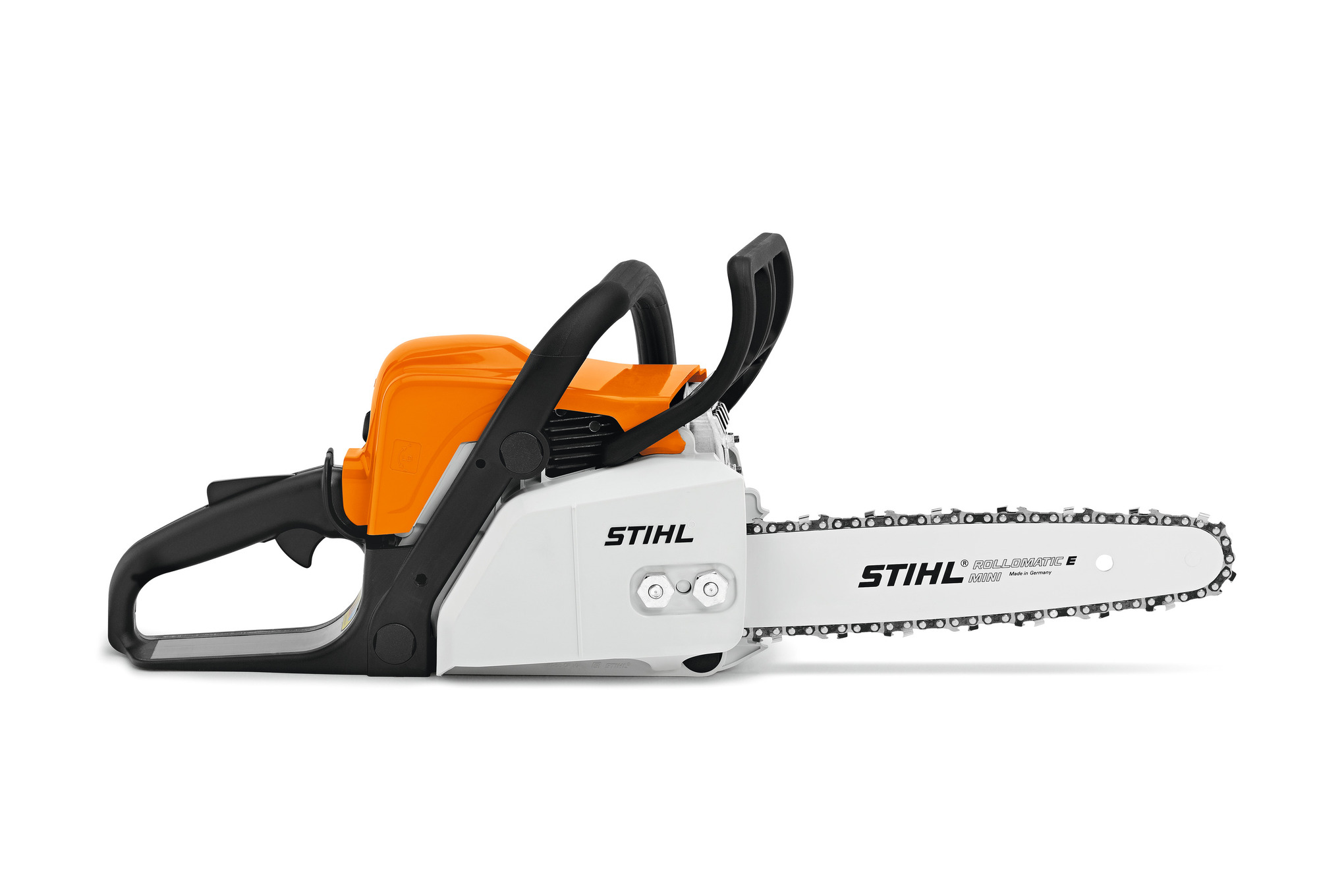
The MS 170 is the chainsaw equivalent of a Honda Civic — nothing flashy, just relentlessly dependable. At 8.6 lbs and 30.1 cc, it handles everything from limbing to bucking 12-inch rounds without wearing you out.
Who it’s for: Off-gridders who need one saw that does 80% of firewood tasks while staying light enough to carry on a trail.
Pros:
– Weighs under 9 lbs — portable for hikes to remote cutting sites
– Stihl’s side-access chain tensioner makes field adjustments tool-free and fast
– Extremely fuel-efficient; the 8.5 oz tank goes further than you’d expect from a small displacement engine
Cons:
– The 16-inch bar limits you on larger diameter hardwoods — anything over 14 inches requires multiple passes
– Only available through authorized Stihl dealers, not shipped online in most regions
DEWALT DCCS620P1 20V MAX Compact
Off-Grid Insider
Get off-grid guides & gear picks in your inbox — free
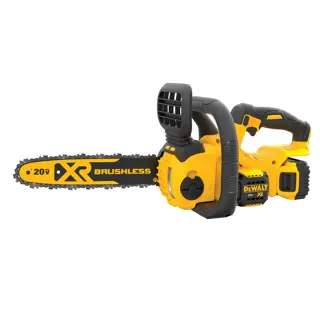
This is the battery powered chainsaw review pick that keeps showing up in off-grid forums for good reason. The 12-inch bar and 20V platform make it a genuine quiet chainsaw for small property work — limbing, clearing brush, and processing kindling without waking up neighbors or livestock.
Who it’s for: Anyone who wants a grab-and-go saw for lighter cutting tasks, especially where noise is a concern.
Pros:
– Near-silent compared to gas — community reports consistently mention using it early morning without complaints
– No fuel mixing, no pull-starting; press and cut in under two seconds
– Compatible with the massive DEWALT 20V MAX battery ecosystem, so existing batteries work
Cons:
– The 12-inch bar and battery runtime (roughly 70 cuts on 4×4 pine per charge, per manufacturer data) aren’t enough for primary firewood processing
– In freezing temperatures, lithium batteries lose significant capacity — plan on 30-40% less runtime below 20°F
Husqvarna 455 Rancher

When the electric vs gas chainsaw off-grid debate comes up for serious firewood volume, the 455 Rancher is the gas side’s strongest argument. At 55.5 cc with a 20-inch bar, this is the saw for people processing multiple cords per season from standing hardwood.
Who it’s for: Off-grid homesteaders who heat exclusively with wood and need to process oak, hickory, or other dense hardwoods efficiently.
Pros:
– 55.5 cc X-Torq engine delivers strong power while Husqvarna claims 20% lower fuel consumption and 75% fewer emissions than conventional engines
– 20-inch bar handles trees up to roughly 36 inches in diameter (two-pass)
– Smart Start spring-assisted system and air purge make cold starts much less miserable
Cons:
– At 12.8 lbs (without bar/chain), this is not a saw you want to carry far — it lives in the truck bed or on an ATV
– More saw than most people need; overkill and unnecessarily fatiguing for basic limbing and small-diameter work
Milwaukee M18 FUEL 16-Inch
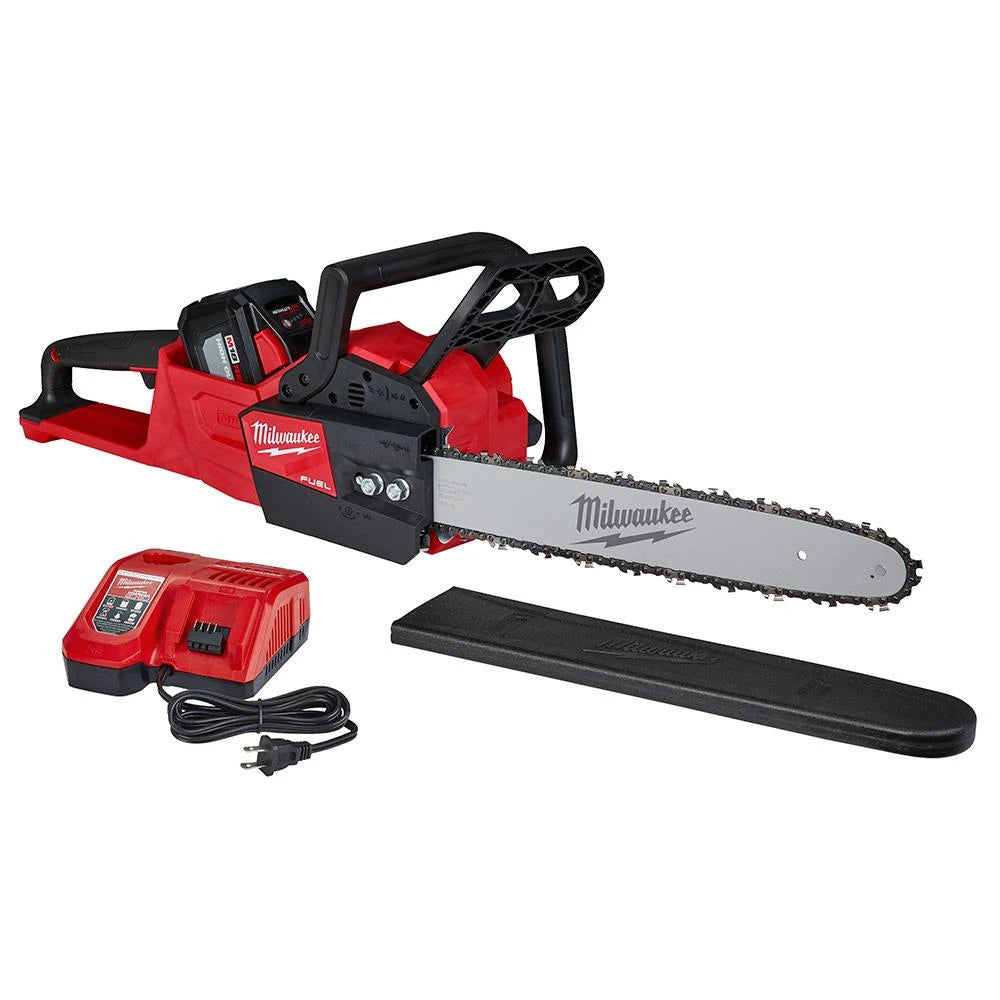
Milwaukee’s entry pushes battery chainsaw capability into territory that legitimately challenges small gas saws. The brushless motor paired with a HIGH OUTPUT 12.0 Ah battery delivers runtime that verified buyers report as sufficient for processing a pickup bed of rounds on a single charge.
Who it’s for: Off-gridders already invested in Milwaukee’s M18 battery platform who want to minimize gas dependency without sacrificing real cutting ability.
Pros:
– 16-inch bar is the sweet spot for most off-grid firewood tasks — large enough for 12-14 inch rounds in a single pass
– Variable speed trigger and instant stop give control that gas saws simply can’t match
– Excellent chain speed — manufacturer rates it comparable to a 40 cc gas saw
Cons:
– The 12.0 Ah battery needed for serious work is expensive if you don’t already own one (battery alone runs $150+)
– Still fundamentally limited by battery chemistry in extreme cold — below 15°F, expect dramatically reduced performance
Echo CS-310

Echo doesn’t have the name recognition of Stihl or Husqvarna, but the CS-310 is a legitimate budget workhorse. At 30.5 cc with a 14-inch bar, it slots right next to the MS 170 in capability but typically costs $60-80 less.
Who it’s for: Budget-conscious off-gridders who need a reliable gas saw and don’t want to pay the Stihl premium.
Pros:
– Consistently priced under $200 — one of the best value-to-performance ratios in portable gas saws
– i-30 starting system reduces pull-start effort by 30% according to Echo’s specs
– 5-year consumer warranty is among the best in class
Cons:
– Build quality and vibration dampening don’t quite match Stihl — extended cutting sessions are more fatiguing
– Parts and dealer network are thinner than Stihl or Husqvarna, which matters when you’re remote
Greenworks 40V 16-Inch Brushless
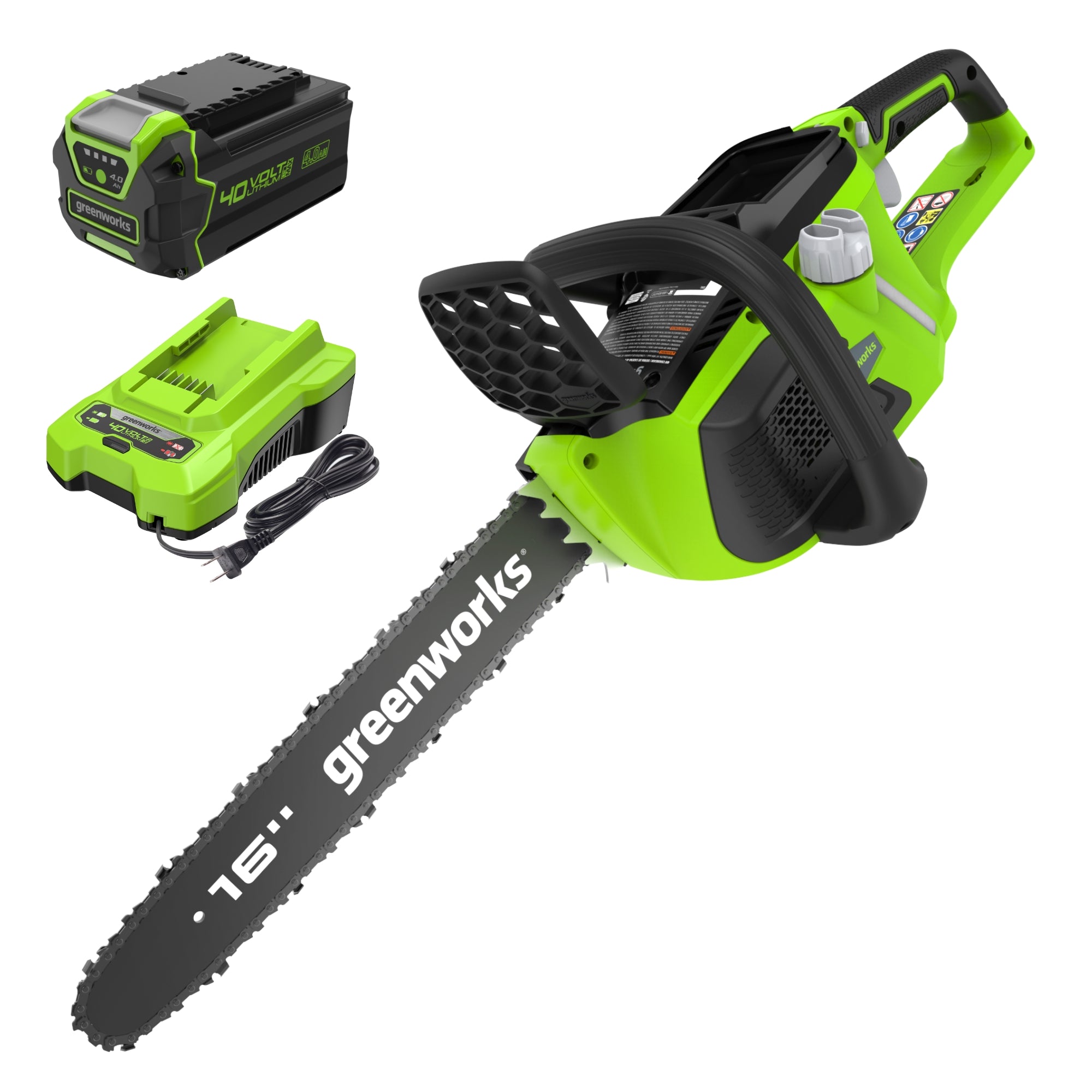
If you’re specifically looking for a quiet chainsaw for small property use and want a larger bar than the DEWALT offers, the Greenworks 40V earns consideration. The 16-inch bar combined with a brushless motor provides solid limbing and moderate bucking capability at a fraction of the noise.
Who it’s for: Small-acreage off-gridders who prioritize low noise and solar-rechargeable convenience for moderate firewood needs.
Pros:
– 40V platform charges easily from a modest solar setup — several off-grid community members report using a single 200W panel to keep batteries topped off
– DigiPro brushless motor provides more torque per watt than brushed competitors
– Substantially lighter than comparable gas saws at roughly 10.3 lbs with battery
Cons:
– Runtime with the included 4.0 Ah battery is modest — expect roughly 100-150 cuts on softwood before recharging
– The 40V battery platform is less universal than DEWALT 20V or Milwaukee M18, limiting cross-tool flexibility
Stihl MSA 220 C-B
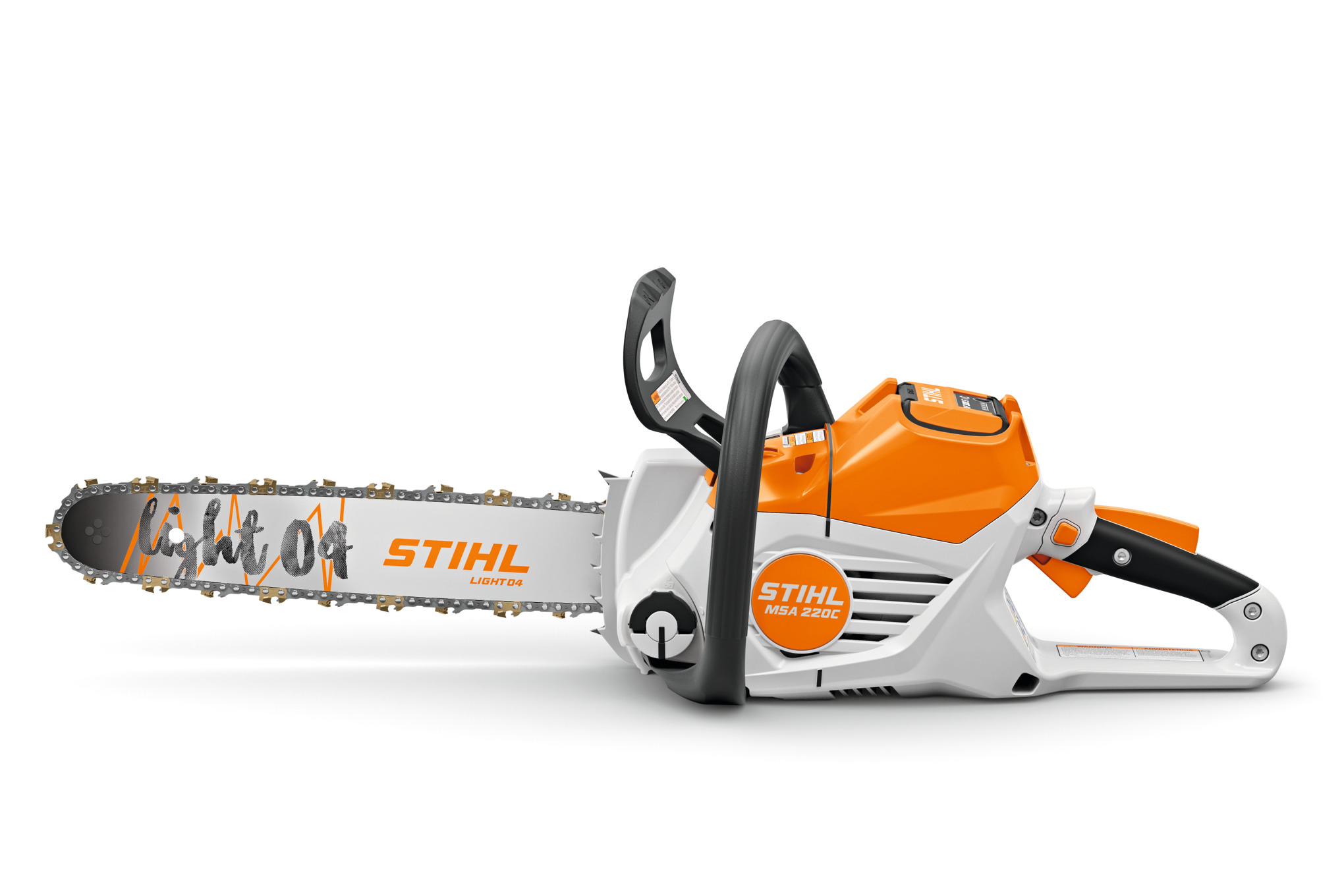
This is the premium battery powered chainsaw review pick — the saw that blurs the line in the electric vs gas chainsaw off-grid conversation. Stihl rates the MSA 220 C-B as equivalent to their 35 cc gas saws, and verified buyer reports generally confirm that claim for cutting performance.
Who it’s for: Off-gridders with budget flexibility who want the best battery chainsaw currently available and are willing to invest in Stihl’s AP battery system.
Pros:
– Cutting performance rivals small gas saws — chain speed and torque handle hardwood rounds that stall lesser battery saws
– Stihl’s quick-stop Super chain brake and low kickback design make it one of the safest saws in any category
– Near-zero maintenance compared to gas — no carb tuning, no fuel system winterization, no spark plugs
Cons:
– Price is steep — the saw alone (tool only) runs $450+, and the AP 300 S battery adds another $250+
– Locked into Stihl’s proprietary battery ecosystem with no cross-compatibility
How We Chose
We started with every chainsaw under 15 lbs that has a bar between 12 and 20 inches — the practical range for portable off-grid firewood work. From there, we filtered by power-to-weight ratio, cold-start reliability data from manufacturer specs and community reports, and long-term durability signals from verified buyer reviews (prioritizing reviews with 6+ months of ownership). For battery models, we weighted runtime-per-charge and charging compatibility with solar setups, since that’s what actually matters off-grid. We excluded saws with fewer than 200 verified reviews or consistent reports of premature failure.
Buying Guide: What Actually Matters for Off-Grid Chainsaw Selection

Gas vs. Battery: The Real Trade-Offs
The electric vs gas chainsaw off-grid debate has a simple answer: it depends on your firewood volume and infrastructure. Gas saws win on sustained runtime and raw power for heavy hardwood processing. Battery saws win on convenience, noise, maintenance, and solar-charging compatibility. If you’re heating a cabin through a northern winter with hardwood, you want gas. If you’re on a small property processing a cord or two of softwood annually, battery is viable now.
Bar Length
For portable off-grid use, 14-16 inches covers 90% of tasks. A 14-inch bar handles rounds up to about 12 inches in a single pass and keeps weight down for carrying. A 20-inch bar is only worth the extra weight if you’re regularly felling or bucking trees over 16 inches in diameter. Don’t overbuy bar length — a saw you’re too tired to use safely is worse than one that requires an extra pass.
Weight and Portability
This is the factor suburban chainsaw reviews ignore and off-gridders can’t. If your cutting site is a 15-minute walk from your vehicle, every pound matters. Gas saws in the 8-10 lb range (MS 170, CS-310) are carryable. Once you cross 12 lbs, you’re looking at ATV or truck-bed transport only. Battery saws vary wildly depending on the battery — always check the “with battery” weight, not the misleading “tool only” spec.
Cold Weather Performance
Gas saws need proper fuel mixture and may require choke and multiple pulls in cold weather, but they fundamentally work in any temperature. Battery saws suffer real performance degradation below 20°F — lithium-ion chemistry is non-negotiable on this point. If you’re cutting firewood in deep winter (when you need it most), a gas saw is more reliable. Some off-gridders keep batteries inside the cabin until cutting time to mitigate this, but it’s a workaround, not a solution.
FAQ
What is the best portable chainsaw for cutting firewood off-grid?
The Stihl MS 170 is our top overall pick. It weighs under 9 lbs, runs reliably in any temperature, and handles the majority of firewood tasks a homesteader encounters. For battery-only setups, the Milwaukee M18 FUEL 16-Inch offers the best combination of cutting power and runtime.
Can you use a battery chainsaw for off-grid firewood?
Yes, but with realistic expectations. Modern battery saws like the Milwaukee M18 FUEL and Stihl MSA 220 C-B handle moderate firewood processing well. They’re best suited for properties processing 1-3 cords annually in mild-to-moderate climates. Heavy volume or extreme cold still favors gas.
How do electric vs gas chainsaws compare for off-grid use?
Gas chainsaws offer unlimited runtime (as long as you have fuel), work in any temperature, and deliver more power per dollar. Battery chainsaws offer near-silent operation, zero-emission use in enclosed spaces, no fuel storage requirements, and can recharge from solar panels. For most off-gridders, the ideal setup is a primary gas saw and a secondary battery saw.
What size chainsaw do I need for firewood?
A 14-16 inch bar handles the vast majority of firewood work. This covers trees and rounds up to about 14 inches in diameter in a single pass. Only step up to 18-20 inches if you’re regularly processing large-diameter hardwood. Bigger bars mean more weight, more chain to maintain, and higher fuel consumption.
Is a quiet chainsaw powerful enough for real firewood cutting?
Battery-powered saws are dramatically quieter than gas — typically 20-30 decibels lower — and the best models (Milwaukee M18 FUEL, Stihl MSA 220 C-B) deliver cutting performance comparable to 35-40 cc gas saws. That’s enough for limbing, bucking 8-12 inch rounds, and general property maintenance. They’re a genuine quiet chainsaw for small property use, not just glorified toys.
Our Verdict
For most off-grid firewood cutting, the Stihl MS 170 remains the saw to beat — light enough to carry anywhere, reliable enough to start on the third pull in January, and capable enough for the firewood work most homesteads actually do. If you’re committed to battery power and have the solar infrastructure to support it, the Milwaukee M18 FUEL 16-Inch is the strongest option we’ve found — real cutting power without the noise, fuel mixing, or maintenance overhead of gas. Buy the saw that matches your actual firewood volume and carrying distance, not the biggest one on the shelf.