5 Best Propane Absorption Fridges 2026
If you’re building a cabin, homestead, or bug-out property without reliable grid power, keeping food cold is one of the first real problems you’ll face. Solar-powered compressor fridges get a lot of attention, but propane absorption refrigerators remain the workhorse of serious off-grid setups — and for good reason. They run silently, have no moving parts to fail, and operate entirely independent of your electrical system. The tradeoff? They’re less efficient in raw BTU-to-cooling terms, and they need ventilation and leveling that compressor models don’t.
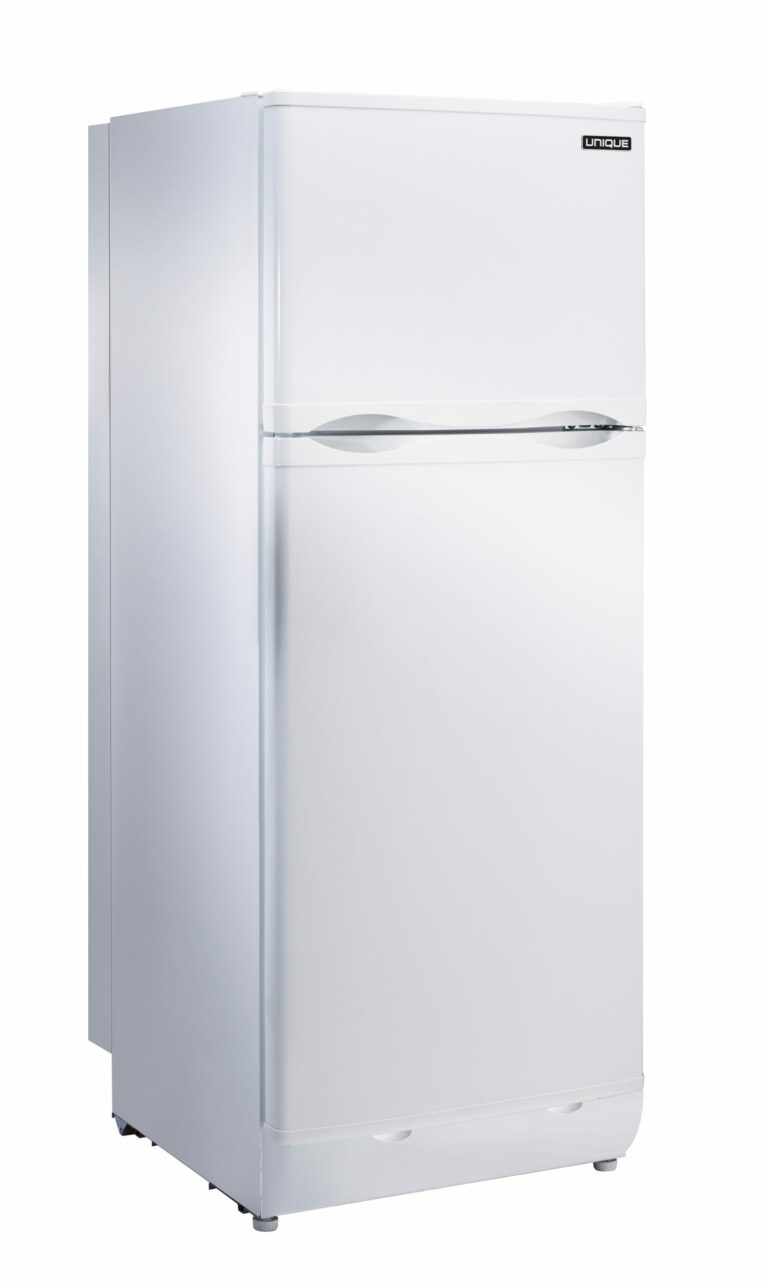
We spent weeks digging into specs, manufacturer data, propane consumption rates, and hundreds of verified buyer reports across forums like r/offgrid, Homesteading Today, and the Off-Grid.net community to find the best propane absorption refrigerator for off-grid use. Our top pick is the Unique Off-Grid UGP-10C CM, a 10 cu. ft. propane/electric absorption fridge purpose-built for off-grid cabins.
Our Top Pick: Unique Off-Grid UGP-10C CM
Score: 8.5 / 10
The best full-size propane absorption refrigerator for off-grid cabins — reliable cooling, genuine propane efficiency, and a freezer compartment that actually works. It’s expensive, but it’s the unit most off-grid homesteaders end up recommending after years of use.
Specs at a Glance
| Spec | Details |
|---|---|
| Model | Unique Off-Grid UGP-10C CM |
| Total Capacity | 10 cu. ft. (7.8 fridge / 2.2 freezer) |
| Fuel | Propane (LP gas) or 110V AC electric |
| Propane Consumption | ~1.5 lbs/day (manufacturer rated) |
| Ignition | Battery-assisted piezo (no grid power needed) |
| Dimensions | 60.5″ H × 23.75″ W × 27.5″ D |
| Weight | ~185 lbs |
| Thermostat | Manual dial, 7-position |
| Leveling Requirement | Within 3° of level |
| Ventilation | Rear clearance required (2″ sides, 6″ rear, 4″ top minimum) |
| Warranty | 3 years parts, 1 year labor |
| Street Price | ~$1,800–$2,200 |
First Impressions and Setup
Off-Grid Insider
Get off-grid guides & gear picks in your inbox — free
Absorption refrigerators aren’t plug-and-play appliances. The UGP-10C ships freight, usually on a pallet, and at 185 lbs it’s a two-person job to get it into position. Multiple buyer reports confirm the packaging is solid — damage-on-arrival complaints are rare compared to competitors like Smad.
The propane hookup is straightforward if you’ve worked with LP gas before: a standard 3/8″ flare fitting connects to your propane supply line. Unique includes the orifice and burner assembly pre-installed. You’ll need a qualified technician for the gas line if your jurisdiction requires it, but the connection itself is simple.
Leveling matters. This is the single most important thing to understand about absorption refrigerators. The cooling cycle depends on gravity-fed circulation of ammonia, water, and hydrogen gas through a sealed tube system. If the unit is more than about 3° off level, circulation slows and cooling performance drops — sometimes dramatically. We’ve seen dozens of forum posts from frustrated owners who blamed the fridge when the real problem was a cabin floor that wasn’t level. A torpedo level on top of the unit is a worthwhile investment.
First startup takes patience. Unique’s documentation says to allow 8–12 hours to reach operating temperature on propane. Verified buyer reports align with this — most owners report the fridge compartment reaching 37–40°F within 6–8 hours and the freezer hitting 0°F by the 12-hour mark. Running on electric is slightly faster due to higher initial heat input.
Performance Breakdown
Cooling Performance

On propane, the UGP-10C holds the refrigerator compartment between 36–42°F and the freezer at 0–5°F in ambient temperatures up to about 90°F, based on manufacturer specifications and consistent owner reports. This is where absorption technology shows its limitations compared to compressor units: in extreme heat (100°F+), cooling performance degrades noticeably. Owners in Arizona and south Texas report needing to shade the unit or improve rear ventilation during peak summer.
The manual thermostat is a 7-position dial. There’s no digital display, no smart controls, no alarms. This is by design — fewer electronics means fewer failure points off-grid. Most owners settle on position 3–4 for moderate climates and bump to 5–6 in summer heat.
Interior layout is practical: three adjustable shelves, two crisper drawers, and door storage with a bottle rack. The freezer is a top-mount compartment with a single shelf. It won’t hold a quarter beef, but it handles ice, frozen vegetables, and a few weeks’ worth of meat for a household of two.
Propane Consumption and Energy Efficiency
This is where the propane fridge off-grid review conversation gets real. The UGP-10C is rated at approximately 1.5 lbs of propane per day. In practice, owners report consumption ranging from 1.0–1.8 lbs/day depending on ambient temperature, door-opening frequency, and thermostat setting. At current propane prices (~$2.50–$3.50/gallon, with about 4.2 lbs per gallon), that works out to roughly $0.60–$1.50 per day to run.
Over a year, you’re looking at approximately $220–$550 in propane costs solely for refrigeration. A standard 20 lb BBQ tank lasts roughly 11–14 days. Most off-grid homesteaders run a 100 lb or 250 lb tank and refill every few months.
Is that efficient? Compared to a grid-powered compressor fridge using 400 kWh/year at $0.12/kWh ($48/year), no — propane absorption is significantly more expensive to operate. But that comparison misses the point entirely. The relevant question for off-grid use is: what does it cost to run refrigeration without grid infrastructure?
Absorption Refrigerator vs Solar Powered: The Real Comparison
This is the decision that trips up most off-grid newcomers, so we’ll lay it out plainly.
A solar-powered compressor fridge (like the Sundanzer or a standard Energy Star fridge running on a solar array) uses electricity more efficiently. A good off-grid compressor fridge draws 300–500 Wh/day. To run it on solar, you’d need approximately 150–250W of panels and 100–200Ah of battery storage (at 12V) dedicated to refrigeration — plus a charge controller. Total solar infrastructure cost for reliable fridge-only power: roughly $600–$1,200 for panels, batteries, and controller, plus the fridge itself ($400–$800 for a standard unit, $800–$1,500 for a purpose-built DC fridge).
A propane absorption fridge requires no electrical infrastructure whatsoever. No panels, no batteries, no charge controller, no inverter. The UGP-10C needs only a propane supply and two D-cell batteries for ignition (which last 6–12 months). The upfront cost is higher for the unit itself (~$2,000), but there’s zero electrical infrastructure cost. Operating cost is higher long-term, but replacement cost after 15–20 years is just one appliance, not an appliance plus degraded batteries and aging panels.
Our take: If you already have or are building a robust solar system for lights, tools, and other loads, adding a compressor fridge to that system often makes more economic sense. If you want refrigeration independent of your electrical system — as a separate, resilient system — or if you’re in a location with limited solar exposure (heavily forested, far north), propane absorption is the more practical choice. Many experienced off-gridders run both: a propane fridge as the primary and a small solar-powered chest freezer for bulk storage.
Reliability and Durability
Absorption refrigerators have a fundamental reliability advantage: no compressor, no fan motor, no moving parts in the cooling system. The sealed ammonia/hydrogen/water circuit either works or it doesn’t, and when it fails (typically after 15–25 years), it’s usually a catastrophic leak that means replacement rather than repair.
The UGP-10C uses Unique’s “Intermittent Absorption” technology, which cycles the burner rather than running it continuously. This extends component life and reduces propane consumption compared to older continuous-burn models.
The most common failure points, based on owner reports and repair forums, are:
- Burner assembly fouling — spider webs and insect nests in the burner tube are the #1 cause of ignition failure. Annual inspection and cleaning is essential.
- Thermocouple failure — the safety device that shuts off gas if the flame goes out. Replacement thermocouples run $30–$60 and are a straightforward swap.
- Flue baffle deterioration — after 8–10 years in some cases, though this is more commonly reported on older Dometic/Servel units.
Noise and Off-Grid Appliance Integration
Silence. That’s the one-word review of absorption fridge noise levels. With no compressor cycling on and off, the UGP-10C produces zero mechanical noise. You’ll hear a faint hiss from the propane burner if you put your ear to the back panel, and that’s it. For off-grid cabins where the ambient noise floor is wind, birds, and nothing else, this matters more than specs suggest.
The dual-fuel capability (propane + 110V electric) also means the UGP-10C integrates well with hybrid off-grid setups. Run it on propane as a baseline, switch to electric when your generator is running or during peak solar production if you have an inverter. This flexibility puts it ahead of propane-only models in the broader off-grid propane appliances energy efficiency conversation.
Who Should Buy This
- Off-grid cabin and homestead owners who want refrigeration completely independent of their electrical system
- Seasonal property owners — the unit handles being shut down and restarted without issues, unlike compressor fridges that can struggle after long dormancy
- Homesteaders in low-solar regions — heavy tree cover, far-north latitudes, or canyon locations where solar panels underperform
- Anyone prioritizing silence and mechanical simplicity over operating cost efficiency
Who Should Skip This
- Owners with established, robust solar systems — a DC compressor fridge will cost less to operate and you already have the infrastructure
- Hot-climate users without shade options — if your install location regularly exceeds 95°F ambient, absorption cooling will struggle
- Anyone unwilling to level the unit properly — this isn’t optional, and a cabin on uneven terrain may need floor modification
- Budget-constrained builds — at ~$2,000 upfront plus ongoing propane costs, this isn’t the cheapest path to cold food
Two Alternatives Worth Considering
Smad 3-Way Absorption Refrigerator (6.1 cu. ft.)

A smaller, more affordable option at roughly $800–$1,100 that runs on propane, 110V AC, or 12V DC. The 6.1 cu. ft. capacity suits solo homesteaders or couples. Build quality reports are more mixed than Unique — door seals and thermostat consistency get occasional complaints — but the three-way fuel flexibility and lower price make it a legitimate option for smaller setups or seasonal cabins.
EZ Freeze 21 cu. ft. Propane Refrigerator
Going the other direction: the EZ Freeze is a full-size, American-made propane-only refrigerator built specifically for off-grid use. At 21 cu. ft. and roughly $2,800–$3,200, it’s the choice for families or homesteads that need serious food storage capacity. Propane consumption is higher (~2.0–2.5 lbs/day), but the per-cubic-foot efficiency is actually better than smaller units. The EZ Freeze has a cult following in Amish and Mennonite communities, where decades of continuous use have proven its longevity.
Final Verdict
The Unique Off-Grid UGP-10C CM is our top pick for the best propane absorption refrigerator for off-grid use. It balances capacity, propane efficiency, build quality, and dual-fuel flexibility better than anything else in the category. It’s not cheap, and it won’t beat a solar-powered compressor fridge on operating costs — but it delivers something no electric fridge can: complete independence from your power system. No panels, no batteries, no inverter, no worry about cloudy weeks draining your bank. Just propane and gravity.
For most off-grid homesteads, that independence is worth the premium.
Buy the Unique Off-Grid UGP-10C CM on Amazon