Berkey vs RO: Which Wins in 2026?
If you’re setting up water filtration for an off-grid cabin, homestead, or bug-out property, you’ve probably landed on two options: a Berkey gravity filter or a reverse osmosis (RO) system. They both produce clean drinking water, but they work in fundamentally different ways — and the right choice depends on your water source, your power situation, and how much maintenance you’re willing to deal with.
We dug into manufacturer specs, third-party lab results, and hundreds of verified buyer reports across off-grid forums and communities to break this down clearly.
TL;DR: Which One Should You Pick?
Choose a Berkey gravity filter if you need zero-electricity filtration, want minimal maintenance, and your primary water source is surface water, rainwater, or well water with known biological and chemical contaminants. It’s the default for most off-grid setups.
Choose a reverse osmosis system if you have reliable power (solar or otherwise), your water has high TDS, heavy metals, fluoride, or dissolved salts, and you need the absolute highest level of purification — especially if you’re dealing with brackish or questionable well water.
Side-by-Side Comparison
| Category | Berkey (Big Berkey w/ Black Elements) | Reverse Osmosis (e.g., APEC Top Tier 5-Stage) |
|---|---|---|
| Filtration Method | Gravity-fed micro-pore carbon/ceramic | Semipermeable membrane + pre/post filters |
| Contaminant Removal | >99.9% bacteria, >99.99% viruses (w/ PF-2 fluoride filters), heavy metals, chlorine, VOCs | 95–99% of TDS, heavy metals, fluoride, arsenic, nitrates, dissolved salts |
| Power Required | None | Yes — needs water pressure (typically 40–80 PSI) or booster pump |
| Flow Rate | ~3.5 gallons/hour (2 Black Berkey elements) | ~50–75 gallons/day (varies by system) |
| Water Waste | Zero | 3:1 to 4:1 waste-to-purified ratio typical |
| Annual Filter Cost | ~$55–$65/year (elements last 3,000 gallons each) | ~$50–$100/year for pre/post filters; membrane every 2–3 years (~$40) |
| Upfront Cost | ~$280–$370 | ~$180–$300 (under-counter); $400+ for off-grid setups with pump |
| Best For | Rainwater, creek water, well water — any off-grid setup without reliable power | High-TDS well water, brackish water, or when you need near-distilled purity |
Deep Dive: Berkey Gravity Filter
Off-Grid Insider
Get off-grid guides & gear picks in your inbox — free
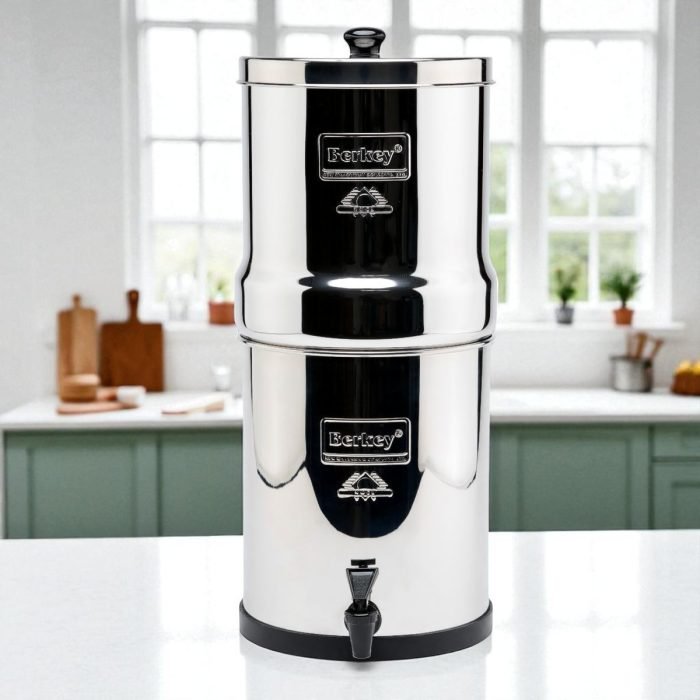
The Berkey system — specifically the Big Berkey with Black Berkey Purification Elements — has become nearly synonymous with off-grid water filtration, and for good reason. It requires no electricity, no plumbing, and no water pressure. You pour water in the top, gravity pulls it through the filter elements, and clean water collects in the lower chamber.
Strengths
True off-grid independence. No power, no pump, no pressure tank. This is the single biggest advantage for anyone living without reliable electricity. It works during power outages, in a cabin with no plumbing, or in an emergency scenario. You can literally fill it from a creek and drink what comes out the bottom.
Excellent pathogen removal. Black Berkey elements are rated to remove >99.9999% of bacteria (E. coli, cholera, etc.) and >99.99% of viruses according to independent lab testing against EPA purifier standards. That’s a critical distinction — most gravity filters are only filters, not purifiers. The Berkey meets purifier classification.
Long filter life. Each pair of Black Berkey elements is rated for 6,000 gallons. For a household of two using roughly 3 gallons of drinking water per day, that’s over five years before replacement. The ongoing cost is low.
Optional fluoride/arsenic reduction. Adding PF-2 fluoride filters to the lower chamber targets fluoride, arsenic, and other ions that the Black Berkey elements alone don’t fully remove.
Weaknesses
Slow flow rate. At roughly 3.5 gallons per hour with two elements, you’re not running a household of six off a single Big Berkey without planning ahead. You can add more elements (up to four in the Big Berkey) to double output, but it’s still not instantaneous.
Doesn’t remove dissolved salts or lower TDS. If your well water is 800+ TDS or brackish, a Berkey won’t make it taste good. It removes contaminants at the micro and sub-micron level, but dissolved minerals and salts pass through. That’s actually fine for most surface water and rainwater — but it’s a real limitation for certain well water sources.
The EPA classification controversy. In 2023, Berkey’s parent company had a public dispute with the EPA over product classification, which led to a temporary sales halt in the U.S. The filters are back on the market, but it’s worth knowing this happened. The core filtration performance hasn’t changed — this was a regulatory/labeling issue.
Who it’s really for: Homesteaders filtering rainwater or surface water, off-grid cabins without power, and anyone who wants a reliable, low-maintenance system that works without infrastructure. It’s also the go-to emergency preparedness filter.
Deep Dive: Reverse Osmosis Systems
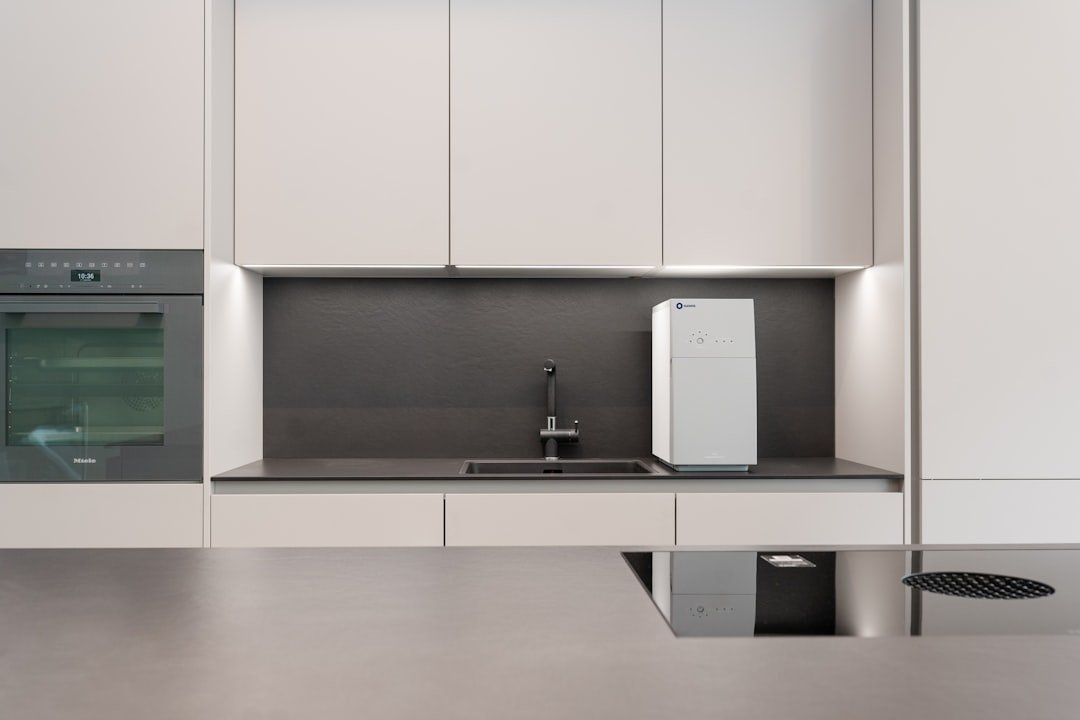
Reverse osmosis pushes water through a semipermeable membrane at high pressure, stripping out essentially everything — bacteria, viruses, heavy metals, dissolved salts, fluoride, nitrates, and even most pharmaceuticals. A quality 5-stage system like the APEC Top Tier RO system or the iSpring RCC7AK is the gold standard for total dissolved solids removal.
Strengths
Unmatched purification depth. RO systems remove 95–99% of total dissolved solids. If your well water tests at 1,200 TDS with elevated arsenic, nitrates, or sulfates, RO is the only practical countertop/under-counter solution that will bring it to drinkable levels. Gravity filters simply can’t do this.
Fluoride removal built in. Unlike the Berkey, which requires add-on PF-2 filters for fluoride, RO membranes strip fluoride as part of their standard operation — typically 90–95% reduction.
Higher daily output. Most RO systems are rated for 50–90 gallons per day. Once installed, they provide purified water on demand (from a pressurized storage tank), which is more convenient for cooking, coffee, and general household use.
Relatively affordable upfront. A quality under-counter RO system runs $180–$300 — actually cheaper than a Big Berkey in many cases.
Weaknesses
Requires water pressure and power. This is the dealbreaker for many off-grid setups. Standard RO systems need 40–80 PSI of water pressure. Without municipal water, you’ll need a well pump and pressure tank, or a dedicated booster pump — all of which require electricity. Solar-powered RO setups exist but add $300–$600+ in additional components (booster pump, pressure tank, solar panel/battery).
Significant water waste. RO systems typically waste 3–4 gallons for every 1 gallon of purified water. In a water-scarce off-grid environment, this is a serious concern. Some modern systems claim 1:1 ratios, but real-world performance under low-pressure conditions is often worse.
Strips beneficial minerals. RO removes everything, including calcium and magnesium that give water a pleasant taste and provide dietary minerals. Many users add a remineralization stage (like an alkaline filter) to address this, adding cost and complexity.
More maintenance complexity. Pre-filters need replacement every 6–12 months. The RO membrane lasts 2–3 years but costs $30–$50 to replace. If you don’t replace pre-filters on schedule, you’ll destroy the membrane prematurely — a $150+ mistake on some systems.
Who it’s really for: Off-gridders with reliable solar power and a well pump already in place, particularly those dealing with high-TDS water, brackish sources, or confirmed heavy metal contamination that gravity filtration can’t adequately address.
Head-to-Head Breakdown
1. Off-Grid Practicality

Winner: Berkey. No contest. Zero electricity, zero plumbing, zero water waste. If you’re truly off-grid — especially if you’re still building out your power system — a gravity filter is the only realistic option. RO demands infrastructure that many off-grid properties don’t have yet.
2. Contaminant Removal
Winner: Reverse Osmosis. The Berkey handles bacteria, viruses, heavy metals, chlorine, and VOCs extremely well. But RO removes dissolved salts, nitrates, and TDS that gravity filtration can’t touch. If your water source has high dissolved solids, RO is objectively more thorough.
3. Long-Term Cost
Winner: Berkey. Black Berkey elements last thousands of gallons and cost roughly $120 per pair. Over five years, your total filter cost is around $120–$250 depending on usage. An RO system’s pre-filters, post-filters, and membrane replacements run $200–$400 over the same period — plus electricity costs for the pump. Add in wasted water and the Berkey pulls further ahead.
4. Water Taste and Quality

Winner: Tie — depends on source water. For rainwater and clean well water under 500 TDS, a Berkey produces excellent-tasting water that retains beneficial minerals. For high-TDS or brackish water, RO is the only way to get palatable results. Neither is universally better here — it depends entirely on what you’re filtering.
Final Verdict
For most off-grid homes, we recommend the Berkey gravity filter system. Specifically, the Big Berkey with two Black Berkey elements for households of 1–3 people, or the Royal Berkey for larger families. Add PF-2 fluoride filters if fluoride or arsenic is a concern in your source water.
The reasoning is straightforward: off-grid living means dealing with limited or intermittent power, and a Berkey removes that variable entirely. It handles the contaminants most common in rainwater, surface water, and typical well water. It’s low-maintenance, has no water waste, and the per-gallon cost is hard to beat.
The exception: If you’ve tested your well water and it comes back with TDS above 700, elevated nitrates, or dissolved salt issues, invest in an RO system with a booster pump and tie it into your solar setup. The APEC ROES-50 paired with a booster pump is a well-regarded combination. Just budget for the extra power draw and water waste.
Test your water first. Then choose your filter. Don’t do it the other way around.
FAQ
Can I use a Berkey filter with pond or creek water?
Yes. The Black Berkey elements are classified as purifiers, meaning they remove bacteria and viruses to EPA purifier standards. We’d still recommend pre-filtering through a cloth or sediment pre-filter to extend element life, but the system is designed to handle untreated surface water.
Does reverse osmosis work without electricity?
Not practically. RO requires water pressure (40+ PSI) to force water through the membrane. Without a pressurized water supply, you’d need an electric booster pump. Some DIY setups use hand pumps, but the flow rate is extremely low and the effort is significant. For a power-free setup, gravity filtration is the better path.
Is Berkey-filtered water safe for immunocompromised individuals?
The Black Berkey elements remove bacteria and viruses to extremely high levels (>99.9999% and >99.99% respectively). However, for severely immunocompromised individuals, many health professionals recommend RO or UV purification as an additional safety layer. Consider pairing a Berkey with a SteriPEN UV purifier for added peace of mind.
How do I know if my water needs RO instead of a gravity filter?
Get a water test. A basic TDS meter (under $15) tells you dissolved solids, but for a full picture, send a sample to a certified lab — Tap Score and SimpleLab offer kits designed for well and off-grid water sources. If your TDS is under 500 and you don’t have confirmed heavy nitrate or salt contamination, a Berkey will handle it. Above that threshold, start considering RO.