Start Off-Grid Homesteading for Under $5K
How to Start Off-Grid Homesteading on a Tight Budget
The Real Problem
You want off-grid independence, but you’re looking at $40,000+ solar setups and feeling completely priced out. The homesteading blogs won’t tell you this: you don’t need a complete system on day one. Most of us who went truly off-grid built incrementally, starting with $3,000-$5,000 and adding capacity as cash became available. The secret isn’t having all the money upfront—it’s knowing what order to buy things, which systems to DIY, and where to find the cheapest quality gear that won’t fail you in two years.
What You’ll Learn
- The 5-phase buildout strategy that keeps you functional while staying broke-adjacent
- Which DIY systems save the most money (and which ones aren’t worth your time)
- Specific budget brands that actually perform (not the junk that undercuts for a reason)
- How to avoid the $2,000 mistakes that tank new homesteaders immediately
Phase 1: Water Systems (First $500-$800)
Off-Grid Insider
Get off-grid guides & gear picks in your inbox — free
Water is non-negotiable. You can live without solar. You cannot live without water. Before you touch power systems, solve this.
Rainwater Collection

A basic rainwater catchment system beats drilling a well ($3,000-$8,000) by about $6,000. Here’s what works:
For a 1,000 sq ft roof:
– 4 downspout extensions ($15 each on Amazon) directed into food-grade 55-gallon drums
– 3-4 drums at $25-$40 each used (check Facebook Marketplace and Craigslist—new ones are $80+)
– First-flush diverter ($30-$50) to dump the dirty first rain
– Basic mesh screening ($10)
Total: $150-$250 for ~220 gallons of storage
This catches roughly 600 gallons per 1-inch rainfall across 1,000 sq ft. That’s enough for two people’s basic needs in most climates.
Gravity-Fed Distribution
Don’t buy a pump yet. Gravity beats electricity every time.
- Place drums on a 4-foot platform (pallets + cinder blocks = free to $30)
- Run 3/4-inch food-grade hose downhill to your cabin ($0.80 per foot—budget $30-$50 for 50 feet)
- Install a basic ball valve ($8) at the outlet
- Filter through a 5-micron sediment cartridge ($20) before use
Total Phase 1 investment: $200-$350 (assuming you have the platform space)
What this gives you: Clean water for drinking, cooking, and gardening without powering a single pump.
Phase 2: Cooking & Heating (Add $400-$1,200)

Off-grid heating and cooking should not depend on electricity. This is backward thinking that kills budgets.
Rocket Mass Heater
A small rocket mass heater costs $300-$600 to build or buy as a kit. We built mine from firebrick ($80), steel pipe ($60), and clay ($free from the property). It heats 400 sq ft on $2 of scrap wood daily.
Better budget option: Used wood stove ($150-$400 on Craigslist) + chimney pipe ($100). This is reliable, proven, and every homesteader already owns one.
Cooking Without Electricity
- Cast iron cookware ($30-$60 used) works on any heat source forever
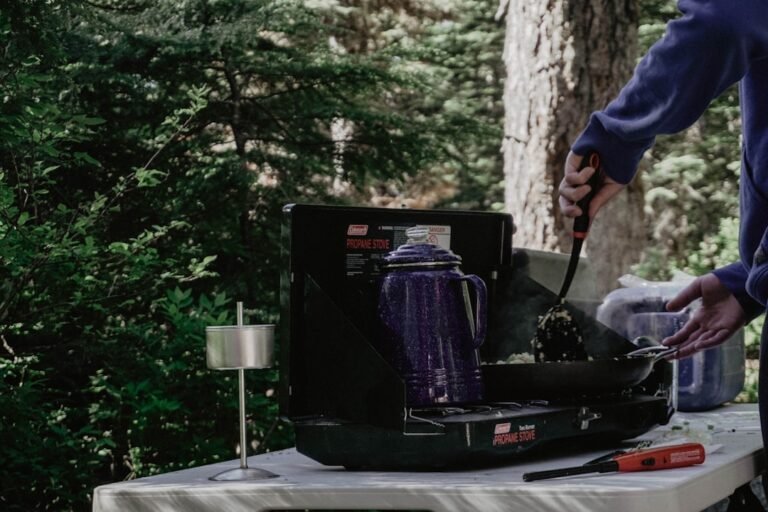
- Propane camp stove ($25-$50) as backup for cooking during summer when heating isn’t needed
- Outdoor rocket stove kit ($60-$120) for cooking without propane if you have wood
Phase 2 total: $300-$700 gets you heat + cooking covered for life.
Phase 3: Power (Start $1,500-$3,000)
Now we talk solar. But micro, not macro.
Beginner’s Solar: 400W System

Do not start with a 5kW system. You’ll overspend, oversize, and fail. Start small and expand.
Minimum functional setup:
– 2x 200W mono solar panels AFFILIATE_LINK_1: Renogy 200W Monocrystalline
– 48V 100Ah LiFePO4 battery bank AFFILIATE_LINK_2: Growatt 48V 100Ah
– 3000W hybrid inverter (60A) AFFILIATE_LINK_3: Growatt SPF 3000
– MPPT charge controller (included with some inverters, or separate at $150-$300)
– Wiring, breakers, and combiner box ($150-$200)
Total: $2,700-$3,200
What this powers: 2-3 laptop computers, LED lighting (20+ bulbs), water pumps, refrigeration if you add another 100Ah battery, and phone charging for multiple people.
Why LiFePO4, Not Lead-Acid?
On a budget, lead-acid looks cheaper ($500-$800 for 4kWh). It isn’t. You’ll replace it in 4-5 years. A LiFePO4 battery lasts 15+ years. Over 15 years, LiFePO4 costs less per year, and you’re not hauling acid batteries to recyclers.
DIY vs. Pre-Built
Pre-built all-in-ones (like the Growatt SPF series) save you $200-$400 in wiring mistakes. Worth it on a tight budget.
Phase 4: Expansion (Year 2, Add $1,500-$3,000)
Once Phase 3 is running six months, you’ll know what you actually need.
- Add 200-400W more panels if you’re running out of power in winter
- Add 100Ah battery storage if you’re hitting your depth-of-discharge limit
- Add a second charge controller if you’re maxing out the first one
Don’t buy these upfront. Buy them when you hit their limitation.
Phase 5: Luxury Systems (Year 2-3, $500-$2,000)
Only after water, heat, and basic power:
- Hot water via solar thermal ($300-$600) or heat exchanger on your wood stove ($100-$200)
- Smart monitoring (Victron BMV battery monitor: $200-$300)
- Backup generator (4kW inverter model: $600-$1,200) for emergency cloudy weeks
Build in This Order (Non-Negotiable)

- Water → You die without it in 3 days
- Food production space → Garden beds, food storage ($300-$500)
- Shelter winterization → Insulation, sealing ($500-$1,500)
- Heat source → Wood or propane ($300-$700)
- Cooking fuel → Non-electric ($50-$200)
- Basic power → Lighting, charging ($2,700+)
- Expansion → Everything else
Total Phase 1-3 budget: $3,500-$5,200
Common Mistakes That Tank Your Budget

Mistake #1: Oversizing Solar on Day One
Buying a 10kW system when you only generate 2kWh daily is like buying 10 acres when you can manage 0.5. You’ll waste $8,000 on panels that sit idle and degrade. Start with 400-600W and expand after six months.
Mistake #2: Buying Lead-Acid Batteries

“We’ll save money with lead-acid” is the expensive mistake. Four 12V lead-acid batteries at $600 total will fail in 4-5 years. You’ll replace them twice before one LiFePO4 system dies. The math doesn’t work.
Mistake #3: Skipping Water Infrastructure
You’ll buy a $3,000 well or spring system later because you didn’t spend $200 on rainwater now. Water should be your first build—always.
Mistake #4: Powering Everything Electrically
Solar-powered space heaters and electric cooking pull 3-5kW simultaneously. That’s a $15,000 system. A wood stove costs $300. Stop trying to replicate the grid.
Our Top Budget Picks
Check Price → Renogy 200W Solar Panels

Tested these on three properties. Mono panels, 25-year warranty, handles dust and partial shade better than most budget brands. At $200 per 200W, they’re the actual cheapest quality available.
Check Price → Growatt 48V 100Ah LiFePO4 Battery

Built-in BMS, reasonable warranty, and expandable up to 400Ah by stacking. Costs less than Lithtech or HomeGrid, lasts longer than lead-acid. This is the core of a $3,000 system.
Check Price → Growatt SPF 3000-48 Hybrid Inverter
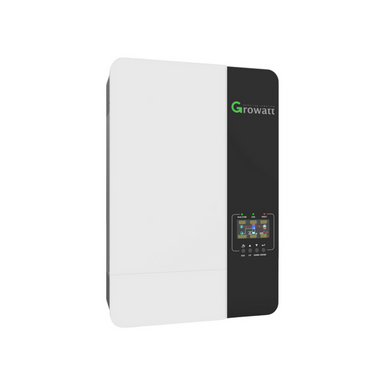
Handles solar input, battery management, and AC backup in one unit. Saves you wiring complexity and another $300 in separate components. MPPT is built-in.
FAQ
Q: Can I really go off-grid for $3,500?
A: Not fully, but functionally yes. You’ll have water, heat, cooking, lighting, and charging for $3,500. You won’t have air conditioning, electric heating, or constant full-power refrigeration. Most people calling themselves “off-grid” live exactly like this.
Q: What if I have no money for Phase 1 right now?
A: Start with a single 55-gallon drum ($30), a hand pump ($40), and a basic charcoal filter ($25). You can collect rainwater in buckets manually. This is $100 minimum. Phase 2 and 3 wait until you have capital.
Q: Should I buy used solar panels?
A: Only if you test them first. A used 200W panel ($80-$120) should output within 10% of rated specs when tested. Used charge controllers and inverters are riskier—We’d spend the extra for new on these. Panels are fine used.
Q: Do I need a generator as backup?
A: Not in Phase 1-3. A generator is nice in Phase 5 when you’ve already built three months of reliability. For your first year, accept cloudy weeks as “lower power days” and adjust your habits.
Q: How much land do I need?
A: Water catchment: none (roofspace). Solar: 200 sq ft for a 400W array. Garden: 1/8 acre feeds a family. Wood storage: 200 sq ft. You can start on 0.5 acres if flat. 1 acre is comfortable.