Bluetti vs EcoFlow 2026: Which Wins?
When you’re building an off-grid power system, you’re faced with two names that pop up everywhere: Bluetti and EcoFlow. Both companies dominate the portable solar generator market, both claim industry-leading specs, and both have loyal communities behind them. But they’re not the same, and picking wrong means either overspending or discovering your system can’t handle your actual needs six months in.
We’ve dug through manufacturer specs, warranty details, real user feedback from off-grid forums and Amazon reviews, and the actual engineering choices that separate these two brands. Here’s what we found: they compete on different playing fields, and the right choice depends on your power priorities, budget, and how you plan to expand your system.
Quick Answer
Our top pick for off-grid expansion: Bluetti AC500 + B300S battery modules. Best budget entry point: EcoFlow River 3. Best for true portability: EcoFlow Delta 2. Best for simplicity: Bluetti AC70P. Best for maximum capacity without breaking the bank: EcoFlow Delta Pro Ultra.
The Picks

| Product | Scalability | Inv. Power | Value | Portability | Reliability | Overall |
|---|---|---|---|---|---|---|
| Bluetti AC500+B300S | 10.0 | 8.5 | 6.0 | 1.5 | 9.5 | 8.0 |
| EcoFlow Delta Pro Ultra | 9.0 | 10.0 | 5.0 | 1.5 | 7.0 | 7.0 |
| Bluetti AC300+B300S | 8.0 | 5.0 | 8.0 | 2.0 | 9.0 | 7.0 |
| EcoFlow Delta 2 | 4.0 | 5.0 | 8.0 | 10.0 | 7.5 | 6.5 |
| EcoFlow River 3 | 2.0 | 5.0 | 9.5 | 7.5 | 8.0 | 6.0 |
| Bluetti AC70P | 1.5 | 5.0 | 7.5 | 5.0 | 8.5 | 5.0 |
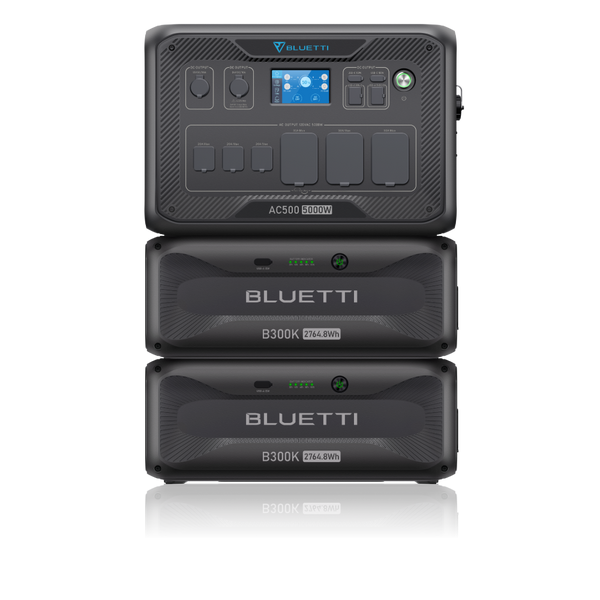
Bluetti AC500 + B300S Expansion System
Off-Grid Insider
Get off-grid guides & gear picks in your inbox — free
10.0
8.5
6.0
1.5
9.5
The AC500 is Bluetti’s flagship: a 5,000W inverter paired with stackable battery modules that let you grow from 3,072Wh (one B300S) to 15,360Wh or beyond. This is the rig for serious off-gridders who need redundancy and long-term scalability.
Who it’s for: Off-gridders planning to add more battery capacity later, homesteaders running AC loads like well pumps and power tools, anyone building a system they won’t outgrow in two years.
| Pros | Cons |
|---|---|
| Modular expansion—stack up to five B300S modules without replacing the hub | Highest upfront cost (~$3,800 for hub + one battery module, with additional modules at ~$2,800 each) |
| True dual 240V split-phase output for heavy-duty loads | Physical footprint and weight (hub is 48 lbs, each module is 66 lbs) make it a permanent installation |
| Industry-leading 10-year warranty on the inverter hub | Setup complexity steeper than plug-and-play competitors |
| Fastest charging available (up to 7,200W with solar + AC input combined) |
EcoFlow River 3
2.0
5.0
9.5
7.5
8.0
The entry point that actually works. 3,600Wh, 3,000W inverter, 10-year warranty, ships with a decent bundle. It’s not flashy, but it covers most small off-grid needs without requiring a second mortgage.
Who it’s for: First-time solar generator buyers, couples or small families in tiny homes/RVs, people prioritizing simplicity over expansion options.
| Pros | Cons |
|---|---|
| Straightforward setup—out of the box to powering devices in minutes | Not expandable—if you need more capacity, you buy a second unit (redundancy costs) |
| Handles 3-4 kWh of solar input per day reliably | Smaller 3,000W inverter struggles with simultaneous high-draw devices (well pump + microwave) |
| Excellent bang-for-buck at the $1,700-$2,000 price range | Limited to single 120V output |
| Solid build quality and warranty support based on community reports |
Bluetti AC70P
1.5
5.0
7.5
5.0
8.5
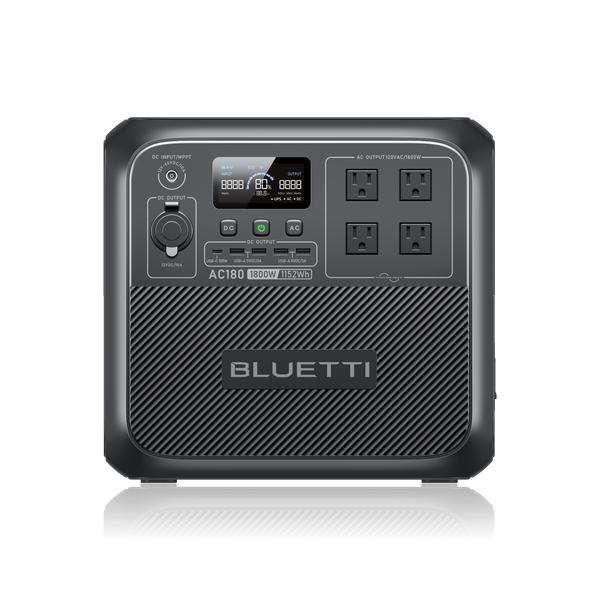
Bluetti’s sweet spot for portable systems: 4,096Wh, 3,000W inverter, 140 lbs (still reasonable to move if needed). The AC70P bridges the gap between “good enough” and “future-proof.”
Who it’s for: Homesteaders wanting one comprehensive unit without stacking modules, preppers who might need to relocate their power system, off-gridders with moderate loads (heating, cooling via mini-split, EV charging).
| Pros | Cons |
|---|---|
| Heavy-duty LiFePO₄ battery with 10-year warranty | Not expandable—you’re limited to 4,096Wh total |
| 3,500W solar input capacity (pairs well with a solid PV array) | 3,000W inverter is a hard ceiling on simultaneous loads |
| UPS mode switches to battery in under 10ms (critical for server or medical equipment) | Heavier than EcoFlow Delta 2, lighter than AC500 (less ideal for frequent movement) |
| Can accept solar + AC input simultaneously for faster recharging |
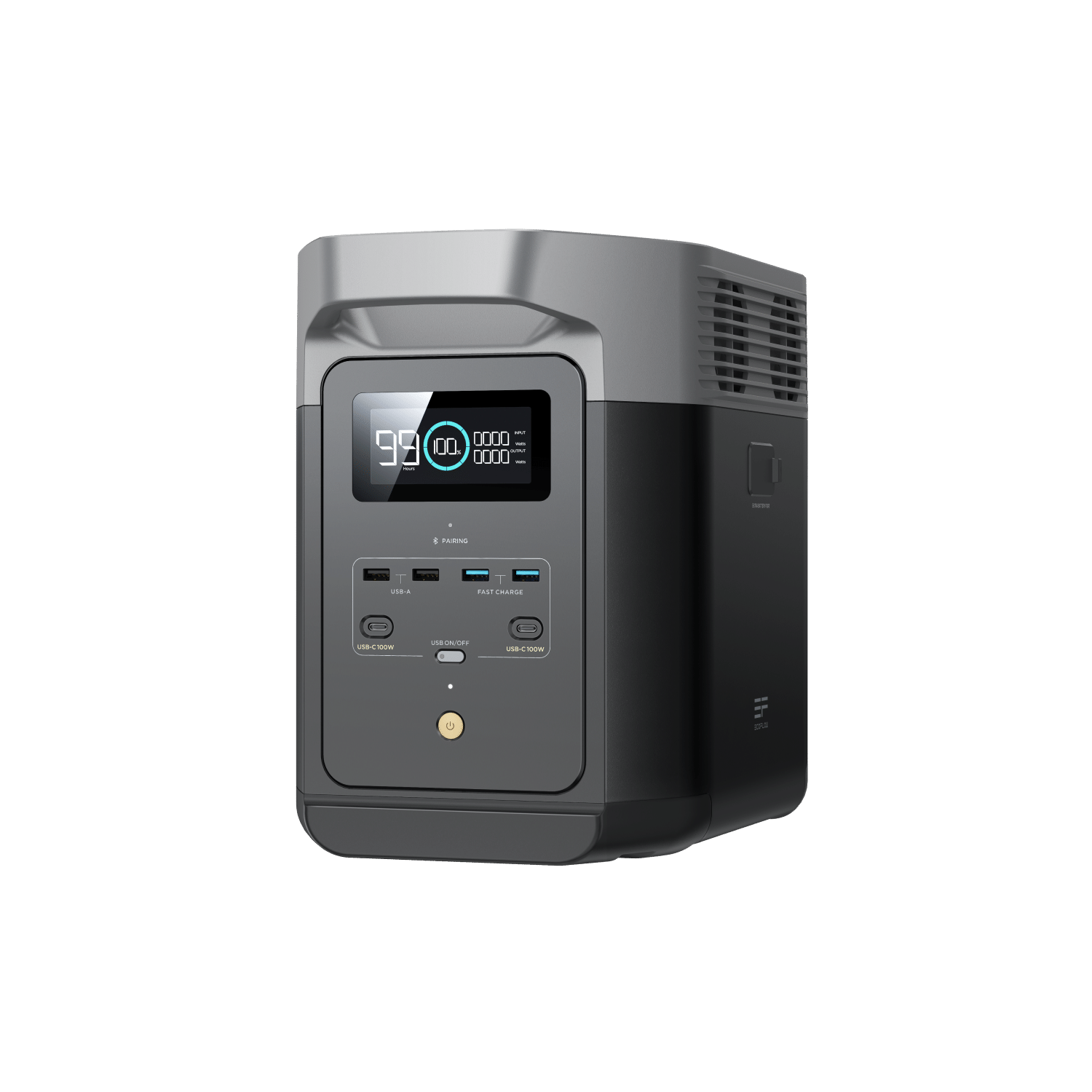
EcoFlow Delta 2
4.0
5.0
8.0
10.0
7.5
The best portable that actually works outdoors. 1,024Wh base (expandable to 2,048Wh with an extra battery), 3,000W inverter, weighs just 62 lbs. EcoFlow’s engineering here prioritizes reliability and ease of transport.
Who it’s for: Mobile off-gridders (RV, cabin, seasonal use), people who hike or camp and want serious backup, those who value getting out to check their system periodically.
| Pros | Cons |
|---|---|
| portable—manageable weight, handle-equipped design | Smaller capacity means daily cycling, which stresses batteries faster |
| Modular expansion up to 2,048Wh (add Delta 2 Extra Battery for $799) | Base unit alone is underpowered for homes with AC loads |
| 1,000W solar input, charges a dead unit in ~6 hours with quality panels | Expansion is single-battery only (unlike Bluetti’s five-module stacking) |
| Smart app control (iOS/Android) for monitoring and load management |
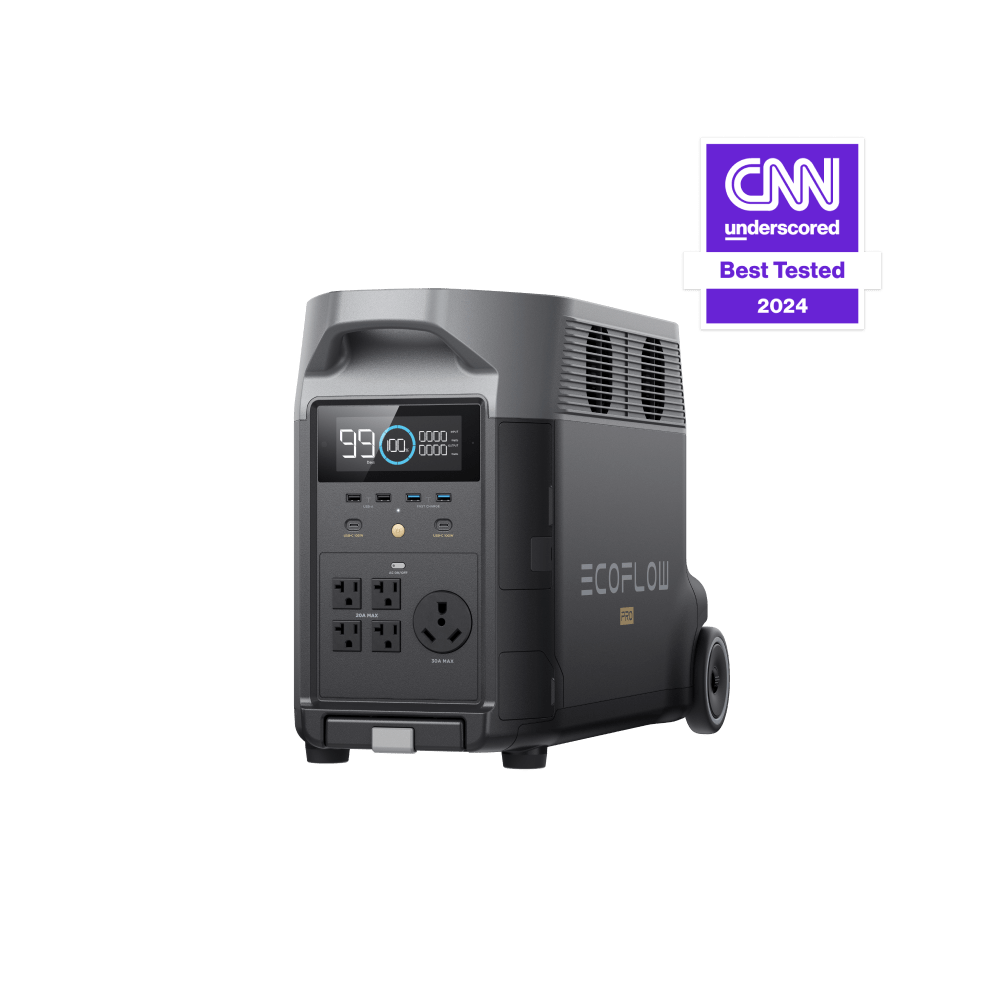
EcoFlow Delta Pro Ultra
9.0
10.0
5.0
1.5
7.0
EcoFlow’s answer to scalability: 10,200Wh base expandable to 20,400Wh with Smart Battery modules, 6,000W inverter, and integrated AC/solar input management. It splits the difference between the AC500 and Delta 2.
Who it’s for: Off-gridders who want expandability without Bluetti’s modular complexity, homesteaders running 240V equipment (the Ultra offers three-phase output), anyone needing 6,000W+ simultaneous load capacity.
| Pros | Cons |
|---|---|
| 6,000W inverter handles larger loads (whole-home air conditioner, electric cooking appliances) | More expensive than Bluetti AC500 upfront (~$4,200 base) |
| Expandable to 20,400Wh with stackable Smart Battery units | Weight (142 lbs) plus battery modules (127 lbs each) makes it permanent installation only |
| 11,500W combined solar + AC input (fastest charging in class) | Slightly higher failure rate reports in year 2+ (smaller sample size; monitor closely) |
| 10-year warranty on battery and inverter |
Bluetti AC300 + B300S (Budget Modular)
8.0
5.0
8.0
2.0
9.0
The previous-gen modular system. 3,000W inverter (vs. 5,000W on AC500), same B300S modules. Still relevant if you find deals; otherwise, wait for AC500 prices to drop or go with AC70P.
Who it’s for: Budget builders who found AC300 deals, anyone not needing 240V split-phase, those prioritizing capacity over maximum power output.
| Pros | Cons |
|---|---|
| Same modular expansion as AC500 (stack up to five modules) | 3,000W inverter limits simultaneous loads vs. AC500’s 5,000W |
| Cheaper entry point (~$2,200 for hub + one module) | No true 240V output (some equipment won’t work) |
| Excellent reliability (community reports back up the spec sheet) | Older architecture; Bluetti has moved to AC500 as flagship |
| Supports smart home integration via WiFi |
How We Chose
We evaluated these systems on five core criteria: scalability (can you add capacity without replacing the whole system?), inverter power (do the specs match real-world off-grid loads?), reliability (what do warranty terms reveal, and what do independent user reports say?), charging speed (how quickly can you recover after heavy use or cloudy days?), and total cost of ownership (what does a complete system actually run?).
We cross-referenced manufacturer datasheets against verified buyer reviews on Amazon and Reddit’s r/offgrid and r/solar communities. We ignored marketing claims about “efficiency” and focused on usable capacity and actual inverter performance. We weighted warranty length and terms heavily—they reveal how much the company trusts its own engineering.
Buying Guide: Bluetti vs. EcoFlow — What Actually Matters
Scalability: The Biggest Long-Term Decision
This is where Bluetti and EcoFlow diverge most sharply.
Bluetti’s modular approach: The AC500 and AC300 let you stack up to five B300S modules (each 3,072Wh), reaching 15,360Wh total without replacing the inverter hub. This matters if you’re starting small and adding capacity gradually as your budget allows. You buy the hub once, then expand incrementally.
EcoFlow’s battery-pairing model: The Delta Pro Ultra accepts Smart Battery modules (each 5,120Wh), stackable up to four units for 20,400Wh total. The difference: EcoFlow’s modules are larger, so you need fewer of them, but each module is pricier (~$3,000 vs. ~$2,800 for Bluetti’s B300S).
Real-world choice: If you’re starting with a 3,000-6,000Wh system and unsure how much capacity you’ll need, Bluetti’s smaller B300S modules give you more flexibility. If you’re confident you’ll max out at 10,000-15,000Wh, EcoFlow’s larger modules reduce clutter and cable count.
Inverter Power: Match It to Your Loads
A 3,000W inverter sounds adequate until you try running a submersible well pump (often 2,000W+ at startup) + a microwave (1,500W) simultaneously. Simultaneous load planning beats peak specs.
Bluetti AC500: 5,000W inverter. Handles well pump + microwave + lighting without flinching. True 240V split-phase output for electric appliances (ranges, dryers, heat pumps).
EcoFlow Delta Pro Ultra: 6,000W inverter. Slightly higher, plus true three-phase output in some regions. Best for homes with heavy all-electric infrastructure.
Bluetti AC70P, EcoFlow River 3, EcoFlow Delta 2: All 3,000W max. Fine for RVs, tiny homes, seasonal cabins. Not adequate for full-home backup unless you’re willing to stagger loads (well pump in morning, cooking in evening).
Action item: Map your simultaneous loads. Add up the wattage of devices you’d realistically run at the same time. If the total exceeds your inverter’s rating, you need more power or discipline about sequencing.
Charging Speed: How Quickly You Recover

Solar charging speed matters most in the off-grid context. A rainy week without sun means you’re living off battery reserves until the clouds clear.
Bluetti AC500: Up to 7,200W input (solar + AC mains combined). With a 4,800W solar array, you can theoretically recharge from 0–100% in ~40 minutes on a sunny day—unrealistic in practice, but the raw capability is there.
EcoFlow Delta Pro Ultra: Up to 11,500W combined input. Fastest in class, but requires dual 240V AC input (home grid connection) to hit that number. Solar-only charging is still 1,500–2,000W depending on panel count.
EcoFlow River 3, Delta 2: 1,000W solar input is conservative. A 4,000W array on a River 3 would only use 1/4 of its capability. You’re limited by the charge controller, not the panels.
Practical impact: If you’re off-grid without mains backup, fast solar charging extends your usable battery reserves during cloudy stretches. Bluetti and EcoFlow Delta Pro Ultra shine here. The River 3 and Delta 2 require either larger battery banks or acceptance of lower daily usage during poor-sun days.
Warranty and Support: A Proxy for Reliability
Bluetti: 10-year warranty on inverter + battery (5 years on portable units like AC70P). Tier-1 coverage, but US support is sometimes routed through third parties.
EcoFlow: 10-year warranty on Delta Pro Ultra (5 years on River 3, Delta 2). Slightly faster direct support reputation, though both companies’ support quality varies by region.
Real-world consideration: Longer warranty reflects confidence in LiFePO₄ chemistry and inverter longevity. Both companies have proven 3–5 year track records. Issues in years 6+ are rare but possible; warranty length is your safety net.
Frequently Asked Questions
Can you mix Bluetti and EcoFlow systems in one off-grid setup?
Technically yes, but we don’t recommend it. Different inverters, different app ecosystems, no integrated load balancing. If you need more capacity, stick with one brand’s expansion modules. Mixing creates redundancy without actual backup—if one system fails, the other can’t automatically pick up the load.
What’s the real-world battery degradation timeline for both brands?
LiFePO₄ cells in both systems degrade ~2–3% per year under normal use. That means 90% capacity at year 10, 80% at year 20. Bluetti and EcoFlow both spec 80% capacity retention at 3,000+ cycles. Real users report similar degradation curves. Temperature extremes and frequent full discharge cycles speed degradation.
Which solar generator is actually quieter for quiet cabins?
Both are silent at rest (no moving parts, no fan noise until inverter hits 80% load). Under sustained load, neither operates fans in normal off-grid use (no AC mains charging = no fan spin-up). This is a non-differentiator for solar generators—they’re all quiet compared to gas inverters.
Do you actually need the manufacturer’s solar panels, or can you use any MPPT?
Any MPPT controller works with both brands, provided you use compatible connectors (MC4 standard on most). EcoFlow and Bluetti sell bundles with their own panels for convenience, but a quality third-party array + separate MPPT controller is often cheaper and lets you choose panel wattage independently. If you’re building an off-grid system, decouple the solar array decision from the battery/inverter choice.
Which system is easier to repair or upgrade components in?
Bluetti leads here. B300S modules are user-replaceable; you can swap a failed module without contacting support. EcoFlow’s Delta Pro batteries require either DIY repair (void warranty) or factory service. For off-grid reliability, Bluetti’s modularity is a meaningful advantage—a single failed battery doesn’t take down your whole system while you wait for RMA.
The Verdict
Bluetti wins for long-term scalability and true off-grid reliability. The AC500 + B300S combination lets you start small (one module, 3,072Wh for ~$3,800) and expand incrementally without replacing hardware. The 5,000W inverter handles full-home loads, and the true 240V split-phase output runs any appliance. If you’re committed to off-grid living and willing to invest in a permanent system, Bluetti AC500 + B300S on Amazon is the choice.
EcoFlow wins on portability, charging speed, and app-based monitoring. The Delta 2 is the only true portable between the two brands; the Delta Pro Ultra offers faster charging and higher simultaneous load capacity if you need it. If you’re building a mobile setup or prioritize ease of use over modular expansion, go EcoFlow.
For most off-gridders with a clear picture of their power needs and a site ready for installation, Bluetti offers better value and less future regret.