Extend Lithium Battery Life to 10+ Years (Complete Guide)
Lithium batteries are the single most expensive component in most off-grid power systems — and the one most likely to fail prematurely if neglected. A quality lithium iron phosphate (LiFePO4) bank can last 10+ years and 4,000+ cycles, but only if you stay on top of a handful of maintenance tasks that are easy to overlook when you’re busy running a homestead. We’ve dug into manufacturer specs, BMS data sheets, and years of forum reports from off-grid owners to put together the maintenance routine that actually matters.
What You’ll Learn
- The charging parameters that protect cycle life — voltage limits, charge rates, and temperature cutoffs backed by cell-level data
- A seasonal maintenance schedule you can follow in under 30 minutes per quarter
- How to catch early warning signs of cell imbalance, BMS failure, and capacity fade before they kill your bank
- Common mistakes that void warranties and shorten battery life by 50% or more
Understanding What You’re Actually Maintaining
Unlike lead-acid batteries, LiFePO4 cells don’t sulfate, don’t need equalization charges, and don’t off-gas hydrogen. That leads a lot of off-grid owners to adopt a “set it and forget it” approach — which works fine until it doesn’t.
What you’re really maintaining is the Battery Management System (BMS), the connections, and the operating environment. The cells themselves are remarkably tolerant, but the electronics and wiring around them are where problems start.
The BMS Is Your First Line of Defense
Off-Grid Insider
Get off-grid guides & gear picks in your inbox — free
Every lithium battery worth buying has a built-in BMS that handles:
- Cell balancing — keeping individual cells at the same voltage
- Over/under-voltage protection — cutting off charge or discharge at safe limits
- Temperature protection — shutting down in extreme cold or heat
- Overcurrent protection — preventing draws that exceed the cell rating
Your job is to make sure the BMS can do its job and to catch the cases where it fails silently.
Charging Parameters That Protect Cycle Life
This is where most battery damage happens — not from discharge, but from improper charging.
Voltage Settings

For standard LiFePO4 cells (3.2V nominal per cell, 4 cells in a 12V battery):
| Parameter | Recommended Setting | Why It Matters |
|---|---|---|
| Bulk/Absorb voltage | 14.2V–14.6V (check your manufacturer) | Too high accelerates capacity fade; too low means incomplete charging |
| Float voltage | 13.4V–13.6V | Some manufacturers say disable float entirely — check your manual |
| Low-voltage cutoff | 10.0V–11.0V | Discharging below 2.5V per cell causes irreversible damage |
| Reconnect voltage | 12.0V–12.5V | Prevents rapid cycling of the BMS disconnect |
Critical point: Don’t just copy these numbers. Brands like Battle Born, SOK, and EG4 each publish slightly different specs. A Battle Born 100Ah recommends 14.4V bulk and 13.6V float. SOK 206Ah units spec 14.6V bulk with float disabled. Using the wrong profile shortens life or leaves capacity on the table.
Charge Rate
Most LiFePO4 batteries are rated for 0.5C charge rate (50A for a 100Ah battery). Staying at or below this keeps cell temperatures low and reduces stress. Some budget units with smaller BMS boards max out at 0.2C–0.3C — exceeding this triggers BMS shutdown and can damage the board over time.
If you’re running a large solar array into a modest battery bank, make sure your charge controller’s max current doesn’t exceed the battery’s rated charge current. We see this mistake constantly in off-grid forums: someone adds panels without checking whether their battery can absorb the increased current.
Cold Weather Charging — The One Rule You Cannot Break
Never charge LiFePO4 cells below 32°F (0°C). This causes lithium plating on the anode — permanent, irreversible capacity loss that no BMS reset will fix.
Many modern batteries (like the Victron Smart LiFePO4 or heated models from SOK and EG4) include internal heating elements that warm the cells before accepting charge. If your batteries don’t have built-in heaters, you need:
- A battery box or insulated enclosure
- A thermostatically controlled heat pad (set to activate at 35°F)
- A charge controller or BMS with low-temperature cutoff enabled
For cold-climate homesteads, we strongly recommend batteries with self-heating capability — the EG4 LifePower4 Heated series is one of the more popular options in the off-grid community.
Quarterly Maintenance Schedule
Set a calendar reminder. This takes 20–30 minutes and catches problems before they cascade.
Every 3 Months: The Quick Check

-
Inspect all terminal connections. Torque lugs to manufacturer spec (typically 6–8 Nm for M8 bolts). Loose connections cause heat buildup, resistance losses, and in severe cases, fire. Use a torque wrench — hand-tight is not reliable enough.
-
Check for corrosion. LiFePO4 terminals corrode less than lead-acid, but it still happens, especially in humid or coastal environments. Clean with a wire brush and apply a thin coat of dielectric grease or Noalox anti-oxidant compound.
-
Read individual cell voltages (if your BMS or battery monitor supports it). All cells in a healthy battery should be within 0.05V of each other at rest. A spread greater than 0.1V indicates a balancing issue. Batteries with Bluetooth monitoring — like those from SOK or Redodo — make this trivial.
-
Check BMS temperature readings. If your BMS reports cell temps above 95°F (35°C) during normal operation, investigate airflow and ambient conditions.
-
Verify your charge controller settings haven’t reset. Some MPPT controllers (particularly budget Epever and PowMr units) can reset to lead-acid defaults after firmware updates or power cycles. One wrong charge profile can push cells past safe limits.
Every 12 Months: The Deep Check
-
Full discharge and recharge cycle. Run the bank down to about 20% SOC, then charge to 100%. This helps the BMS recalibrate its state-of-charge estimate and gives passive balancers time to equalize cells. Don’t do this monthly — once or twice a year is sufficient.
-
Measure actual capacity. Using a battery monitor like the Victron SmartShunt, record the total amp-hours delivered from 100% to your cutoff point. Compare to previous years. Losing more than 5% per year in the first five years suggests a problem.
-
Inspect wiring and fuses. Check for chafed insulation, heat-discolored lugs, and blown or weakened fuses. Replace any fuse that shows signs of heat stress even if it hasn’t blown.
-
Update BMS firmware if your battery supports it (EG4 and some SOK models do via Bluetooth). Manufacturers occasionally patch balancing algorithms and protection thresholds.
Monitoring: What to Watch Between Checkups

If you’re serious about protecting a multi-thousand-dollar battery investment, a dedicated battery monitor is non-negotiable. The Victron SmartShunt (~$100) tracks voltage, current, SOC, and historical data via Bluetooth. For larger systems, an EG4 WallMount Indoor Battery with rack monitoring gives you cell-level data.
Red flags to watch for:
- Voltage sag under load beyond what’s normal — a 100Ah battery dropping below 12.0V under a 30A load suggests capacity loss
- One cell consistently lower than the others — the BMS may not be balancing properly
- BMS tripping frequently — usually means your loads exceed the continuous discharge rating or there’s a wiring issue
- Cells not reaching full charge — indicates a balancing problem or a charge controller misconfiguration
Common Mistakes That Kill Lithium Batteries
1. Charging Below Freezing Without Protection
We can’t stress this enough. A single overnight charge session at 25°F can permanently reduce capacity by 10–20%. If you live anywhere with winter freezes, this is the number-one risk to your battery bank.
2. Leaving Batteries at 100% SOC for Weeks

LiFePO4 handles this far better than other lithium chemistries, but storing at full charge still accelerates calendar aging. If you’re leaving a cabin for an extended period, charge to 50–60% and disconnect.
3. Mixing Old and New Batteries

Adding a new battery to a bank with 2-year-old batteries creates imbalance. The older cells have higher internal resistance and lower capacity. They’ll hit voltage limits first, causing the BMS to cut off the entire bank while the new battery still has charge left. If you must expand, match the same brand, model, and approximate cycle count.
4. Ignoring Torque Specs on Terminals
A connection that’s hand-tight today will be loose in six months due to thermal cycling. Loose connections are the leading cause of battery fires in off-grid systems. Use a torque wrench every single time.
Our Recommendations
Best Overall for Off-Grid: SOK 206Ah 12V LiFePO4
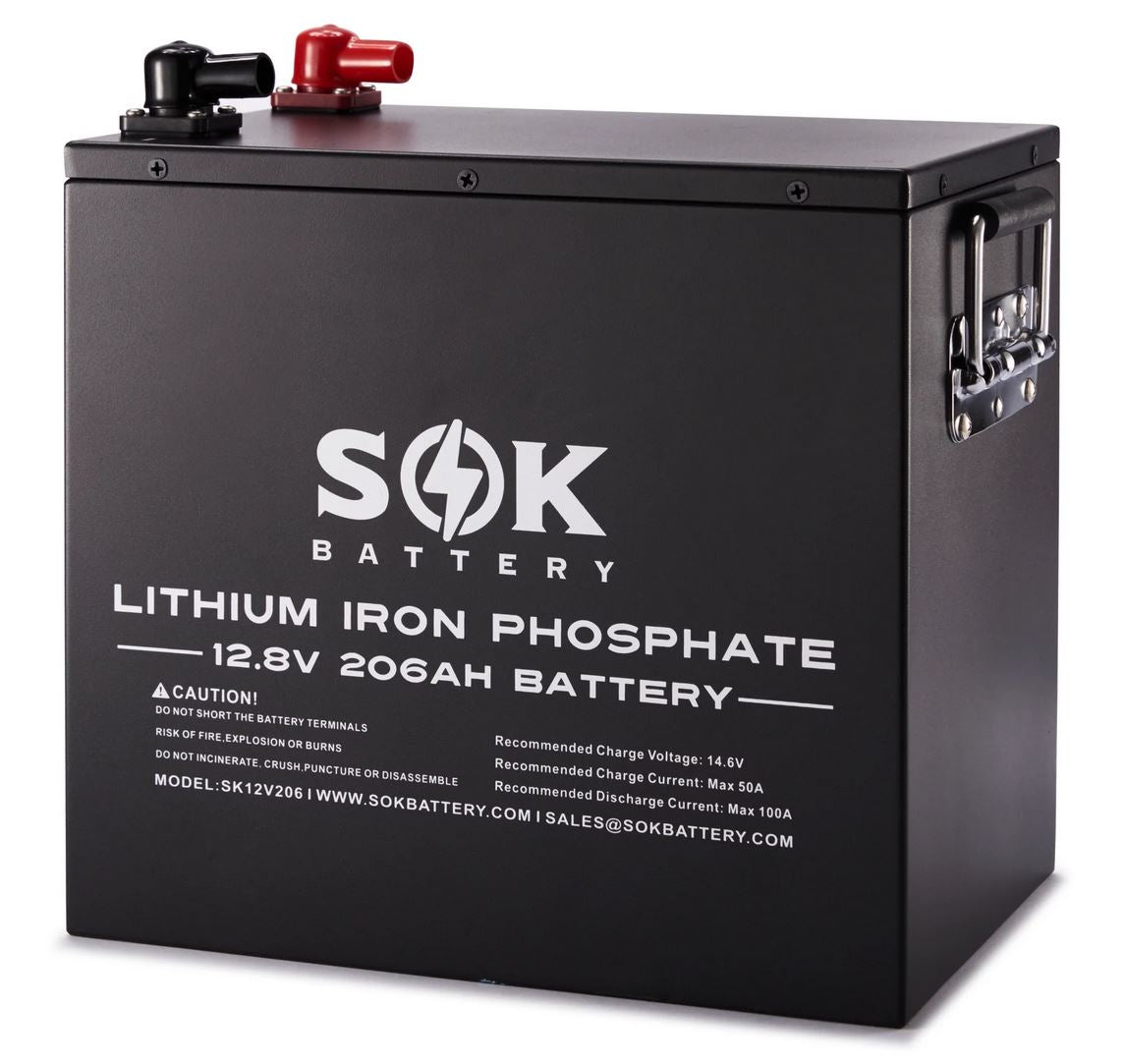
The SOK 206Ah has become a community favorite for good reason — 206Ah of usable capacity, a robust 150A continuous BMS, Bluetooth monitoring with cell-level data, and a track record of reliability across thousands of off-grid installs. At roughly $0.45/Wh, it’s also one of the better values in the market.
Best for Cold Climates: EG4 LifePower4 Heated
If you’re in a climate where temperatures regularly drop below freezing, the EG4 LifePower4 with built-in heating elements removes the biggest maintenance headache. The heater activates automatically when cell temps approach 32°F, drawing power from the battery itself. Available in server-rack and wall-mount form factors for 48V systems.
Best Battery Monitor: Victron SmartShunt 500A
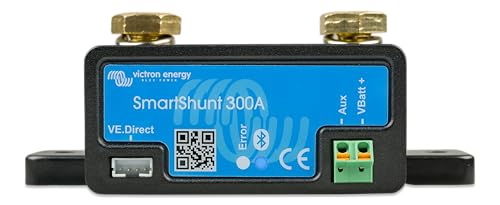
Not a battery, but arguably the most important accessory for maintaining one. Tracks SOC, voltage, current, power, and historical charge/discharge data. Connects via Bluetooth to the VictronConnect app. Gives you the data you need to catch problems early — worth every penny of the ~$100 price tag.
FAQ
How often should I do a full charge cycle on my lithium batteries?
Once every one to three months is sufficient for BMS calibration. Unlike lead-acid, LiFePO4 doesn’t need regular full charges for health — it’s primarily for keeping the SOC meter accurate. Daily partial cycling (20%–80%) is perfectly fine and actually easier on the cells than constant full cycles.
Can I leave my lithium batteries on a solar charger indefinitely?
Yes, as long as your charge controller is set to the correct LiFePO4 profile. The BMS will manage absorption and prevent overcharge. However, if you’re leaving for months, charging to 50–60% and disconnecting is gentler on calendar life.
How do I know when my lithium battery needs replacing?
When usable capacity drops below 70–80% of the original rating, most manufacturers consider the battery end-of-life. With LiFePO4, this typically happens after 3,000–5,000 cycles — roughly 8–15 years for most off-grid use patterns. A Victron SmartShunt or similar monitor that tracks total amp-hours delivered per cycle is the easiest way to measure this.
Do I need to add distilled water or equalize lithium batteries?
No. LiFePO4 batteries are fully sealed with no liquid electrolyte to maintain. There is no equalization charge — the BMS handles cell balancing passively. If you see advice about equalizing lithium batteries, it’s either outdated or confused with lead-acid maintenance.
What happens if my BMS fails?
A failed BMS can either lock the battery in a disconnected state (safe but inconvenient) or, in rare cases, fail to protect against over/under-voltage (dangerous). If your battery suddenly stops accepting charge or delivering power, a BMS fault is likely. Some units (particularly EG4 and SOK) allow BMS reset via Bluetooth. If that doesn’t work, contact the manufacturer — most offer replacement BMS boards under warranty. Never bypass a BMS to keep a battery running.