Process Meat Off-Grid: Essential Equipment Guide
Processing your own meat off-grid means you need equipment that can handle a full deer, hog, or steer without relying on a butcher shop two hours away — and most “homestead butchering equipment” lists just rehash the same Amazon bestsellers without considering whether they’ll actually run on a generator or solar inverter. We spent weeks digging through specs, wattage draws, owner reviews, and homesteading forum threads to find the gear that actually holds up when you’re breaking down 200 pounds of elk in a barn with limited power.
Our Top Picks at a Glance
Best meat grinder overall: LEM Big Bite #22 Meat Grinder — powerful, efficient, reasonable wattage draw.
Best heavy-duty grinder: Weston Butcher Series #32 — handles commercial volumes for large-animal homesteaders.
Best budget grinder: STX Turboforce Classic 3000 Series — solid entry point under $200.
Best sausage stuffer: LEM Vertical Sausage Stuffer 15 lb — the one serious homesteaders actually use.
Best vacuum sealer: Weston Pro-2300 Vacuum Sealer — built for game processing, not leftover soup.
Best bone saw: Weston Butcher Series Electric Meat Saw — makes primal cuts fast without exhausting you.
Our Picks


LEM Big Bite #22
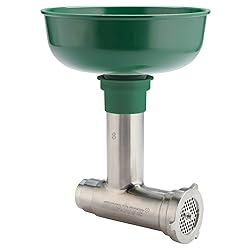
This is the grinder we recommend to most homesteaders processing deer, hogs, or small cattle. The #22 head size hits the sweet spot between throughput and power consumption — it pulls around 1100 watts under load, which most 2000W+ inverters or generators handle without flinching.
Who it’s for: Homesteaders processing 3–10 large animals per year who want speed without overloading a modest off-grid power system.
Pros:
– Grinds 13+ lbs per minute according to manufacturer specs, and owner reports consistently confirm fast throughput on venison and pork
– Permanently lubricated motor means less maintenance in dusty barn or outbuilding environments
– Big Bite auger design pulls meat through without constant stuffing — a real time saver during long processing days
Cons:
– At roughly 80 lbs, it’s not something you’ll casually move between workstations
– Price sits in the $700–$900 range, which is a real investment for a new homestead

Weston Butcher Series #32 Meat Grinder
Off-Grid Insider
Get off-grid guides & gear picks in your inbox — free
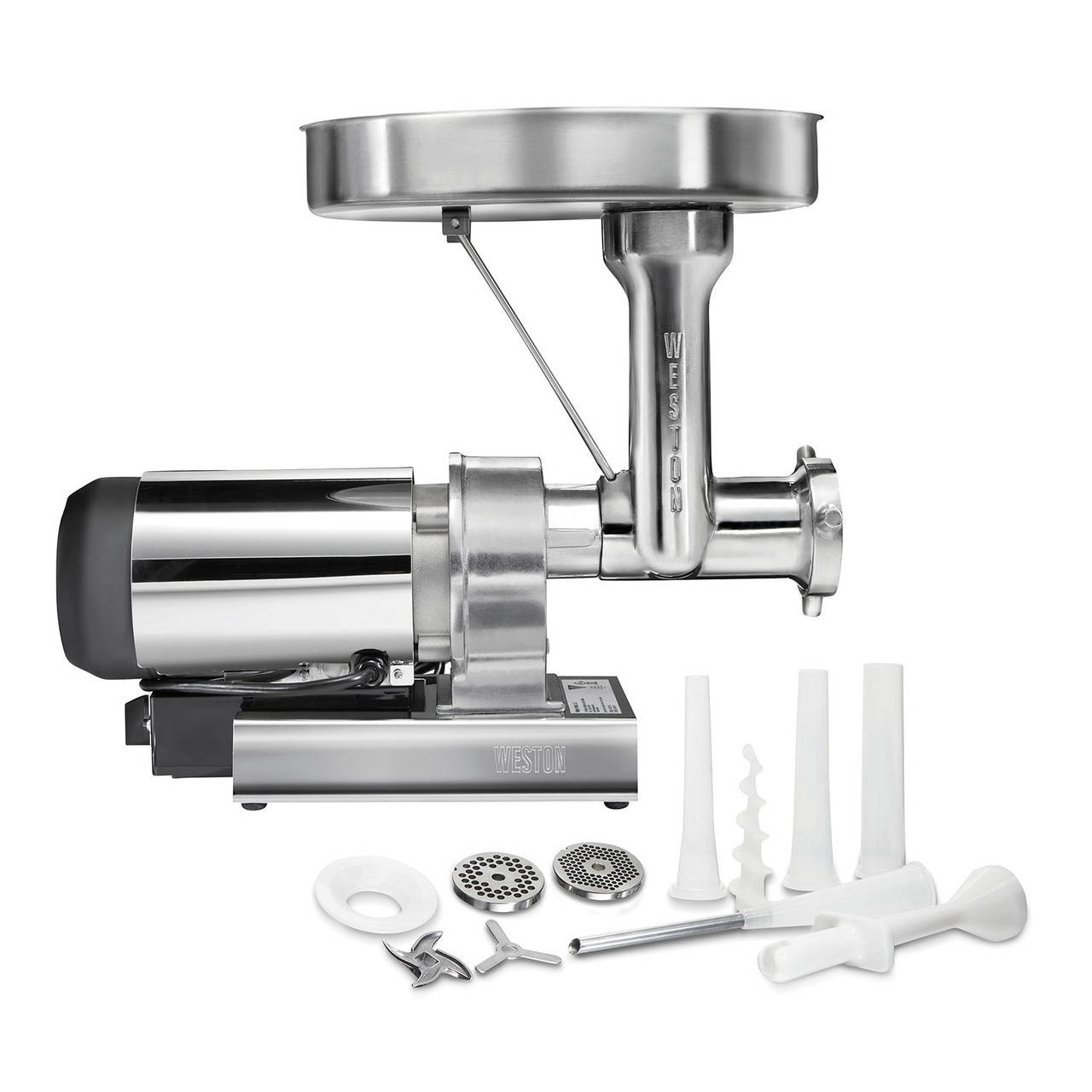
If you’re processing full cattle or multiple hogs in a season, the #32 head size handles larger volumes and tougher cuts without bogging down. This is the step up when you’ve outgrown a #12 or #22 grinder and your homestead butchering equipment needs to scale.
Who it’s for: Larger homesteads, co-ops, or anyone processing beef cattle and wanting commercial-grade durability.
Pros:
– 1.5 HP motor with a #32 head pushes serious volume — Weston rates it at 18+ lbs per minute
– All-metal gears and housing; owner reports consistently praise longevity across hundreds of animals
– Comes with both fine and coarse plates plus a sausage stuffing kit, so it doubles as a basic stuffer in a pinch
Cons:
– Draws approximately 1500 watts under load — you need a robust inverter or a dedicated generator circuit
– Over 100 lbs and bulky; this is a permanent-station grinder, not something you’re putting away after each use

STX Turboforce Classic 3000 Series Meat Grinder
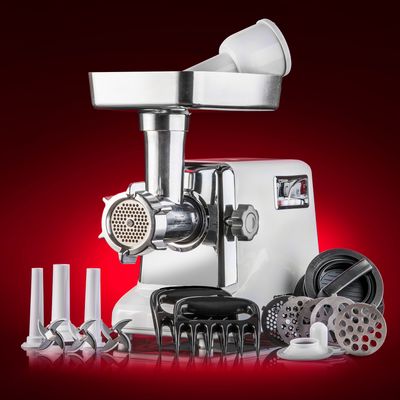
For homesteaders just getting started with meat processing or handling smaller volumes (a few deer per season, backyard poultry), this is the grinder that delivers real capability without the four-figure price tag. It’s a #12 size head with a surprisingly capable motor.
Who it’s for: Beginners or small-scale processors doing fewer than five animals per year on a tight budget.
Pros:
– Priced consistently under $200, making it the most accessible serious grinder on the market
– Three speed settings and a reverse function help manage sinew and connective tissue without jamming
– Ships with three grinding plates, three cutting blades, and a sausage stuffing tube set — usable out of the box
Cons:
– #12 head size means slower throughput; plan for longer processing sessions on a full deer
– Plastic gear housing won’t survive the abuse a metal-geared grinder shrugs off — treat it carefully and keep it cool


LEM 15 lb Sausage Stuffer

Grinder-mounted stuffing tubes work in a pinch, but anyone who’s tried to stuff 30 lbs of bratwurst through one knows the frustration. A dedicated vertical stuffer is a different experience entirely — consistent pressure, uniform links, and no motor heat affecting your meat. This LEM is the model we see recommended most often across homesteading forums and YouTube channels focused on game processing.
Who it’s for: Anyone making sausage, summer sausage, snack sticks, or salami in meaningful quantities.
Pros:
– Two-speed hydraulic piston delivers smooth, consistent pressure — critical for even casings and no air pockets
– No electricity required; it’s entirely manual, making it fully off-grid compatible regardless of your power situation
– All stainless steel cylinder and base clean up fast and resist corrosion even in unheated outbuildings
Cons:
– At 15 lbs capacity, you’ll be reloading multiple times during a big sausage session — the 25 lb model exists but costs significantly more
– Requires a sturdy table or bench mount; the suction-cup base alone isn’t enough for aggressive stuffing
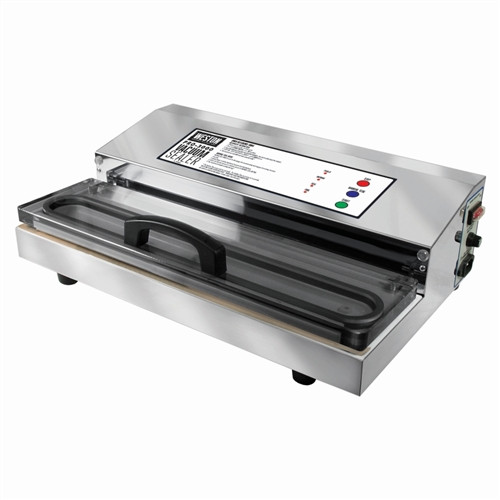
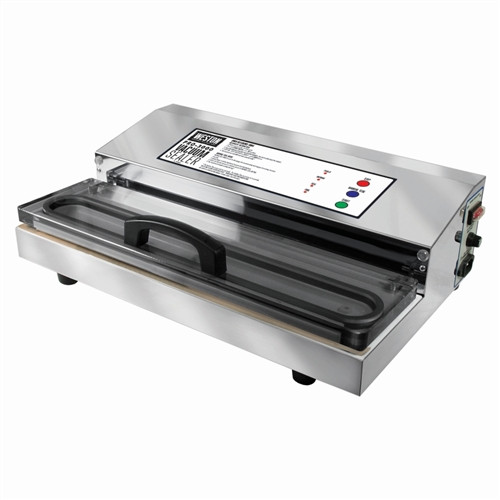
Weston Pro-2300 Vacuum Sealer
Vacuum sealing is non-negotiable for off-grid meat storage. Whether you’re packing a chest freezer on solar or prepping for long-term cold storage, a proper seal prevents freezer burn and extends storage life by months. The Pro-2300 is built for game processing — wider seal bars, stronger suction, and a fan-cooled motor that handles back-to-back sealing without overheating.
Who it’s for: Any homesteader who needs to seal large batches of meat cuts, ground meat, or sausage links in a single processing session.
Pros:
– Double piston pump pulls 28+ inches of mercury — significantly stronger than consumer-grade FoodSaver models
– 15-inch seal bar handles wide bags for roasts, ribs, and bulk ground packs without trimming
– Fan-cooled motor is rated for continuous use; owner reviews consistently report sealing 50+ bags in a session without issues
Cons:
– Requires Weston-compatible or universal vacuum bags — not the cheapest ongoing supply cost
– Draws around 900 watts, which is manageable but worth budgeting on a smaller solar system
Weston Butcher Series Electric Meat Cutting Band Saw

A hand bone saw works, but after quartering your third deer of the season your arms will remind you why butcher shops use band saws. This Weston model handles frozen meat and bone cuts that would destroy a standard wood-cutting band saw, with a stainless steel table and food-safe blade guides.
Who it’s for: Homesteaders doing their own primal and sub-primal cuts on large animals — especially beef and pork.
Pros:
– Cuts through frozen meat and bone cleanly, which is critical if you’re breaking down hanging carcasses in cold weather
– Stainless steel construction and removable blade guard make sanitation between animals straightforward
– ¾ HP motor keeps wattage draw reasonable (around 550W) compared to a full commercial saw
Cons:
– Priced in the $800–$1,100 range — a significant investment, though it replaces the most physically demanding part of butchering
– Blade replacement requires Weston-specific 82-inch blades; stock up before you need them
How We Chose
We focused on three things: off-grid power compatibility, durability in non-climate-controlled environments, and actual owner feedback from homesteading and hunting communities. We cross-referenced manufacturer specs with discussions on forums like Homesteading Today, r/homestead, and dedicated game-processing groups to identify which models hold up over years of real use. We excluded anything that looked good on paper but had consistent owner complaints about motor burnout, cheap gears, or misleading throughput claims. Every product here has a track record with people doing exactly what you’re doing — processing their own animals far from town.
Buying Guide: What to Look For in Off-Grid Meat Processing Equipment

Power Draw vs. Your System Capacity
This is the factor most homestead butchering equipment guides ignore entirely. A 1500-watt meat grinder running for two hours is a real load on a solar-and-battery system. Before buying, check your inverter’s continuous wattage rating (not surge — continuous) and make sure your processing equipment fits within it. If you’re running on a generator, factor in what else is running simultaneously — freezers, lights, well pumps. We recommend totaling the wattage of every piece of equipment you’ll run during a processing day and making sure you’ve got at least 20% headroom.
Grinder Head Size (#8, #12, #22, #32)

The head size number directly correlates to throughput and motor power. A #8 or #12 is fine for poultry, rabbits, and the occasional deer. A #22 is the workhorse sweet spot for most homesteads — it’ll handle deer, hogs, and even beef quarters efficiently. A #32 is commercial territory, justified only if you’re doing multiple cattle or running a small co-op. Bigger isn’t always better — a #32 draws more power and costs more to maintain.
Metal Gears vs. Plastic Gears

This is a hard line for us. Plastic gears are designed to fail as a “safety feature” to protect the motor, but on a remote homestead, a broken gear during processing day means you’re hand-cutting the rest of that animal. Metal gears cost more upfront and can theoretically damage a motor if you jam a bone in — but they don’t snap unexpectedly. For any homesteader doing more than a couple of animals per year, metal gears are the right call.
Build for the Environment, Not the Kitchen
Your processing setup is probably in a barn, garage, or outbuilding that gets cold in winter and hot in summer. Stainless steel construction resists corrosion in damp environments. Permanently lubricated motors tolerate dust and temperature swings better than models requiring periodic oiling. Think about where this equipment actually lives and choose accordingly.
FAQ
What equipment do I need to butcher a deer at home?
At minimum, you need a quality set of skinning and boning knives, a gambrel and hoist for hanging, a meat grinder (we recommend the LEM Big Bite #22), vacuum sealer bags, and a vacuum sealer. For sausage, add a dedicated stuffer. A bone saw is optional for deer but becomes essential for pork and beef. A sturdy stainless-steel table and cutting boards round out the setup.
Can I run a meat grinder on solar power?
Yes, but you need to size your system correctly. A typical #22 grinder draws 1000–1200 watts under load. You’ll need an inverter rated for at least 2000 watts continuous (to leave headroom for startup surge), and enough battery capacity to run the grinder for your full processing session — usually two to four hours. A 5kWh battery bank handles this comfortably with energy left for lights and a vacuum sealer.
What is the best meat grinder size for a homestead?
For most homesteaders processing deer, hogs, or small numbers of cattle, a #22 head grinder is the best balance of speed, power consumption, and price. It grinds roughly 13 lbs per minute and handles the volume of a full deer in under 30 minutes of actual grinding time. Go #32 only if you’re processing cattle regularly or sharing equipment with neighbors.
How do I keep meat cold during processing without refrigeration?
Process in cold weather when possible — hanging temperatures between 33–40°F are ideal. If you’re processing in warmer months, work in small batches and get each batch vacuum sealed and into a chest freezer immediately. Some homesteaders use large coolers with block ice as staging areas. The key is keeping the meat below 40°F at all times to prevent bacterial growth.
Is it cheaper to process your own meat or pay a butcher?
Custom butchering typically runs $0.50–$1.00+ per pound for processing, and many rural processors have wait times of weeks or months during hunting season. If you’re processing three or more deer-sized animals per year, a solid homestead butchering equipment setup pays for itself within one to two seasons. The real value is independence — you process on your schedule, cut exactly how you want, and never lose an animal to a backed-up processor.
Our Verdict
For most off-grid homesteaders, the LEM Big Bite #22 is the centerpiece your processing setup should be built around. It’s powerful enough for serious throughput, efficient enough for solar or generator power, and built to last in the environments where homesteaders actually work. Pair it with the LEM 15 lb Sausage Stuffer and the Weston Pro-2300 Vacuum Sealer, and you’ve got a complete processing line that handles everything from ground venison to smoked sausage links — no trips to town required.