7 Best Off-Grid Generators 2026: Buyer’s Guide
When the grid goes down, nobody’s coming to fix it — that’s the deal you made when you moved off-grid. The difference between a homestead that keeps running and one that goes dark for days comes down to one piece of equipment: your backup generator. But choosing between propane, diesel, dual-fuel, and inverter models across dozens of brands is overwhelming, and the wrong pick can mean thousands wasted on a unit that’s too loud, too thirsty, or too small for your actual loads.
We spent weeks digging into spec sheets, manufacturer data, fuel consumption curves, and hundreds of verified buyer reports across forums like r/OffGrid, r/Homesteading, and Solar Panel Talk to find the generators that actually deliver for off-grid homesteads — not suburban backup duty.
Our top pick: Honda EU7000iS — unmatched reliability and whisper-quiet operation for most homesteads.
Best whole house: Generac Guardian 22kW — automatic standby power for full-size off-grid homes.
Best budget dual fuel: Champion 76533 — serious wattage with propane/gas flexibility under $1,200.
Best quiet generator for off-grid cabin: Yamaha EF2200iS — library-quiet at quarter load, perfect for small cabins.
Best diesel: Cummins Onan QD 8000 — the diesel workhorse built for permanent off-grid installations.
Our Picks
Honda EU7000iS

The Honda EU7000iS is the generator we recommend to most off-grid homesteaders without hesitation. It produces 7,000 watts of clean inverter power at just 52 dB on eco mode — quieter than a normal conversation — and Honda’s GX390 engine has a well-documented reputation for lasting thousands of hours with basic maintenance.
Who it’s for: Homesteaders running a well pump, refrigeration, chest freezer, and lights who want set-it-and-forget-it reliability.
Pros:
– Fuel injection means reliable cold starts even after sitting for weeks — no carb cleaning rituals
– 52 dB at rated load; neighbors (if you have any) won’t hear it past 50 feet
– Electric start with Bluetooth monitoring via the Honda My Generator app
Cons:
– Premium price (typically $4,200–$4,800) — you’re paying for the Honda tax, but resale holds strong
– At 262 lbs dry weight, it’s technically “portable” but realistically needs a permanent spot or cart
Generac Guardian 22kW
Off-Grid Insider
Get off-grid guides & gear picks in your inbox — free
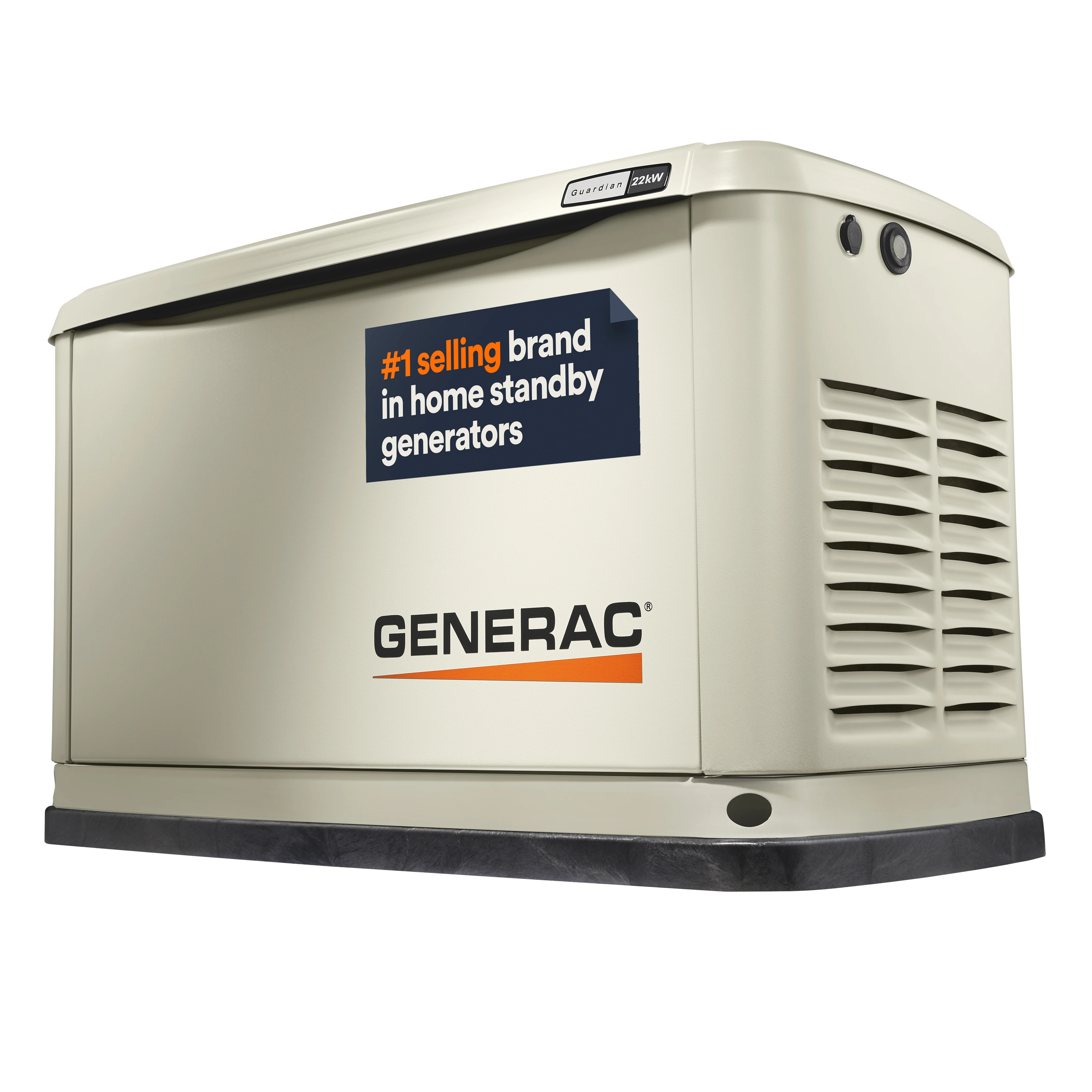
If you need a true whole house backup generator off-grid, the Generac Guardian 22kW is the most practical standby option. It runs on propane or natural gas, fires up automatically within 10 seconds of detecting power loss via the included 200-amp transfer switch, and can handle central HVAC, well pumps, and every circuit in a typical 2,000+ sq ft homestead simultaneously.
Who it’s for: Larger off-grid homes with high electrical loads — especially those already using propane for heating or cooking.
Pros:
– 22,000 watts handles full house loads including HVAC, water heaters, and workshop tools
– Automatic transfer switch included — power restores in under 10 seconds with no manual intervention
– Generac’s Mobile Link remote monitoring sends alerts and status updates to your phone
Cons:
– Requires professional installation and a concrete pad — budget $1,500–$3,000 for install on top of the $5,500–$6,500 unit cost
– Propane consumption at full load runs 3.4–4.0 gallons per hour; you need substantial tank capacity for extended outages
Champion 76533 Dual Fuel
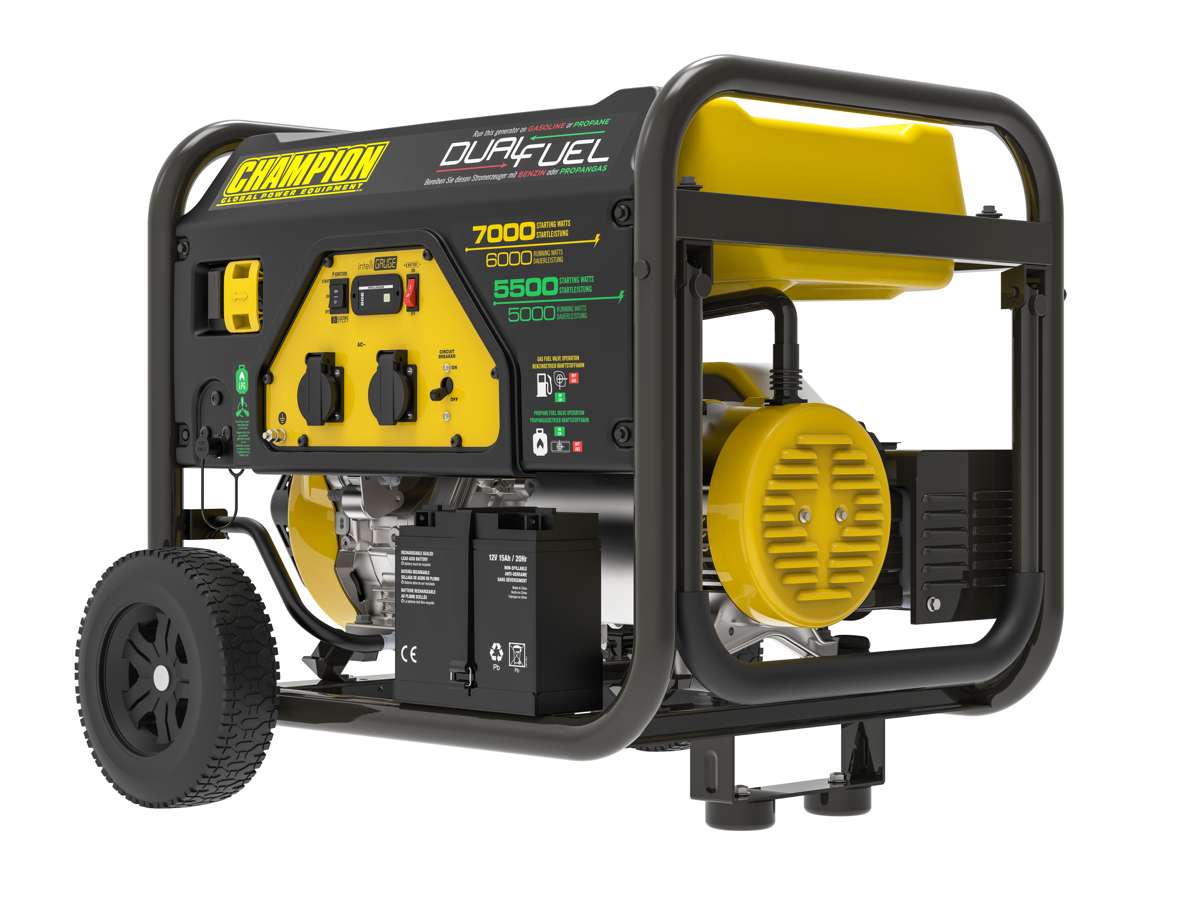
The Champion 76533 delivers 4,750 running watts on gas or 4,275 on propane, and at roughly $1,000–$1,200 street price, it’s the best value entry point for off-grid backup. The dual-fuel capability matters: gasoline degrades in storage, but propane sits indefinitely — a real advantage when your generator might idle for months between uses.
Who it’s for: Budget-conscious homesteaders who want fuel flexibility without spending Honda money.
Pros:
– Dual-fuel switch between gasoline and propane without tools or conversion kits
– Electric start standard, with Intelligauge monitoring volts, hertz, and run hours on the panel
– Champion’s 3-year warranty and free lifetime technical support are good for this price tier
Cons:
– 68 dB rated noise is noticeably louder than inverter generators — you’ll want it 50+ feet from living spaces
– Open-frame design means no inverter-clean power; sensitive electronics should go through a surge protector
Yamaha EF2200iS
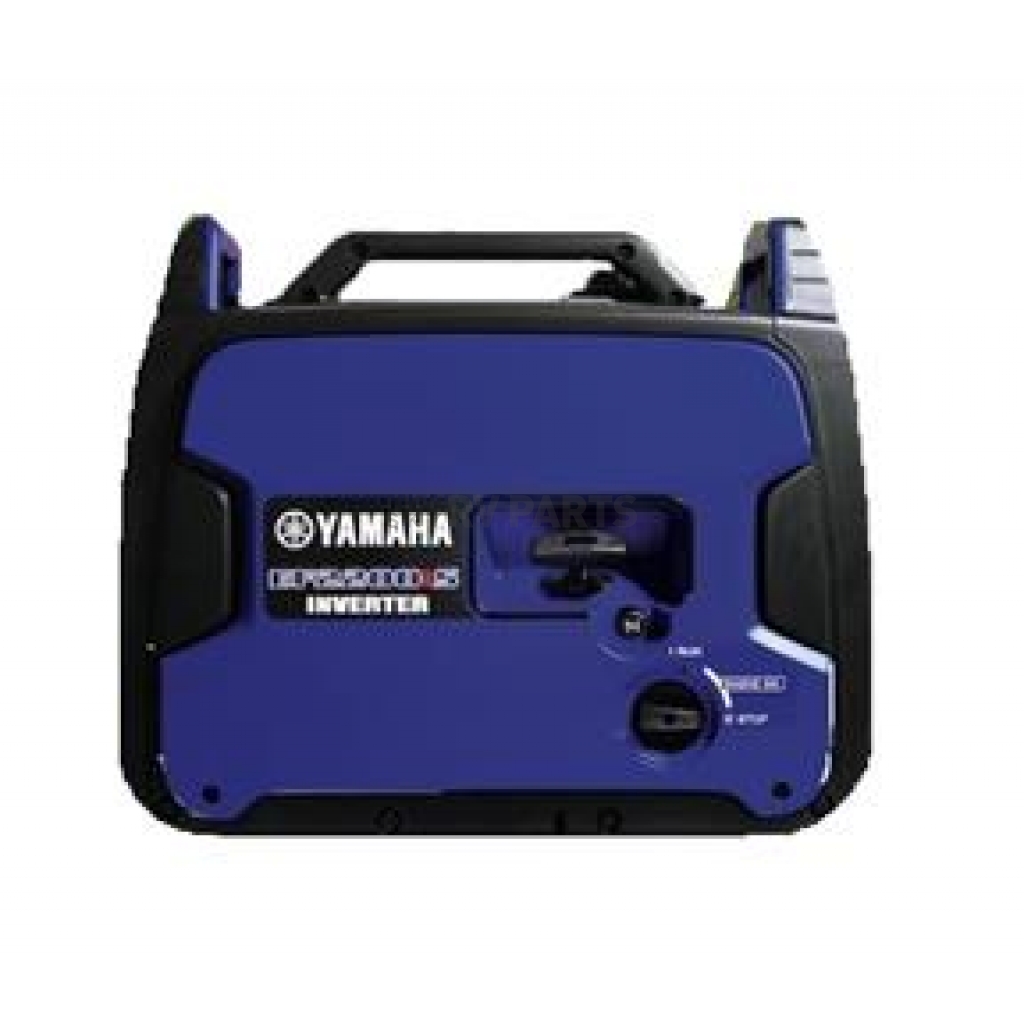
If you’re running a small off-grid cabin — lights, a mini fridge, charging stations, maybe a small window unit — the Yamaha EF2200iS is the quiet generator for off-grid cabin use that actually lives up to the “quiet” marketing. At 51.5 dB on quarter load, it’s hard to hear from inside a cabin with the windows shut. Yamaha rates it at 2,200 surge watts and 1,800 continuous.
Who it’s for: Small cabin owners, seasonal off-gridders, or anyone who needs a portable, silent-running backup for light loads.
Pros:
– 51.5 dB at quarter load — the quietest generator in its class by verified spec
– Only 55 lbs — one person can carry it, store it, and deploy it without help
– Smart Throttle adjusts engine speed to load, stretching a 1.1-gallon tank to 10.5 hours at quarter load
Cons:
– 1,800 running watts won’t start a well pump or run a large refrigerator and other loads simultaneously
– Small fuel tank means frequent refills under heavier loads (about 4.5 hours at rated output)
Cummins Onan QD 8000
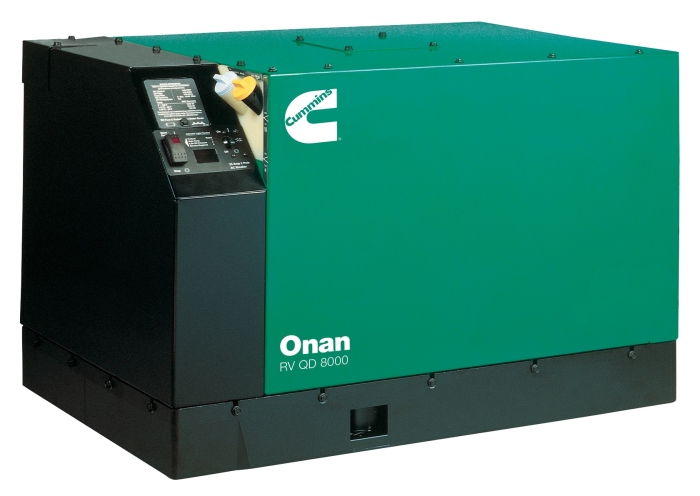
For the propane generator vs diesel off-grid debate, diesel wins on one metric that matters enormously for remote homesteads: fuel energy density. The Cummins Onan QD 8000 puts out 8,000 watts from a Kubota diesel engine that sips 0.4 gallons per hour at half load. Diesel stores longer than gasoline, and in cold climates where propane pressure drops, a diesel unit keeps running without flinching.
Who it’s for: Serious off-gridders in cold climates or remote locations where diesel fuel availability and storage life are critical advantages.
Pros:
– Kubota 3-cylinder diesel engine is a commercial-grade powerplant with documented 10,000+ hour lifespans in the field
– 0.4 GPH at 50% load — a 50-gallon tank gives you roughly 5 days of continuous backup
– Liquid-cooled and enclosed; rated for continuous duty, not just emergency backup
Cons:
– Expensive — expect $8,000–$10,000 for the unit alone, plus installation costs
– Diesel engines require more involved maintenance (fuel filter changes, bleeding fuel lines, winterizing with anti-gel additives)
Westinghouse WGen9500DF

The Westinghouse WGen9500DF hits a sweet spot we don’t see often: 9,500 running watts on gasoline (12,500 peak) with full dual-fuel propane capability, a remote start key fob, and a street price that frequently dips under $1,100. For homesteaders who need to run a well pump, full-size fridge, chest freezer, and a few circuits simultaneously, this is the most wattage per dollar you’ll find.
Who it’s for: Homesteaders who need heavy wattage for demanding loads (well pumps, power tools, multiple appliances) without paying standby-generator prices.
Pros:
– 9,500 running watts on gas easily handles simultaneous well pump startup surges and refrigeration loads
– Remote start fob lets you fire it up from inside the house on cold mornings
– Transfer-switch ready with both L14-30R and 14-50R outlets built in
Cons:
– 73 dB at rated load — this is a loud machine; plan your generator placement accordingly
– 365 lbs means it’s not moving once you set it up; build a permanent shelter for it
DuroMax XP13000HXT

The DuroMax XP13000HXT goes a step further than dual fuel — it runs on gasoline, propane, and natural gas. With 13,000 running watts on gasoline, it’s essentially a portable whole house backup generator off-grid for homesteads with high peak loads. The tri-fuel flexibility is particularly appealing if you’re already running a large propane tank for heating and want redundant fuel options.
Who it’s for: Homesteaders with large loads or workshop equipment who want maximum fuel flexibility and raw power.
Pros:
– 13,000 running watts on gas / 10,850 on propane — enough to back up a full-size homestead and workshop simultaneously
– Tri-fuel design means you’re never locked into one fuel source; propane for storage life, gas for availability, NG if plumbed
– CO Alert sensor auto-shuts the unit down if carbon monoxide reaches dangerous levels
Cons:
– 76 dB makes this the loudest unit on our list — a dedicated generator shed with sound baffling is essentially mandatory
– At 440 lbs, this is a permanent installation; plan accordingly with a concrete pad or reinforced platform
How We Chose
We started with over 40 generators marketed for home backup and off-grid use and filtered for factors that actually matter on a homestead: sustained running wattage (not just peak claims), verified fuel consumption rates at realistic loads, noise levels measured in dB at rated distance, engine pedigree and documented longevity, and real-world owner reports from off-grid communities. We cross-referenced manufacturer specs against independent reviews and gave heavy weight to units with established track records — because when you’re 30 miles from the nearest dealer, reliability isn’t a feature, it’s everything. We excluded generators with fewer than 100 verified buyer reviews or a pattern of unresolved reliability complaints.
Buying Guide
Fuel Type: Propane Generator vs Diesel Off-Grid
This is the single most consequential decision. Here’s the honest breakdown:
- Propane stores indefinitely, burns cleaner, and is available in portable tanks anywhere. But propane has roughly 73% of gasoline’s energy density, meaning higher fuel consumption per kWh generated. In extreme cold (below 0°F), propane tank pressure drops and output suffers.
- Diesel has the highest energy density of any generator fuel, stores well for 12–18 months with stabilizer, and diesel engines are built for tens of thousands of hours. But diesel generators cost more upfront, require more maintenance, and can gel in extreme cold without additives.
- Dual fuel (gas/propane) offers the best flexibility for most homesteaders. Store propane long-term, use gasoline when available. The 10–15% power loss on propane is a fair trade for fuel redundancy.
Wattage Sizing
The most common mistake is undersizing. Add up your critical loads — well pump (1,000–2,000W starting surge), refrigerator/freezer (600–800W running, 1,200–2,400W surge), lights (200–500W), and anything else essential. Multiply total running watts by 1.25 for safety margin. A typical off-grid homestead with a well pump, refrigeration, and basic circuits needs 5,000–8,000 running watts minimum.
Noise Level
If you chose off-grid living partly for the quiet, a 76 dB generator running at 3,600 RPM will make you miserable. Inverter generators (Honda, Yamaha) run at variable speeds and typically operate at 50–58 dB — comparable to a quiet conversation. Conventional generators run at fixed 3,600 RPM and land between 68–76 dB. For a quiet generator for off-grid cabin use, inverter models are the only real option, but they cost more per watt.
Runtime and Tank Size

A generator that runs 4 hours at full load means you’re refueling 6 times a day during an extended outage. For off-grid backup duty, we look for minimum 8-hour runtime at 50% load. Larger fixed tanks (or easy connection to external propane supplies) are a major advantage for homestead use where outages can last days or weeks.
FAQ
What size generator do I need for an off-grid homestead?
Most off-grid homesteads need between 5,000 and 10,000 running watts for essential circuits — well pump, refrigeration, freezer, lights, and charging. If you’re running HVAC or a workshop, size up to 10,000–15,000 watts. Always calculate your actual loads rather than guessing.
Is propane or diesel better for off-grid generator use?
For most homesteaders, propane is the more practical choice — it stores indefinitely, burns cleaner, and tanks are easy to refill or swap. Diesel is better for heavy-duty, continuous-run applications or cold climates where you need maximum fuel efficiency and can handle the extra maintenance. This propane generator vs diesel off-grid decision comes down to your climate, usage pattern, and maintenance willingness.
How quiet are inverter generators compared to conventional generators?
Inverter generators typically run between 50–58 dB, which is roughly the volume of a normal indoor conversation. Conventional open-frame generators run at 68–76 dB, closer to a vacuum cleaner. If you want a quiet generator for off-grid cabin use, inverter technology is the only way to get below 60 dB.
Can I run a whole house on a portable generator?
A large portable generator (9,500+ running watts) can handle most essential circuits in a typical off-grid home, but it requires manual startup and fuel management. For true whole house backup generator off-grid capability with automatic transfer, you need a standby unit like the Generac Guardian series professionally installed with an automatic transfer switch.
How long can I store generator fuel without it going bad?
Propane stores indefinitely with no degradation — it’s the best fuel for long-term standby generators. Diesel lasts 12–18 months with fuel stabilizer and proper storage. Gasoline degrades in 3–6 months even with stabilizer, making it the worst choice for a generator that might sit idle for extended periods.
Our Verdict
For most off-grid homesteads, the Honda EU7000iS is our top recommendation — it’s quiet enough to run near your cabin, reliable enough to start after months of sitting, and powerful enough to handle a well pump, refrigeration, and essential circuits simultaneously. If your budget is tighter, the Champion 76533 dual fuel delivers remarkable capability for under $1,200 and gives you the propane storage advantage. Whatever you choose, size for your actual loads, plan your fuel storage strategy before you need it, and treat your generator like the critical infrastructure it is — because off-grid, it’s the last line between comfort and a very long, dark night.