7 Best Propane Stoves for Off-Grid Cooking 2026
Finding the right propane stove for off-grid cooking shouldn’t require a PhD in BTU ratings and burner configurations, but here we are. Most “camp stoves” are flimsy weekend toys that buckle under a cast iron skillet, while restaurant-grade units cost a fortune and weigh as much as your dog. We dug through manufacturer specs, verified buyer feedback, and community forums to find propane stoves that actually hold up to daily off-grid kitchen duty — not just a Saturday cookout.
Our top pick: Camp Chef Explorer 2-Burner — the best propane stove for off-grid cooking for most people. Best budget: Coleman Classic 2-Burner. Best high-output: Camp Chef Everest 2X. Best for large families: Camp Chef Pro 60X.
Our Picks
Camp Chef Explorer 2-Burner Stove
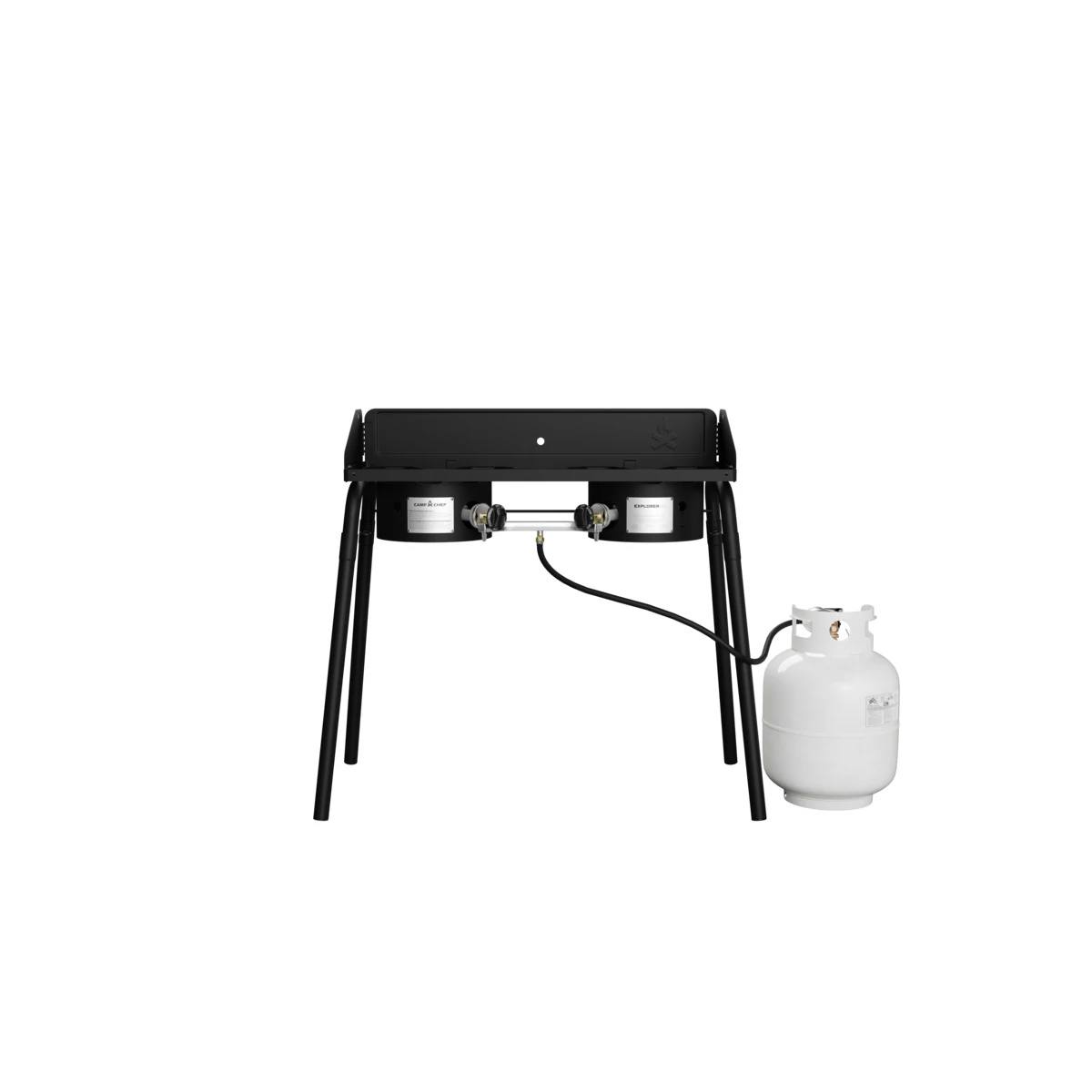
The Explorer is the workhorse that keeps showing up in off-grid forums for a reason: 30,000 BTU per burner, a heavy-gauge steel body, and a cooking surface wide enough for two 12-inch skillets side by side. It runs on standard 1 lb propane canisters or adapts to a bulk 20 lb tank with a hose (sold separately), which is how most off-grid households actually use it.
Best for: Anyone setting up a primary or backup off-grid kitchen who needs reliable, high-heat cooking daily.
Pros:
– 30,000 BTU per burner handles cast iron, pressure canners, and woks without struggle
– Detachable legs let you set it at counter height or remove them for tabletop use
– Compatible with Camp Chef’s full accessory line — griddles, BBQ boxes, pizza ovens
Cons:
– At ~34 lbs it’s not something you’re carrying far from camp
– Wind screens are minimal; you’ll want a sheltered setup or aftermarket windbreak
Coleman Classic 2-Burner Propane Stove
Off-Grid Insider
Get off-grid guides & gear picks in your inbox — free
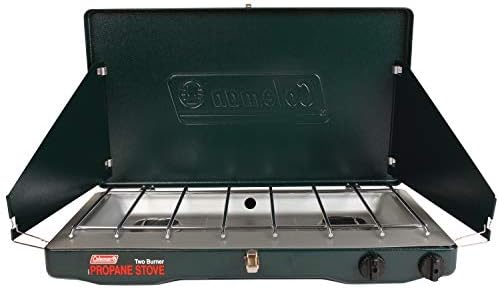
If you’re watching every dollar while building out your off-grid setup, the Coleman Classic delivers startling value. It’s been in production for decades with minimal changes — because the design works. Two burners at 10,000 BTU each, PerfectFlow pressure regulation, and a suitcase-style latch that keeps everything protected during transport.
Best for: Budget-conscious beginners and anyone who wants a proven, no-frills propane stove for off-grid cooking without spending triple digits.
Pros:
– Street price typically under $50 — hard to beat for a functional two-burner
– PerfectFlow technology maintains consistent heat output even as canister pressure drops
– Wind-blocking side panels actually work decently in moderate conditions
Cons:
– 10,000 BTU per burner is adequate for most cooking but struggles with large-batch canning
– Grate spacing is tight for oversized cast iron — measure your cookware first
Camp Chef Everest 2X High-Output Stove
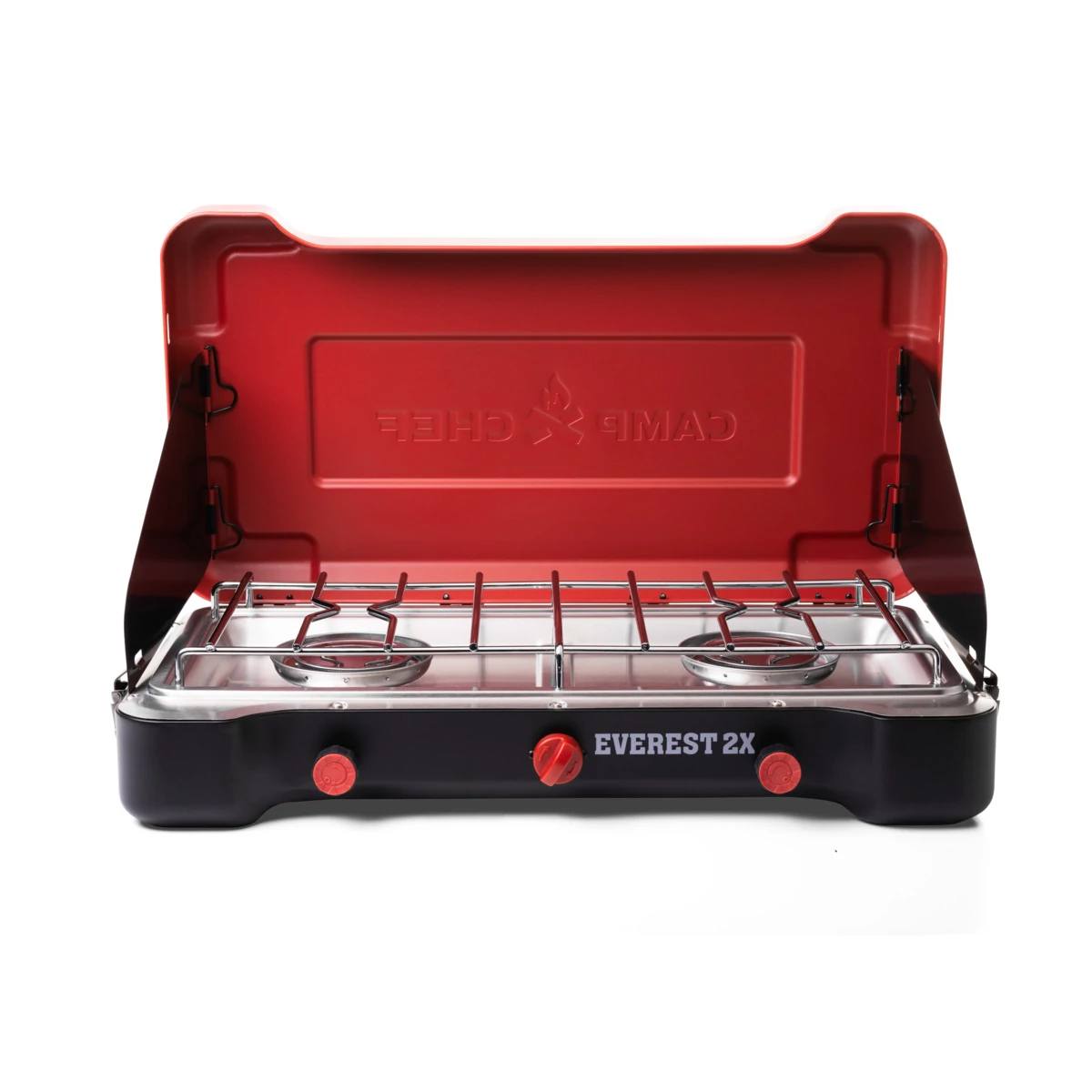
The Everest 2X pushes 40,000 BTU per burner, making it the highest-output portable option we found. That kind of heat is what you need for serious wok cooking, fast water boiling, and pressure canning at altitude where lower-BTU stoves can’t maintain a rolling boil. The matchless ignition is reliable based on extensive buyer feedback, which matters when your hands are full.
Best for: Off-gridders at elevation, anyone doing large-batch water boiling or pressure canning, and serious cooks who refuse to wait.
Pros:
– 40,000 BTU per burner — boils water significantly faster than standard camp stoves
– True matchless ignition with consistent reports of long-term reliability
– Compact folding design with a sturdy latch for a stove this powerful
Cons:
– That BTU output burns through propane faster — expect roughly 1 lb per hour at full blast on both burners
– Overkill (and wasteful) if you mostly simmer and sauté
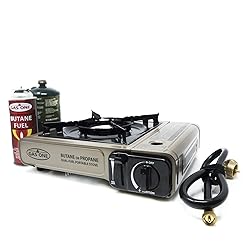
GasOne B-5300 Dual Fuel Portable Stove

The GasOne B-5300 takes both standard propane and butane canisters, giving you fuel flexibility that most single-fuel stoves can’t match. At just over 3 lbs, it’s the most portable option on this list and works well as a secondary cooking station or a grab-and-go stove for hunting trips and supply runs.
Best for: Off-gridders who want a compact backup stove, or anyone who needs to switch between propane and butane depending on what’s available.
Pros:
– Dual-fuel capability means you’re never stuck with one canister type
– Under 4 lbs — portable for a propane-capable stove
– Built-in piezo ignition and automatic safety shutoff if it overheats
Cons:
– Single burner with 12,000 BTU — this is a supplemental stove, not a kitchen replacement
– Small cooking surface limits you to one pot or skillet at a time
Camp Chef Pro 60X Two-Burner Stove
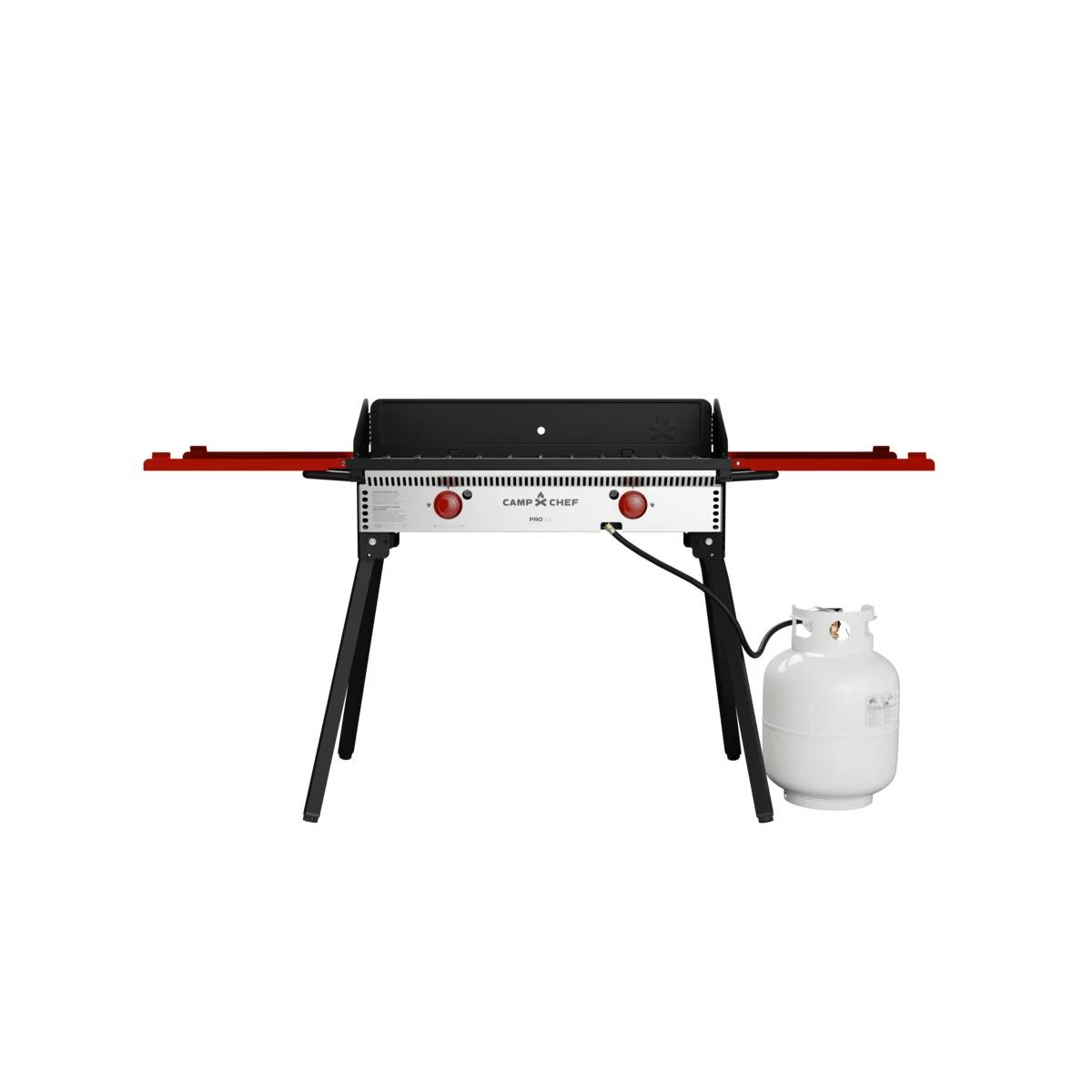
The Pro 60X is the Explorer’s bigger, more powerful sibling. Each burner delivers 30,000 BTU across a wider 14-inch cooking surface — enough room for a 14-inch cast iron skillet and a large stockpot simultaneously. The full-length drip tray underneath is a small detail that makes a real difference in daily off-grid use where cleanup water is precious.
Best for: Families of four or more, off-grid homesteaders who batch-cook and preserve food regularly, and anyone running a semi-permanent outdoor kitchen.
Pros:
– 14-inch wide burner grates accommodate oversized cast iron and canners with room to spare
– Full-length removable drip tray simplifies cleanup — a genuine quality-of-life feature
– Same Camp Chef accessory compatibility as the Explorer line
Cons:
– Heavier and wider than the Explorer — this is a semi-permanent kitchen fixture, not a grab-and-go stove
– Premium pricing puts it at roughly double the Explorer’s cost
Flame King YSNHT-300 Three-Burner Propane Stove
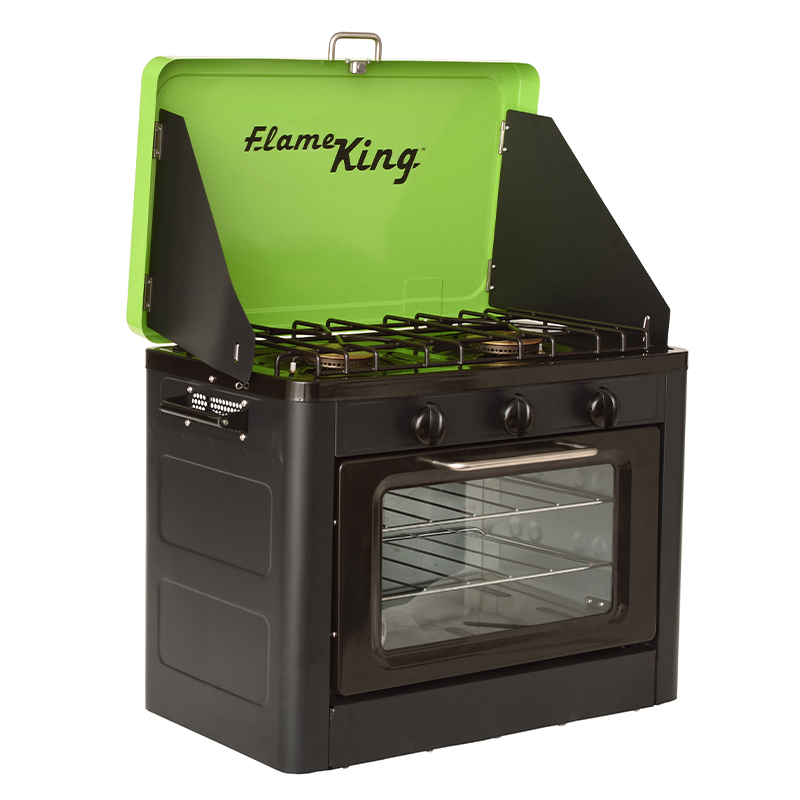
Three burners change the math on off-grid meal prep. The Flame King YSNHT-300 delivers 75,000 BTU total across three independently controlled burners, letting you run a full dinner spread — protein, starch, and vegetables — simultaneously. It connects directly to a 20 lb tank and is built with a thick steel frame that inspires confidence under heavy loads.
Best for: Off-grid households cooking for groups, homesteaders who want a three-burner outdoor kitchen setup without going propane-plumbed.
Pros:
– Three independent burners with 25,000 BTU each — genuine multitasking capability
– Connects directly to standard 20 lb propane tanks (hose and regulator included)
– Heavy-gauge steel construction rated for heavy cast iron and large canners
Cons:
– At over 30 lbs and 29 inches wide, this needs a dedicated counter or table
– No windscreen included — budget for a sheltered installation or DIY solution
How We Chose
We started with every propane stove marketed for outdoor and off-grid cooking, then filtered ruthlessly. First cut: anything under 10,000 BTU per burner — that’s too weak for daily kitchen use, especially at elevation. Second cut: we eliminated stoves with consistent reports of regulator failures, warped grates, or ignition issues within the first year, pulling from verified buyer reviews across multiple retailers. We cross-referenced specs against off-grid community discussions on forums and social media where people report real long-term use, not weekend impressions. What survived are stoves with the BTU output, build quality, and fuel efficiency to serve as genuine off-grid cooking solutions.
Buying Guide: What to Look for in an Off-Grid Propane Stove
BTU Output Per Burner
This is the single most important spec. For daily off-grid cooking — especially if you’re doing any canning, large-batch boiling, or cooking at altitude — you want at least 20,000 BTU per burner. Anything under 15,000 will leave you waiting too long for water to boil and struggling to maintain heat under heavy cast iron. The best propane stove for off-grid cooking will have enough BTU headroom that you can dial it down to simmer, rather than running maxed out just to maintain temperature.
Fuel Configuration and Tank Compatibility

A stove that only runs on 1 lb green canisters will cost you a fortune in fuel over time. For any serious off-grid setup, you need a stove that connects to a bulk 20 lb (or larger) propane tank via a hose and regulator. Some stoves include the adapter hose; others sell it separately. Check before you buy. A typical off-grid household cooking three meals a day on a two-burner stove goes through roughly one 20 lb tank every three to four weeks, depending on cooking style and BTU usage.
Build Quality and Grate Size
Your stove needs to handle cast iron. Period. Off-grid cooking gravitates toward heavy cookware — Dutch ovens, cast iron skillets, pressure canners — and a flimsy stove will warp, wobble, or collapse under load. Look for heavy-gauge steel construction, wide grate spacing that accommodates 12-inch skillets without overhang, and stable leg or base design. If the manufacturer specs don’t list maximum weight capacity, that’s a red flag.
Wind Resistance and Shelter Requirements
Propane burners lose dramatic efficiency in wind. Some stoves include side panels or windscreens; most don’t provide enough protection for exposed locations. If you’re setting up a permanent or semi-permanent outdoor kitchen, plan for a three-sided wind shelter or position your stove against a structure wall. A stove that’s spec’d at 30,000 BTU can perform like a 15,000 BTU stove in a 15 mph crosswind.
FAQ
What is the best propane stove for off-grid cooking?
The Camp Chef Explorer 2-Burner is our top pick for most off-grid households. It delivers 30,000 BTU per burner, handles heavy cast iron without flexing, connects to bulk propane tanks, and has a proven track record in off-grid communities. It strikes the best balance of power, durability, and value.
How long does a 20 lb propane tank last with an off-grid cooking stove?
A 20 lb propane tank contains roughly 430,000 BTU of energy. Running a single 30,000 BTU burner at full output, that’s about 14 hours of cook time. In real-world off-grid use — where you’re adjusting flame levels and not running both burners continuously — most households report a 20 lb tank lasting three to four weeks of daily cooking.
Can I use a propane camping stove as my main off-grid kitchen stove?
Yes, but choose carefully. Low-BTU weekend camping stoves won’t cut it for daily use. You need a stove rated at 20,000+ BTU per burner with heavy-gauge construction that can handle cast iron and daily wear. The stoves on this list are all rated for that level of use.
Is propane or wood better for off-grid cooking?
Propane gives you instant, adjustable heat with no fire-starting time. Wood is free if you have timber but requires constant attention, produces smoke, and offers less temperature control. Most serious off-grid kitchens use propane as the primary cooking fuel and wood stoves for heating with occasional cooking. They complement each other well — propane for daily meals, wood for slow-cooking and winter heating.
How do I safely store propane tanks for off-grid living?
Store propane tanks upright, outdoors, and away from any ignition sources. Never store tanks inside your cabin or shelter — propane is heavier than air and will pool at floor level if it leaks. Keep tanks on a level surface in a ventilated area, out of direct sunlight in summer, and inspect valves and hoses regularly for leaks using a soapy water test. Most off-grid homesteads keep two to three 20 lb tanks in rotation.
Our Verdict
For most off-grid households, the Camp Chef Explorer 2-Burner is the best propane stove for off-grid cooking — full stop. It has the BTU output for serious work, the build quality for cast iron abuse, and the accessory ecosystem to grow with your kitchen. If budget is tight, start with the Coleman Classic and upgrade when you can. Either way, pair your stove with a bulk propane tank setup from day one — your wallet and your cooking will both thank you.