Solar Well Pump Setup: Save $1,200/Year (Guide)
If you’re living off-grid or building a homestead, water is the first problem you need to solve — and if you’ve got a well, a solar powered well pump is one of the most reliable ways to get water without a monthly electric bill or a generator running all day. But between pump types, solar panel sizing, controller specs, and well depth, there’s a lot that can go wrong if you don’t match your components correctly. We’ve dug into the specs, manufacturer data, and real-world reports from off-grid communities to put together a no-nonsense guide to getting this right the first time.
What You’ll Learn
- How to size a solar well pump system based on your well depth, water demand, and sun hours
- The difference between submersible and surface solar pumps — and which one you actually need
- How to wire solar panels directly to a pump versus using a battery-backed system
- Specific product recommendations with real specs and pricing context
Understanding Solar Well Pump Systems
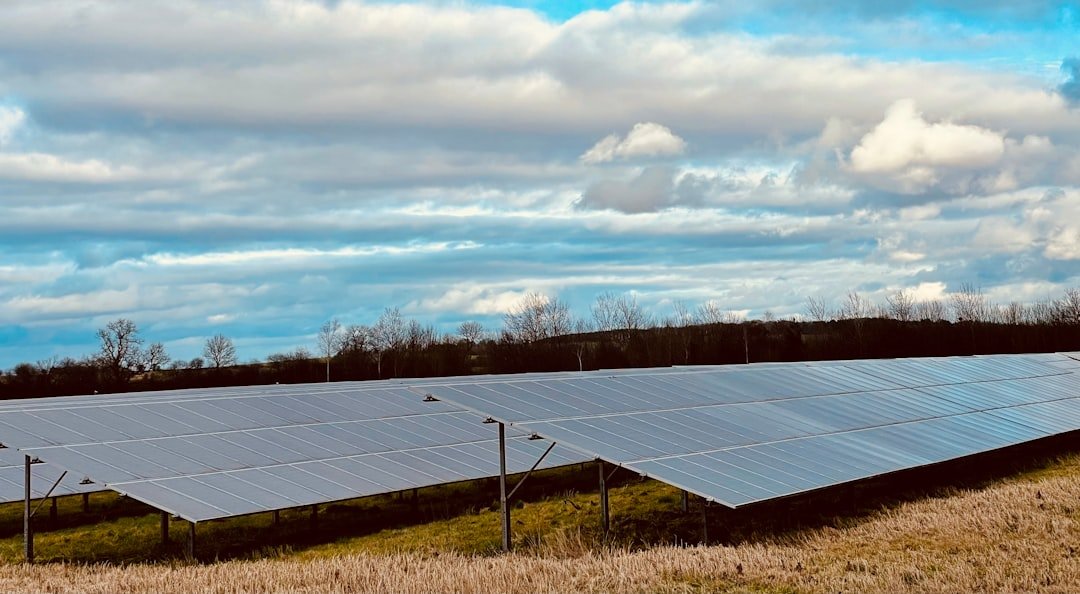
A solar powered well pump replaces your conventional AC well pump with a DC pump driven directly by photovoltaic panels. The core components are simple: solar panels, a pump controller, and the pump itself. Some setups add batteries and an inverter, but many run direct — panels power the pump when the sun shines, and water goes into a storage tank for use anytime.
This “solar direct” approach is the most common for off-grid wells because it’s the simplest and most affordable. You’re essentially trading electrical storage (batteries) for water storage (a tank), which is far cheaper per unit of stored energy.
Submersible vs. Surface Pumps
Off-Grid Insider
Get off-grid guides & gear picks in your inbox — free

Submersible pumps sit down inside the well casing, submerged in water. These are what you need for wells deeper than about 20–25 feet. Most off-grid wells fall into this category. Submersible solar pumps typically handle depths from 50 feet up to 800+ feet, depending on the model.
Surface pumps sit at ground level and pull water up through a suction pipe. They’re limited by atmospheric pressure to a maximum suction lift of roughly 20–25 feet vertically. If your static water level is shallower than that, a surface pump is simpler to install and maintain. For deeper wells, submersible is your only real option.
Key Specs You Need to Know Before Buying
Before you shop, measure or confirm these numbers:
- Total well depth — how deep the well was drilled
- Static water level — the depth from ground level to the water surface when the pump isn’t running (check your well driller’s report)
- Well recovery rate — how fast the well refills in gallons per minute (GPM); also on your driller’s report
- Total dynamic head (TDH) — static water level + vertical rise to your storage tank + friction loss in piping. This is the number that matters most for pump sizing
- Daily water demand — a household of four typically needs 200–400 gallons per day; livestock and irrigation add significantly
Sizing Your Solar Panels to the Pump
Every solar well pump has a wattage requirement specified by the manufacturer. The general rule: your solar array should produce 1.5× to 2× the pump’s rated wattage to account for real-world conditions — clouds, panel angle, dust, and heat derating.
For example, the Grundfos SQFlex 2.5-2 is rated for around 300–900W depending on configuration and depth. For a 200-foot well, you’d typically need about 600W of solar. That means a panel array of 800W–1,200W gives you solid margin.
Peak Sun Hours Matter
Solar panels don’t produce rated power all day. In most of the continental U.S., you get 4–6 peak sun hours per day. A 400W array producing for 5 peak sun hours delivers roughly 2,000 watt-hours. Your pump controller converts that into actual pumping time and flow rate.
A common setup for a moderate-depth well (100–200 feet) with 3–5 GPM flow:
| Component | Specification |
|---|---|
| Pump | DC submersible, 0.5–1 HP |
| Solar array | 600W–1,200W (3–4 panels at 200–400W each) |
| Controller | MPPT pump controller matched to pump brand |
| Daily output | 500–1,500 gallons (varies by depth and sun) |
| Storage tank | 1,000–2,500 gallon polyethylene or concrete |
Installation: Step by Step
Step 1: Prepare Your Well
If you’re replacing an existing AC pump, you’ll need to pull it out. For a new well, confirm the casing diameter — most solar submersible pumps require a minimum 4-inch well casing. Check that your well cap has a conduit port for the pump wiring and safety rope.
Step 2: Mount Your Solar Panels

Ground-mount racks are the most practical for well pump arrays because they can be placed close to the well, minimizing wire runs. Longer wire runs mean more voltage drop, which directly reduces pump performance. Keep the array within 100 feet of the well if possible, and use appropriately sized wire (10 AWG or larger for most residential runs under 100 feet at 24–48V DC).
Tilt panels at your latitude angle for year-round performance, or add 10–15 degrees for winter optimization if that’s when you need the most water.
Step 3: Install the Pump Controller

The controller sits between the panels and the pump. It performs MPPT (Maximum Power Point Tracking) to extract peak power from your array and converts it to the voltage/frequency your pump needs. Most solar pump manufacturers — Grundfos, Lorentz, and RPS — make controllers specifically matched to their pumps. Do not mix brands between controller and pump unless you’re experienced with the electronics.
Mount the controller in a weatherproof enclosure near the wellhead. Wire the solar array input and pump output per the manufacturer’s diagram.
Step 4: Lower the Pump
Attach the pump to rigid drop pipe (1-inch or 1.25-inch poly pipe is standard for residential flow rates), secure the electrical cable to the pipe with zip ties every 10 feet, and attach a stainless steel safety cable. Lower the assembly to 10–20 feet above the well bottom — never set it on the bottom, as sediment will destroy the pump.
Step 5: Connect to Storage
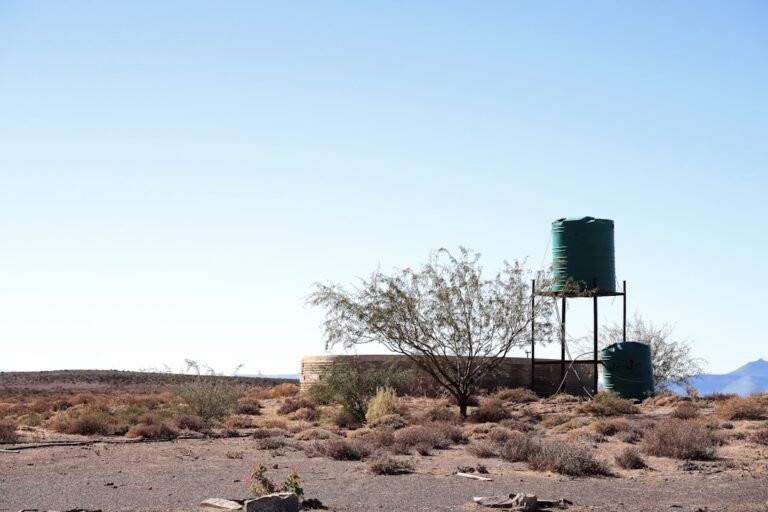
Run pipe from the wellhead to an elevated or pressurized storage tank. Gravity-fed tanks placed at least 40–50 feet of elevation above your house deliver roughly 17–22 PSI — enough for basic household use without a booster pump. If you can’t get elevation, a 20–40 gallon pressure tank with a small DC booster pump handles household pressure.
Install a float switch or water level sensor in the storage tank wired back to your pump controller. This prevents overflow and lets the system run unattended.
Direct Solar vs. Battery-Backed Systems

Direct solar (no batteries): Simpler, cheaper, and less maintenance. The pump runs only when the sun shines. Water goes into a tank for 24/7 availability. This is the setup we recommend for most off-grid homesteads. Total system cost for a 200-foot well: roughly $2,500–$5,000 for panels, controller, and pump.
Battery-backed: Adds a battery bank, charge controller, and sometimes an inverter to run the pump at any time — including at night or during storms. Useful if you have no room for a large storage tank or need on-demand pressure. Adds $1,500–$4,000+ depending on battery capacity. More components means more failure points.
For most applications, a 1,500-gallon storage tank ($300–$800) is far cheaper and more reliable than the equivalent battery system.
Common Mistakes
Undersizing the solar array. This is the most frequent error we see reported in off-grid forums. People match panel wattage exactly to the pump’s rating, then wonder why output is low. Panels rarely produce nameplate wattage in real conditions. Oversize by 50–100%.
Ignoring total dynamic head. Your pump doesn’t just fight gravity to the static water level — it also has to push water up to your tank and overcome pipe friction. A system sized for a 150-foot static level that actually has 200 feet of TDH will underperform badly or stall entirely.
Skipping the float switch. Without an automatic shutoff, your tank overflows and your pump runs dry when the tank is full and water backs up. Both waste water and risk pump damage. A basic float switch costs $15–$30.
Buying the cheapest no-name pump. Submersible pumps are expensive to pull and replace. A failure at 200 feet means hiring a well service or rigging a tripod and doing hard manual labor. Grundfos, Lorentz, and RPS pumps cost more upfront but have documented track records spanning 10–20 years in off-grid installations.
Our Recommendations
Best Overall: RPS 200 Solar Well Pump Kit
RPS (Rural Power Systems) specializes in solar well pumps and sells complete kits including panels, controller, pump, and wiring. The RPS 200 handles wells up to 200 feet deep at 2–5 GPM, comes with a matched MPPT controller and 3× 100W panels (expandable), and includes U.S.-based phone support — a huge advantage for DIY installers. Reported lifespans of 10–15 years in off-grid communities.
Best for Deep Wells: Grundfos SQFlex
The Grundfos SQFlex series handles wells from 50 to 800+ feet and is the benchmark for reliability in commercial and residential solar pumping worldwide. It accepts a wide input voltage range and works with solar, wind, or generator power. Higher upfront cost ($2,000–$4,000 for the pump alone), but Grundfos has a global service network and decades of field data.
Best Budget Option: ECO-WORTHY DC Submersible Pump

For shallow wells under 100 feet with modest water needs, the ECO-WORTHY 24V/36V DC submersible pumps offer a low-cost entry point at $150–$300 for the pump. Pair with two to three 100W panels and a basic pump controller. These lack the build quality and longevity of RPS or Grundfos, but for a seasonal cabin or backup water source, they get the job done.
FAQ
How many solar panels do I need to run a well pump?
It depends on well depth and pump size, but most residential systems need 3–6 panels (600W–1,800W total). A 200-foot well with a 0.5 HP pump typically runs well on 800–1,200W of solar. Always check your specific pump’s wattage requirement and oversize by at least 50%.
Can a solar well pump work in cloudy weather?
Yes, but at reduced output. MPPT controllers adjust to extract whatever power is available, so the pump runs slower rather than shutting off entirely. On heavily overcast days, expect 30–50% of normal flow. This is why adequate storage tank capacity is essential — you buffer sunny-day surplus for cloudy-day demand.
How deep can a solar powered well pump go?
Consumer and light-commercial solar pumps handle up to about 800–1,000 feet. The Grundfos SQFlex series maxes out around 800 feet. RPS offers models rated to 500 feet. Most residential off-grid wells are 100–300 feet, well within range for any quality solar pump system.
Do I need batteries for a solar well pump?
In most cases, no. A direct-solar setup with a storage tank is simpler, cheaper, and more reliable. Batteries make sense only if you need on-demand pumping at night or can’t install a storage tank. For the vast majority of off-grid homesteads, we recommend skipping batteries and investing in a properly sized water tank instead.
How long does a solar well pump last?
Quality pumps from manufacturers like Grundfos, Lorentz, and RPS commonly last 10–20 years based on reported community feedback and manufacturer warranty data. Grundfos warranties their SQFlex for 2 years, but real-world reports frequently cite 15+ years of operation. Cheaper pumps from generic brands may last only 2–5 years, and replacement means pulling the pump from depth — a significant labor cost.