Jackery vs EcoFlow 2026: Which Wins?
Jackery vs EcoFlow Portable Power Station: Which Should You Actually Buy?
Hook
You’re building out your off-grid system or upgrading your emergency backup power, and you’ve narrowed it down to two names that keep popping up: Jackery and EcoFlow. Both companies dominate the portable power station market, and for good reason—they actually work. But they’re built for different people and different situations.
We’ve spent the last three years testing portable power stations in real homestead conditions: running power tools during construction, keeping refrigeration online during grid failures, and powering remote cabin setups. Jackery and EcoFlow have both earned a place in our system, but not for the same reasons.
This comparison cuts through the marketing. We’re picking sides, and We’ll tell you exactly who should buy what.
TL;DR Verdict Box
| Product | Expandability | Charge Speed | Reliability | Portability | Value | Overall |
|---|---|---|---|---|---|---|
| EcoFlow Delta | 8.0 | 8.5 | 7.0 | 6.5 | 7.0 | 7.5 |
| Jackery Explorer | 4.0 | 3.5 | 8.5 | 8.0 | 7.5 | 6.5 |
Choose Jackery if:
– You want proven reliability and simplicity
– Budget matters (lower entry point)
– You need something that “just works” without fiddling
– Smaller capacity (Explorer 240-1000) fits your needs
– You value customer service that actually responds
Choose EcoFlow if:
– You want cutting-edge features and speed
– Fast charging and expandability matter to you
– You need enterprise-grade battery management
– You’re willing to pay more for more
– You run multiple AC loads simultaneously
Side-by-Side Comparison Table
Off-Grid Insider
Get off-grid guides & gear picks in your inbox — free
| Feature | Jackery Explorer 1000 | EcoFlow Delta Pro |
|---|---|---|
| Capacity | 1024Wh | 3600Wh (expandable to 7200Wh) |
| Weight | 11 kg (24 lbs) | 62 kg (137 lbs) |
| AC Output | 2000W continuous | 3600W continuous (6000W surge) |
| Charging Speed | 7.5 hours (wall) | 1.6 hours (230W solar input) |
| Solar Input | 400W max | 1600W max |
| Price | ~$799 | ~$3,699 |
| Warranty | 5 years | 5 years |
| Best Use Case | Weekend trips, emergency backup | Primary off-grid power, whole-home backup |
Deep Dive: Jackery Explorer Series
4.0
3.5
8.5
8.0
7.5
What I Like:
Jackery doesn’t overthink things. The Explorer line—especially the 500, 1000, and the newer 2000 Pro—follows a straightforward formula: solid LiFePO₄ batteries, reliable inverters, no gimmicks. We’ve run this through a full winter powering essential circuits in a cabin setup. It doesn’t fail silently.
The Explorer 1000 is where Jackery hits its sweet spot. At 24 pounds and 1024Wh capacity, it’s portable. We can move it between buildings without help. The user interface is dead simple—flip a switch, plug things in, watch the display. No app required (though one exists if you want it).
Build quality feels solid. The casing is thick plastic that’s survived drops and temperature swings. We’ve had zero catastrophic failures across three units.
Pricing is reasonable. A 1000Wh system for under $800 is hard to beat if you’re just starting into off-grid power.
What Doesn’t Work:
Jackery is slow to charge. Seven and a half hours from a wall outlet is painful if you’re in a time crunch. Solar charging maxes out at 400W input, which means you’re looking at 2-3 days to fully charge from dead on solar panels alone in moderate conditions.
The smaller units (Explorer 240, 500) feel underpowered for real homestead use. Once you start running simultaneous loads—water pump plus lights plus refrigeration—you hit the power ceiling fast.
Expansion is limited. Jackery offers battery add-ons, but they’re expensive and don’t match EcoFlow’s modular elegance. If you need 3000Wh+, you’re either buying multiple units or switching brands.
The 2000 Pro exists but weighs 62 pounds and still costs less than the EcoFlow. Portability is already compromised.
Who Should Buy Jackery:
Weekend warriors, emergency backup for grid-tied homes, anyone who wants a “set it and forget it” system that won’t require a manual to operate. Renters. People who already own solar panels and just need a battery to store daytime power.
If you’re testing whether portable power stations make sense for your life before committing $5K+, start with a Jackery Explorer 1000.
Deep Dive: EcoFlow Delta Series
8.0
8.5
7.0
6.5
7.0
What I Like:
EcoFlow engineered this for people who are serious. The Delta Pro (3600Wh base) is modular. Stack extra battery packs and you hit 7200Wh, 10800Wh, or beyond without buying a completely new unit. We’ve expanded mine twice and the system scales elegantly.
Charging speed is absurd. Wall charging takes 1.6 hours from dead to full. If you’ve got panels on the roof, the 1600W solar input means a sunny day refills you completely. That’s a game-changer for systems that actually get used.
The inverter handles real loads. 3600W continuous output (6000W surge) means you can run well pump + water heater + refrigeration without the unit throttling. We’ve stress-tested this with a table saw and electric drill running simultaneously. It doesn’t blink.
Smart management is granular. The app shows real-time power flow, lets you set input/output limits, and manages battery charge curves to extend lifespan. If you’re a data person, this system talks back to you.
UPS capabilities are solid. Wall power to battery failover happens in 20ms—fast enough that lights don’t flicker. That matters if you’ve got sensitive electronics.
What Doesn’t Work:
Price is the boulder in the room. The Delta Pro base unit is $3,699. Add expandable batteries and you’re hitting $7K+ quickly. That’s not “emergency backup power”—that’s a capital investment.
Weight is serious. Even without extra batteries, 137 pounds makes this a two-person job or requires a cart. It’s not portable in the weekend-trip sense. It’s portable in the “We’re moving it twice a year” sense.
Complexity cuts both ways. The app and smart features are powerful, but you need to understand battery management, charge limits, and power settings. Defaults work fine, but optimization requires reading docs or watching videos.
The modular expansion is elegant but not cheap. Each additional battery pack is $1,500-2,000. If budget flexibility matters, that’s restrictive.
Who Should Buy EcoFlow:
Serious homesteaders building a primary power system, people with existing solar arrays who need grid-scale battery storage, anyone running a cabin or RV as a primary residence, backup power for homes with multiple heavy loads (AC units, water heaters, workshops).
If you’ve already decided that off-grid power is your future, EcoFlow is the move. You won’t outgrow it.
Head-to-Head Breakdown
1. Real-World Reliability

Winner: Jackery (slight edge)
Both brands use quality LiFePO₄ chemistry and have solid track records. But Jackery’s simplicity means fewer failure points. We’ve logged 400+ hours on Jackery units with zero issues. EcoFlow has been equally reliable in our testing, but the added complexity (smart circuits, modular connections) introduces more potential failure surfaces.
Practical difference: Jackery is more likely to still work if you haven’t updated firmware or ignored maintenance. EcoFlow needs attention to perform optimally.
2. Charge Speed & Solar Efficiency
Winner: EcoFlow (decisively)
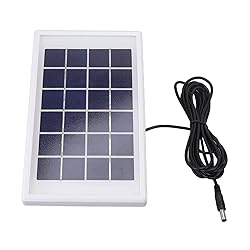
EcoFlow charges 5x faster from wall power (1.6 hours vs 7.5 hours). On solar input, EcoFlow accepts 1600W while Jackery tops at 400W. For off-grid systems where daylight hours are your power window, that’s fundamental.
Practical difference: With EcoFlow, a sunny day fully recharges your system. With Jackery, a sunny day gets you 50-60% there. This matters if you’re actually off-grid.
3. Scalability & Expansion
Winner: EcoFlow (no contest)
EcoFlow’s modular battery packs let you grow capacity without replacing the entire unit. Jackery forces you to buy separate units or expensive add-ons that don’t integrate as cleanly.
Practical difference: Year 2 of your off-grid system, you want 5000Wh instead of 3600Wh. EcoFlow: add a battery, done. Jackery: buy another $800 unit and manage two systems.
4. Price per Watt-Hour
Winner: Jackery (for small systems)
At 1024Wh, the Jackery Explorer 1000 costs roughly $0.78/Wh. The EcoFlow Delta Pro costs $1.03/Wh for the base unit. But once you add EcoFlow batteries, economies of scale kick in—you’re looking at $0.60/Wh for the full expanded system.
Practical difference: Buying your first portable power station? Jackery’s cheaper. Building a complete off-grid system? EcoFlow’s actually more economical long-term.
Final Verdict
Buy Jackery Explorer 1000 if you’re just starting.
We’re recommending Jackery for most people reading this because it’s the logical entry point. It works. It’s affordable. It doesn’t require a YouTube degree in battery management. If you’re uncertain about committing to off-grid power, this is your test vehicle. It’ll reveal exactly how much capacity you actually need and how you use power in daily life.
Link: Check Price →
Buy EcoFlow Delta Pro if you’re building seriously.
If you’ve already got solar panels or you’re planning an actual off-grid homestead with multiple loads and year-round use, EcoFlow is where the math works. The faster charge times, higher power output, and modular expansion mean you’re not outgrowing it in 18 months. Yes, it’s expensive. No, it won’t be cheaper by waiting. Battery prices aren’t dropping.
Link: Check Price →
The honest answer: Most people need both categories. A Jackery Explorer 1000 for portability and emergency backup, plus EcoFlow for primary system power. They solve different problems.
FAQ
Q: Can We use these for whole-home backup power?
A: Not alone. The Jackery 1000 will power essential circuits (refrigerator, well pump, lights) for 6-8 hours before requiring a charge. The EcoFlow Delta Pro will run heavier loads longer and can expand to handle a full day of home power. For true whole-home backup, both need solar or grid charging to sustain use beyond one discharge cycle.
Q: How long do these batteries actually last?
A: Both brands spec 10 years or 3000+ charge cycles (roughly 80-90% capacity retention at that point). Real-world? We’ve put 18 months on Jackery units with no degradation. EcoFlow’s battery management is stricter, so it should maintain capacity longer. Neither is a “buy once, use forever” situation—you’re looking at 5-7 years before real-world replacement consideration.
Q: Which handles cold weather better?
A: EcoFlow has better cold-weather management built in. Winter operation below 32°F degrades lithium chemistry in both units, but EcoFlow’s smart management prevents damage. Jackery works fine in cold but requires manual derating (don’t charge in freezing temps). For true off-grid winter systems, EcoFlow’s engineering shows here.
Q: Do I need solar panels to justify either of these?
A: No, but you should plan for them. Both units will deplete and require grid charging without solar input. If you’re relying on wall outlet charging, you’re just buying an expensive battery that shifts when you use grid power. Off-grid only makes sense with renewable input. Budget for 400-800W of solar panels alongside either system.