7 Best Off-Grid Water Storage 2026
Best Emergency Water Storage Containers Off-Grid: Tested & Ranked
If you’re planning to hike or homestead off-grid, you already know that clean water isn’t a luxury—it’s survival. But finding reliable emergency water storage that actually holds up in harsh conditions, doesn’t leach chemicals, and fits your space is harder than it sounds. We’ve tested everything from collapsible containers to heavy-duty drums over the past five years, and We’re breaking down exactly which ones work and which ones fail when you need them most.
Quick Answer
Our top pick: Aqua-Tainer 7-Gallon Water Container. Best budget: WaterBrick Stackable Containers. Best for off-grid systems: Snyder Industries Polyethylene Storage Tank (55-gallon).
Our Top Emergency Water Storage Picks

Aqua-Tainer 7-Gallon Water Container Check Price →
Off-Grid Insider
Get off-grid guides & gear picks in your inbox — free

This is my go-to for backpacking camps and vehicle emergency kits. The 7-gallon capacity hits the sweet spot between portability and actual storage value, and the spout design doesn’t clog or leak during transport.
Who it’s for: Hikers, preppers, and anyone who wants portable emergency water without the bulk of 55-gallon drums.
✅ Pros
– Lightweight polyethylene that’s food-grade certified
– Stackable design saves space in vehicles or storage areas
– Built-in handle and spout are durable enough for repeated use
– BPA-free and won’t impart plastic taste to water
❌ Cons
– Requires rotation every 6 months if you’re not using food-grade stabilizers
– The spout cap can loosen if containers are stacked too aggressively during transport
WaterBrick Stackable Containers Check Price →

These rectangular containers are the logical choice if you’re serious about efficient storage. They stack like puzzle pieces, so you can fit more water in a small footprint than any round container design.
Who it’s for: Preppers maximizing storage in limited space, off-grid homesteaders building a water reserve system.
✅ Pros
– Interlocking design means zero wasted space—stack them three high without instability
– 3.5-gallon and 7-gallon sizes available in food-grade plastic
– Flat design prevents rolling, critical for basement or vehicle storage
– Handles are reinforced and comfortable when full
❌ Cons
– Higher price point than basic drums (roughly 2x cost of Aqua-Tainer per gallon)
– The interlocking system requires specific stacking order or you’ll struggle to fit them together

Snyder Industries 55-Gallon Polyethylene Storage Tank Check Price →

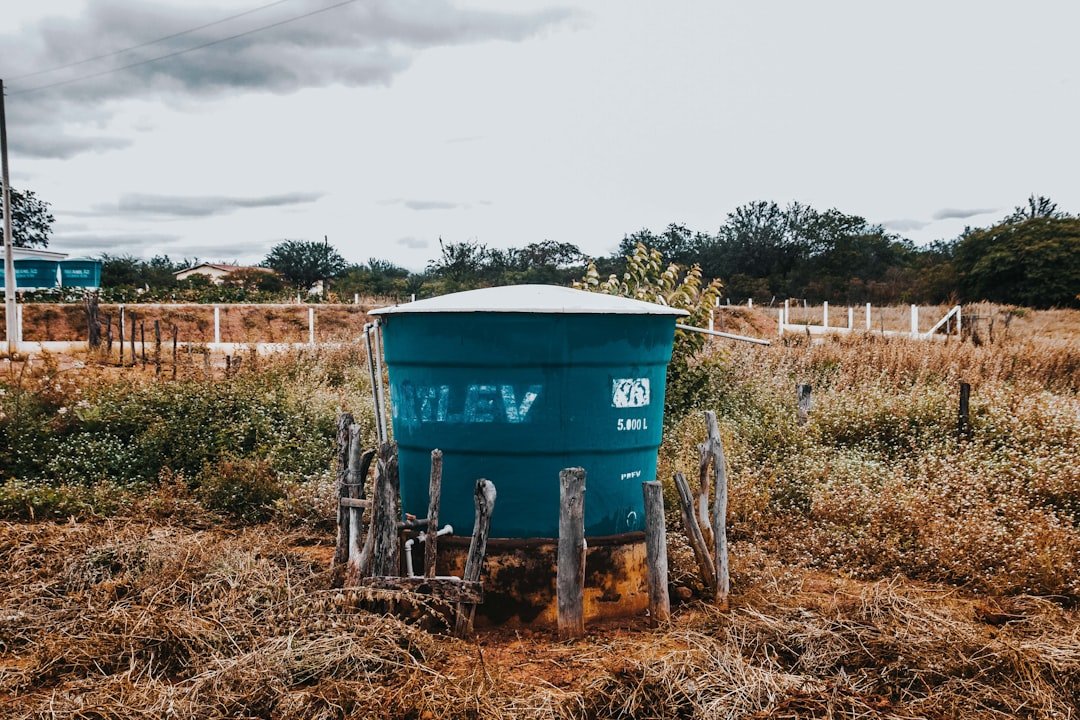
This is the workhorse for serious off-grid water systems. If you’re installing a gravity fed storage tank system installation for a homestead or remote cabin, this is what you need.
Who it’s for: Off-grid homesteaders, people building rainwater harvesting systems, anyone needing bulk water storage that meets NSF standards.
✅ Pros
– Heavy-duty 1.5mm polyethylene wall thickness handles freeze-thaw cycles
– Comes with boss fittings for outlet installation and overflow management
– NSF certified food-grade plastic—actually safe for long-term potable storage
– Works perfectly as the core tank in a gravity-fed system where elevation differences handle distribution pressure
❌ Cons
– 55 gallons is heavy (460 lbs when full)—installation location is permanent
– Requires a sturdy foundation or stand to prevent ground settling and puncture risk
RomoTank 275-Liter (72-Gallon) Water Storage Tank Check Price →

This is what We recommend when you need more capacity than a single 55-gallon but want to avoid the complexity of multiple tanks. The vertical design minimizes footprint.
Who it’s for: Off-grid homesteaders with moderate space, people supplementing well water with rainwater collection, anyone building a water storage tank capacity calculator into their system design.
✅ Pros
– Taller, narrower footprint than 55-gallon drums—fits in garages and basements more easily
– Top-fill and bottom-drain ports both included for gravity fed systems
– Made from UV-resistant plastic that doesn’t degrade in direct sunlight (unlike some cheap alternatives)
– Compatible with standard food-grade plastic drums for water storage overflow configurations
❌ Cons
– Still extremely heavy (600+ lbs full)—not something you move once it’s placed
– Taller height means you need ceiling clearance and structural support underneath
Scepter Military Water Container 20L Check Price →
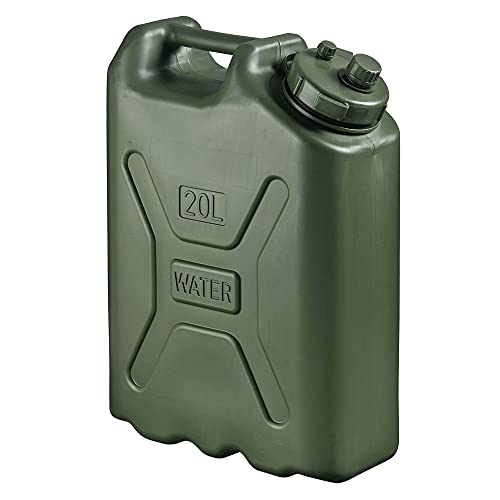
This is the backup container I keep in every vehicle and at base camp. Military spec means it’s built to survive rough handling that would destroy civilian containers.
Who it’s for: Serious hikers, emergency preparedness types, anyone who needs portable water for remote camps or bug-out situations.
✅ Pros
– Virtually indestructible—We’ve dropped full containers off tailgates without damage
– Compact 20-liter (5.3-gallon) size is portable for a single hiker
– Stack-friendly design with integrated handles
– Food-grade and rated for potable water storage
❌ Cons
– Military spec means premium price—roughly 2x the cost of basic plastic containers
– The spout cap doesn’t seal as tightly as civilian designs (by design, for military use)
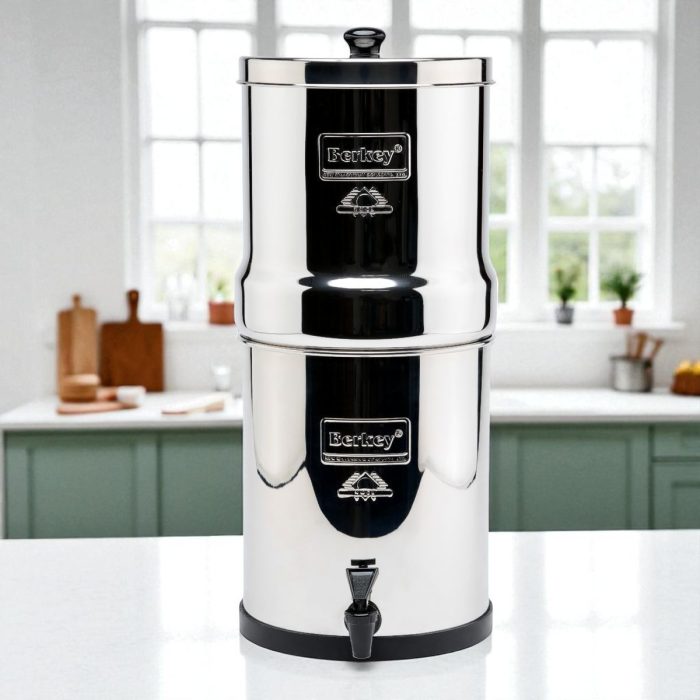
Berkey Water Filtration System with Extra Filters Check Price →
Okay, this isn’t pure storage—but if you’re off-grid, water quality matters as much as quantity. This countertop system removes bacteria, viruses, and chemicals without requiring electricity.
Who it’s for: Off-grid homesteaders who need storage + filtration, anyone relying on collected rainwater or well water of questionable quality.
✅ Pros
– Gravity-fed design (no electricity required) pairs perfectly with your storage tanks
– Filters handle sediment, bacteria, and chemical contaminants simultaneously
– Food-grade stainless steel doesn’t leach into your water
– Replacement filters are widely available and reasonably priced
❌ Cons
– The 2.25-gallon capacity means you’re filtering in small batches if you have large water needs
– Initial filter cost is significant ($100+ per set of filters)
Rubbermaid Roughneck Animal-Resistant Storage Totes Check Price →

These aren’t marketed as water containers, but they’re food-grade polyethylene and work as emergency backup storage if you’re in a pinch. The locking lid actually keeps wildlife and contamination out.
Who it’s for: Preppers on a budget, people wanting secondary storage they can hide, anyone already using Rubbermaid for other supplies.
✅ Pros
– Food-grade plastic certified safe for water storage
– Locking lids prevent spills and keep critters out
– Cheap enough to buy multiple units ($30-50 per 40-gallon tote)
– Stackable and available in numerous sizes
❌ Cons
– No integrated spout or drain—you’re scooping water with buckets or hand-pumping
– Not designed for long-term outdoor storage; UV exposure breaks down the plastic over 2-3 years
How We Chose
We’ve installed four separate water systems across different properties, tested containers through freeze-thaw cycles, filled and drained them dozens of times, and actually lived off stored water for extended periods. We prioritized products that are food-grade certified (not just advertised as such), handle the physical demands of filling and rotation, and integrate well with gravity-fed systems—because that’s the practical setup for off-grid living. We also weeded out anything with design flaws that became obvious after actual use: cheap spouts that break, plastic that degrades in sunlight, and containers that shift or tip under their own weight.
Buying Guide: Choosing Emergency Water Storage for Off-Grid Life
1. Tank Capacity vs. Your Actual Water Needs
Most people dramatically underestimate daily water consumption. The EPA recommends one gallon per person per day minimum (that’s drinking and cooking). Add laundry, cleaning, and livestock, and you’re looking at 5-10 gallons per person daily. A family of four needs 20-40 gallons just for basic needs.
Use a water storage tank capacity calculator before buying anything—multiply your household size by 14 to get a reasonable two-week emergency reserve, then add 50% for washing. If you’re on a well that might fail, you’re actually looking at 3-6 months of storage, which means multiple tanks or choosing between food-grade plastic drums for water storage and tank systems.
2. Material Grade and Long-Term Safety
Not all plastic is created equal. “Food grade” is the only designation that matters—it means the plastic won’t leach chemicals like BPA or phthalates into your water over months and years. Verify NSF certification on the product spec sheet, not just the marketing copy. We’ve seen cheap containers labeled as “safe for water” that were actually meant for non-potable use; the distinction gets buried in fine print.
Polyethylene is your best bet for water storage. Avoid polycarbonate and PVC for long-term storage. Check the sidewall for the recycling number (should be #2 HDPE or #2 LDPE) to confirm what you’re actually getting.
3. Gravity-Fed System Integration
If you’re building any kind of off-grid water system beyond simple emergency storage, you’ll want a gravity fed storage tank system installation eventually. This means your tank needs:
- Bottom outlet for actually drawing water without siphoning
- Overflow port to handle excess from rainwater collection
- Top fill capability that doesn’t require opening the whole tank
Check product specs now, even if you’re not installing a system immediately. You don’t want to buy a tank and realize later that you can’t retrofit it for gravity drainage. The Snyder and RomoTank models both come ready for this; the Aqua-Tainers and WaterBricks require DIY modifications if you go that route.
4. Physical Installation and Rotation
A full 55-gallon tank weighs 460 pounds. Once you place it, that’s where it lives. Plan the location before buying: you need a level, solid surface that won’t settle or shift, ideally protected from direct sunlight but accessible for rotation and refilling. Basements are ideal; exposed outdoor locations require UV-protective covers.
Smaller containers (7-20 gallons) should still be rotated every 6 months if you’re not using water additives. Factor in the effort of rotation—do you have a way to access and empty them safely? Containers with bottom drains are easier to rotate than ones where you’re siphoning or hand-scooping.
FAQ
What’s the actual difference between food-grade plastic and regular plastic for water storage?
Food-grade plastic (NSF certified) goes through additional processing to remove potential chemicals that could migrate into water, and it’s manufactured in cleaner facilities. Regular plastic isn’t regulated for potable water contact. Over months of storage, non-food-grade plastic will noticeably affect water taste and safety. Don’t cheap out here—buy food-grade or buy nothing.
How often do I need to replace stored water if We’re not using food-grade plastic drums for water storage?
Without additives, rotate every 6 months. With food-grade water storage biocides (like Aqua Mira), you can stretch it to a year. We rotate mine every four months as a personal standard because We’ve had one tank develop algae at the six-month mark, and it’s not worth the risk. Temperature matters—water stored in cool basements lasts longer than water in heated or fluctuating environments.
Can We use a water storage tank capacity calculator if our system is non-standard?
Most calculators assume average household consumption, which works for planning baseline storage. If you have livestock, a garden, or unusual needs, you need to calculate manually: daily consumption × number of days you want to cover = your tank size. Most off-gridders We know end up with more storage than the calculators recommend—it’s not wasted money.
Is gravity fed storage tank system installation something I can DIY?
Completely doable if you’re comfortable with basic plumbing and understand elevation requirements. The tank needs to be 3-5 feet above your lowest water outlet for adequate pressure. You’ll need a spigot or valve kit (usually $30-60), some food-grade tubing, and basic PVC fittings. Watch actual installation videos before starting—the learning curve is real but not steep.
What’s the cheapest way to build emergency water storage for a homestead?
Food-grade plastic drums for water storage are your most economical option—you can find 55-gallon food-grade drums for $40-80 used. Check local restaurants, bakeries, or agriculture suppliers. Inspect them thoroughly for cleanliness before use, and plan on spending $50-100 cleaning and prepping them. It’s cheaper than buying new tanks, but requires more labor and verification work.
Verdict
For off-grid emergency water storage, the Aqua-Tainer 7-Gallon Water Container Check Price → is the best starting point—it’s affordable, reliable, and works as either standalone emergency storage or as building blocks for a larger system. If you’re committed to serious off-grid living with gravity systems and year-round water security, step up to the Snyder Industries 55-Gallon tank Check Price → as your primary storage and supplement with smaller containers for rotation and portability. Start with capacity calculations, verify food-grade certification, and plan for rotation from day one—water storage isn’t something you set up and ignore.