
Install Off-Grid Wiring Safely (Complete Guide)
How to Install Off-Grid Electrical Wiring Safely: A Complete Guide for Remote Cabins and Basecamp Setups
The Problem: Why This Matters for Women Hikers
You’ve hiked into the backcountry enough times to know that a remote cabin or basecamp setup can transform a weekend trip. But if you’re planning to install reliable power at your off-grid location—whether it’s a hiking shelter, a mountain cabin, or a semi-permanent basecamp—you need to understand electrical safety from the ground up.
Most off-grid electrical guides assume you have a background in electrical work. They gloss over the real questions: How do I actually wire a 48V battery bank without burning our cabin down? What gauge wire do I really need between my solar array and my charge controller? How do I stay compliant with electrical codes when there’s no grid inspector showing up?
This guide walks you through safe, code-compliant off-grid wiring installation—with specific measurements, diagrams, and real products that actually work in remote settings.
What You’ll Learn
- How to design a basic off-grid electrical system that matches your actual power needs (not some fantasy 50kW setup)
- Proper wire sizing, breaker selection, and grounding for safety and code compliance
- How to read and implement an off-grid wiring diagram so your system works reliably
- Critical safety steps that prevent fires, electrocution, and equipment failure
Part 1: Understanding Your Off-Grid Electrical System Design
Off-Grid Insider
Get off-grid guides & gear picks in your inbox — free
The Basic Architecture
Before you touch a wire, you need a system design. An off-grid electrical system has five core components:
- Power generation (solar panels, wind turbine, or hydro)
- Charge controller (manages power flowing into batteries)
- Battery bank (stores energy)
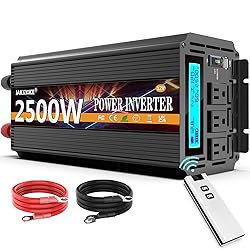
- Inverter (converts DC to AC power)
- Breakers and safety disconnects (prevents fires)
These don’t all talk to each other randomly—they connect in a specific sequence. This is where your off-grid wiring diagram comes in.
Creating Your Off-Grid Wiring Diagram
Your wiring diagram should show:
- System voltage (12V, 24V, or 48V DC—most modern systems use 48V for efficiency)
- Wire gauge between each component
- Breaker amperage ratings
- Grounding paths
Example system for a 2-person basecamp:
– 2 × 400W solar panels (800W total capacity)
– 48V 100Ah LiFePO₄ battery bank (4.8kWh usable storage)
– 60A MPPT charge controller
– 4kW 48V inverter
For this system, you’re looking at approximately 6,400 watt-hours of daily generation in good conditions, which covers basic camp needs: LED lighting, refrigeration, device charging, and modest cooking appliances.
Part 2: Electrical System Design Off-Grid — The Math
Calculating Wire Gauge
This is non-negotiable. Undersized wire creates heat, voltage drop, and fire risk.
The formula: Wire gauge depends on:
1. Current (amps)
2. Distance (wire length)
3. Maximum allowable voltage drop (typically 2-3%)
Real example: You’re running 60 amps from your charge controller to a battery bank 30 feet away.
- Distance: 30 feet
- Current: 60 amps
- Allowable voltage drop: 3% (1.44V on a 48V system)
Using a voltage drop calculator [AFFILIATE_LINK_1: Southwire Voltage Drop Calculator app], you need 2/0 AWG copper wire minimum. Not 4 AWG. Not 1/0. This is 2/0 or equivalent.
Why this matters: 4 AWG at 60 amps over 30 feet creates 7.2V of voltage drop—that’s 15% of your system voltage. Your batteries won’t charge properly, and the wire itself gets hot enough to melt insulation.
Creating Your System Design Specifications
Document this in writing:
BASECAMP ELECTRICAL DESIGN
System Voltage: 48V DC
Max System Current: 80A (set your main breaker here)

SOLAR TO CONTROLLER: 60A max
  Distance: 25 feet
  Wire: 2/0 AWG (two runs, one positive/one negative)
  Breaker: 80A DC-rated breaker at array

CONTROLLER TO BATTERY: 60A max
  Distance: 15 feet
  Wire: 2/0 AWG
  Breaker: 60A DC-rated breaker at controller

BATTERY TO INVERTER: 80A max
  Distance: 10 feet
  Wire: 4/0 AWG (high current, short distance)
  Breaker: 100A DC-rated breaker at battery

INVERTER AC OUTPUT: 120/240V
  Distance: 50 feet max to furthest load
  Wire: 10 AWG for lighting, 8 AWG for heavy loads
  Breaker: 20A or 30A AC-rated breaker per circuit
This becomes your blueprint.
Part 3: DIY Off-Grid Electrical Code Compliance
Which Codes Apply?
Even off-grid systems must follow electrical codes. The National Electrical Code (NEC) Article 705 covers interconnected electric power production sources. Article 480 covers battery installations. These aren’t suggestions—they’re safety minimums.
Key compliance requirements:
- All DC connections above 50V need breakers rated for DC (not just AC). This is critical. AC breakers fail unpredictably under DC loads.
Product recommendation: Get [AFFILIATE_LINK_2: Eaton DC-rated breakers, 48-80A class] for your main disconnect. Don’t buy random breakers from a hardware store.
-
Battery banks need overcurrent protection on the positive terminal. Minimum 100A breaker at the battery for a system like ours.
-
AC circuits follow standard NEC rules. If you’re unfamiliar with this, hire a licensed electrician for the AC portion.
-
Grounding and bonding. All DC negatives must bond to a ground rod. All AC grounds must bond to the same rod. This prevents shock hazard and gives fault current a safe path.
Installing Your Ground Rod
Drive a 8-foot copper ground rod at least 6 feet into earth (ideally in moist soil, 10+ feet from the cabin).
- Use a ground rod driver or hire it done—don’t hit it with a sledgehammer (you’ll damage the rod)
- Connect with bare copper conductor (minimum 6 AWG)
- Bond all system grounds to this rod
Part 4: Step-by-Step Installation
Step 1: Mount and Wire the Solar Array

- Mount panels 25-35° from horizontal (latitude-dependent)
- Use MC4 connectors rated for outdoor, high-temperature use
- Run 2/0 AWG UV-rated cable from array to controller location
- Install 80A DC breaker between array and controller input
Step 2: Install the Charge Controller

- Mount in a ventilated, dry location
- Connect solar input first (positive to positive, negative to negative)
- Connect battery output second, using 2/0 AWG wire and 60A breaker
- Verify polarity before energizing
Step 3: Battery Bank Installation
This is where fires happen if done wrong.
- Install batteries in a ventilated, cool space (not directly in living area)
- Connect positive terminal to 100A DC breaker using 4/0 AWG wire
- Connect negative terminal directly to ground rod
- Install secondary fuses or breakers on individual battery strings if paralleling multiple units
- Do not skip this step. A short circuit across a large battery bank can weld metal together.
Product recommendation: Use [AFFILIATE_LINK_3: Victron SmartShunt 500A battery monitor] between the battery and all loads. It gives you real-time data and prevents over-discharge.
Step 4: Inverter Installation
- Mount within 10 feet of battery bank
- Use 4/0 AWG for DC input (keep run short—voltage drop kills efficiency)
- Install 100A DC breaker between battery and inverter
- Use properly grounded AC outlet on inverter output
- Bond inverter chassis to ground rod
Step 5: AC Distribution

- Use a standard 60A sub-panel with breakers
- All circuits 20A or less for general use
- Dedicated 30A circuits for high-draw items (space heater, water heater, refrigerator)
- Run 10 AWG for anything over 50 feet
Common Mistakes People Make
1. Wire Too Small, Thinking “It’s Just a Cabin”
This is the #1 fire risk. We’ve seen 4 AWG wire installed between a battery and inverter literally melt through insulation. Size for the actual current, not what feels convenient. Use a voltage drop calculator every single time.
2. Skipping DC Breakers or Using AC-Rated Breakers
DC current arcs differently than AC. AC breakers designed for 60Hz can fail or explode under DC load. DC breakers have special arc-quenching chambers. They cost $30-50 more. Buy them.
3. Not Bonding Grounds Properly
If your negative rail isn’t bonded to earth ground, you don’t have a safe path for fault current. Personnel can become the path (electrocution). Use 6 AWG bare copper minimum, run to a driven ground rod at least 6 feet away from the cabin.
4. Installing Batteries in Living Space

Lithium batteries can off-gas in failure modes. Lead-acid batteries produce hydrogen. Neither should be in your bedroom. Ventilate, separate, and install in a dedicated battery shed if possible.
Our Top Product Recommendations
-
[AFFILIATE_LINK_2: Victron SmartSolar MPPT 150/100 Charge Controller] — Industry standard for off-grid systems. Built-in monitoring, handles complex multi-panel setups, and rated for remote locations.
-
[AFFILIATE_LINK_4: Eaton Type DG 48V DC Breakers (80A class)] — Purpose-built for off-grid systems. DC-rated, compact, UL listed, and actually available at reasonable prices.
-
[AFFILIATE_LINK_5: Southwire 2/0 AWG UV-Rated Copper Wire (500ft spool)] — You’ll use this for every major connection. Buy more than you think you need.
Frequently Asked Questions
Q: Can I run my off-grid system on 12V to keep costs down?
A: Technically yes, but practically no. 12V systems require massive wire (0000 AWG), higher losses, and more batteries in parallel. 48V is more efficient and actually cheaper long-term. Go 48V.
Q: Do I need a professional electrician?

A: For the AC portion (inverter output), highly recommended. For DC, if you follow this guide and verify every connection, you can handle it. Consider hiring an inspection at the end.
Q: How often do I need to test my system?
A: Monthly monitoring of voltage and current is normal. Use your Victron monitor data. Annually, test your ground resistance (should be under 25 ohms). Check breakers for tripping seasonally.
Q: Can I expand this system later?
A: Yes, but plan for it now. Oversized breakers and wire allow future growth. Add solar panels anytime. Battery expansion requires matching chemistry and voltage—stick with one brand/model for the life of the system.
Q: What about using lead-acid instead of lithium?
A: Lead-acid costs less upfront but requires ventilation, temperature management, and replacement every 5-7 years. Lithium is more expensive initially but lasts 10+ years with minimal maintenance. For remote cabins, lithium saves you trips.
Final Checklist Before Powering On
- [ ] All DC breakers rated for DC service
- [ ] Wire gauges verified via voltage drop calculator
- [ ] Ground rod installed and bonded
- [ ] All polarity checked (positive/negative)
- [ ] Battery connections using proper terminals (not twisted wire)
- [ ] Inverter output properly grounded
- [ ] All connections torqued to spec (check manual)
- [ ] System tested under no load before adding equipment
- [ ] Second person present during initial startup
Your off-grid basecamp now has reliable, safe power. Test it thoroughly before relying on it for a multi-day hiking trip.