Composting Toilet Laws by State (Legal Guide)
Composting toilets are one of the most practical solutions for off-grid homes, cabins, tiny houses, and rural properties with poor soil conditions. They eliminate black water entirely, require no septic system, and produce usable compost.
They’re also one of the most legally complicated off-grid decisions you can make.
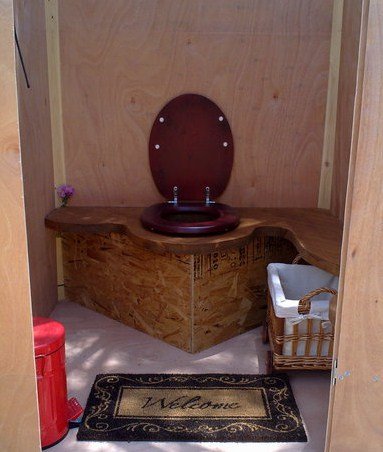
The same composting toilet that’s simple to permit in Vermont requires quarterly professional inspections in Connecticut, is explicitly prohibited as a primary toilet in Indiana, and has zero statewide rules in Montana (meaning your county sanitarian decides entirely on their own).
This guide covers the actual legal landscape in all 50 states — what the statutes say, which regulatory bodies approve them, and which states are permissive vs. which are quietly hostile.
What You Need to Know Before Reading the State Guide
Five structural realities govern composting toilet law across the US:
1. No federal standard exists. There is no federal law permitting or prohibiting composting toilets. This is entirely state and local.
2. The graywater problem. A composting toilet handles human waste only. In nearly every state, greywater (sinks, showers, laundry) still must be managed via an approved system — septic, municipal sewer, or permitted greywater dispersal. “Allowed as primary toilet” almost never means zero other infrastructure unless you have no running water.
3. NSF/ANSI Standard 41 is the benchmark. This certification, published by NSF International, confirms a manufactured composting toilet meets pathogen reduction, odor control, and containment standards. Many states only permit NSF 41-certified units. A smaller number also allow site-built systems under their own specifications (Oregon, Washington, Alaska).
4. Local jurisdiction often controls. Even in permissive states, counties and municipalities can impose additional restrictions — or prohibit composting toilets entirely. California and Texas have extreme county-level variance. Colorado’s Park County requires a concurrent flush toilet even though state law is permissive.
5. The regulatory body varies. State health departments handle most approvals, but in some states it’s the environmental quality agency. In many states, the county sanitarian is the functional decision-maker.
Most Permissive States
These states permit composting toilets as the primary (or only) toilet, with defined approval pathways and without requiring a concurrent flush toilet or conventional septic system.
Oregon
Off-Grid Insider
Get off-grid guides & gear picks in your inbox — free
The most clearly codified state in the US.
Oregon is the only state that defines composting toilets by statute (ORS 447.115) and has made ongoing legislative updates through 2024–2025. Site-built (non-NSF) units are allowed when designed to state specifications (OAR 918-770-0080). Occupant self-installation is permitted.
- Permit: Yes — plumbing permit required before installation
- NSF 41: Required unless using state-spec site-built design
- As primary toilet: Yes — composting toilet can be the only toilet; separate greywater system required (public sewer or DEQ-approved greywater system)
- Compost use: Around ornamental plants/fruit trees; not on edible vegetables
- Community systems: Explicitly permitted for eco-villages
Official sources: ORS 447.118–447.124; OAR 918-770-0080; Oregon DEQ Composting Toilet Guidance
Vermont

Clearest northeastern state; primitive system pathway is the easiest in the country.
Vermont’s “primitive system” pathway is unique: a composting toilet plus hand-carry greywater limited to 3 fixtures eliminates the need for a full site evaluation entirely. For rural properties with minimal water use, this is the simplest approval path of any state.
- Permit: Yes — Alternative Toilet Permit from Vermont Agency of Natural Resources
- NSF 41: Required for manufactured units
- As primary toilet: Yes — explicitly permits in both seasonal and year-round residences
- Primitive system: Composting toilet + hand-carry greywater (3 fixtures) = no site evaluation required
Official source: Vermont Wastewater System and Potable Water Supply Rules, Chapter 24; VT DEQ Composting Toilet Guidance (2020)
Maine
2023 rule updates created the clearest exemption pathway.
Maine’s 2023 amendments establish: if a system produces no ground discharge, no site evaluation is needed. For properties with no piped water that carry all water by hand, composting toilet regulation is minimal to nonexistent.
- Permit: Not required for alternative toilets (unlike conventional systems) if no ground discharge occurs
- NSF 41: Required
- As primary toilet: Yes — alternative toilets (composting, incinerating, vault) are explicitly legal
- Primitive systems: Explicitly defined; no disposal field required if no greywater generated
Official source: Maine Subsurface Wastewater Disposal Rules, 10-144 CMR Ch. 241 (amended September 2023)
Alaska

Practical framework for remote primary residences.
Alaska’s geography makes composting toilets essential in many areas where conventional septic is physically impossible. ADEC explicitly permits them as alternative wastewater systems in primary residences. Site-built units are allowed in rural contexts.
- Permit: Required; rural/off-grid properties have a simplified process
- NSF 41: Required for manufactured units; site-built allowed in rural contexts
- As primary toilet: Yes
- Cold-weather requirement: Composting chamber must maintain above 68°F year-round
Official source: Alaska Department of Environmental Conservation, 18 AAC 72; Alaska DEC FAQ
Arizona
2024 legislation significantly expanded permissiveness.
Arizona HB2097 (2024) explicitly exempts rural residential land owners using only composting toilets from mandatory connection to on-site wastewater treatment facilities. Before this law, approval required demonstrating site constraints — now rural properties can simply choose a composting toilet.
- Permit: Required — but free and streamlined; 12 counties handle locally, others through ADEQ Southern Regional Office
- NSF 41: Not explicitly required by the general permit; manufacturer documentation required
- As primary toilet: Yes — especially for rural properties after HB2097 (2024)
- Capacity: Up to 50 persons/day per system
Key change: HB2097 signed 2024 is a significant liberalizing development.
Official source: Arizona R18-9-E303 General Aquifer Protection Permit; AZ HB2097 Senate Fact Sheet
Washington State
Permitted with significant county-level variance — verify locally.
Washington allows site-built non-NSF units per DOH specifications (unusual — most states require NSF certification). Using a composting toilet earns a 50% reduction in septic tank volume and 40% reduction in hydraulic loading for paired greywater systems.
- Permit: Required from local health jurisdiction; unit must be on DOH’s registered product list
- NSF 41: Required for manufactured units; site-built allowed per DOH RS&G 337-016
- As primary toilet: Possible — depends heavily on county
- ⚠ County variance is HIGH: Whatcom County documented cases of refusing state-approved pathways. Always verify with the county health department, not just state rules.
Massachusetts
Clear regulatory pathway for new residential construction.
- Permit: Required — DEP and local Approving Authority approval
- As primary toilet: Yes for new residential construction where a compliant Title 5 system could otherwise be installed
- Greywater caveat: If any greywater or garbage disposal waste exists, a septic tank and soil absorption system are also required. Most residences still need septic for greywater.
Official source: Massachusetts 310 CMR 15.289 (Title 5); MA Title 5
Other Generally Permissive Western States
Colorado: Permitted with local health department approval. NSF 41 required. Compost residue must be removed at 75% capacity. Mountain counties above 7,500 ft have expedited permitting.
⚠ Park County exception: Requires at least one flush toilet connected to approved septic alongside any composting toilet — directly contradicting state permissiveness.
Montana: Permissive by absence of restriction rather than affirmative authorization. County permits; no explicit state statute. Local health district variation is moderate.
Wyoming: Permissive; county permits. Remote properties over 20 acres reported to face minimal requirements. Similar to Montana — permissiveness reflects no prohibition.
Utah: Permitted; basic leachate management plan required. Desert counties expedited; mountain regions above 7,000 ft require freeze-protection specs.
Idaho: Permitted with conditions — must have access to water under pressure; greywater must be handled conventionally.
Nevada: Manufactured NSF 41 units permitted with annual maintenance inspections. Note: One 2010 source identified Nevada as the only state that “expressly prohibited” composting toilets. Current 2024–2025 sources describe a permissive regime. If your project depends on Nevada’s current rules, verify directly with the Nevada Administrative Code — the historical record conflicts with recent reporting.
New Mexico: Generally allowed; minimal specific regulation; locally determined.
States Requiring Permits (Conditional Approval)
These states allow composting toilets but typically require a concurrent conventional system for greywater management. The composting toilet is legal but usually not accepted as sole sanitation.
California
County is everything here. There is no statewide rule.
California has no uniform composting toilet code. Individual county Environmental Health Departments set all rules under California Code of Regulations Title 24. San Francisco has specific favorable provisions. Sonoma County requires NSF 41 and licensed waste hauler for biosolids (no on-site land application). Rural Central Valley counties may have minimal oversight.
⚠ Extreme county-level variance. Do not rely on state-level guidance for California. Always verify with the specific county before purchasing equipment or starting construction.
Texas
Second-highest county-level variance; county health department approval required.
Texas TCEQ oversees On-Site Sewage Facilities under Health and Safety Code Ch. 366. Even with a composting toilet, bathroom sinks and kitchen water are classified as requiring conventional treatment. Greywater separation (shower, laundry) may allow reduced system sizing with a variance.
Hill Country counties (Gillespie, Kerr, Blanco) are generally more accommodating. Urban counties (Harris/Houston, Travis/Austin) are stricter. Properties over 10 acres need notification rather than full permits in some counties.
⚠ Always verify with the specific county.
Florida
Legal; state encourages use especially in flood-prone areas. NSF/ANSI Standard 41 certification required. County health department approval required. Composting toilet reduces septic system sizing requirements.
Georgia

Permitted when land-limited. Allows 35% reduction in required absorption field. Non-potable rule: laundry, bath, and kitchen wastes must go to conventional septic. Rural preferred, urban stricter. County approval required.
Maryland
NSF-approved devices only. Using a composting toilet earns 36% design flow reduction for paired septic system. Bay-adjacent properties face quarterly inspections.
North Carolina
Legal; NSF Standard 41 required. However: state requires all sewage receive “adequate treatment and disposal,” and many county health departments interpret this as requiring a conventional toilet remain available as backup.
⚠ Practical barrier to sole-use in most counties. Mountain counties are more flexible.
Ohio
Primary in rural areas; supplemental in urban. NSF required. Annual professional inspections statewide.
Minnesota

Generally allowing; NSF required. Insulated components required for winter. Lake-cabin area rules may vary by county.
Wisconsin
NSF required. 400-foot setback from public water bodies required. Northern lake cabin areas have specific rules.
Pennsylvania
Must bear NSF seal under Standard No. 41. Separate greywater management required. Historic properties on the National Register may receive exemptions.
Michigan
NSF/ANSI Standard 41 required. Local health department approval required. Northern counties allow simpler approval for seasonal cabins. Properties within 1,000 ft of water bodies face stricter rules.
Connecticut
Legal but demanding. Quarterly professional maintenance inspections — among the most demanding in the US. Requires hardship demonstration in some cases. Single-family residential primarily.
New York
NSF Standard 41 required; 5-year manufacturer warranty required. Allowed “where running water is not available or too scarce” for owner-occupied single-family dwellings. NYC watershed areas (Catskills, Adirondacks) are significantly stricter.
New Jersey
NSF/ANSI Standard 41 required. Mandatory backup conventional systems required. Most restrictive northeastern state in practice. Primarily applies in areas without municipal sewer access.
Tennessee
Treated as an “experimental system” — requires active approval rather than following a standard permit pathway. Secretary of environment must approve plans. Allowed in remote cabins above 2,500 ft in Appalachian counties; restricted in areas with running water access.
Kentucky

Streamlined process in Appalachian/mountain counties. Reduces design flow when used exclusively. Annual inspection reports required.
West Virginia

NSF Standard 41 required. Approved greywater system required. Mountain areas above 2,000 ft have streamlined approval.
Hawaii

Case-by-case DOH director review required for each installation. Only pre-approved NSF 41 models permitted without additional review. Detailed leachate management plans required.
Arkansas
NSF-approved devices required. Material must be buried on-site or deposited in an approved sanitary landfill.
Illinois
Must comply with NSF Standard 41 and bear NSF seal. Waste disposal options: municipal sanitary sewer, sludge lagoon, incinerator, or sanitary landfill. Secondary treatment required before land application.
States That Effectively Prohibit Composting Toilets as Primary Sanitation
Indiana — Explicit Statutory Prohibition

Indiana is the clearest restrictive state in the country. The statute is unambiguous:
“The use of a proprietary product (i.e., composting or incinerating toilet) is not a substitute for an on-site sewage system.”
A full OSSF (On-Site Sewage Facility) must be installed and operational. You can add a composting toilet on top of an existing septic system, but it cannot replace it. The cost of the composting toilet is purely additional.
Official source: Indiana ISDH, 410 IAC 6-8.3; ISDH Composting Toilets Guidance
Virginia — Narrow Exceptions Only
Composting toilets may only be used with an approved greywater treatment and disposal method. VDH permits primarily for properties without access to municipal sewer, and only in hardship or unsuitable-soil situations. Historic structures (pre-1950) have some flexibility.
Compost material cannot be placed in vegetable gardens or on ground surface — it must be buried. County-level enforcement is often stricter than the already-restrictive state rules.
Official source: Virginia 12VAC5-610-980; VA Code
Alabama — No Approval Pathway
Alabama takes a conservative stance with no clear approval pathway for primary residences. The default is conventional septic. Case-by-case approval is theoretically possible in rural areas, but there is no defined process and most county health departments will decline.
Mississippi — Severely Restricted
Limited to remote and temporary locations only. Rural properties exceeding 3 acres are eligible for case-by-case consideration, but state rules explicitly state composting toilets are “limited to receive excreta only due to limited capacities.” Annual local health department inspections required.
Not intended for full-time primary residences.
States With No Specific Regulations (County Decides Everything)
In these states, there is no state composting toilet statute. The county sanitarian is the sole decision-maker. Outcomes range from streamlined approval to outright refusal depending on which county you’re in.
| State | County Approach |
|---|---|
| Iowa | County sanitarian approval; leachate management and greywater systems mandatory |
| Kansas | County environmental health; some counties require NSF 41 and quarterly maintenance |
| Missouri | Streamlined for properties over 10 acres; urban counties much stricter |
| Montana | Generally permissive; county permits; no explicit state statute |
| Nebraska | Simple county permit; annual health inspections; agricultural focus |
| North Dakota | County approval; freeze-protection required |
| New Mexico | No state mention; locally determined |
| Oklahoma | Streamlined for properties over 10 acres |
| Wyoming | County permits; generally permissive for remote properties |
Quick Reference Summary
| Category | States |
|---|---|
| Permitted as primary | Oregon, Vermont, Maine, Alaska, Arizona (2024), Washington, Massachusetts, New Mexico, Montana, Wyoming, Colorado, Nevada*, Utah, Idaho, New Hampshire, Kentucky (Appalachian areas) |
| Conditional/supplemental | California, Texas, Florida, Georgia, Hawaii, Maryland, Pennsylvania, Illinois, Ohio, Michigan, Minnesota, Wisconsin, Arkansas, Tennessee, NC, SC, West Virginia, Connecticut, New York, New Jersey, Rhode Island, Iowa, Missouri, Kansas, Nebraska, ND, SD, Oklahoma, Delaware, Louisiana, Mississippi, Kentucky (urban) |
| Effectively prohibited | Indiana (statutory), Virginia (narrow exceptions), Alabama (no pathway) |
| No state rules (county decides) | Iowa, Kansas, Missouri, Montana, Nebraska, New Mexico, Oklahoma, Wyoming — and effectively California and Texas too |
Asterisk = meaningful caveats; see state-specific entry
Recommended Products
If your state permits composting toilets, NSF/ANSI Standard 41 certification is important in most states. The most commonly approved and installed units for residential use:
- Sun-Mar Excel Non-Electric Composting Toilet — NSF 41 certified; works without electricity; popular for off-grid cabins
- Nature’s Head Self-Contained Composting Toilet — widely used in tiny homes and boats; NSF 41 certified; excellent for 1–2 person households
- Separett Villa 9215 Urine-Diverting Toilet — urine-diverting design; requires less maintenance; popular for seasonal cabins
For greywater management (required in most states even with a composting toilet): branched drain greywater systems handle sink, shower, and laundry water without connection to septic.
States That Require NSF/ANSI Standard 41
For reference when selecting equipment — these states explicitly require NSF 41 certification:
Arkansas, Colorado, Connecticut, Florida, Georgia, Hawaii, Illinois, Indiana (supplemental), Maryland, Massachusetts (functionally), Michigan, Minnesota, New Jersey, New York, North Carolina, Ohio, Oregon (or equivalent), Pennsylvania, Rhode Island, South Carolina, Tennessee, Texas, Virginia, Washington, West Virginia, Wisconsin
Exception: Oregon, Washington, and Alaska explicitly allow site-built composting toilets if built to state specifications. Most other states require an NSF-certified manufactured unit.
Official Sources
- Oregon: ORS 447.118 | OAR 918-770-0080 | Oregon DEQ Guidance
- Vermont: VT DEQ Composting Toilet Guide (2020)
- Maine: Maine Subsurface Wastewater Disposal Rules, 10-144 CMR Ch. 241 (2023)
- Alaska: Alaska DEC 18 AAC 72 FAQ
- Arizona: R18-9-E303 General Permit | HB2097 (2024)
- Washington: DOH Standards
- Massachusetts: 310 CMR 15.289
- Virginia: 12VAC5-610-980
- Indiana: ISDH Guidance Document
- Texas TCEQ: OSSF Compost Toilet Information
- NSF International — Standard 41: nsf.org/composting-toilets
Last updated April 2026. Regulations change frequently in this area — always verify current rules with your state’s health or environmental quality department before purchasing or installing equipment.