Best Inverters for Power Tools 2026
Running a circular saw, angle grinder, or air compressor off-grid means your inverter needs to handle brutal startup surges — often two to three times the tool’s rated wattage. Pick the wrong unit and you get tripped breakers, stalled motors, or worse, a fried inverter. We dug into specs, manufacturer data, and hundreds of verified buyer reports across forums and retailer reviews to find the inverters that actually keep up with demanding power tools.
Our top pick: AIMS Power 3000W Pure Sine Wave Inverter — handles the heaviest startup surges with clean, stable output.
Best budget: Giandel 2200W Pure Sine Wave — solid performance for lighter tool loads without breaking the bank.
Best for mobile/jobsite use: Krieger 3000W Pure Sine Wave — compact footprint, reliable surge capacity, easy vehicle mounting.
Our Picks
AIMS Power PWRIG300012120S 3000W Pure Sine Wave Inverter
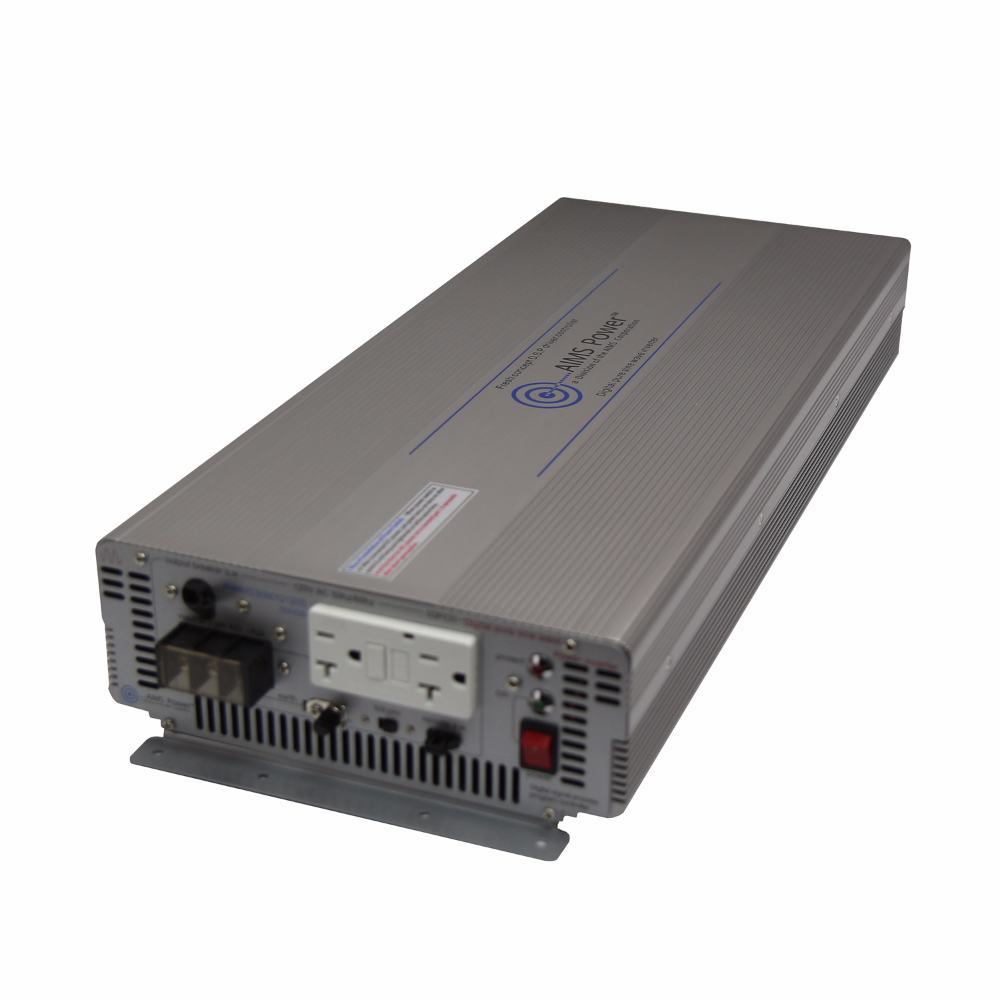
This is the inverter we recommend first for anyone running serious power tools off a battery bank. AIMS rates it at 3000W continuous with a 9000W surge peak — enough headroom to start a 15-amp circular saw or a small compressor without flinching.
Who it’s for: Off-grid workshops, dedicated tool sheds, or anyone running multiple tools from a 12V battery bank.
Pros:
– 9000W surge rating handles inductive loads (saws, compressors, grinders) that choke lesser inverters
– Built-in GFCI outlets and hardwire terminal block for permanent installation
– Thermally controlled fans stay quiet until the load actually demands cooling
Cons:
– Weighs over 30 lbs — this is a stationary install, not something you toss in a truck bed
– Price sits above $400, which is steep if you only run lighter tools
Giandel 2200W Pure Sine Wave Inverter
Off-Grid Insider
Get off-grid guides & gear picks in your inbox — free

For folks who don’t need to run a table saw and a shop vac simultaneously, the Giandel 2200W hits a sweet spot between price and capability. Its 4400W surge peak comfortably starts most handheld power tools — drills, jigsaws, sanders, and even a moderate circular saw.
Who it’s for: Budget-conscious builders running one tool at a time from a 12V system.
Pros:
– Priced under $250 — roughly half the cost of premium 3000W units
– Includes a wired remote on/off switch, which is useful when the inverter is buried in a cabinet
– Dual AC outlets plus a USB port for charging devices between cuts
Cons:
– 2200W continuous means you’ll hit the ceiling with heavy-draw tools like a miter saw or large compressor
– Fan runs continuously under load and gets noticeable in a quiet workshop
Krieger 3000W Pure Sine Wave Inverter
The Krieger 3000W is a popular pick in the mobile contractor and van-build community, and the verified buyer feedback backs that up. It delivers 3000W continuous with a 6000W surge in a surprisingly compact chassis.
Who it’s for: Mobile jobsite setups, work trucks, and van conversions where space and weight matter.
Pros:
– Compact form factor relative to its 3000W rating — fits under truck seats or in tight van compartments
– Hard-start capable for most corded power tools including circular saws and angle grinders
– Built-in protections for over-voltage, under-voltage, overload, over-temperature, and short circuit
Cons:
– 6000W surge peak is lower than the AIMS, so very large inductive motors may still trip it
– Some users report the included battery cables are marginal for full-load use — upgrading to heavier gauge is recommended
Renogy 3000W 12V Pure Sine Wave Inverter

Renogy has a strong reputation in the off-grid solar space, and their 3000W inverter benefits from that ecosystem — it integrates cleanly with Renogy charge controllers and monitoring if you’re building out a full solar tool shed. The 3000W continuous / 6000W surge spec handles the best inverter for running power tools scenarios that most off-gridders face.
Who it’s for: Anyone already in the Renogy solar ecosystem who wants a seamlessly integrated workshop inverter.
Pros:
– Works within Renogy’s monitoring ecosystem — track loads, faults, and battery state from one interface
– Clean sine wave output protects sensitive tool electronics (laser guides, digital readouts, brushless motor controllers)
– UL-listed, which matters for insurance and code compliance in permanent installations
Cons:
– Priced at a premium compared to standalone inverters with similar specs
– Limited to 12V input — if you’re running a 24V or 48V battery bank, you’ll need a different model
WZRELB 3500W Pure Sine Wave Inverter
If you regularly run a table saw, planer, or large shop compressor, the WZRELB 3500W gives you extra continuous headroom that 3000W units don’t. Its 7000W surge peak handles the nastiest inductive startup loads we’ve seen in community reports.
Who it’s for: Dedicated off-grid woodworking shops or anyone running stationary power tools with high startup current.
Pros:
– 3500W continuous is the highest in our list — real headroom for stationary tools
– 7000W surge handles even stubborn compressor startups
– Hardwire terminal block plus standard outlets gives installation flexibility
Cons:
– Large, heavy unit — strictly for permanent installation
– Less established brand than AIMS or Renogy, though buyer reviews are consistently positive
GoWISE Power 3000W Pure Sine Wave Inverter
The GoWISE 3000W is a mid-range option that checks every box for a general-purpose off-grid workshop inverter. It’s consistently praised in buyer reviews for reliable startups on circular saws and grinders.
Who it’s for: General-purpose off-grid workshops where you need reliable 3000W output without paying a premium for brand name or extra ecosystem features.
Pros:
– Competitive pricing for a 3000W pure sine wave unit — often found under $350
– Includes wired remote control for convenient on/off switching
– Dual AC outlets with clean sine wave output suitable for all corded power tools
Cons:
– Surge rating (6000W) is adequate but not class-leading
– Documentation and support are thinner than AIMS or Renogy
How We Chose
We started with every pure sine wave inverter rated 2000W or above that’s available through major US retailers. We filtered for units with at least 100 verified buyer reviews and cross-referenced those ratings against discussions on off-grid forums, Reddit’s r/offgrid and r/SolarDIY communities, and woodworking forums where people actually run heavy tools off battery banks. We prioritized surge rating (the single most important spec for power tools), build quality indicators, protection features, and real-world reliability reports. We excluded modified sine wave inverters entirely — they damage brushless motors and produce unacceptable noise in tools with electronic speed controls.
Buying Guide: What Actually Matters for Power Tool Inverters

Surge (Peak) Wattage Is the Spec That Matters Most
Every inductive motor — and that includes almost every corded power tool — draws two to six times its rated wattage during startup. A 15-amp circular saw running at 1800W might spike to 4000W+ for a fraction of a second. If your inverter can’t handle that spike, it trips, resets, or shuts down. Always buy an inverter with a surge rating at least double the startup draw of your heaviest tool. When in doubt, go bigger.
Pure Sine Wave Is Non-Negotiable
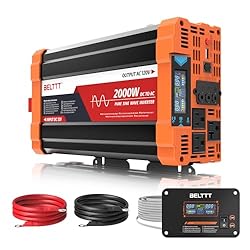
Modified sine wave inverters are cheaper, and you’ll see people claim they “work fine” for power tools. They work until they don’t. Brushless motors, variable speed controls, laser guides, and digital readouts in modern power tools all expect clean AC power. A modified sine wave produces extra heat in motors, can cause erratic speed control behavior, and shortens tool life. For the price difference — usually $50-$100 more — pure sine wave is the only serious option.
Wire Gauge and Battery Bank Sizing
An inverter is only as good as the system feeding it. A 3000W inverter on a 12V system pulls 250+ amps at full load. That demands short, heavy-gauge battery cables (typically 2/0 AWG or larger for runs over 3 feet) and a battery bank that can deliver sustained high-current output without voltage sag. Undersized wiring causes voltage drop, triggering the inverter’s low-voltage protection and shutting you down mid-cut. If you’re running heavy tools regularly, a 24V or 48V system reduces current draw and cable requirements significantly.
Continuous Rating vs. Your Actual Workload
Don’t just match the inverter’s continuous rating to your tool’s nameplate watts — give yourself at least 20-25% headroom. Running an inverter near its continuous max generates heat, reduces efficiency, and shortens component life. If your heaviest tool draws 2400W, a 3000W inverter is the minimum. A 3500W unit is better. And if you ever plan to run two tools simultaneously — say a dust collector and a saw — add those loads together before choosing.
FAQ
What size inverter do I need to run a circular saw?
Most 7¼-inch circular saws draw 1400-1800W running and can surge to 3500-4500W on startup. We recommend a minimum 3000W continuous / 6000W surge pure sine wave inverter. Anything smaller risks nuisance shutdowns, especially if the blade catches or bogs in dense material.
Can I run power tools on a modified sine wave inverter?
Technically some tools will spin, but we don’t recommend it. Modified sine wave causes excess heat in motors, can damage electronic speed controls, and voids some tool warranties. The price difference between modified and pure sine wave inverters is small enough that there’s no good reason to compromise.
How many batteries do I need to run power tools off-grid?
It depends on how long you run them. A 3000W tool load on a 12V system draws roughly 275 amps. A single 100Ah battery would be drained in about 20 minutes (and you shouldn’t discharge below 50% for lead-acid). For a realistic workshop session of 1-2 hours of intermittent tool use, plan for at least 400-600Ah of battery capacity at 12V — or step up to a 24V or 48V system to reduce current demands.
Is a 2000W inverter enough for power tools?
For handheld tools like drills, jigsaws, and sanders — yes, 2000W is usually fine. For circular saws, miter saws, planers, or compressors, 2000W continuous is too close to the edge. Startup surges will trip the overload protection. If you plan to use anything beyond light-duty tools, start at 3000W.
What’s the difference between a power inverter and an inverter generator for tools?
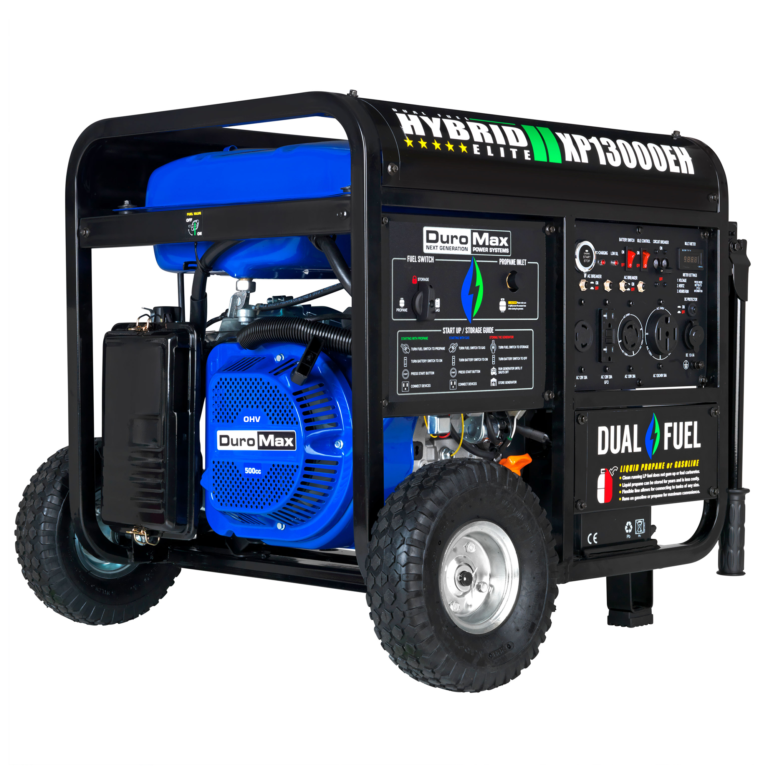
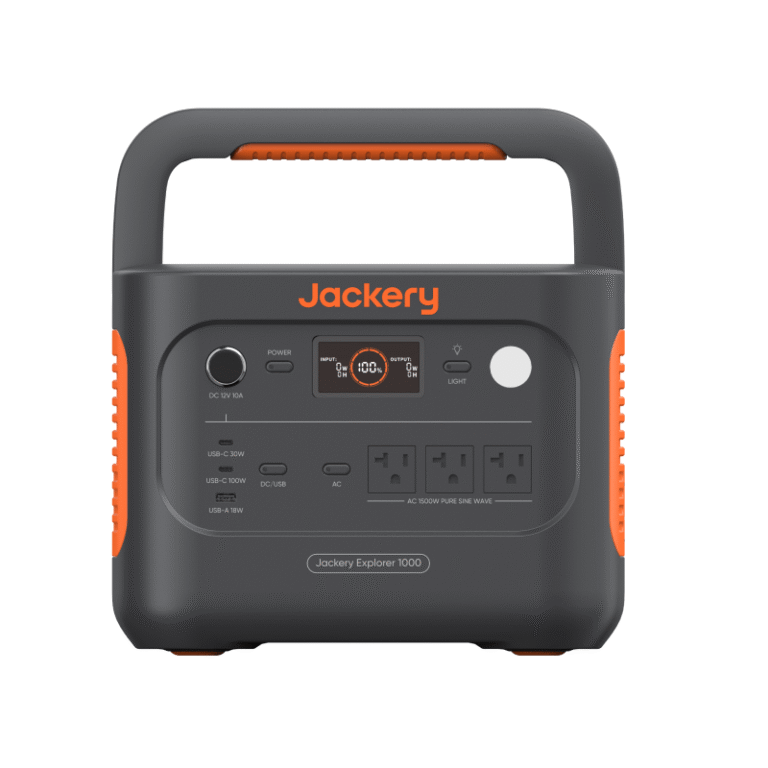
An inverter converts DC battery power to AC. An inverter generator burns fuel to produce AC power with electronic regulation for clean output. For a permanent off-grid workshop with solar and batteries, a battery inverter is the better long-term investment. A generator makes sense as backup or for remote jobsites without a battery bank. Many off-gridders use both — the generator charges the batteries, and the inverter runs the tools.
Our Verdict
For most off-grid workshops and tool sheds, the AIMS Power 3000W Pure Sine Wave Inverter is our top recommendation. Its 9000W surge rating gives you the most headroom for demanding startup loads, and its build quality and protection features justify the higher price for a permanent installation. If you’re working with a tighter budget and running lighter tools, the Giandel 2200W delivers honest performance for roughly half the cost. Match your inverter to your heaviest tool, oversize your wiring, and don’t cheap out on the battery bank — that’s where most off-grid power tool setups actually fail.