5 Best Off-Grid Chainsaws 2026
If you’re managing an off-grid property, a chainsaw isn’t optional — it’s infrastructure. Fallen trees block access roads. Standing deadwood needs to come down before it falls on something expensive. And unless you’re hauling propane or pellets from town every week, firewood processing equipment for off-grid heating means running a saw regularly from late summer through fall.
The question we hear most often isn’t whether you need a chainsaw — it’s which type holds up when there’s no grid power, no dealer nearby, and no room for tools that can’t earn their keep. The battery powered chainsaw vs gas off-grid debate has shifted dramatically in the last three years, and the answer now depends less on “which is better” and more on what your property actually demands.
We dug into manufacturer specs, long-term owner reports, and real-world duty-cycle data to find the best off-grid chainsaws for property maintenance work — and to help you figure out which power source makes sense for your situation.
Our Top Picks at a Glance
| Chainsaw | Power Source | Bar Length | Weight | Best For | Our Score |
|---|---|---|---|---|---|
| Stihl MS 261 C-M | Gas (50:1 mix) | 16–20″ | 10.8 lb | All-around property maintenance | 9/10 |
| Husqvarna 562 XP | Gas (50:1 mix) | 18–24″ | 13.2 lb | Heavy milling & large timber | 8.5/10 |
| EGO Power+ CS1804 | 56V Battery | 18″ | 15.0 lb (with battery) | Moderate cutting, low maintenance | 8/10 |
| Stihl MSA 300 C-O | 36V Battery | 16″ | 9.5 lb (with AP 300 S) | Light-to-medium limbing & bucking | 7.5/10 |
| Echo CS-590 Timber Wolf | Gas (50:1 mix) | 20″ | 13.2 lb | Budget workhorse | 8/10 |
The Real Debate: Battery Powered Chainsaw vs Gas Off-Grid
This isn’t a simple “gas wins” conversation anymore, but context matters enormously when you’re off-grid.
Where Gas Still Dominates
Off-Grid Insider
Get off-grid guides & gear picks in your inbox — free
For sustained cutting — dropping trees over 12″ diameter, processing multiple cords of firewood, milling lumber — gas chainsaws remain the practical choice off-grid. A gallon of premixed fuel stores indefinitely with stabilizer, delivers 40–60 minutes of hard cutting, and refuels in 30 seconds. No inverter required. No charge time.
The Stihl MS 261 C-M runs its M-Tronic electronic fuel management system, which auto-adjusts for altitude and temperature — a genuine advantage if your property sits above 4,000 feet where carburetors get finicky. Owners in mountain communities consistently report reliable cold starts down to single-digit temperatures.
Where Battery Has Closed the Gap
Modern 56V and 36V pro-grade saws from EGO, Stihl, and Husqvarna now deliver enough torque for legitimate 12–14″ softwood cuts and handle limbing and bucking work that used to require gas. The EGO CS1804 with its 18″ bar pushes chain speeds comparable to a 40cc gas saw, and with a 7.5Ah battery, owners report 150–200 cuts on 6″ pine before needing a charge.
The off-grid calculus: if you already run a solar array with battery storage, charging a 56V tool battery draws roughly 300–500 watts for 60–90 minutes. That’s well within what a modest 2kW solar setup handles midday. You effectively run the saw on sunlight.
The honest trade-off: battery saws need 1–2 hours to recharge. If you’re processing a full cord of hardwood in a day, you either need 3–4 batteries (at $200–350 each) or you accept downtime. Gas doesn’t have that problem.
Our Recommendation
For a primary off-grid chainsaw: gas. For a secondary saw for lighter daily property work: battery, especially if you have solar charging. Many experienced off-grid homesteaders we’ve seen reporting in forums run both.
Detailed Reviews
Stihl MS 261 C-M — Best Overall Off-Grid Chainsaw
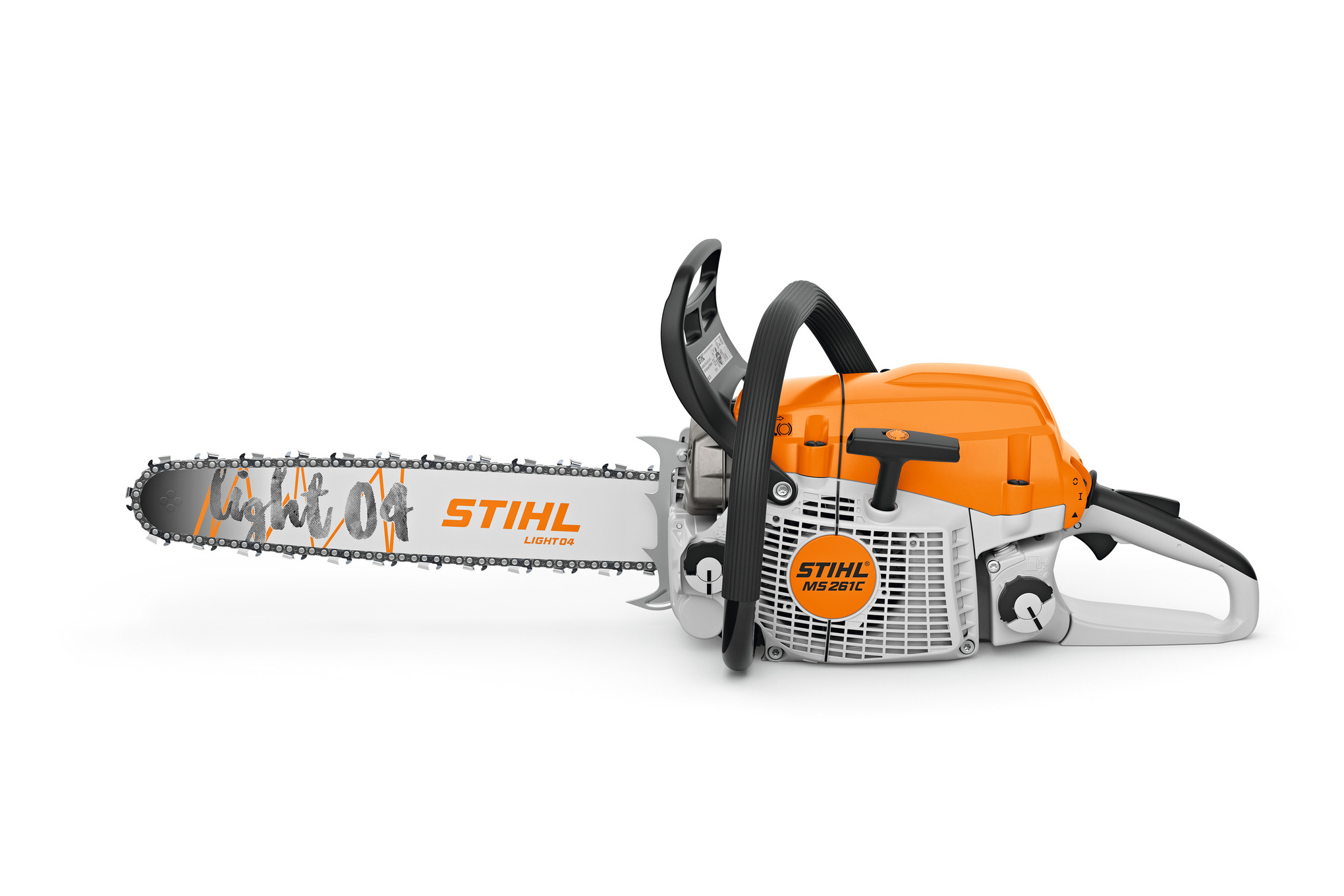
Score: 9/10 — The most capable all-around saw for off-grid property work, with the reliability record to back it up.
| Spec | Detail |
|---|---|
| Engine | 50.2cc, 4.0 bhp |
| Bar Length | 16″, 18″, 20″ |
| Weight (powerhead) | 10.8 lb |
| Fuel Capacity | 16.9 oz |
| Chain Type | Oilomatic 3/8″ RS |
| Fuel Mix | 50:1 |
| Anti-Vibration | Yes (4-point) |
| Price Range | $550–$620 |
What stands out: The M-Tronic system eliminates manual carburetor adjustments. For off-grid users, this matters more than it sounds — you don’t need to retune when seasons change or when you move between elevation zones on your property. It self-compensates for dirty air filters too, buying you extra run time before servicing.
The 50.2cc engine sits in a sweet spot: enough power to run a 20″ bar through 18″ hardwood without bogging, but light enough at 10.8 lb (powerhead only) for extended overhead limbing without destroying your shoulders.
What owners report: Arborists and rural landowners on forestry forums consistently rank the MS 261 among the most reliable saws in its class. Common praise centers on the easy starting (most report 1–2 pull starts when properly maintained), low vibration during extended use, and fuel efficiency. Typical complaints are limited to the price and the proprietary chain system.
Who this is for: Off-grid property owners who need one saw that handles everything from storm cleanup to annual firewood processing. If you’re buying a single gas chainsaw, this is the one.
Who should skip it: If your cutting needs rarely exceed 8″ diameter limbs, this is more saw than you need — and more investment.
Echo CS-590 Timber Wolf — Best Budget Gas Option

Score: 8/10 — Roughly half the price of the Stihl with 80% of the capability. A proven workhorse with a simpler design that’s easier to maintain in the field.
| Spec | Detail |
|---|---|
| Engine | 59.8cc, 3.89 bhp |
| Bar Length | 18″, 20″ |
| Weight (powerhead) | 13.2 lb |
| Fuel Capacity | 21.8 oz |
| Chain Type | 3/8″ standard |
| Fuel Mix | 50:1 |
| Anti-Vibration | Yes (spring-assist) |
| Price Range | $300–$370 |
What stands out: The CS-590 runs a larger displacement engine (59.8cc vs. 50.2cc) than the Stihl, which translates to raw pulling power through hardwood. It uses standard-pitch chains available at any hardware store — a real advantage when the nearest Stihl dealer is two hours away.
The decompression valve and spring-assisted starter make cold starts manageable, and the tool-less air filter access means field cleaning takes under a minute.
What owners report: Long-term reviews consistently highlight durability and parts availability as primary strengths. The most common criticism is higher vibration compared to premium saws — extended sessions of 2+ hours get fatiguing. Several owners note the bar oil consumption runs high.
Who this is for: Budget-conscious homesteaders who process 3–6 cords annually and want a saw that’s simple to repair with commonly available parts.
EGO Power+ CS1804 — Best Battery Chainsaw for Off-Grid Use
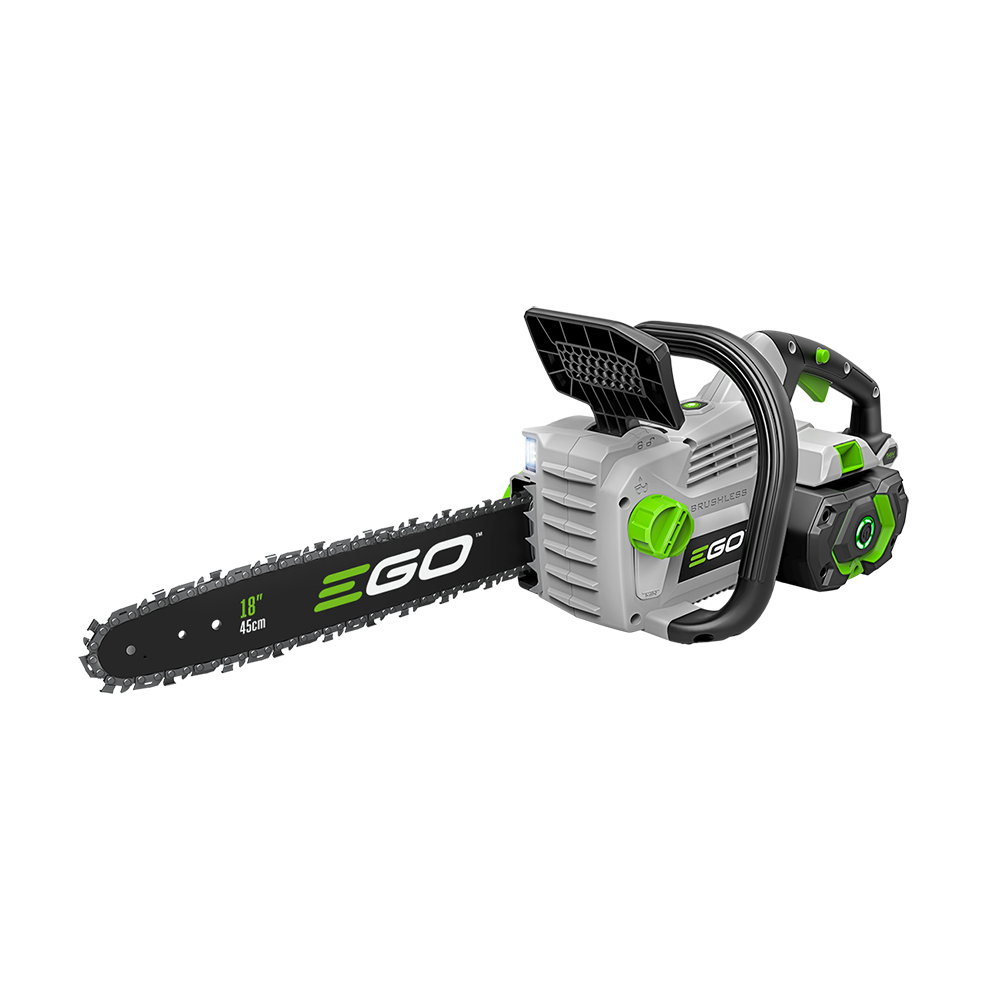
Score: 8/10 — The most capable cordless chainsaw we’ve found for off-grid property work, provided your solar setup can handle the charging.
| Spec | Detail |
|---|---|
| Motor | Brushless 56V |
| Bar Length | 18″ |
| Weight (with 5.0Ah battery) | 15.0 lb |
| Battery | 56V ARC Lithium (5.0Ah included) |
| Chain Speed | 6,800 FPM |
| Chain Type | Oregon 3/8″ low-profile |
| Charge Time | ~100 min (5.0Ah) |
| Price Range | $350–$400 (kit with battery + charger) |
What stands out: The 56V platform delivers genuine cutting performance — chain speed of 6,800 FPM puts it in the range of a 38–42cc gas saw. The brushless motor means no spark plug, no carburetor, no air filter to service. For chainsaw maintenance without electricity, that’s a significant reduction in the number of things that can go wrong.
The battery platform is cross-compatible with EGO’s mowers, blowers, and string trimmers. If you’re already on the EGO 56V system, the saw uses batteries you own.
What owners report: Buyers consistently praise the low noise (no hearing protection technically required, though we’d still recommend it) and instant starting. The main limitation is runtime: with the included 5.0Ah battery, expect 80–120 cuts on 6″ softwood. Hardwood and larger diameters drain the battery significantly faster. Multiple owners recommend upgrading to the 7.5Ah battery for serious work.
Who this is for: Off-grid homeowners with solar charging capability who primarily handle limbing, trail clearing, and light-to-moderate bucking. Excellent as a second saw alongside a gas primary.
Who should skip it: Anyone processing more than 2 cords of firewood annually as their primary cutting tool. The charge-to-cut ratio doesn’t support sustained heavy production.
Chainsaw Maintenance Without Electricity

Every chainsaw — gas or battery — needs a sharp chain, proper bar care, and clean internals. Here’s what that looks like when you can’t plug in a bench grinder.
Chain sharpening: A round file guide (like the Stihl 2-in-1 or Pferd ChainSharp) is the off-grid standard. Match the file diameter to your chain pitch (most commonly 7/32″ for 3/8″ chain or 5/32″ for .325″). Five to seven strokes per tooth, same angle, same pressure. Most experienced users report a full sharpening takes 10–15 minutes. Keep three spare chains in rotation — sharpen in the evening, swap fresh in the morning.
Bar maintenance: Flip the bar every 3–5 tanks of fuel to distribute wear evenly. Clean the bar groove with a groove cleaner or flat screwdriver. Check bar rails for burrs with a straightedge and dress them with a flat file if needed. No electricity required.
Air filter cleaning: Gas saws need this regularly. Compressed air is ideal but not always available off-grid. Warm soapy water works for fabric filters (dry completely before reinstalling). Stihl’s fleece filters can be tapped clean. Stock 2–3 spares.
Spark plug service: Keep a spark plug wrench and a few spare NGK plugs (check your manual for the specific number — BPMR7A is common for Stihl saws). Inspect every 25 hours of runtime. No tools beyond a wrench and a gap gauge needed.
Fuel management: Use ethanol-free fuel whenever possible (it stores better and won’t degrade carb diaphragms). Add fuel stabilizer to every can. Mix fresh 50:1 batches in quantities you’ll use within 60 days.
Firewood Processing Equipment Off-Grid: The Full Setup
A chainsaw alone doesn’t heat your cabin. Here’s the supporting gear that makes firewood processing efficient off-grid:
- Splitting: A quality maul (Fiskars X27 or Gransfors Bruks Splitting Maul) handles most rounds under 20″. For high-volume processing, a manual kinetic log splitter avoids fuel and power demands entirely.
- Bucking: A sawhorse or log jack holds rounds at waist height and saves your back. The Timber Tuff log jack is a commonly recommended budget option.
- Measuring: A 16″ bucking gauge clamped to your bar ensures consistent stove-length cuts without measuring each round.
- Stacking & seasoning: Cut in spring, stack in a sunny spot with good airflow, burn the following winter. Moisture meters (battery-powered, under $30) confirm your wood is below 20% moisture content.
What About the Husqvarna 562 XP?
If your property maintenance includes milling lumber or regularly dropping trees over 20″ diameter, the 562 XP’s 59.8cc engine and ability to run a 24″ bar puts it in a different league. It’s a professional felling saw that happens to be excellent for property work. The AutoTune system (Husqvarna’s equivalent to M-Tronic) keeps it running right across conditions. At $700–$800, it’s a bigger investment, and at 13.2 lb it’s heavier for extended use — but for large-timber properties, it’s worth the step up.
Stihl MSA 300 C-O — Lightweight Battery Alternative
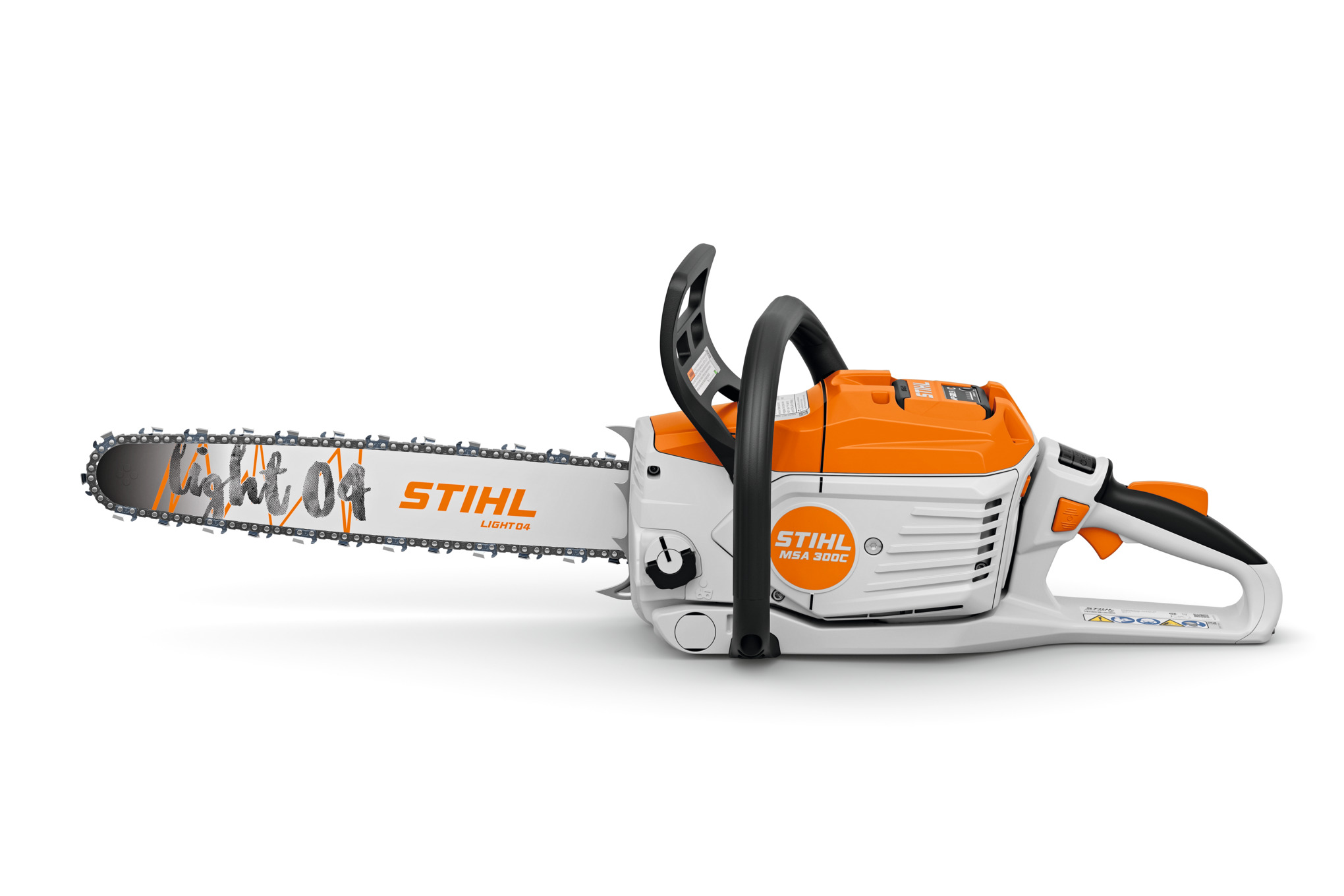
Stihl’s pro-grade battery saw runs on their 36V AP battery system and weighs just 9.5 lb with the AP 300 S pack. It won’t replace a gas saw for heavy work, but for daily limbing, light bucking, and cleanup tasks it’s remarkably capable and nearly silent. If you’re already invested in Stihl’s battery ecosystem for other tools, it’s a natural addition.
Final Verdict
For most off-grid properties, the Stihl MS 261 C-M is the chainsaw to own. It balances power, weight, fuel efficiency, and long-term reliability better than anything else in its class. The M-Tronic system earns its premium by eliminating carburetor headaches in variable conditions — exactly the kind of conditions off-grid properties dish out.
If budget is the primary concern, the Echo CS-590 Timber Wolf does genuine work for roughly half the price and runs on parts you can find anywhere.
And if your solar setup supports it, adding the EGO CS1804 as a secondary saw for daily chores means less mixing fuel, less noise, and less maintenance for the 80% of cuts that don’t require a gas saw’s sustained power.
Buy the Stihl MS 261 C-M on Amazon | Buy the Echo CS-590 on Amazon | Buy the EGO CS1804 on Amazon