5 Best Container Home Insulation for 2026
Shipping containers are steel boxes designed to survive ocean crossings — not keep you comfortable in July or January. Without proper insulation, a container home turns into a convection oven in summer and a walk-in freezer in winter. Condensation becomes your worst enemy, rotting out framing and breeding mold faster than you’d believe. Choosing the right insulation for a container home isn’t the same decision as insulating a stick-built house, because you’re dealing with corrugated metal walls, limited interior space, and moisture dynamics that punish bad choices hard.
We spent weeks digging through building science research, manufacturer spec sheets, and hundreds of owner-reported builds in container home forums to find what actually works — and what wastes money.
Our top pick: Froth-Pak 620 Closed-Cell Spray Foam — best all-around performance and moisture control.
Best budget option: Owens Corning FOAMULAR 150 XPS Rigid Foam — solid R-value without the spray foam price tag.
Best for extreme heat: Super Shield Multi-Layer Reflective Insulation — radiant barrier that fights solar heat gain on metal walls.
Best eco-friendly: Havelock Wool Loose Fill — natural, breathable, and handles moisture without losing performance.
Our Picks
Froth-Pak 620 Closed-Cell Spray Foam Kit
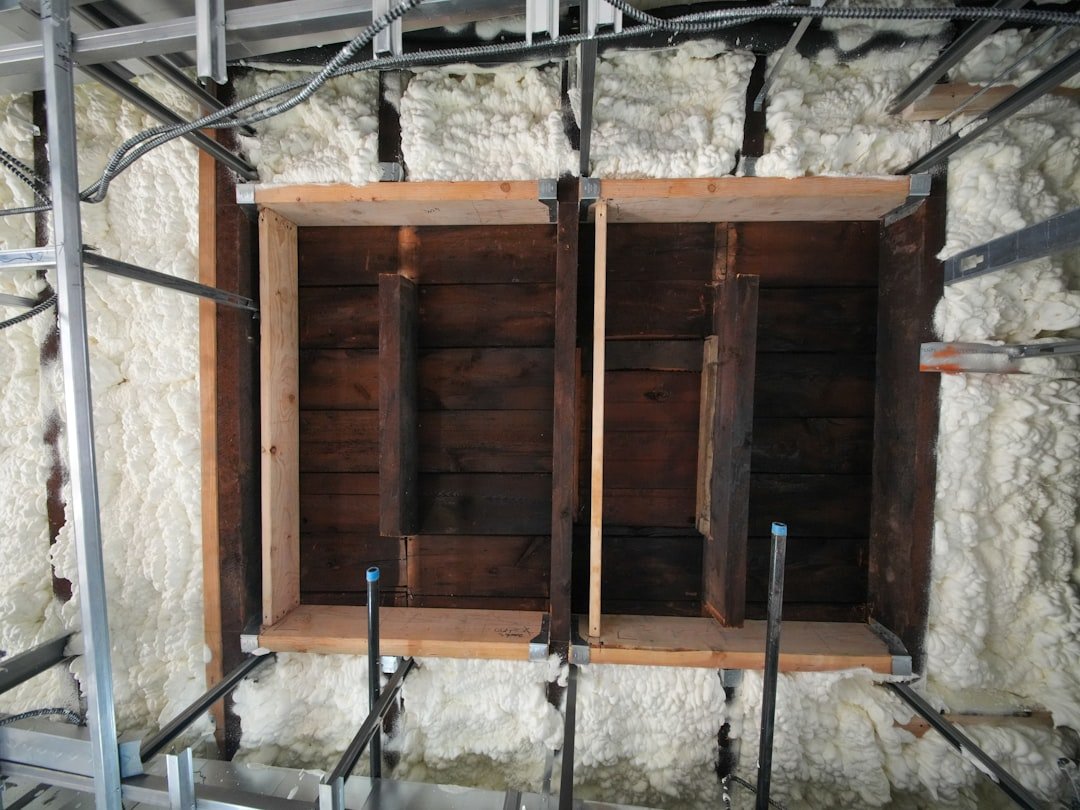
This is the insulation most experienced container home builders reach for first, and for good reason. Closed-cell spray foam bonds directly to corrugated steel, fills every ridge and gap, and creates a continuous vapor barrier that eliminates the condensation problem that plagues container builds.
Best for: Builders who want a one-step solution for insulation and moisture control, especially in humid climates.
Pros:
– R-value of roughly 6.5 per inch — highest of any common insulation type, maximizing usable interior space
– Acts as its own vapor barrier when applied at 1.5 inches or more, eliminating the need for separate moisture management
– Bonds directly to steel corrugation, preventing the air gaps that cause condensation and rust
Cons:
– At roughly $700 per 620 board-foot kit, you’ll need multiple kits for a full 40-foot container — costs add up fast
– Application requires proper PPE and ventilation; mistakes are permanent and difficult to remove
Owens Corning FOAMULAR 150 XPS Rigid Foam Board
Off-Grid Insider
Get off-grid guides & gear picks in your inbox — free

XPS rigid foam boards are the workhorse budget option for container homes, offering a strong R-5 per inch with excellent moisture resistance. You’ll need to frame out the walls first and cut panels to fit between studs, but the cost savings over spray foam are substantial — typically 40-60% less for comparable coverage.
Best for: Budget-conscious builders comfortable with framing and willing to handle vapor barrier installation separately.
Pros:
– R-5 per inch with virtually zero moisture absorption — the pink and blue boards hold their R-value even in damp conditions
– Easy to cut with a utility knife and score; no specialized equipment needed for installation
– Widely available at any building supply store, so no waiting on specialty orders
Cons:
– Doesn’t conform to corrugated walls — requires furring strips or stud framing, eating into already-tight interior space
– Seams and edges need careful taping with foil tape or canned spray foam to prevent condensation at gaps
Super Shield Multi-Layer Reflective Insulation

In hot climates where solar heat gain is the primary enemy, reflective radiant barrier insulation makes a measurable difference on steel containers. This multi-layer product combines reflective aluminum faces with a foam or bubble core, and it’s specifically effective at bouncing radiant heat away before it conducts through the metal walls. We see it used heavily in desert and southern builds where cooling loads dominate.
Best for: Hot-climate container builds where reducing solar heat gain matters more than retaining winter warmth.
Pros:
– Reflects up to 97% of radiant heat according to manufacturer specs — a real advantage on sun-baked steel surfaces
– Thin profile (typically under half an inch) preserves maximum interior square footage
– Doubles as a vapor barrier, simplifying the wall assembly in dry climates
Cons:
– Low conductive R-value on its own (roughly R-1 to R-3) — in cold climates, it must be paired with foam or batt insulation
– Requires an air gap to perform; direct contact with the steel wall eliminates the radiant barrier benefit
Havelock Wool Loose Fill Insulation
Wool insulation has been quietly gaining traction in the container home community, and Havelock is the brand we see recommended most. Sheep’s wool can absorb up to 35% of its weight in moisture without losing insulating performance — a property that’s almost uniquely suited to the condensation-prone environment inside a steel container.
Best for: Eco-conscious builders in moderate climates who want breathable, non-toxic insulation and are comfortable with a vapor-open wall design.
Pros:
– Naturally manages moisture by absorbing and releasing water vapor, reducing condensation risk without a vapor barrier
– R-3.6 per inch with no off-gassing or chemical irritants — safe to handle without PPE
– Biodegradable and sustainably sourced; naturally fire-resistant due to lanolin content
Cons:
– Significantly more expensive than fiberglass or rigid foam — roughly $1.50–$2.00 per square foot at standard thickness
– Requires framing cavities and won’t adhere to steel walls on its own, adding labor and reducing interior space
Rockwool ComfortBatt Mineral Wool Insulation

Rockwool batts are fire-resistant up to 2,150°F, water-repellent, and acoustically superior to fiberglass — all properties that matter in a steel box. The semi-rigid batts friction-fit into framed cavities and won’t sag or settle over time, which is a common complaint with fiberglass in wall assemblies.
Best for: Builders prioritizing fire safety, sound dampening, and long-term durability in a framed-out container wall.
Pros:
– Non-combustible to 2,150°F — a serious safety advantage in a metal structure where fire can spread fast through interior finishes
– Water-repellent yet vapor-permeable, allowing walls to dry while resisting bulk moisture damage
– R-3.7 per inch with excellent sound attenuation — noticeably reduces rain noise on metal roofs
Cons:
– Requires full stud framing, which in a 40-foot container means losing 3-4 inches per wall — a real sacrifice in an 8-foot-wide structure
– Heavier and more difficult to cut than fiberglass; a serrated knife or bread knife works better than a utility knife
DAP Touch ‘n Seal Foam Kit 600
A solid alternative to the Froth-Pak for DIY closed-cell application. The Touch ‘n Seal 600 delivers comparable R-value and adhesion with a slightly different gun design that some builders prefer for extended use. Coverage runs about 600 board feet at one-inch thickness, which handles roughly one long wall and ceiling of a 20-foot container.
Best for: DIYers who want closed-cell spray foam performance and prefer the Touch ‘n Seal application system.
Pros:
– R-6.2 per inch closed-cell performance with strong adhesion to bare and primed steel surfaces
– Self-contained pressurized kit — no compressor or specialized spray rig required
– Creates a monolithic air and vapor barrier in a single application step
Cons:
– Single-use kit — once chemicals are mixed and pressurized, you have roughly 30 minutes of working time before the gun clogs
– Overspray and drips are nearly impossible to remove from surfaces; masking and prep time is significant
US Energy Products Nasatech Reflective Foam Core Insulation
This is the budget radiant barrier option we see in a lot of container workshop and garage builds. It combines a closed-cell foam core with dual reflective faces and costs roughly half what the Super Shield runs. Performance is a step down — thinner foam core, slightly lower reflectivity — but for non-climate-controlled spaces or as a supplemental layer, it’s hard to beat the price.
Best for: Workshop containers, storage builds, or as a supplemental layer under primary insulation in hot climates.
Pros:
– Dual-sided reflective aluminum faces with foam core provide both radiant and minor conductive insulation
– Extremely easy to install — cuts with scissors, attaches with spray adhesive or staples to furring strips
– Budget-friendly at roughly $0.50–$0.75 per square foot for full rolls
Cons:
– Thin foam core (typically 3/16 inch) provides minimal conductive insulation — R-value without air gaps is negligible
– Not a standalone solution for livable container homes in any climate with temperature extremes
How We Chose
We cross-referenced manufacturer data sheets for R-value, vapor permeability, and fire ratings with real-world build reports from container home forums, YouTube build channels, and owner communities on Reddit and Facebook. We weighted recommendations toward products with consistent positive feedback across multiple independent builds — not just sponsored reviews. Moisture management got extra weight in our evaluation because condensation is the single most common failure point in container home insulation, and getting it wrong leads to structural damage that’s expensive to fix.
Buying Guide: What Actually Matters for Container Home Insulation
R-Value Per Inch vs. Space Loss
Standard shipping containers are only 7 feet 10 inches wide on the inside. Every inch of insulation on each wall costs you two inches of total interior width. Closed-cell spray foam at R-6.5 per inch gives you more thermal performance per inch lost than any other option. If you’re building a bedroom or kitchen inside a container, that difference between 2 inches and 4 inches of wall buildup is the difference between comfortable and cramped.
Vapor Management and Condensation Control
Steel containers create a unique moisture problem: warm interior air hits cold metal and condenses. This happens year-round in most climates — not just winter. Your insulation strategy must either create a continuous vapor barrier on the warm side (closed-cell spray foam does this inherently) or use a breathable system that can absorb and release moisture without trapping it against the steel (wool insulation takes this approach). The worst choice is fiberglass batts with a poly vapor barrier that gets punctured during finishing — trapped moisture behind imperfect poly is how container homes grow mold.
Fire Rating and Code Compliance
If your container home needs to meet building code — and it does if you want insurance or plan to sell — your insulation’s fire rating matters. Closed-cell spray foam typically requires a 15-minute thermal barrier (usually half-inch drywall) over it. Rockwool is non-combustible and can be left exposed in many jurisdictions. Reflective bubble insulation often doesn’t meet code requirements for habitable spaces without additional covering. Check your local code before committing to a product.
Climate-Specific Strategy
There’s no single best insulation for container homes across all climates. Desert builds benefit enormously from reflective barriers because radiant heat gain through steel is the dominant load. Cold-climate builds need maximum R-value and airtight vapor barriers. Humid subtropical climates demand closed-cell foam or a carefully designed breathable assembly to prevent year-round condensation. Match your insulation to your actual climate, not to what worked for a YouTuber in a different state.
FAQ
What R-value do I need for a shipping container home?
Most building codes require between R-13 and R-21 for walls, depending on your climate zone. For container homes, we recommend targeting at least R-13 in moderate climates and R-19 or higher in extreme cold. With closed-cell spray foam, that means 2-3 inches of thickness. With rigid foam or batts, you’re looking at 3.5-5.5 inches in framed cavities.
Can I use fiberglass insulation in a shipping container home?
You can, but we don’t recommend it as a primary insulation for container walls. Fiberglass absorbs moisture, loses R-value when wet, and doesn’t adhere to steel. In a container’s condensation-prone environment, fiberglass batts behind drywall are a mold risk unless you have a flawless vapor barrier — and in practice, vapor barriers get punctured during electrical and finishing work.
Should I insulate the outside or inside of a container home?
Exterior insulation is technically superior because it keeps the steel at interior temperature, eliminating the condensation surface entirely. However, most container home builders insulate interior walls because exterior insulation requires weather-resistant cladding, adds significant cost, and changes the exterior profile. If budget allows, exterior rigid foam under cladding with interior spray foam is the gold standard.
How do I prevent condensation in an insulated container home?
The key is eliminating air contact with cold steel. Closed-cell spray foam applied directly to the container walls is the most reliable method because it bonds to the steel and creates a continuous vapor barrier with no air gaps. If using rigid foam or batts, you must seal every seam, penetration, and edge to prevent warm moist air from reaching the steel surface behind the insulation.
How much does it cost to insulate a 40-foot shipping container home?
For a standard 40-foot high-cube container (roughly 320 square feet of floor space, approximately 1,300 square feet of wall and ceiling surface), expect to spend $1,500–$3,000 for DIY closed-cell spray foam, $800–$1,500 for rigid foam board with framing, or $3,500–$6,000 for professional spray foam installation. These ranges cover walls and ceiling — floor insulation adds 15-25% to the total.
Our Verdict
For most container home builds, the Froth-Pak 620 Closed-Cell Spray Foam Kit remains our top recommendation. It solves the three biggest container insulation problems — thermal performance, vapor management, and space efficiency — in a single application. If budget is the primary constraint, Owens Corning FOAMULAR 150 XPS boards with careful air sealing deliver strong performance at roughly half the cost. Whatever you choose, don’t cut corners on moisture management — it’s the one decision that determines whether your container home lasts five years or fifty.