Remove Bacteria From Off-Grid Water (Step-by-Step)
Drinking untreated water off-grid is one of the fastest ways to end up seriously sick — giardia, cryptosporidium, and E. coli don’t care how clean that mountain stream looks. Chemical treatments work but leave a taste, and boiling burns through fuel. A UV water purifier offers a middle path: 99.99% pathogen elimination in seconds, no chemicals, no boil time. But off-grid UV purification comes with real constraints — power supply, pre-filtration requirements, and water clarity thresholds that most product listings gloss over.
We dug into manufacturer specs, EPA standards, and feedback from off-grid communities to put together a practical guide for choosing and running a UV water purifier when you’re not connected to the grid.
What You’ll Learn
- How UV-C purification actually works and what it does (and doesn’t) kill
- Power requirements and how to run a UV purifier on solar, battery, or 12V systems
- Pre-filtration steps you must take before UV treatment works reliably
- Specific product recommendations with real-world power draws and flow rates
How UV Water Purification Works
UV water purifiers use UV-C light at a wavelength of 253.7 nanometers to destroy the DNA of bacteria, viruses, and protozoa. The organism absorbs the UV energy, its DNA gets scrambled, and it can no longer reproduce or infect you.
The key metric is UV dose, measured in millijoules per square centimeter (mJ/cm²). The EPA and NSF/ANSI Standard 55 require a minimum dose of 40 mJ/cm² for Class A systems (designed to disinfect microbiologically unsafe water). Class B systems deliver 16 mJ/cm² and are only rated for supplemental treatment of already-treated municipal water — these are not appropriate for off-grid raw water sources.
What UV kills:
– Bacteria (E. coli, salmonella, cholera) — 99.99% at 40 mJ/cm²
– Viruses (hepatitis A, norovirus, rotavirus) — 99.99% at 40 mJ/cm²
– Protozoan cysts (giardia, cryptosporidium) — 99.9% at 40 mJ/cm²
What UV does NOT remove:
– Chemical contaminants (pesticides, heavy metals, VOCs)
– Sediment, turbidity, or particulates
– Taste and odor compounds
This is critical to understand: a UV water purifier is a disinfection tool, not a filter. For off-grid water drawn from wells, springs, or surface sources, you almost always need UV paired with physical filtration.
Pre-Filtration: The Step Most People Skip
Off-Grid Insider
Get off-grid guides & gear picks in your inbox — free
UV light can only work if it can actually reach the organisms in the water. Turbid or cloudy water creates shadows where pathogens hide from the UV lamp. The industry standard is that water must have turbidity below 1 NTU (nephelometric turbidity unit) for reliable UV disinfection. Most raw surface water runs 5–50+ NTU.
Minimum Pre-Filtration Setup
For an off-grid UV system, run water through these stages before the UV chamber:
-
Sediment pre-filter (20–50 micron) — catches sand, silt, and large debris. A simple spin-down filter or wound polypropylene cartridge works. Replace or clean every 1–3 months depending on source water.
-
Fine sediment filter (5 micron) — removes smaller particles that cause turbidity. Standard 10-inch cartridge housings with 5-micron filters cost about $15–25 per cartridge and last 3–6 months.
-
Optional: activated carbon block (1–5 micron) — if you want to also address taste, odor, or chemical contaminants. Not required for UV to function, but adds a meaningful layer for well water or agricultural runoff areas.
Skipping pre-filtration is the number one reason off-grid UV systems underperform. The UV lamp may be running, the indicator light may be green, but if your water is murky, you’re getting a fraction of the rated dose.
Power Requirements for Off-Grid UV Systems

This is where off-grid UV purification gets interesting. UV systems fall into two broad categories based on power draw:
Point-of-Use Portable UV (Battery Powered)

Devices like the SteriPEN Ultra and SteriPEN Adventurer use a small UV-C lamp you dip into a water bottle. They run on internal rechargeable batteries or CR123 batteries.
- Power draw: roughly 3–4 watts for 60–90 seconds per liter
- Battery life: 50–100 liters per charge (SteriPEN Ultra) or per set of batteries
- Best for: individual or small-group use, backpacking, bug-out scenarios
- Limitation: you’re treating one liter at a time, and you still need to pre-filter through at least a bandana or portable filter
These are excellent backup devices, but they’re impractical as a primary household water system.
Whole-House / Point-of-Entry UV Systems
For a cabin, homestead, or permanent off-grid setup, you need a flow-through UV chamber installed in your plumbing line. These are the workhorses.
| System | Flow Rate | Power Draw | Lamp Life | UV Dose |
|---|---|---|---|---|
| Viqua VH200 | 9 GPM | 40W | 9,000 hrs | 40 mJ/cm² |
| Viqua D4 | 12 GPM | 39W | 9,000 hrs | 40 mJ/cm² |
| HQUA-OWS-6 | 6 GPM | 25W | 9,000 hrs | 30 mJ/cm² |
| Bluonics 12W | 2 GPM | 12W | 8,000 hrs | 16 mJ/cm² |
Key takeaway: A Class A whole-house UV system draws 25–40 watts continuously while water is flowing. That’s very manageable on a modest solar setup — a single 100W panel with a small battery bank can run a UV purifier and a well pump with room to spare.
Wiring a UV Purifier Into a 12V/24V Off-Grid System
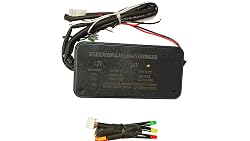
Most residential UV purifiers are designed for 110/120V AC. Off-grid options:
-
Run through an inverter. A 40W UV system needs a minimum 100W pure sine wave inverter. Modified sine wave inverters can work but may reduce lamp life — manufacturers like Viqua explicitly recommend pure sine wave. A pure sine wave inverter in the 300–600W range gives you headroom for the UV system plus the well pump.
-
Use a 12V DC UV system. A few manufacturers make 12V DC UV purifiers specifically for off-grid, RV, and marine use. The UV Dynamics 12V UVD 240 and units from Pura are designed to run directly off a 12V battery bank without an inverter, which eliminates conversion losses.
-
Wire to a dedicated circuit. If your off-grid system uses a charge controller and battery bank, wire the UV purifier to a dedicated breaker so it runs whenever your pump kicks on. A 40W draw over 2 hours of daily pumping is only 80 watt-hours — trivial for even a 200Ah battery bank.
Lamp Replacement and Maintenance

UV lamps degrade over time. A lamp rated for 9,000 hours doesn’t suddenly stop working at 9,001 — it gradually loses intensity. At the rated end-of-life, most lamps still emit UV-C light, but below the dose threshold needed for reliable disinfection.
Replace lamps on schedule, not when they burn out. For a system running an average of 4–6 hours per day, a 9,000-hour lamp lasts roughly 4–6 years. Replacement lamps for popular systems like the Viqua VH200 run $60–90.
Also replace the quartz sleeve every 2–3 lamp changes or if you notice mineral buildup. The quartz sleeve separates the lamp from the water, and mineral scaling reduces UV transmission. Clean it with a vinegar solution or CLR during lamp changes.
Common Mistakes
1. No pre-filtration. We’ve said it twice because it’s that common. Running murky creek water through a UV chamber gives you a false sense of security. Always filter to below 1 NTU first.
2. Buying a Class B system for raw water. Class B (16 mJ/cm²) systems are marketed as “UV purifiers” but are only rated for supplemental treatment. For untreated off-grid water, you need Class A (40 mJ/cm²). Check the NSF/ANSI 55 classification before buying.
3. Using a modified sine wave inverter. This technically works but causes the UV lamp to flicker and run at inconsistent intensity, which degrades lamp life and can reduce UV dose. Spend the extra $30–50 for a pure sine wave inverter.
4. Forgetting that UV provides no residual disinfection. Unlike chlorine, UV doesn’t leave any lasting protection in the water. If purified water sits in a tank exposed to contamination (open-top, animal access, biofilm), it can become recontaminated. Store UV-treated water in sealed, clean containers.
Our Recommendations
Best Overall: Viqua VH200
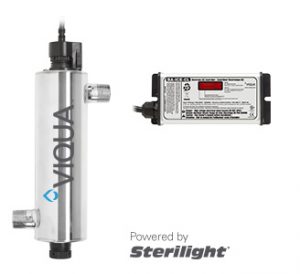
The VH200 delivers 40 mJ/cm² at up to 9 GPM, meets NSF/ANSI 55 Class A certification, and draws just 40W. The lamp lasts 9,000 hours and the system includes a countdown timer so you know when to replace it. It’s the most widely recommended whole-house UV system in off-grid forums and has broad parts availability.
Best Budget Option: HQUA-OWS-12
For smaller cabins or lower flow rates, the HQUA 12 GPM system draws around 55W and provides a 40 mJ/cm² dose. It’s roughly half the price of the Viqua and uses standard-size replacement lamps. Build quality is a step below Viqua, but verified buyer feedback is consistently positive for the price point.
Best Portable Backup: SteriPEN Ultra

For a backup or travel UV purifier, the SteriPEN Ultra treats 1 liter in 90 seconds, recharges via micro-USB, and lasts roughly 8,000 treatments per lamp. It’s not a primary system, but as an emergency backup or for treating water at a remote campsite, it’s proven and compact.
FAQ
Can a UV purifier work with rainwater?
Yes, and rainwater is actually one of the best source waters for UV treatment because it’s naturally low in turbidity and sediment. A simple 5-micron pre-filter followed by a UV chamber is usually sufficient. You still want to keep your collection system clean — roof washers and first-flush diverters prevent the worst contamination from reaching your tank.
How much solar do I need to run a UV purifier?
A 40W UV system running 4 hours per day uses 160 watt-hours. A single 200W solar panel paired with a 100Ah 12V lithium battery gives you far more capacity than needed. In practice, the UV system is one of the smallest electrical loads in an off-grid home.
Does UV purification work in cold water?
Yes. UV effectiveness is not significantly affected by water temperature. Cold water can cause condensation on the quartz sleeve in humid environments, but this is rare in properly installed systems where the chamber is inline with pressurized plumbing.
How do I know if my UV lamp is still effective?
Higher-end systems like the Viqua VH200 include UV intensity monitors that measure actual UV output in real time. Budget systems typically have a simple indicator light that shows the lamp is powered, but don’t verify dose. If you’re using a budget system, follow the manufacturer’s lamp replacement schedule strictly — don’t wait for visible failure.
Can I use UV alone without any other filtration?
For biologically contaminated but otherwise clean water (like a deep, capped well with a positive coliform test), UV alone can be sufficient for disinfection. For surface water, shallow wells, or any source with visible turbidity, chemical concerns, or unknown contamination, UV should be one stage in a multi-barrier treatment system — typically sediment filter, carbon filter, then UV.