7 Best Off-Grid Comms for 2026 Emergencies
I don’t have file system tools available in this environment. I’ll write the article directly as output here:
When cell towers go down — and they will during the exact emergencies where communication matters most — your smartphone becomes an expensive paperweight. Wildfires, ice storms, hurricanes, and even routine power outages in remote areas kill cellular coverage fast. If you live on or manage an off-grid property, having a reliable backup communication system isn’t optional — it’s infrastructure.
We spent weeks comparing satellite messengers, GMRS radios, ham transceivers, and mesh networking devices to find the systems that actually work when nothing else does. Here are our picks.
Our top pick: Garmin inReach Mini 2 — the most reliable satellite messenger for off-grid emergencies at a reasonable size and price.
Best budget: Motorola T800 Two-Way Radio Pack — solid two way radio communication system for property-wide coverage under $60.
Best for remote properties: Iridium 9575 Extreme Satellite Phone — the gold standard satellite phone off-grid property owners trust for voice calls anywhere on earth.
Our Picks
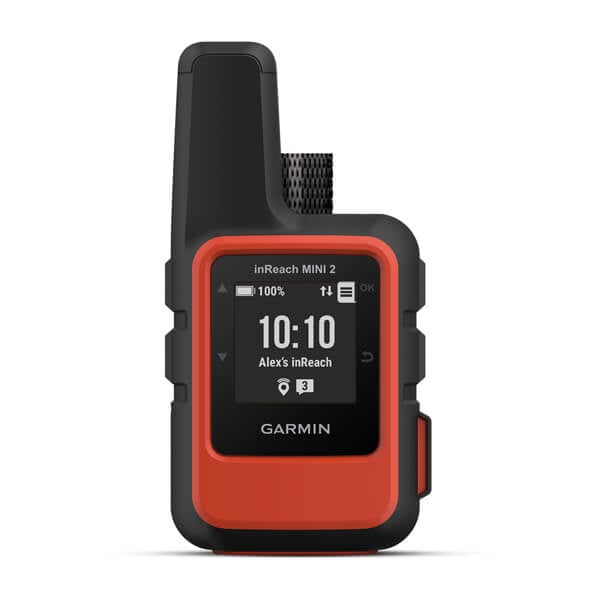
Garmin inReach Mini 2
The inReach Mini 2 uses the Iridium satellite network for global two-way text messaging and SOS alerting, with no cell coverage required. At 3.5 oz, it clips to a pack strap or sits in a kitchen drawer as a permanent emergency backup — and the interactive SOS connects directly to Garmin’s 24/7 IERCC monitoring center.
Best for: Off-grid homesteaders who want a compact, always-ready emergency lifeline with GPS tracking.
Pros:
– Global Iridium coverage — works in deep valleys, dense forest, and polar regions where other satellite services drop out
– Two-way texting to any phone number or email, not just other Garmin devices
– Built-in GPS with tracking and route sharing via the Garmin Explore app; doubles as a navigation tool
Cons:
– Requires a Garmin satellite subscription ($14.95–$64.95/month) — no plan, no messaging
– No voice calls — text and SOS only, which can be limiting in complex emergencies
Motorola Talkabout T800
Off-Grid Insider
Get off-grid guides & gear picks in your inbox — free

A capable two way radio communication system at a price point that makes it easy to equip every family member and outbuilding on your property. The T800 adds Bluetooth smartphone connectivity for offline GPS and messaging between radios, which is a useful feature when coordinating across a homestead.
Best for: Budget-conscious families who need reliable property-wide communication without subscriptions.
Pros:
– No recurring fees — buy once, communicate forever on FRS/GMRS frequencies
– 35-mile manufacturer range (realistically 2–5 miles in hilly, wooded terrain — still plenty for most properties)
– IPX4 weather resistance and the Talkabout app adds offline maps and location sharing between paired radios
Cons:
– Range drops significantly in mountainous or heavily forested terrain — line-of-sight dependent
– GMRS channels technically require an FCC license ($35, no exam), though many users operate on FRS channels license-free
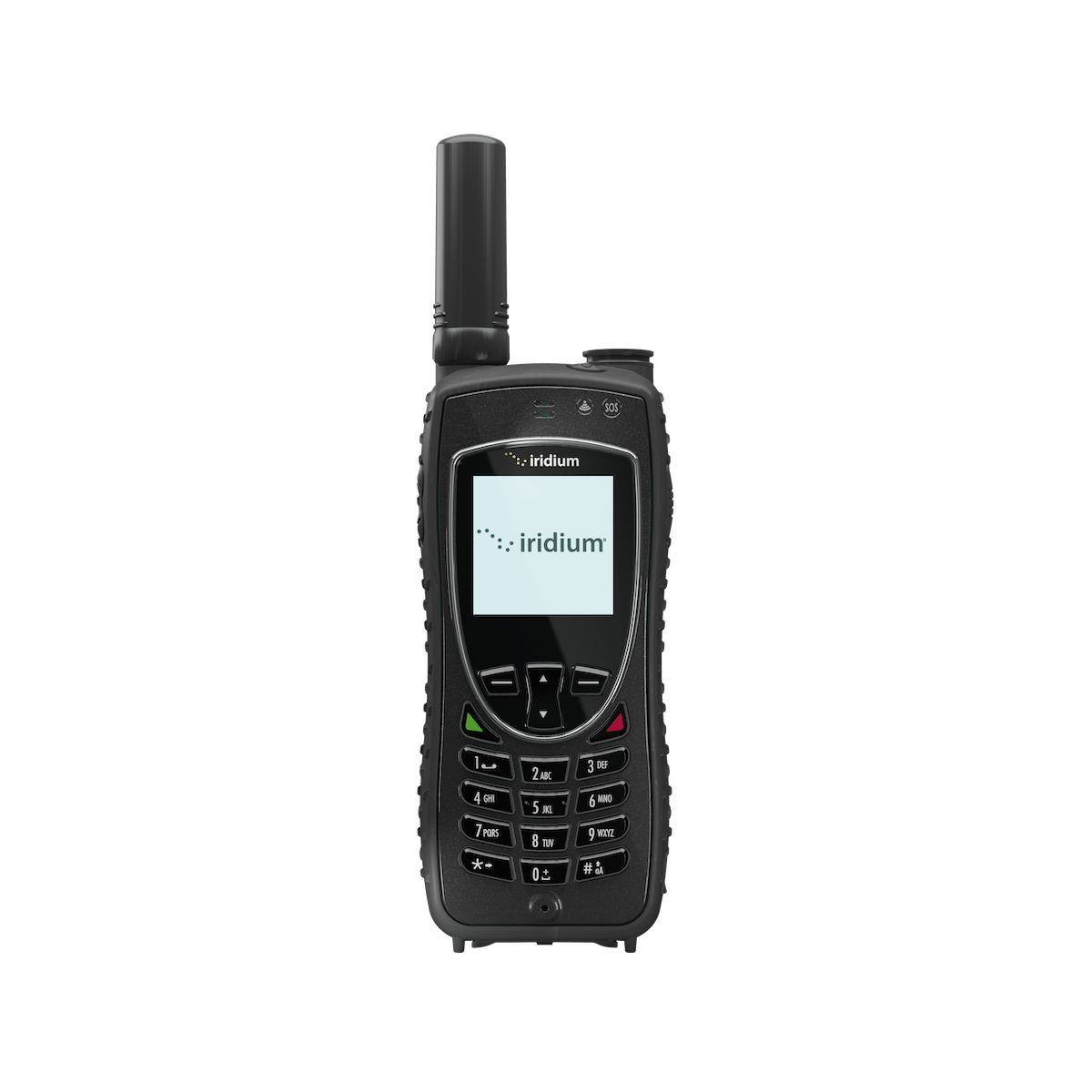
Iridium 9575 Extreme Satellite Phone
If you need actual voice calls from a location with zero infrastructure, this is the device. The 9575 Extreme is the satellite phone off-grid property owners, expedition teams, and NGOs have relied on for years. It’s MIL-STD-810G rated, has a dedicated SOS button connected to GEOS emergency response, and works on every square inch of the planet.
Best for: Remote property owners who need voice calling capability and can justify the investment.
Pros:
– True global voice, SMS, and short data capability on the Iridium LEO constellation — lowest latency of any satellite phone network
– MIL-STD-810G certified for shock, dust, rain, and humidity — built for harsh off-grid environments
– Programmable SOS button with GPS coordinates sent to GEOS International Emergency Response
Cons:
– Expensive: the handset runs $900–$1,300 and airtime plans start around $50/month for minimal minutes
– Bulky compared to satellite messengers — this is a purpose-built phone, not a clip-on device
goTenna Pro X2
The goTenna Pro X2 is purpose-built for mesh network off-grid connectivity — each device acts as a node, relaying messages across other goTenna units to extend range far beyond what any single radio achieves. Deploy four or five across a property and you’ve built a private, infrastructure-free communication network that doesn’t need satellites, cell towers, or internet.
Best for: Off-grid communities, homestead clusters, or preppers who want a self-healing network with no subscription fees.
Pros:
– True mesh networking — messages hop between nodes, so range scales with the number of devices deployed
– End-to-end encryption on all messages; operates on UHF frequencies without licensing requirements for the consumer version
– Pairs with smartphones via Bluetooth for a full mapping and messaging interface — no cell service needed
Cons:
– The Pro X2 is priced for organizations ($500+ per unit); the consumer goTenna Mesh is discontinued, making entry cost high
– Text and GPS location only — no voice capability through the mesh

Midland MXT275 MicroMobile GMRS Radio
A 15-watt GMRS mobile radio that dramatically outperforms handheld units on range. Mount it in a vehicle or a fixed location on your property with an external antenna, and you’ll cover distances that handhelds can’t touch. The MXT275 hits 8 repeater channels, which means you can tap into community GMRS repeater networks for even more reach.
Best for: Homesteaders who need a fixed-base or vehicle-mounted radio with serious range for a large property or rural area.
Pros:
– 15 watts of power — roughly 8x the output of a handheld, translating to significantly better range in real terrain
– 15 GMRS channels plus 8 repeater channels for extended community-network reach
– MicroMobile form factor mounts easily in a truck, ATV, or workshop without a complicated installation
Cons:
– Requires an FCC GMRS license ($35, covers your whole family, no exam)
– Needs a 12V power source — not a grab-and-go portable unit
BaoFeng UV-5R

At under $30, the UV-5R is the most accessible entry point into ham radio — and ham radio is the most resilient communication network on the planet. It’s a dual-band VHF/UHF transceiver that can reach local repeaters, communicate with other ham operators, and monitor weather and emergency frequencies. The off-grid community has adopted this radio in massive numbers for good reason.
Best for: Budget-minded operators willing to get a ham license ($0 exam fee as of 2024 through some VE teams) for access to the most robust emergency communication network available.
Pros:
– Absurdly affordable — equip your entire household for the cost of one satellite messenger
– Dual-band (VHF/UHF) with access to local repeater networks that can relay your signal across entire counties
– Hugely popular with a massive online community for support, programming guides, and firmware resources
Cons:
– Requires an FCC Amateur Radio license (Technician class minimum) to transmit legally
– Build quality reflects the price — the rubber antenna is mediocre, and most experienced operators immediately upgrade to a Nagoya NA-771
Zoleo Satellite Communicator
Zoleo takes a smart hybrid approach: it routes messages through cellular or Wi-Fi when available and switches to the Iridium satellite network when you’re off-grid. This means lower satellite costs on months when you have intermittent connectivity. The dedicated SOS button and check-in feature make it a strong emergency-focused device for properties that are remote but not completely disconnected.
Best for: Off-gridders with occasional cell access who want satellite backup without paying full satellite rates every month.
Pros:
– Intelligent message routing — uses cell/Wi-Fi first, Iridium only when needed, keeping costs down
– Dedicated SOS button with 24/7 monitoring through IERCC; also supports check-in and weather forecast messages
– Plans start at $20/month (basic) with a lower hardware cost than Garmin’s inReach line
Cons:
– Larger than the inReach Mini 2 — less pocketable as an everyday carry
– Requires a smartphone for full functionality; the device itself has limited standalone interface beyond SOS
How We Chose
We evaluated over 20 off-grid communication devices across four categories: satellite messengers, satellite phones, GMRS/FRS radios, and mesh networking systems. Our primary criteria were emergency reliability (does it work when everything else fails?), coverage area, subscription costs, and ease of use for non-technical household members. We cross-referenced manufacturer specifications with verified buyer reports on Amazon, community feedback from r/preppers, r/amateurradio, and r/offgrid, and professional reviews from sources like The Prepared and Wirecutter. Devices that required complex programming or lacked a true emergency SOS function were deprioritized in our rankings.
Buying Guide: What to Look for in Off-Grid Emergency Comms

Coverage Type: Satellite vs. Radio vs. Mesh
This is the fundamental decision. A satellite phone off-grid property setup gives you global reach — it works anywhere on earth with a view of the sky. Satellite messengers (Garmin inReach, Zoleo) provide text and SOS on the same networks at lower cost but without voice. A two way radio communication system (GMRS, ham) gives you free, unlimited local communication but is range-limited by terrain. Mesh network off-grid connectivity (goTenna) creates a private local network that extends range through node-hopping but requires multiple devices. Most serious off-grid setups use a layered approach: radios for daily on-property communication and a satellite device for true emergencies.
Subscription Costs vs. Hardware Costs
Satellite devices are cheaper to buy but expensive to operate. The Garmin inReach Mini 2 costs around $400 but demands $15–$65/month. The Iridium 9575 costs $1,000+ with $50+/month in airtime. GMRS and ham radios cost less upfront and have zero recurring fees (beyond the one-time FCC license). Factor in 3–5 years of ownership costs, not just sticker price.
Ease of Use Under Stress
In an actual emergency — wildfire approaching, someone injured on the property, severe weather — you need a device that anyone in your household can operate. Dedicated SOS buttons (Garmin, Zoleo, Iridium) are invaluable here. Ham radios are powerful but require training. Consider who will actually use the device and how much setup they can handle under pressure.
Power Requirements
Every device in this list needs power, and off-grid means you’re generating your own. Satellite messengers have internal batteries lasting 14+ days in expedition mode. Handheld radios run on AA batteries or rechargeable packs. Mobile GMRS radios need 12V DC. Factor your existing solar, battery bank, or generator setup into the decision — a device that dies when the power system is down isn’t an emergency device.
FAQ
What is the best emergency communication device for off-grid living?
For most off-grid households, the Garmin inReach Mini 2 offers the best combination of reliability, portability, and emergency capability. Its Iridium satellite network provides global coverage, the SOS function connects to a staffed monitoring center, and it weighs just 3.5 oz. If you need voice calls, upgrade to the Iridium 9575 Extreme satellite phone.
Do you need a license to use a two-way radio off-grid?
It depends on the radio type. FRS radios (like the Motorola T800 on FRS channels) require no license. GMRS radios require a $35 FCC license that covers your entire family for 10 years — no exam needed. Ham radios require passing a Technician class exam. In a true life-threatening emergency, FCC rules allow unlicensed transmission on any frequency.
How far can a two-way radio reach on an off-grid property?
Handheld GMRS/FRS radios like the Motorola T800 realistically reach 2–5 miles in terrain with trees and hills. A mobile GMRS radio like the Midland MXT275 with an external antenna can reach 10–20+ miles depending on elevation and obstructions. Ham radios using repeaters can cover entire counties or more.
Can you use a satellite phone without a subscription?
No. All satellite phones and satellite messengers require active service plans to send messages or make calls. However, most satellite devices with SOS functionality (Garmin inReach, Zoleo) will send an emergency SOS even if your subscription has lapsed — this is a safety feature, not a guaranteed policy, so always maintain active service on your emergency device.
What is mesh networking and how does it work off-grid?
Mesh network off-grid connectivity works by linking multiple small radio devices (like goTenna Pro X2 units) that relay messages between each other. Each device acts as a node — if Device A can’t directly reach Device C, it sends the message through Device B. This creates a self-healing network that extends range with every added node, requires no infrastructure, and operates without cellular or internet service.
Our Verdict
For most off-grid households, the Garmin inReach Mini 2 is the emergency communication device we’d grab first. Global satellite coverage, two-way messaging, SOS monitoring, and a tiny form factor make it the most practical single device for emergencies. Pair it with a set of Motorola T800 radios for daily on-property communication, and you’ve built a layered system that covers everything from “dinner’s ready” to “send help now” — without depending on a single piece of infrastructure you don’t control.