7 Best Hand Tools for Off-Grid Living 2026
I don’t have file system tools available in this environment, so I’ll output the article as clean markdown below.
When you’re miles from the nearest hardware store and the power’s out — or there’s no power to begin with — every tool in your shed needs to earn its place. Finding the right essential hand tools homestead setups demand means sorting through mountains of cheap imports, vague marketing, and gear that falls apart after a single season of real work. We’ve done that sorting so you don’t have to, cross-referencing manufacturer specs, verified buyer feedback, and community forums where homesteaders actually report what survives years of daily use.
This is our rundown of the best manual tools off-grid living actually requires — the ones that hold an edge, won’t snap a handle, and justify the investment when resupply isn’t easy.
Our Top Picks at a Glance
Best overall axe: Gränsfors Bruk Small Forest Axe
Best budget multi-tool: Fiskars X7 Hatchet
Best hand saw: Silky Gomboy 240
Best digging tool: Meadow Creature Broadfork
Best cutting tool: Felco 2 Pruners
Best hand drill: Schroeder 3-Jaw Hand Drill (Brace)
Best sharpening system: Lansky Puck Dual-Grit Sharpener
Our Picks
Gränsfors Bruk Small Forest Axe
This is the axe that gets recommended in every serious homesteading forum, and the reputation is earned. Hand-forged in Sweden from recycled steel, each head is stamped with the smith’s initials — a level of accountability you won’t find from mass-produced competitors.
Who it’s for: The homesteader who splits kindling, limbs trees, and needs one axe that does it all at a manageable 2 lb head weight.
Pros:
– Arrives shaving-sharp from the factory; holds an edge through sustained use on hardwoods
– Hickory handle is individually fitted to the head — no wobble, no wedge popping
– Compact 19-inch length makes it packable for remote property work
Cons:
– Price point sits around $150–$180, which stings upfront
– The thinner grind excels at carving and limbing but isn’t ideal for heavy log splitting
Fiskars X7 Hatchet
Off-Grid Insider
Get off-grid guides & gear picks in your inbox — free

If you’re building your first tool kit on a budget, the X7 delivers surprising performance for under $35. The FiberComp handle is virtually unbreakable — Fiskars backs it with a lifetime warranty — and the blade geometry is optimized for clean kindling splits rather than precision carving.
Who it’s for: Budget-conscious beginners or anyone who needs a beater hatchet they won’t cry about leaving in the rain.
Pros:
– Near-indestructible composite handle eliminates the most common failure point
– Low-friction blade coating reduces sticking in green wood
– Light enough (1.4 lbs total) for extended one-handed use
Cons:
– Synthetic handle transmits more vibration than quality hickory on heavy strikes
– Not serviceable the way a traditional axe is — you can’t re-hang the head
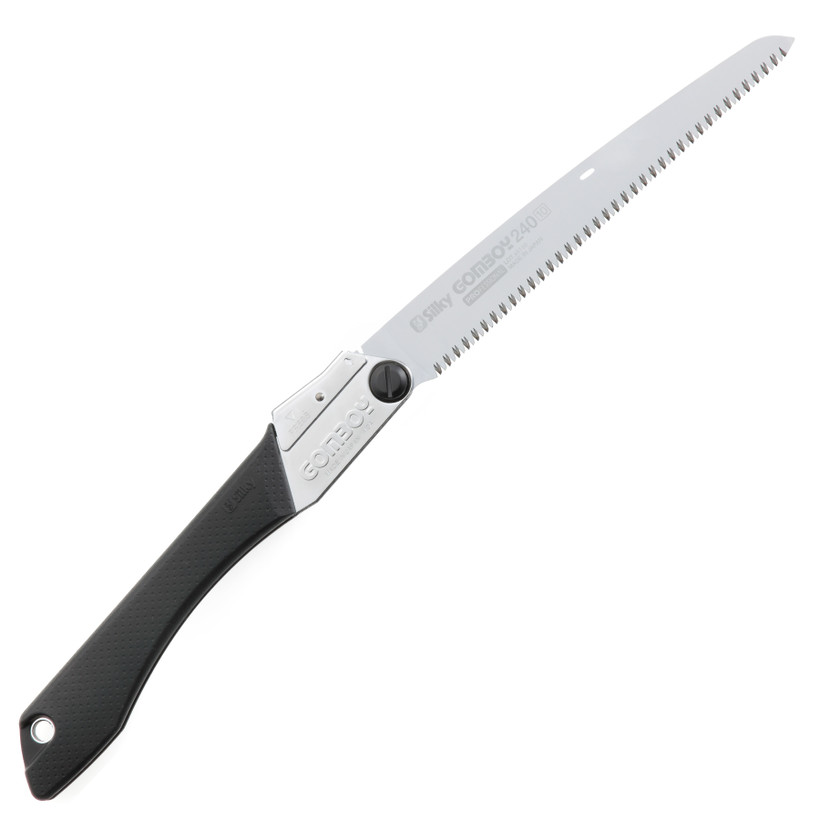
Silky Gomboy 240
Japanese pull-saws cut on the pull stroke, which means thinner blades, less effort, and cleaner cuts — and the Gomboy is the gold standard for field saws. The 240mm blade folds into its handle for safe carry and chews through 4–6 inch limbs faster than most people expect from a hand saw.
Who it’s for: Anyone who needs to process wood without a chainsaw — trail clearing, pruning, shelter building, or firewood prep.
Pros:
– Impulse-hardened teeth stay sharp significantly longer than conventional saw teeth
– Folding design locks open and closed securely; no sheath needed
– Replacement blades available (~$20), so the handle is a lifetime investment
Cons:
– Pull-stroke cutting has a learning curve if you’re used to Western push-saws
– The 240mm blade maxes out around 6-inch diameter cuts; bigger logs need the Gomboy 300
Meadow Creature Broadfork
A broadfork is the off-grid gardener’s answer to a rototiller — no fuel, no engine maintenance, and it aerates soil without destroying structure the way powered tillers do. The Meadow Creature version is welded from chromoly steel with 10-inch tines that handle heavy clay without bending.
Who it’s for: Homesteaders growing food in serious quantities who refuse to depend on gasoline-powered tillers.
Pros:
– Chromoly steel frame supports users up to 300 lbs standing on the crossbar
– Five 10-inch tines spaced across 16 inches cover ground efficiently
– Lifetime warranty from a small U.S. manufacturer with responsive support
Cons:
– At ~$250, it’s a significant investment for what looks like a simple fork
– Heavy at 21 lbs — not the tool you carry to a distant garden plot
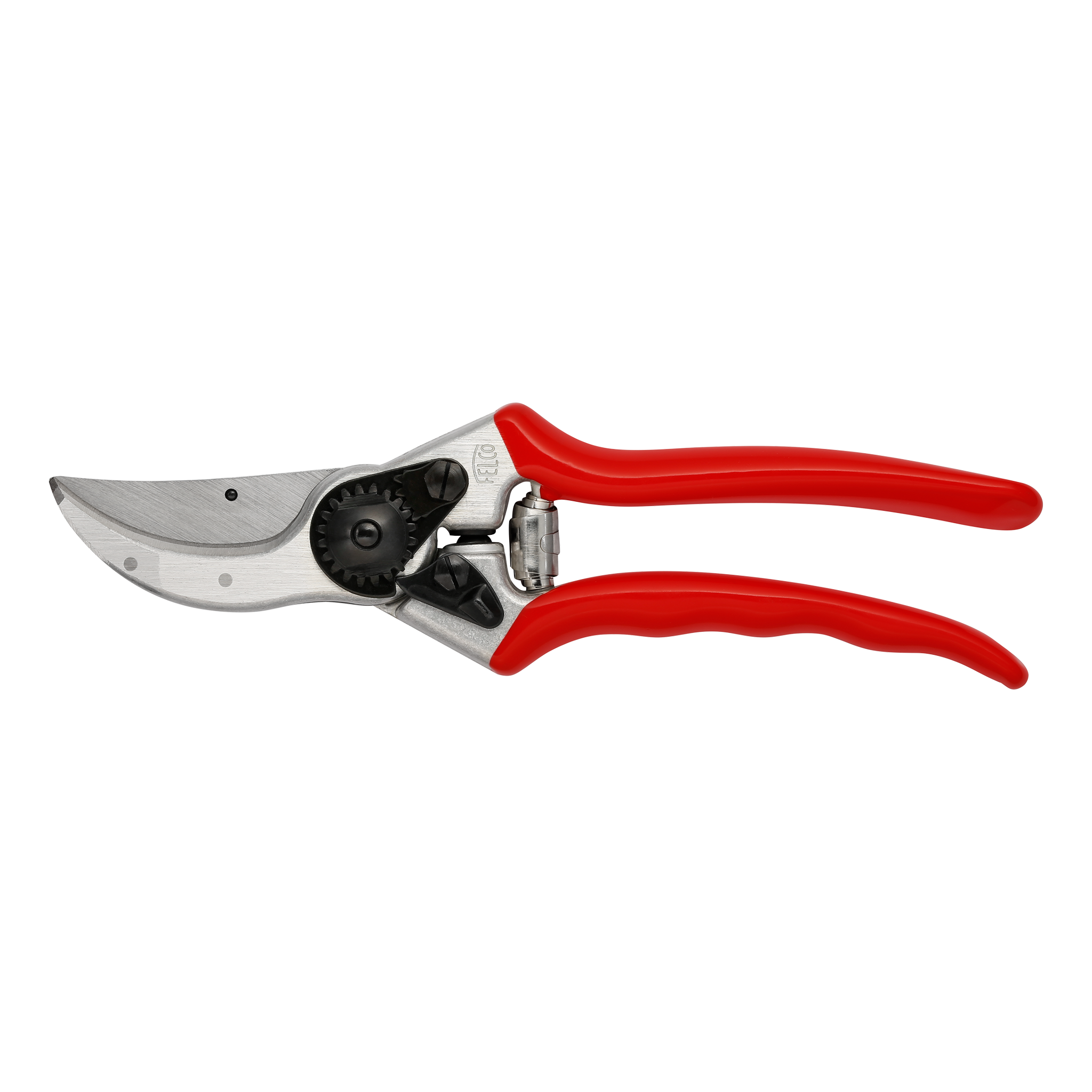
Felco 2 Classic Pruners

The Felco 2 has been the professional orchardist’s default bypass pruner for decades, and that standing holds up under our research. Every component — blade, spring, handles — is individually replaceable, which makes this a buy-once tool in the truest sense.
Who it’s for: Anyone maintaining fruit trees, berry bushes, or perennial food forests who needs clean cuts that promote healthy regrowth.
Pros:
– Hardened steel blade produces clean bypass cuts up to 1-inch diameter
– Fully rebuildable: replacement parts are cheap and widely stocked
– Wire-cutting notch in the blade is useful for fencing work
Cons:
– The standard Felco 2 fits medium-to-large hands; smaller hands should look at the Felco 6
– Forged aluminum handles can feel cold in winter without gloves
Millers Falls No. 2 Hand Drill Brace (or modern equivalent)
Before you dismiss the hand brace as a relic, consider this: it drills clean holes in timber with zero electricity, zero batteries, and zero noise. For off-grid cabin building, furniture repair, and timber framing, a quality brace with a set of auger bits is irreplaceable. Vintage Millers Falls and Stanley braces are still abundant and affordable; new-production options from companies like Schroeder also exist.
Who it’s for: Builders and woodworkers on properties where running a generator for a cordless drill charger isn’t practical or desirable.
Pros:
– Massive torque advantage from the sweep mechanism — drills large holes human-powered
– Accepts standard tapered-shank auger bits, which are widely available new and used
– Zero maintenance beyond occasional oiling of the chuck and bearing
Cons:
– Slower than powered drills for repetitive small-hole tasks like decking screws
– Quality new braces are harder to source than vintage ones, which require inspection before buying
Lansky Puck Dual-Grit Sharpener
Every tool on this list eventually gets dull, and a dull tool is a dangerous tool. The Lansky Puck is a dual-grit (120/280) hockey-puck-shaped stone that sharpens axes, hatchets, mower blades, machetes, and garden tools in the field with no setup. It’s under $10 and belongs in every homesteader’s back pocket.
Who it’s for: Everyone. If you own any of the tools above, you need a way to maintain their edges without electricity.
Pros:
– Dual grit handles both reprofiling damaged edges (coarse) and maintenance sharpening (fine)
– Ergonomic puck shape fits naturally in the hand for safe freehand sharpening
– Costs under $10 — no excuse not to own one (or three)
Cons:
– Not precise enough for fine knives or chisels; those need a benchstone or guided system
– Wears down over heavy use and will need replacing every few years
How We Chose
We didn’t fabricate a test lab for this — our quality hand tool brands review process is built on cross-referencing manufacturer specifications, material certifications, and warranty terms against thousands of verified buyer reports and homesteading community discussions. We prioritize tools with documented service life over multiple seasons, readily available replacement parts, and materials that perform in wet, cold, and rough conditions. We also weight repairability heavily: on a remote homestead, a tool you can re-handle, re-sharpen, or rebuild is worth three times what a disposable one is.
Buying Guide: What Actually Matters in Hand Tools for Homesteading
Steel Quality and Heat Treatment

The single biggest differentiator in hand tools is the steel and how it’s heat-treated. Look for tools that specify their steel type (1055 carbon steel, Swedish axe steel, SK5 tool steel for saws). Vague descriptions like “hardened steel” with no specification are a red flag. Higher Rockwell hardness (HRC) ratings generally mean better edge retention, but steel that’s too hard becomes brittle — a well-tempered tool balances both.
Handle Material and Attachment

Handles fail more often than heads. American hickory remains the gold standard for impact tools (axes, hammers) because it absorbs shock without transmitting it to your hands. Fiberglass and composite handles (like Fiskars’ FiberComp) are nearly indestructible but transmit more vibration. The critical factor is how the head attaches: a properly fitted eye with a wooden wedge and metal cross-wedge is the most secure and most repairable method. Epoxy-set handles are strong but not user-serviceable.
Repairability and Parts Availability
Off-grid means you fix things yourself. Prioritize tools where you can replace handles, blades, springs, and wear parts. Felco pruners are the poster child here — you can order any individual component. Silky saws take replacement blades. A traditional axe can be re-hung on a new handle in an afternoon. Conversely, tools with molded-in handles or proprietary fasteners become landfill when one component fails.
Weight-to-Utility Ratio
Every tool you carry to a work site, haul to a remote property, or store in a small cabin needs to justify its weight. Multi-function tools aren’t always the answer — a mediocre multi-tool often loses to two purpose-built tools that each weigh half as much. Evaluate whether each tool serves a function you’ll use weekly, monthly, or rarely, and stock accordingly.
FAQ
What are the most essential hand tools for starting an off-grid homestead?
Start with five core tools: a quality axe or hatchet for wood processing, a folding hand saw for cutting, bypass pruners for food production, a broadfork or spading fork for gardening, and a sharpening stone to maintain all of them. These cover the daily demands of shelter, heat, and food without any electricity.
Can you really build a cabin with only hand tools?
Yes — timber frame and log cabin construction predates power tools by centuries. A hand brace and auger bits, a crosscut saw, a broad axe or hewing hatchet, chisels, and a mallet are the core kit. It’s slower than power tools, but the joinery is often stronger because hand-cut joints are fitted individually rather than machined to generic tolerances.
How do I keep hand tools from rusting off-grid without a climate-controlled shop?
Wipe metal surfaces with a light coat of camellia oil (traditional Japanese tool oil), boiled linseed oil, or even a thin layer of paste wax after each use. Store tools off concrete floors — concrete wicks moisture. A simple wall rack in a covered shed with decent airflow beats a closed toolbox in a damp cabin.
Are expensive hand tools actually worth the money for homesteading?
In most cases, yes — but with a caveat. The value isn’t in the brand name; it’s in the steel quality, heat treatment, and repairability that higher-priced tools typically deliver. A $150 Gränsfors Bruk axe that lasts 30 years and can be re-handled costs less per year than a $30 hardware-store axe that needs replacing every two to three seasons. Buy the best you can afford for tools you’ll use daily; save money on tools you’ll use rarely.
What hand tool brands are most trusted by off-grid homesteaders?
Based on community feedback across forums and homesteading groups, the most consistently recommended brands are: Gränsfors Bruk and Hultafors for axes, Silky for hand saws, Felco for pruners, Council Tool for American-made forestry tools, and Meadow Creature for garden broadforks. These brands share common traits: transparent material sourcing, available replacement parts, and strong warranty support.
Our Verdict
For most homesteaders assembling a hand tool kit from scratch, the Gränsfors Bruk Small Forest Axe remains our top overall pick — it’s the single most versatile and well-built hand tool we’ve found for off-grid property work. Pair it with a Silky Gomboy 240 and a Felco 2, and you’ve covered wood processing, construction, and food production with three tools that will outlast you if maintained. These are the essential hand tools homestead life demands — buy once, maintain well, and get to work.