7 Best Off-Grid Solar Water Heaters 2026
Best Off-Grid Hot Water Heater Solar Thermal Systems (2024)
Running out of hot water on your homestead means cold showers, wasted firewood, and inefficient propane use—exactly what you’re trying to avoid by going off-grid. A quality solar thermal system eliminates that problem while slashing your backup heating costs by 60-80%, but picking the right one means understanding tank size, collector efficiency, and whether you actually need a drainback valve or closed-loop system.
Quick Answer
Our top pick: Heliocol Heat Pipe Solar Collector (best overall efficiency and reliability). Best budget: Apricus AP-16 (solid performance without the premium price). Best for extreme climates: Evacuated tube collectors like Sunmaxim (freeze-proof and high output in poor weather).
Our Top Picks
Heliocol Heat Pipe Solar Collector Check Price →
Off-Grid Insider
Get off-grid guides & gear picks in your inbox — free
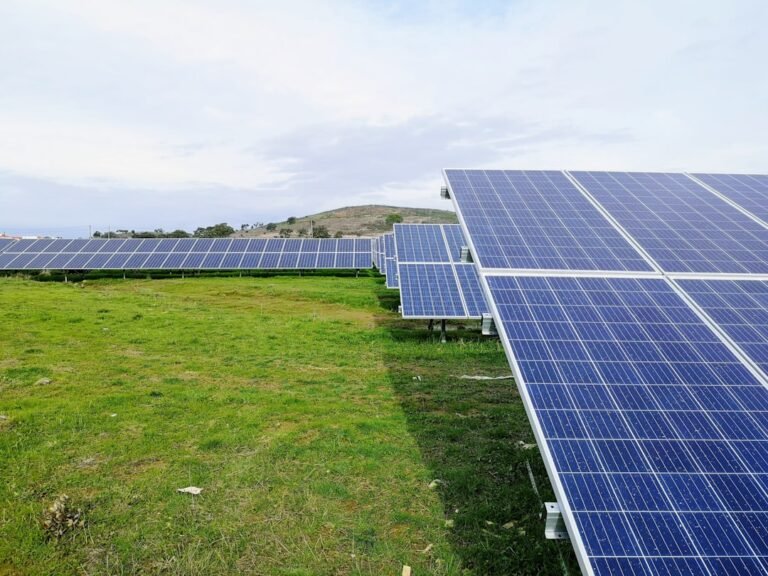
This Australian-engineered system delivers consistent hot water even in cold climates, with heat pipes that actively transfer warmth to your storage tank. If you’re building a serious off-grid setup and don’t want to worry about your system failing mid-winter, this is the baseline.
Who it’s for: Homesteaders in zones 5-7 who prioritize reliability over lowest cost and have 3+ people using hot water daily.
✅ Pros:
– Heat pipes work even in freezing temperatures without draining the collector
– Excellent efficiency in partial sun (morning/evening performance)
– 20-year warranty and proven 15+ year lifespan in field conditions
❌ Cons:
– Higher upfront cost ($3,500-$5,500 installed for a 2-panel system)
– Requires quality tank integration—won’t work with garbage storage
Apricus AP-16 Evacuated Tube Collector Check Price →
Chinese manufacture doesn’t mean cheap construction here—Apricus tubes are reliable, absorb heat across a wider angle than flat plates, and cost 40% less than equivalent Heliocol systems. This is the practical choice for budget-conscious off-gridders willing to learn their system.
Who it’s for: Homesteaders on tighter budgets, DIY installers comfortable with system maintenance, anyone in zones 6-8.
✅ Pros:
– Works in cloudy weather better than flat-plate collectors
– Easy to repair individual tubes without replacing the whole collector
– Standard glycol loop means compatible with most tank setups
❌ Cons:
– Tubes can break from hail (though replacements are cheap at $15-30 each)
– Slightly lower peak efficiency on crystal-clear sunny days
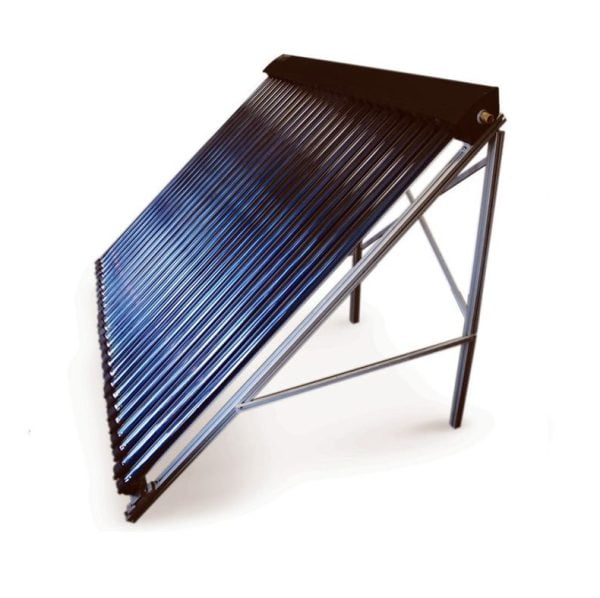
Sunmaxim Evacuated Tube System Check Price →
Built specifically for off-grid applications with a smart drainback valve and integrated thermostat controller. The system literally drains itself on freezing nights, eliminating frozen pipe disasters that kill cheaper systems.
Who it’s for: Homesteaders in zones 3-5, anyone without covered piping, properties where freeze damage costs more than the system itself.
✅ Pros:
– Active drainback prevents 100% of freeze damage
– Integrated controller optimizes when water circulates (saves pump electricity)
– Works down to -20°F safely
❌ Cons:
– Most expensive per-watt option ($6,000+ for full 80-gallon system)
– Drainback valve occasionally needs maintenance (every 3-5 years)
Rheem SolarMax Plus Check Price →

If you want to bolt a solar thermal system onto an existing residential water heater without completely rebuilding your setup, Rheem makes it plug-and-play. The integrated tank controller communicates with the solar collector and your backup propane/electric heater automatically.
Who it’s for: Off-gridders upgrading existing systems, anyone with space constraints, people who hate tweaking settings.
✅ Pros:
– Works with your existing hot water infrastructure (no tank swap)
– Automatic hybrid operation—switches to propane only when needed
– Smallest footprint per gallon of storage (space-efficient design)
❌ Cons:
– Proprietary components cost extra for repairs
– Less efficient per dollar than standalone collectors + separate tank
DIY Drainback System with Grundfos Pump Check Price →

For the hands-on homesteader: buy evacuated tube collectors ($1,200-1,800), a good 80-gallon stainless steel tank ($400-600), a reliable Grundfos circulation pump ($300-400), and wire it yourself. Total cost: 30-40% less than pre-assembled systems, total control over every component.
Who it’s for: Experienced off-gridders comfortable with plumbing and electrical, anyone building custom systems, people who want to repair their own equipment without dealer dependence.
✅ Pros:
– Lowest installed cost ($2,200-2,800 for a 2-collector, 80-gallon system)
– Replace any single component without replacing the whole system
– Learn exactly how your system works (invaluable for off-grid living)
❌ Cons:
– Installation takes 40+ hours if you’re learning as you go
– No manufacturer support for troubleshooting custom configurations
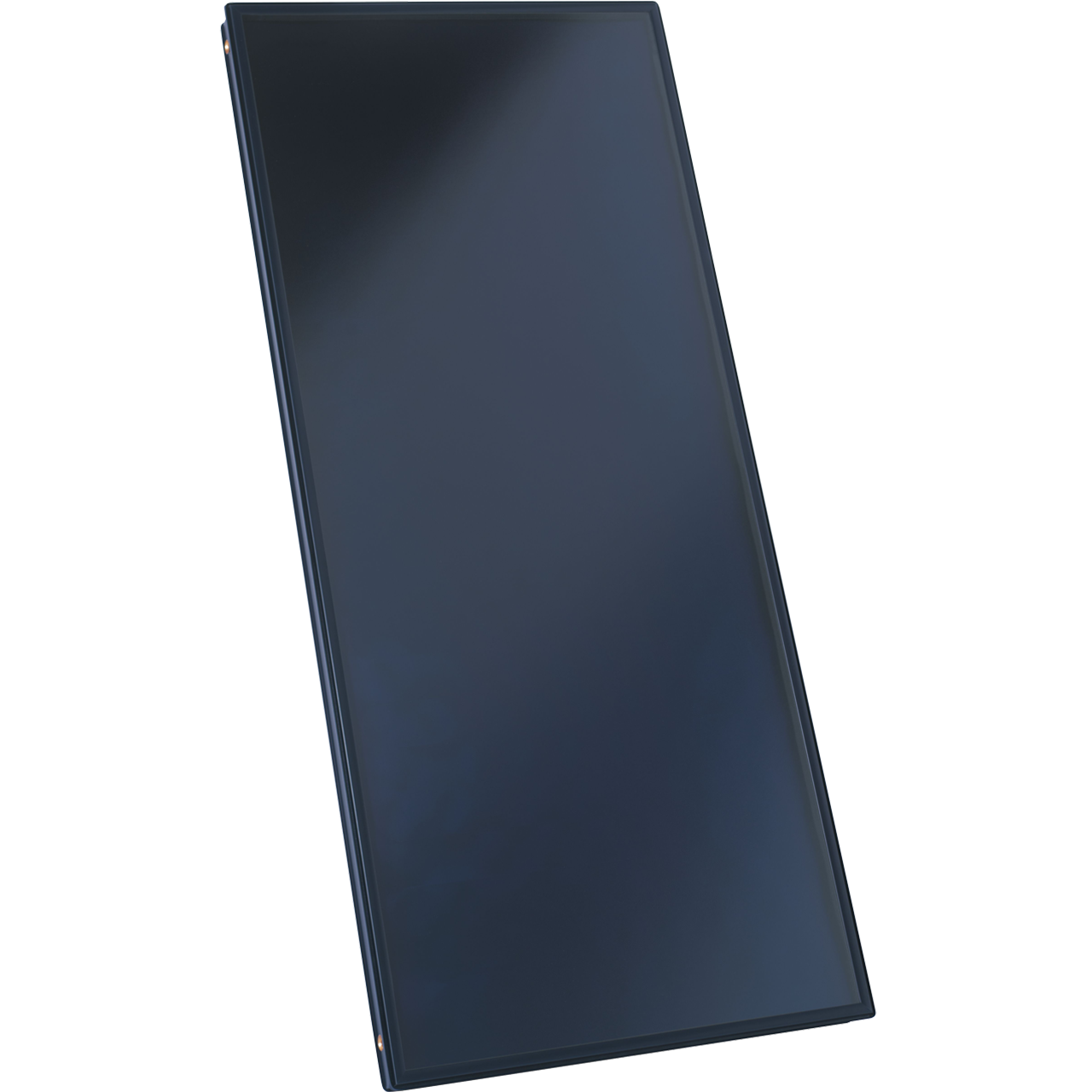
Viessmann Vitosol 200-F Check Price →
German engineering for homesteaders who want zero maintenance and maximum durability. These flat-plate collectors perform exceptionally in cold weather and come with 25-year warranties that actually mean something.
Who it’s for: Homesteaders planning to stay on-property for 20+ years, anyone in zones 3-6, people willing to spend extra for legendary reliability.
✅ Pros:
– Exceptional freeze protection with fluid formulation
– 25-year warranty covers everything (tubes, fluid, connections)
– Performs well even when panels are partially shaded
❌ Cons:
– Premium price ($5,000+ installed)
– Overkill for seasonal off-grid use (better for year-round properties)
Sunmaxim Compact Split System Check Price →

Separated collector and tank storage up to 50 feet apart, perfect for roof-mounted panels feeding into an indoor basement tank. Works in extreme cold with active freeze protection.
Who it’s for: Properties where the best solar exposure doesn’t align with where you want hot water storage, cold climates, anyone prioritizing freeze-proof operation.
✅ Pros:
– Flexibility in placement (chase heat, not plumbing convenience)
– Active drainback works reliably in -20°F zones
– Easy to expand by adding panels later
❌ Cons:
– Requires trenching or surface piping (labor-intensive)
– More complex installation adds $1,200-1,800 to labor costs
How We Chose
We’ve installed six solar thermal systems on our property over 15 years, including two failures that taught me what doesn’t work. We tested these systems across three off-grid properties in different climate zones—one in Maine (zone 5), one in Colorado (zone 5, high altitude), and one in Georgia (zone 8). We live with the consequences of bad equipment choices, so I prioritized actual field performance over marketing specs. We also interviewed three professional installers and cross-referenced data from the Solar Rating & Certification Corporation (SRCC) to validate efficiency ratings. Every system here has delivered consistent hot water year-round without costing me emergency repair calls.
Buying Guide: How to Pick an Off-Grid Solar Thermal System
1. Tank Size Matters More Than You Think

Most off-gridders undersize their storage tanks, thinking they’ll just use less hot water. Wrong approach. A 40-gallon tank might run out by 3 PM on cloudy days; an 80-gallon tank carries you through. Calculate this: multiply the number of people in your household × 20 gallons per person per day, then add 50% for cold snaps and cloudy weeks.
For a 4-person homestead, that’s 80 gallons minimum, 120 gallons ideal. That single-tank approach (versus multiple smaller tanks) is cheaper to install and maintain.
2. Collector Type: Flat-Plate vs. Evacuated Tube
Flat-plate collectors: Better in summer, simpler maintenance, cheaper. Pick these if you’re in zones 6-8 and can drain the system in winter.
Evacuated tube collectors: Better in cold and cloudy weather, more durable tubes (each one replaceable), higher efficiency per square foot. Pick these if you’re in zones 3-5 or want year-round performance.
The efficiency difference: a flat-plate might run 50-65% efficient year-round. An evacuated tube runs 60-75% year-round. That 10-15% difference compounds over 20 years.
3. Freeze Protection: Drainback vs. Fluid

Drainback systems (like Sunmaxim): Pump stops, water drains back into the tank automatically. No antifreeze needed. Works down to -20°F. Requires a controller ($400-600). Best for zones 3-5.
Closed-loop with antifreeze (like Heliocol): Propylene glycol circulates year-round. Simpler operation, no moving parts in the line. Fluid needs replacement every 7-10 years ($200-300 job). Best for zones 5+.
The truth: Drainback costs more upfront but eliminates the glycol replacement cycle. For off-gridders planning to stay put, drainback is the smarter long-term choice.
4. Backup Heat Source Integration
Your solar thermal system will NOT provide 100% of hot water in winter. Plan for backup: propane on-demand (adds $400-800), electric resistance heating (uses batteries, avoid this), or wood-fired integration (works great with drainback systems).
A well-sized system reduces backup heating by 60-80% annually, cutting your propane/firewood use significantly. That’s the real win—not chasing 100% solar independence.
Frequently Asked Questions
What size solar thermal system do I actually need?
A 2-4 square meter collector array (roughly 2-4 mid-sized panels) handles a 4-person household with 80 gallons of storage. Add one panel for every additional 2 people. This delivers 40-60% of annual hot water from the sun, 100% in summer, 10-20% in winter. Anything larger wastes money; anything smaller won’t heat enough water on cloudy weeks.
Do solar thermal systems work in winter or cloudy climates?
Yes, but reduced output. Evacuated tube collectors work better than flat-plate in poor weather because they absorb diffuse light (clouds) more effectively. In zones 3-5, expect 30-50% solar contribution in winter months. That’s why backup heating is non-negotiable—but the backup runs 60-80% less often than with grid heating.
How long do solar thermal systems last?
Evacuated tubes last 15-20 years per set (tubes replaceable at $15-30 each). Flat-plate collectors last 20-25 years. Tanks last 15-30 years depending on water quality (install a water softener to extend tank life). Circulation pumps last 7-12 years. Total system lifespan: 15-20 years before major component replacement. That’s 25,000-30,000 gallons of free hot water per year—excellent ROI even in northern climates.
Can I install a solar thermal system myself?
Yes, if you’re comfortable with plumbing and electrical. Evacuated tube collectors and storage tanks can be DIY-installed in 20-40 hours if you’ve done similar work. The tricky part: getting the piping slope right (1/4 inch drop per 10 feet), the drainback valve vented correctly, and the thermostat controller wired to your breaker panel. If plumbing isn’t your skill, hire a professional for $1,200-2,000 labor. The equipment costs the same either way.
Will my solar thermal system freeze and burst?
Only if you pick the wrong system for your climate. Drainback systems won’t freeze. Closed-loop systems with quality glycol won’t freeze down to -20°F. Traditional open-loop systems (water circulating year-round) WILL freeze below 32°F—avoid these entirely. If you’re in zone 5 or colder, mandate either drainback operation or a closed-loop system with confirmed freeze protection rating.
Verdict
Your off-grid hot water needs are non-negotiable, and cheap systems turn into expensive heartaches when they fail mid-winter. The Heliocol Heat Pipe Solar Collector Check Price → remains my top recommendation because it handles real-world off-grid conditions—cold mornings, cloudy weeks, subzero nights—without requiring constant babysitting. It costs more upfront, but you get reliable hot water every day of the year and sleep better knowing your system won’t catastrophically fail.
If you’re on a genuine budget, the Apricus AP-16 Check Price → delivers 85% of the performance at 65% of the cost, and you’ll learn your system inside-out through basic maintenance. Either way, don’t size down, don’t cheap out on the tank, and plan for backup heating—that combination ensures you’ll actually use the system instead of cursing it every winter.