Heat & Power Your Yurt (Winter Survival Guide)
Living in a yurt off-grid sounds romantic until your first January night when the woodstove dies at 3 AM and your phone battery reads 4%. Yurts lose heat fast — their circular shape and fabric-over-lattice walls create unique challenges that standard cabin heating and power advice doesn’t address. We’ve dug into manufacturer specs, BTU calculations, and reports from full-time yurt dwellers across climate zones to put together a practical system-design guide that actually works.
What You’ll Learn
- How to size a heating system for a yurt’s specific heat-loss profile
- The best stove and backup heating options by climate zone
- How to design a solar + battery power system scaled to yurt living
- Critical installation mistakes that waste money or create safety hazards
Understanding Yurt Heat Loss
A yurt is essentially a thin-walled cylinder with a cone roof. That geometry matters. A standard 24-foot diameter yurt (452 sq ft) has roughly 1,200 square feet of total surface area including walls and roof — far more exposed surface per square foot of floor than a conventional cabin.
Most yurt manufacturers use insulation packages rated around R-7 to R-14 for walls and R-10 to R-20 for the roof. Compare that to a code-built house wall at R-13 to R-21, and you see the problem. Add the dome skylight (typically single-pane acrylic, around R-1.5) and a platform floor that may or may not be insulated, and heat pours out of a yurt in every direction.
Calculating Your BTU Needs
Off-Grid Insider
Get off-grid guides & gear picks in your inbox — free
A rough formula for yurt heating:
BTU/hr = Total Surface Area × ΔT ÷ R-value
For a 24-ft yurt with R-9 average insulation in a climate where you need a 60°F temperature rise (say, from 0°F outside to 60°F inside):
1,200 sq ft × 60 ÷ 9 = 8,000 BTU/hr
That’s the steady-state number. In practice, you want 1.5–2× that for cold starts, wind exposure, and air infiltration through the door and skylight. So plan for 12,000–16,000 BTU/hr minimum for a 24-ft yurt in a cold climate. A 30-ft yurt (706 sq ft) in the same conditions needs roughly 18,000–24,000 BTU/hr.
Heating Options That Actually Work

Wood Stoves: The Primary Choice
A wood stove remains the most practical primary heat source for off-grid yurts. The key specs to match:
- Firebox size determines burn time. For overnight heating, you want at least 2 cubic feet of firebox volume. Smaller stoves burn hot but need reloading every 2–3 hours.
- BTU output should match your calculation above. Most mid-size wood stoves (Drolet, Englander, US Stove) put out 40,000–70,000 BTU/hr at peak — far more than needed, which means you’ll run them damped down most of the time.
- EPA certification matters for efficiency. EPA-certified stoves burn at 70–80% efficiency versus 40–50% for old-style box stoves.
The Drolet Escape 1800 is a popular choice among yurt dwellers — 2.4 cu ft firebox, 75,000 BTU max output, EPA-certified at 77% efficiency. It’s more stove than most yurts need, which means long burn times on low settings.
For smaller yurts (16–20 ft), the Dickinson Newport P12000 propane heater provides a cleaner, simpler option at 12,000 BTU — no chimney, no wood storage, just a propane line. However, it does require ventilation and a CO detector.
Chimney Installation in a Yurt
This is where people get into trouble. The stovepipe must exit through a roof boot — a flashed, fire-rated penetration through the roof fabric. Most yurt manufacturers (Pacific Yurts, Rainier Outdoor) sell purpose-built stove pipe flashing kits rated for Class A chimney pipe.
Non-negotiable specs:
- Use only Class A insulated chimney pipe through the roof penetration — never single-wall pipe through fabric
- Maintain 2-inch minimum clearance from combustible materials at the roof pass-through
- The chimney should extend at least 2 feet above the peak of the roof for proper draft
- Install a floor-level heat shield under and behind the stove — 18 inches of clearance minimum to the lattice wall
Backup and Supplemental Heat

Relying on a single heat source in a cold-climate yurt is risky. Good backup options:
- Propane wall heater (ventless, 10,000–20,000 BTU): The Mr. Heater Big Buddy runs on 1-lb or 20-lb propane tanks and puts out up to 18,000 BTU. Keep a window cracked and install a CO detector.
- Radiant floor heating (hydronic or electric): Expensive to install but eliminates the cold-floor problem inherent to platform yurts. Only practical if you have enough solar/battery capacity for the circulation pump or heating elements.
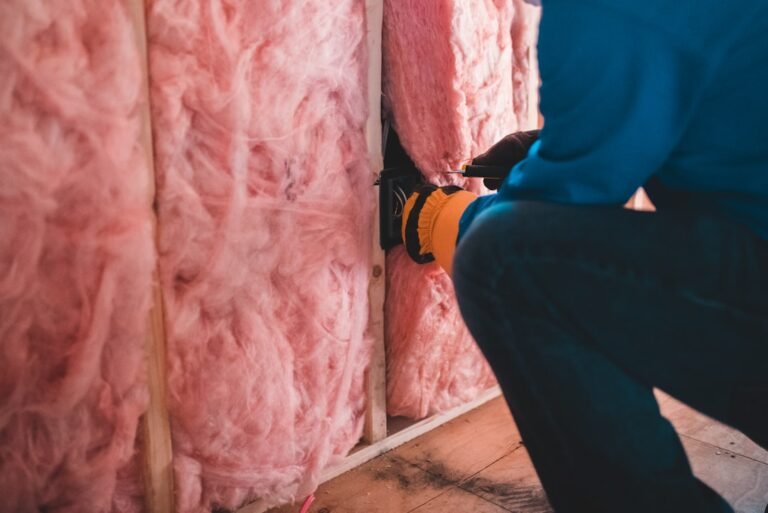
- Insulated skirting: Not a heater, but adding R-13 batt insulation under the platform and a wind-blocking skirt around the base can reduce your heating load by 20–30%.
Designing a Yurt Power System
Sizing Your Solar Array
Yurt living typically means modest electrical loads. A realistic daily consumption for a full-time yurt dweller:
| Load | Watts | Hours/Day | Wh/Day |
|---|---|---|---|
| LED lighting (4 fixtures) | 40 | 5 | 200 |
| Phone/laptop charging | 60 | 3 | 180 |
| 12V water pump | 60 | 1 | 60 |
| Small fridge (efficient DC) | 50 | 12 | 600 |
| Misc (fans, router) | 30 | 6 | 180 |
| Total | 1,220 Wh |
Round up to 1,500 Wh/day for buffer. In a location averaging 4 peak sun hours, you need:
1,500 Wh ÷ 4 hours ÷ 0.85 (system losses) = ~440 watts of solar panels
Two 200W panels or a single 400W+ panel covers this. The Rich Solar 200W monocrystalline panel is a solid, affordable option that yurt owners frequently recommend in off-grid forums.
Battery Bank

For one day of autonomy (enough to ride out a cloudy day), you need at least 1,500 Wh of usable capacity. With lithium (LiFePO4) batteries at 80–90% depth of discharge, that means a 1,800–2,000 Wh battery bank — a single 12V 200Ah LiFePO4 battery delivers about 2,400 Wh.
The Ampere Time 12V 200Ah LiFePO4 is one of the most commonly used batteries in small off-grid setups. It includes a built-in BMS and handles sub-freezing charge cutoff.
Charge Controller and Inverter

- MPPT charge controller: Sized for your panel wattage. A 30A MPPT controller handles up to ~400W of panels on a 12V system. The Victron SmartSolar 100/30 is a reliable pick.
- Inverter: A pure sine wave inverter in the 1,000–2,000W range covers most yurt loads. The AIMS Power 1500W pure sine wave inverter is a workhorse for small systems.
Panel Mounting for Yurts

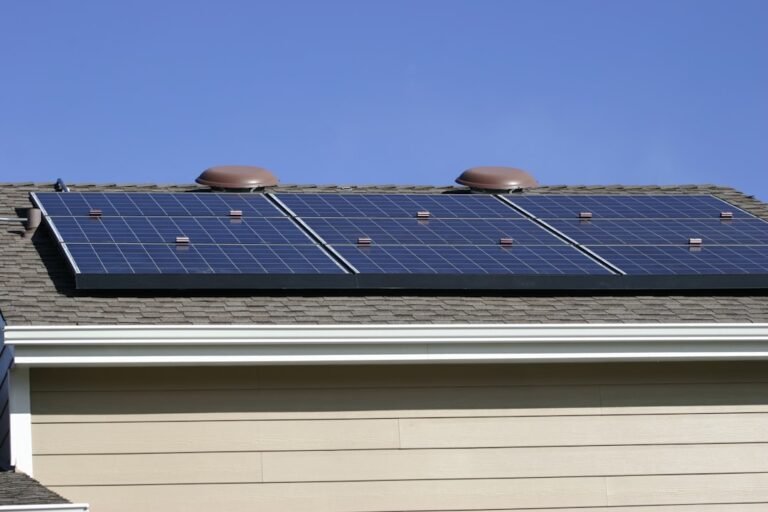
You can’t roof-mount panels on a yurt. Ground-mount or pole-mount systems are standard. Advantages: you can angle panels seasonally and clear snow easily. Place panels south-facing (in the Northern Hemisphere), 10–20 feet from the yurt to avoid shading from the structure itself. Run appropriately sized wire (10 AWG minimum for runs under 30 feet at 12V) in conduit to prevent rodent damage.
Common Mistakes
-
Undersizing the chimney. A 6-inch stovepipe stuffed through a 6-inch hole in the roof fabric with no Class A pipe is a fire waiting to happen. Full-time yurt dwellers on forums report this as the single most dangerous shortcut they see.
-
Running a generator as primary power. A generator works as backup, but as a daily driver it’s loud, expensive per kWh, and mechanically unreliable over time. Solar + battery is cheaper within the first year for loads under 2 kWh/day.
-
Ignoring the floor. An uninsulated platform floor can account for 25–30% of total heat loss. At minimum, put R-19 batts between the floor joists and seal the underside with a vapor barrier.
-
Oversizing the solar system. Yurt dwellers sometimes buy 2,000W panel arrays for 1,200 Wh/day loads. That money is better spent on a larger battery bank or better insulation. Size panels to your actual loads, not worst-case fantasies.
Our Recommendations
Best Wood Stove for Most Yurts

Drolet Escape 1800 — 2.4 cu ft firebox, EPA-certified at 77% efficiency, up to 75,000 BTU. Overkill for small yurts, perfectly sized for 24–30 ft models. Large firebox means 6–8 hour burn times on a full load, which is the real selling point for overnight heating. Street price runs around $1,100–$1,300.
Best Starter Solar Kit

Rich Solar 400W kit with 40A MPPT controller — Two 200W panels, wiring, and a capable charge controller in one package. Pair with a 12V 200Ah LiFePO4 battery and a 1,500W inverter for a complete system under $2,000. Covers lighting, device charging, a DC fridge, and a water pump without strain.
Best Backup Heater
Mr. Heater Big Buddy — 4,000–18,000 BTU adjustable output, runs on standard propane tanks, tip-over and low-oxygen shutoff built in. Not a primary heater, but it bridges the gap when you’re too tired to reload the woodstove at 4 AM. Keep ventilation open and a battery-operated CO detector within 10 feet.
FAQ
Can you heat a yurt with only solar-powered electric heaters?
Technically yes, but it’s wildly impractical. A 1,500W space heater running 8 hours consumes 12,000 Wh — you’d need roughly 3,000W of panels and 600Ah of lithium batteries just for heating. A $200 wood stove and a cord of firewood is a fraction of that cost.
How much firewood does a yurt need per winter?
In a cold climate (northern US, Canada), full-time yurt dwellers report using 3–5 cords per heating season for a 24-ft yurt with standard insulation. Better insulation, a more efficient stove, and supplemental propane heat can bring that down to 2–3 cords.
Do yurts need a building permit for wood stove installation?
This varies entirely by county and state. Some jurisdictions classify yurts as temporary structures and don’t require permits; others treat them like any dwelling and require full code compliance including UL-listed stove installation. Check with your local building department before starting.
How do you keep pipes from freezing in a yurt?
Heat tape on exposed water lines, insulated pipe wrap, and keeping the interior above 40°F are the standard approaches. Many yurt dwellers avoid the problem entirely by using a gravity-fed water system from an insulated tank inside the yurt, eliminating exterior pipe runs.
Is a wind turbine worth adding to a yurt power system?
For most yurt locations, no. Small wind turbines (under 1 kW) are noisy, maintenance-heavy, and produce meaningfully less energy than equivalent-cost solar panels unless you’re in a consistently windy site (average 12+ mph). Solar is almost always the better investment for yurt-scale power needs.