Build an Off-Grid Solar Irrigation System (Step-by-Step)
Running a garden or small farm off-grid means solving one persistent problem: getting water where it needs to go without a utility bill or a gas generator running in the background. Solar-powered irrigation bridges that gap — quiet, free to operate after the initial investment, and reliable enough to keep crops alive even when you’re away from the property for days. But the market is flooded with undersized pumps, misleading flow-rate claims, and kits that don’t account for real-world head pressure. We dug into the specs, manufacturer data, and community feedback from homesteaders actually running these systems to put together a practical guide.
What You’ll Learn
- How to size a solar pump and panel array for your specific garden or field layout
- The key differences between surface pumps, submersible pumps, and drip-kit systems — and when each makes sense
- How to design a gravity-fed storage system so your irrigation runs even after sundown
- Common mistakes that kill pumps, waste water, or leave crops dry at the worst possible time
Understanding Solar Irrigation: The Core Components
Every solar-powered irrigation setup has four parts: a power source (solar panels), a pump, a water source (well, pond, creek, rainwater cistern), and a distribution method (drip lines, sprinklers, flood channels). The design challenge is matching these components so the system actually delivers enough water at enough pressure throughout the growing season.
Power Source: Sizing Your Solar Panels
Off-Grid Insider
Get off-grid guides & gear picks in your inbox — free

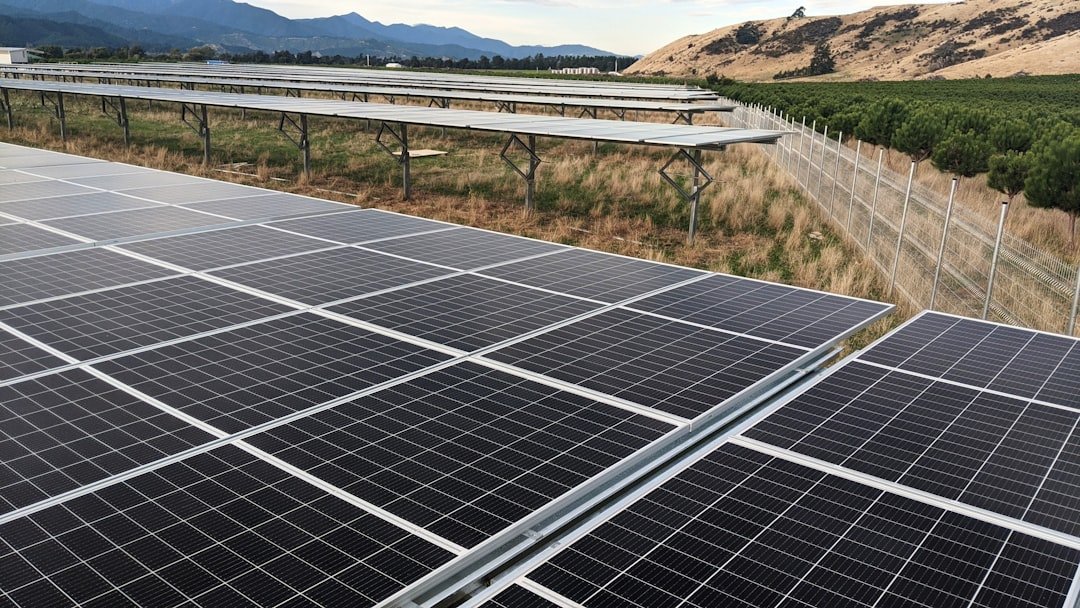
The single most important spec is your pump’s wattage draw. A small 12V DC surface pump pulling 60 watts needs at minimum a 100W panel to account for real-world efficiency losses — panels rarely produce their rated output due to angle, temperature, clouds, and wiring losses. A good rule of thumb: size your panel array at 1.5× to 2× your pump’s rated wattage.
For a typical homestead garden (1,000–5,000 sq ft), you’re looking at 100W to 200W of solar. For a full-acre irrigation setup pulling from a deep well, plan for 400W or more. Panels in the 100W monocrystalline range currently run $80–$120 each and are widely available.
Pump Types: Matching the Job
Surface pumps sit above ground and pull water from shallow sources — rain barrels, ponds, creeks, or cisterns. Most 12V DC surface pumps deliver 3–5 GPM (gallons per minute) at low head pressure (under 30 feet). They’re affordable, easy to maintain, and perfect for gravity-feed tank filling. The Shurflo 2088 series is the workhorse here — it draws about 60W, self-primes up to 12 feet of suction lift, and delivers 3.3 GPM at 45 PSI. Thousands of off-grid homesteaders run them.
Shurflo 2088 12V Water Pump on Amazon
Submersible pumps drop directly into a well or deep cistern. For wells under 200 feet, 12V/24V DC submersible solar pumps from manufacturers like Grundfos, RPS Solar, and ECO-WORTHY deliver 1–5 GPM depending on depth and pipe diameter. The deeper the well, the more wattage you need — a pump pulling from 100 feet typically requires 200–400W of solar. These are more expensive ($300–$800 for the pump alone) but essential for well-based systems.
ECO-WORTHY 24V Submersible Solar Well Pump on Amazon
All-in-one solar drip kits combine a small pump, a panel, and drip tubing in a single package. These work for raised beds or small gardens under 500 sq ft. They’re limited — typically 0.5–1.5 GPM with minimal pressure — but dead simple to install. The SNS-300 and similar kits from AEO and Solar Pump Kit brands run $50–$150.
Direct-Drive vs. Battery-Buffered Systems
A direct-drive system runs the pump only when the sun shines — no battery. This is simpler, cheaper, and eliminates battery maintenance. The tradeoff: no irrigation on cloudy days or at night. For most garden irrigation, this is fine because you’re pumping water into a storage tank during the day and gravity-feeding it to drip lines whenever you want.
A battery-buffered system adds a 12V or 24V battery bank and a charge controller between the panels and pump. This lets you irrigate on a timer regardless of sunlight. It adds $150–$400 in cost (battery + controller) and introduces maintenance, but it’s essential if you need precise scheduling or your water source has limited flow that requires pumping over longer periods.
Our recommendation for most homesteaders: go direct-drive with an elevated storage tank. It’s the most reliable, lowest-maintenance configuration.
Designing a Gravity-Fed Storage System
This is the piece most people skip, and it’s arguably the most important. An elevated water tank — even just 8–10 feet above your garden — provides consistent, free pressure to drip lines without any electricity.
The Math on Gravity Pressure
Every foot of elevation gives you 0.433 PSI. A tank at 10 feet above your drip emitters delivers 4.33 PSI — enough for most low-pressure drip systems, which typically need 3–8 PSI. A tank at 20 feet delivers 8.66 PSI, which handles longer drip runs and micro-sprinklers.
Tank Sizing
A 1,000 sq ft garden with drip irrigation uses roughly 50–100 gallons per watering session. A 275-gallon IBC tote (the standard white cube totes you see on homesteads everywhere) gives you 2–5 days of buffer. They’re cheap ($50–$100 used), stackable on a simple platform, and UV-resistant if you wrap or paint them.
For larger operations, 500–1,000 gallon poly tanks on a raised platform are the standard. Budget $200–$500 for the tank and $100–$300 for a sturdy elevated platform built from treated lumber or steel.
275 Gallon IBC Tote Water Tank on Amazon
The Complete Flow
- Solar panels power the pump during daylight hours
- Pump fills the elevated storage tank from your water source
- A float valve in the tank shuts off the pump when full (prevents overflow and dry-running)
- Gravity feeds water from the tank through a main line to drip irrigation zones
- A simple ball valve or battery-operated timer on each zone controls watering
This setup means your irrigation is solar-powered but not solar-dependent at the moment of watering. The tank is your battery — except it stores water instead of electrons, costs a fraction of lithium, and lasts decades.
Distribution: Drip vs. Sprinkler vs. Flood
Drip irrigation is the gold standard for off-grid gardens. It uses 30–50% less water than sprinklers, works at low pressure (perfect for gravity-fed systems), and delivers water directly to root zones. A 1,000 sq ft drip system costs $50–$150 in tubing, emitters, and fittings.
Micro-sprinklers cover more area per head and work for ground-cover crops, orchards, or pasture. They need 15–30 PSI — achievable with a tank at 35–70 feet of elevation or a pressurized system. Less common in off-grid gardens for this reason.
Flood/furrow irrigation requires the highest volume but the lowest pressure. If you have a pond uphill from your field, this can work with zero pumping at all. Otherwise, it’s water-intensive and better suited for rice paddies or large-scale permaculture swales.
For most off-grid gardens and small farms, drip irrigation with a gravity-fed tank is the clear winner.
Drip Irrigation Kit 1000 sq ft Garden on Amazon
Common Mistakes
1. Undersizing the panel for the pump. A 100W pump on a 100W panel will underperform badly — panels lose 20–40% of rated output in real conditions. Always oversize by at least 50%.
2. Skipping the float valve. Without a float valve on your storage tank, the pump runs dry when the tank overflows and the source depletes. Dry-running kills diaphragm and submersible pumps fast. A brass float valve costs $15–$25 and saves you a $300 pump replacement.
3. Ignoring total dynamic head. Your pump doesn’t just need to move water horizontally — it needs to push it up to the tank, plus overcome friction in the pipe. A pump rated for “100 feet of head” at 2 GPM might only deliver 0.5 GPM when you account for 60 feet of vertical lift plus 200 feet of pipe run. Always calculate total dynamic head: vertical lift + friction loss (roughly 3–5 feet of head per 100 feet of 1″ poly pipe at typical flow rates).
4. Using AC pumps with inverters instead of DC pumps. Converting 12V DC solar to 120V AC to run a standard AC pump wastes 15–25% of your power in conversion losses. DC pumps designed for solar are more efficient and often include built-in controllers that handle variable voltage from panels.
Our Recommendations
Best All-Around Surface Pump: Shurflo 2088-443-144
The 2088 series is the default recommendation for off-grid surface pumping, and for good reason. It runs on 12V DC, draws 60W, delivers 3.3 GPM at 45 PSI, and self-primes up to 12 feet. Pair it with a single 100W panel for light duty or a 200W panel for consistent full-day filling. Replacement parts are widely available, and the diaphragm design tolerates sediment better than centrifugal pumps. Street price is typically $90–$130.
Shurflo 2088 12V Diaphragm Pump on Amazon
Best Budget Submersible for Shallow Wells: ECO-WORTHY 24V DC Submersible

For wells or cisterns under 100 feet, ECO-WORTHY’s 24V submersible pumps deliver 3–5 GPM and run on 200–300W of solar. Build quality is a step below Grundfos, but at $150–$250 compared to $800+ for a Grundfos SQFlex, the value is hard to argue with for a homestead setup. Pair with two 200W panels and an elevated tank for a complete system under $700.
ECO-WORTHY 24V Solar Submersible Pump on Amazon
Best Plug-and-Play Kit for Small Gardens: AEO Solar Powered Pump Kit

For raised beds and small gardens under 300 sq ft, the AEO kit includes a small brushless pump and a 12W–20W panel. Flow rate is modest (around 1 GPM) but sufficient for filling a small elevated barrel that feeds a drip system. Under $50 and installs in an hour with no wiring knowledge. A solid entry point before scaling up.
AEO Solar Water Pump Kit on Amazon
FAQ
How many solar panels do I need for irrigation?
It depends entirely on your pump’s wattage. For a standard 12V surface pump (50–80W), one or two 100W panels are enough. For a submersible well pump pulling from 50–150 feet, plan on 200–400W of panels. Always size panels at 1.5–2× the pump’s rated draw to account for real-world losses.
Can I run solar irrigation without batteries?
Yes, and for most homestead setups we’d recommend it. Pump water into an elevated storage tank during the day using a direct-drive connection (panels → pump, no battery). Then gravity-feed from the tank to your drip lines whenever you need to water. The tank replaces the battery — simpler, cheaper, and no battery maintenance.
How high does my water storage tank need to be?
For standard drip irrigation, 8–10 feet of elevation above your emitters provides 3.5–4.3 PSI, which is enough for most drip systems. If you’re running longer lines (over 200 feet) or micro-sprinklers, aim for 15–20 feet of elevation. Every foot of height gives you 0.433 PSI.
What size storage tank do I need?
A 1,000 sq ft drip-irrigated garden uses roughly 50–100 gallons per watering. A 275-gallon IBC tote provides 2–5 days of buffer, which handles cloudy stretches. For larger gardens or farms, scale to 500–1,000 gallons. Oversize slightly — extra stored water is always worth more than extra pump capacity.
Will a solar irrigation system work in winter or cloudy climates?
Solar output drops significantly in winter and overcast conditions — sometimes to 30–50% of rated capacity. For year-round irrigation in cloudy climates (Pacific Northwest, northern latitudes), you’ll need to oversize panels more aggressively (2–3× pump wattage) or add a small battery bank to buffer cloudy days. Most homesteaders in northern zones only irrigate April through October anyway, when solar production is at its strongest.