How to Secure an Off-Grid Home (Complete Guide)
Living off-grid means you’re often miles from the nearest neighbor — and even further from the nearest sheriff’s deputy. Response times to remote properties can stretch past 30 minutes, sometimes over an hour. That reality makes property security something you have to own entirely yourself. We’ve researched the most practical, field-proven approaches to locking down a rural or off-grid homestead, from low-tech perimeter strategies to solar-powered camera systems that work without internet.
What You’ll Learn
- How to build layered security that works without grid power or reliable cell service
- The best solar-powered cameras, motion lights, and alarm systems for remote properties
- Perimeter hardening strategies that deter threats before they reach your door
- Communication and alert systems that function completely off-grid
The Layered Security Model: Why It Works Off-Grid
Professional security experts use a concept called “defense in depth” — multiple overlapping layers so that no single failure leaves you exposed. For off-grid properties, we recommend thinking in four concentric rings:
- Perimeter — property boundary deterrents and detection
- Approach — driveway and pathway alerts
- Structure — hardened entry points on buildings
- Interior — last-resort alarms and safe rooms
Each layer buys you time. Time to assess, time to respond, and time to call for help if needed. Let’s break each one down.
Layer 1: Perimeter Security
Off-Grid Insider
Get off-grid guides & gear picks in your inbox — free
Fencing and Gates

A physical boundary is your first signal to anyone approaching that this property is occupied and monitored. You don’t need a fortress — you need a clear, maintained boundary.
- Farm fencing with posted signage is the minimum. “No Trespassing” signs every 200 feet along your property line satisfy legal notice requirements in most states and signal that someone is paying attention.
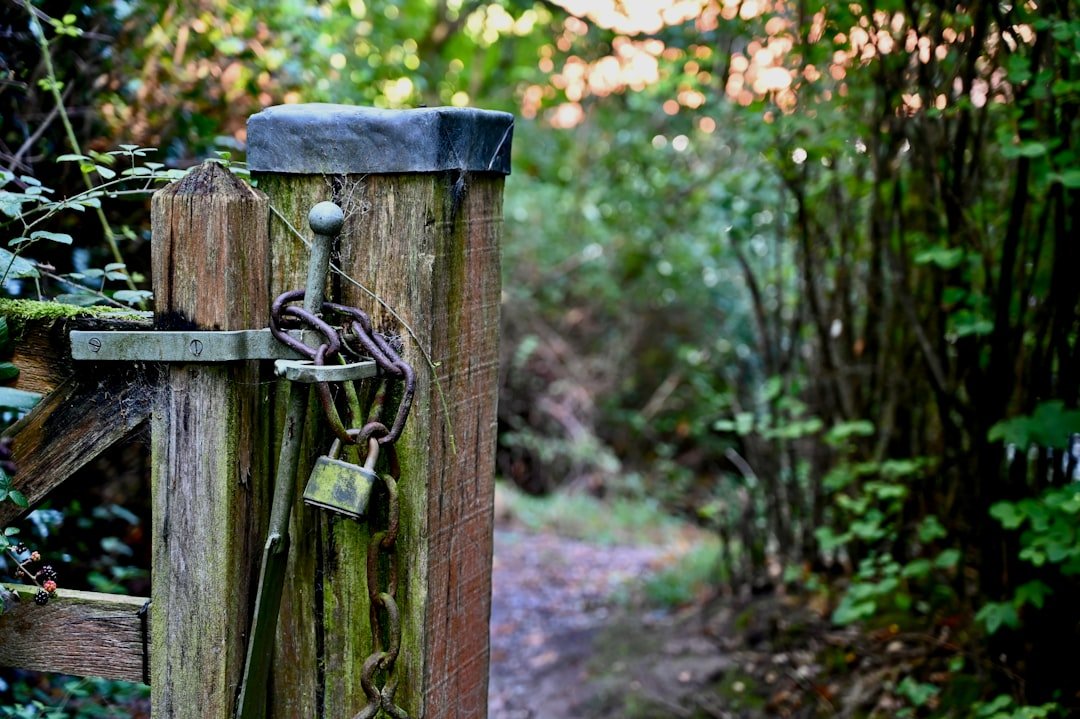
- A locked gate on your main access road is one of the single highest-impact security upgrades. A simple 16-foot galvanized farm gate with a heavy-duty chain and shrouded padlock costs under $300 and stops casual trespassers cold.
- Cattle guards at secondary access points prevent vehicle entry without requiring a gate you have to open daily.
Trail Cameras for Surveillance

Cellular trail cameras are the off-grid security workhorse. They run on AA lithium batteries (lasting 3–6 months depending on trigger frequency), capture photos or video on motion detection, and send alerts to your phone over cellular networks.
The Tactacam Reveal X 2.0 and Stealth Cam Fusion X are popular choices among rural property owners. Look for cameras with:
- Sub-0.5-second trigger speed
- No-glow or low-glow infrared (visible flash cameras get stolen)
- Cellular connectivity (Verizon and AT&T models available — check coverage at your location first)
- At least IP66 weather rating
Mount them 8–10 feet high, angled slightly downward, at choke points: gates, trail intersections, and anywhere a vehicle could enter. Expect to pay $80–$150 per camera plus a $5–$10/month cellular plan.
Browse cellular trail cameras on Amazon
Layer 2: Approach Detection

Driveway Alarms

A driveway alert system gives you advance warning — typically 30 seconds to several minutes — before someone reaches your home. The Guardline GL5000 is the most recommended long-range option in off-grid communities, with a wireless range up to 500 feet (realistically 300–400 feet through trees) and weatherproof sensors that run on 3 AA batteries for about a year.
For longer driveways, the Dakota Alert MURS system operates on MURS radio frequencies with a range up to half a mile. These pair with a handheld MURS radio so you receive alerts even when you’re working outside — not just inside near a base unit.
Browse driveway alarm systems on Amazon
Solar-Powered Motion Lights

Motion-activated floodlights accomplish two things: they deter intruders, and they illuminate the area for your cameras. Solar-powered options have gotten dramatically better in recent years. The Ring Solar Floodlight and Aootek 182 LED Solar Lights are both solid choices.
Position lights to cover:
- All entry doors and windows
- Outbuilding entrances (sheds, barns, workshops)
- Any blind spots near your home
Look for lights with a detection range of at least 25 feet, adjustable sensitivity, and a battery capacity large enough to handle 5+ hours of winter darkness. A light that dims after 10 seconds of activation is less effective than one with a 30-second or adjustable hold time.
Browse solar motion security lights on Amazon
Layer 3: Structure Hardening

Doors and Locks

Most forced entries come through doors — and most door failures happen at the frame, not the lock itself. A standard interior door frame splits with one solid kick.
- Replace strike plates with 3-inch-screw reinforcement plates on every exterior door. A $15 Door Armor kit adds enormous strength.
- Upgrade to Grade 1 or Grade 2 deadbolts — Schlage B60N is a reliable, affordable Grade 1 option.
- Reinforce door frames with steel door frame reinforcement kits. This is the single most cost-effective structural upgrade, typically under $75 per door.
- Outbuilding doors matter too. A padlocked shed full of tools and fuel is an obvious target. Use shrouded shackle padlocks (like the ABUS 20/70) that resist bolt cutters.
Browse door reinforcement kits on Amazon
Windows

Standard single-pane windows are trivially easy to break. Depending on your budget:
- Window security film (3M Safety Series or BDF S8MC) holds shattered glass together, turning a quick smash-and-grab into a noisy, time-consuming effort. Apply to all ground-floor windows.
- Window bars or grilles on outbuildings and any windows not needed for emergency egress.
- Dowel rods or window locks in all sliding window tracks — a $2 fix that prevents prying.
Layer 4: Interior Alerts and Communication

Off-Grid Alarm Systems
If you have any solar/battery power system, a SimpliSafe base station runs on minimal power and has a cellular connection built in — no Wi-Fi required. It includes battery backup and works during power system downtime.
For a fully DIY approach, standalone magnetic door/window alarms (the simple battery-powered kind that shriek at 120 dB when opened) cost $5–$10 each and require zero infrastructure. They won’t notify you remotely, but they’re extremely loud and effective if you’re on the property.
Communication When Cell Service Fails
Many off-grid properties have weak or no cellular signal. Your security plan must account for this.
- A MURS or GMRS radio network lets you receive driveway alerts and communicate across your property.
- A satellite communicator like the Garmin inReach Mini 2 provides two-way messaging and SOS capability anywhere on Earth. At $15/month for a basic plan, it’s cheap insurance.
- A Starlink terminal, if within your budget ($120/month), gives you full internet connectivity for IP cameras, video doorbells, and remote monitoring from anywhere.
Browse satellite communicators on Amazon
Common Mistakes
Relying on a single layer. A camera without an alarm is just evidence collection. An alarm without a camera gives you no context. Layer your systems so each one compensates for the others’ weaknesses.
Ignoring outbuildings. Thieves hitting remote properties often target detached garages, barns, and tool sheds first — they’re usually less secured and further from where you sleep. Treat every structure with valuables as a potential target.
Choosing the wrong cellular carrier. That fancy cellular trail camera is worthless if there’s no Verizon tower within range. Before buying any cellular device, test coverage at your property with the specific carrier. AT&T and Verizon have the widest rural coverage, but there are dead zones for both.
Broadcasting your absence. Long absences are the highest-risk periods. Don’t announce trips on social media. Use light timers, keep a vehicle visible, and ask a trusted neighbor to check on the property. If your driveway alarm or trail cameras trigger while you’re away, you need a local contact who can physically check — remote alerts alone aren’t enough.
Our Recommendations
Best All-Around Driveway Alert: Dakota Alert MURS HT Kit

Uses license-free MURS frequencies with genuine half-mile range. Pairs with a handheld radio so you get alerts anywhere on your property. Sensor runs on a 9V battery lasting 6–12 months. This is the setup we see recommended most consistently across off-grid forums and homesteading communities.
Best Cellular Trail Camera: Tactacam Reveal X 2.0
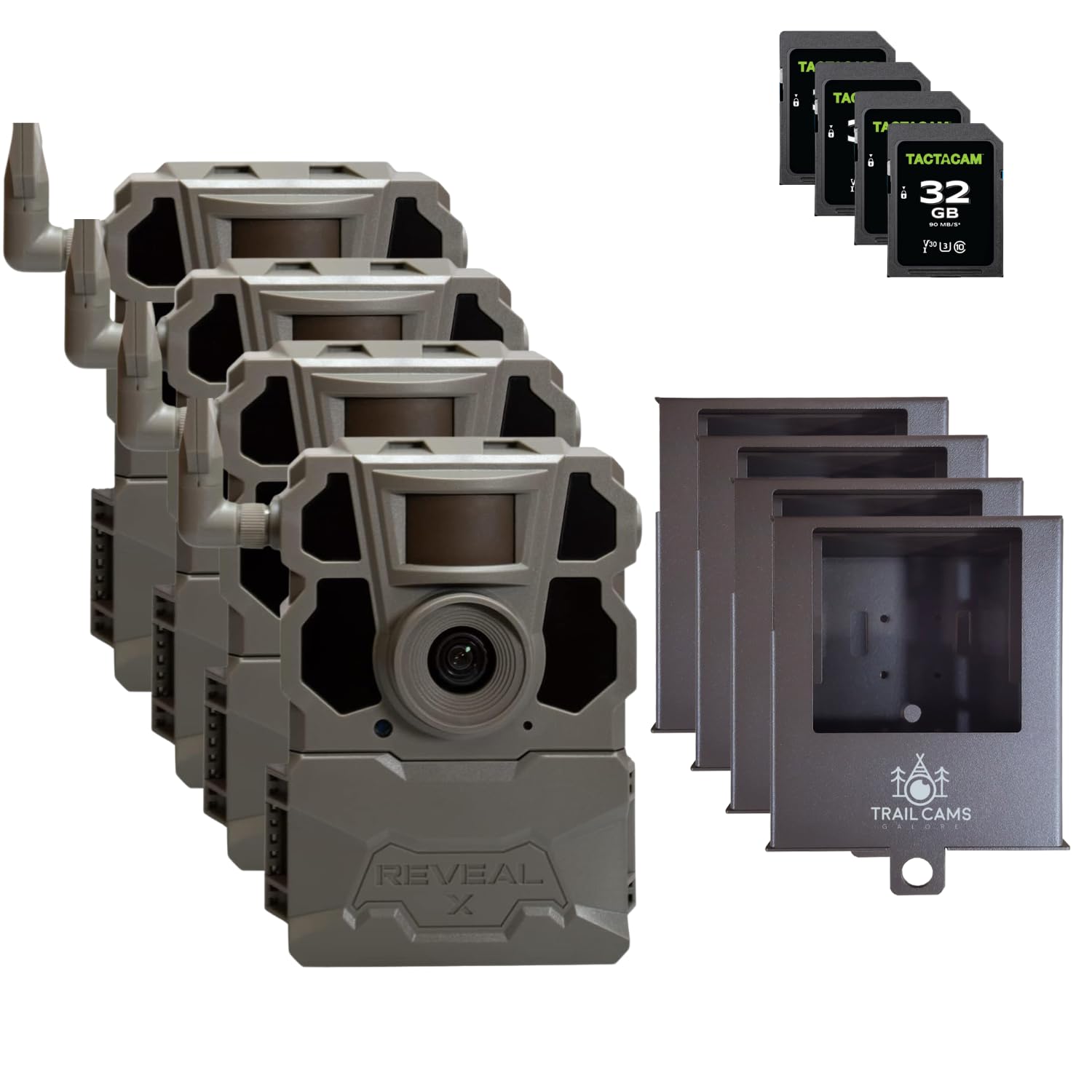
0.3-second trigger speed, no-glow infrared, dual-carrier SIM support (works on both AT&T and Verizon), and a well-designed app. Runs on 12 AA batteries for roughly 3–4 months at moderate trigger rates. Available in detection ranges up to 96 feet.
Tactacam Reveal X 2.0 on Amazon
Best Budget Door Hardening: Door Armor MAX Kit

Reinforces the frame, hinges, and strike plate — the three weakest points on any exterior door. Installs in about 30 minutes with a drill. Rated to withstand over 800 pounds of force. At roughly $70 per door, it’s the highest-security-per-dollar upgrade we’ve found.
FAQ
Can I use Wi-Fi security cameras off-grid?
Yes, but only if you have a local network — even without internet. A Wi-Fi router powered by your solar system can connect cameras to a local NVR (network video recorder) for on-site recording. For remote viewing, you’ll need internet via Starlink or a cellular hotspot.
How do I power security cameras without grid electricity?
Most trail cameras run on AA batteries. For continuous-recording IP cameras, a small dedicated solar panel (20–50W) and a 12V battery can keep a camera running indefinitely. Several manufacturers sell integrated solar camera kits designed for exactly this use case.
Are dogs an effective security measure?
Absolutely — and they’re one of the oldest security systems on earth. A dog with strong territorial instincts (livestock guardian breeds like Great Pyrenees, Anatolian Shepherds, or Kangals) provides a detection and deterrent layer that no technology can fully replicate. That said, a dog is a companion and a responsibility, not a gadget. Pair them with physical and electronic layers.
What about firearms for property defense?
Firearms are a personal decision and a legal one. We’re not going to tell you what to do here — but we will say that a firearm without training, secure storage, and a clear understanding of your state’s self-defense laws creates more risk than it mitigates. Security layers that deter, detect, and delay should be your priority. A firearm is a last resort, not a security plan.
How much does a basic off-grid security setup cost?
A practical baseline: one driveway alarm ($150–$200), two cellular trail cameras ($300), door reinforcement on two doors ($150), solar motion lights ($60–$100), and a satellite communicator ($300 + $15/month). That’s roughly $950–$1,050 upfront for a meaningful, layered system — less than the value of most tool collections sitting in an unlocked shed.