7 Best Wood Burning Cookstoves 2026
Finding the right wood burning cookstove is harder than it should be. Most “reviews” online are thinly disguised product descriptions with zero useful detail about firebox size, actual oven temperatures, or how well the cooktop holds heat across all six burners. If you’re setting up an off-grid kitchen — or just want a reliable backup that doesn’t need electricity — you need real specs, not marketing copy.
We spent weeks digging through manufacturer data, installer forums, off-grid community feedback, and verified buyer reports to narrow down the best wood burning cookstove options for different budgets and kitchen setups. Here’s what we found.
Our top pick: Kitchen Queen 480 — the most capable all-around wood cookstove for serious off-grid cooking.
Best budget: Drolet Outback Chef — solid performance at roughly half the price of premium models.
Best for small kitchens: Margin Gem Pac — compact footprint without sacrificing oven quality.
Best for large families: Pioneer Princess — massive firebox and cooktop for high-volume meal prep.
Our Picks
Kitchen Queen 480
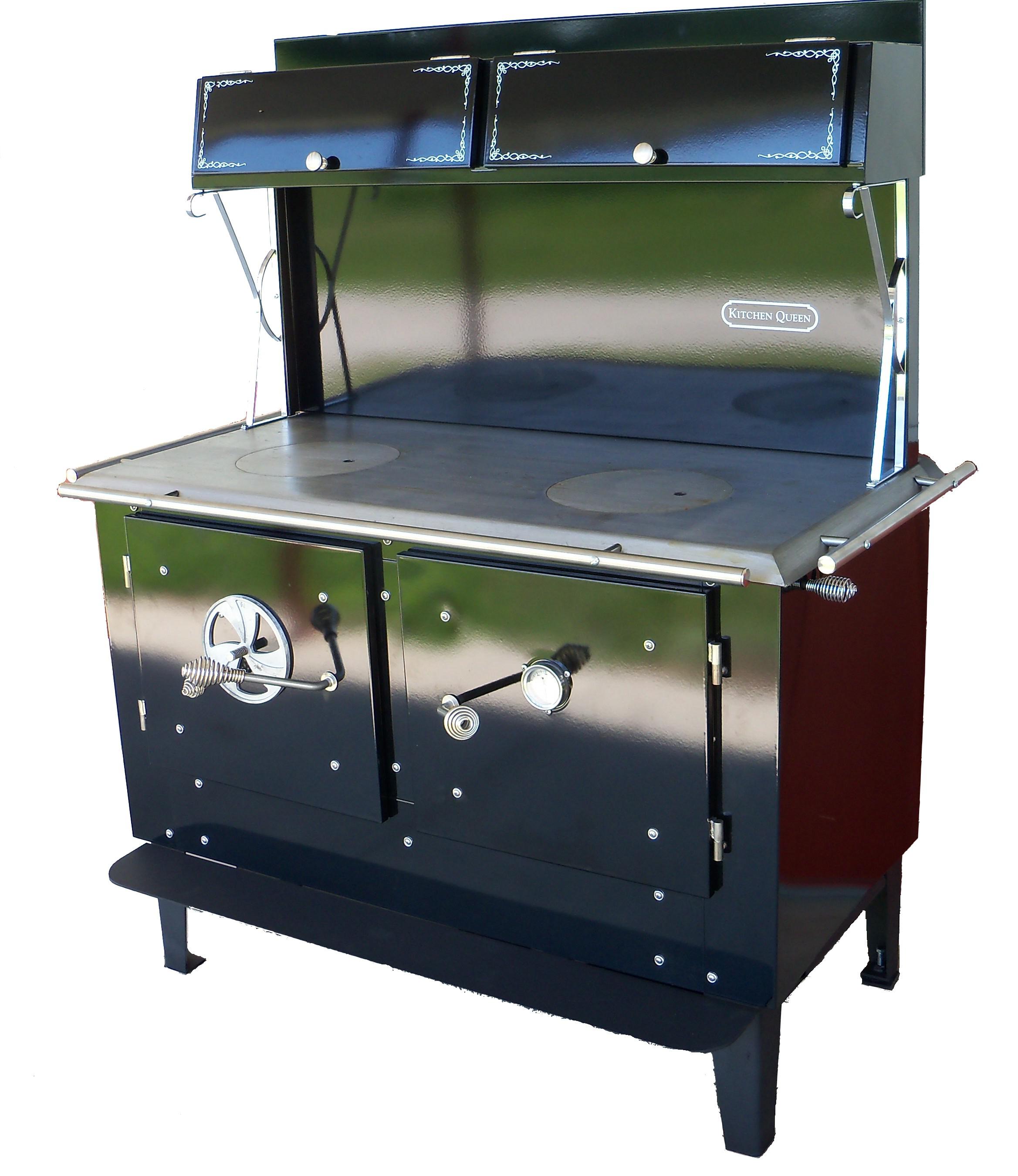
The Kitchen Queen 480 is the cookstove we recommend to most people going off-grid. It delivers a genuine six-burner cooktop with meaningful temperature variation across the surface, a large baking oven that holds steady temps, and a firebox big enough to accept 22-inch logs — meaning fewer reloads during long cook sessions.
Best for: Off-grid homesteaders who cook daily and want one appliance that handles baking, frying, simmering, and space heating.
Pros:
– 22-inch firebox accepts full-size cordwood — no splitting down to tiny pieces
– Oven thermostat is surprisingly accurate for a wood-fired unit, verified by multiple community reports
– Also heats up to 2,500 sq ft, so it doubles as your primary heat source
Cons:
– Heavy — over 600 lbs shipping weight, so plan your install carefully
– Premium price point; expect to pay significantly more than basic box stoves
Elmira Fireview
Off-Grid Insider
Get off-grid guides & gear picks in your inbox — free
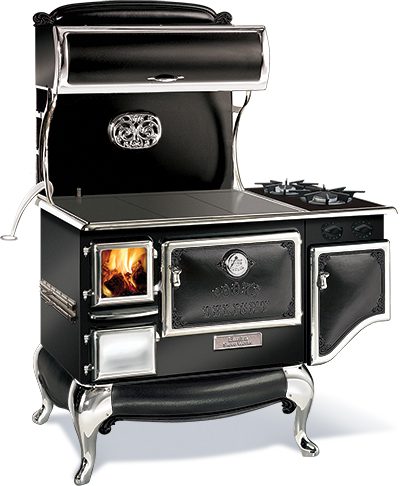
The Elmira Fireview is the cookstove you buy when you want heirloom quality and don’t mind paying for it. The cast iron and porcelain enamel construction is built to last decades, and the glass fire-viewing door is a useful feature — you can monitor your fire without opening anything and losing heat.
Best for: Homeowners who want a premium wood burning cookstove that looks as good as it performs — and plan to use it for 20+ years.
Pros:
– Porcelain enamel finish available in multiple colors; one of the few cookstoves that actually looks good in a modern kitchen
– Glass viewing door lets you manage the fire visually without disrupting oven temps
– Canadian-built with excellent manufacturer support and parts availability
Cons:
– One of the most expensive residential wood cookstoves on the market
– Cooktop surface area is slightly smaller than the Kitchen Queen 480
Drolet Outback Chef
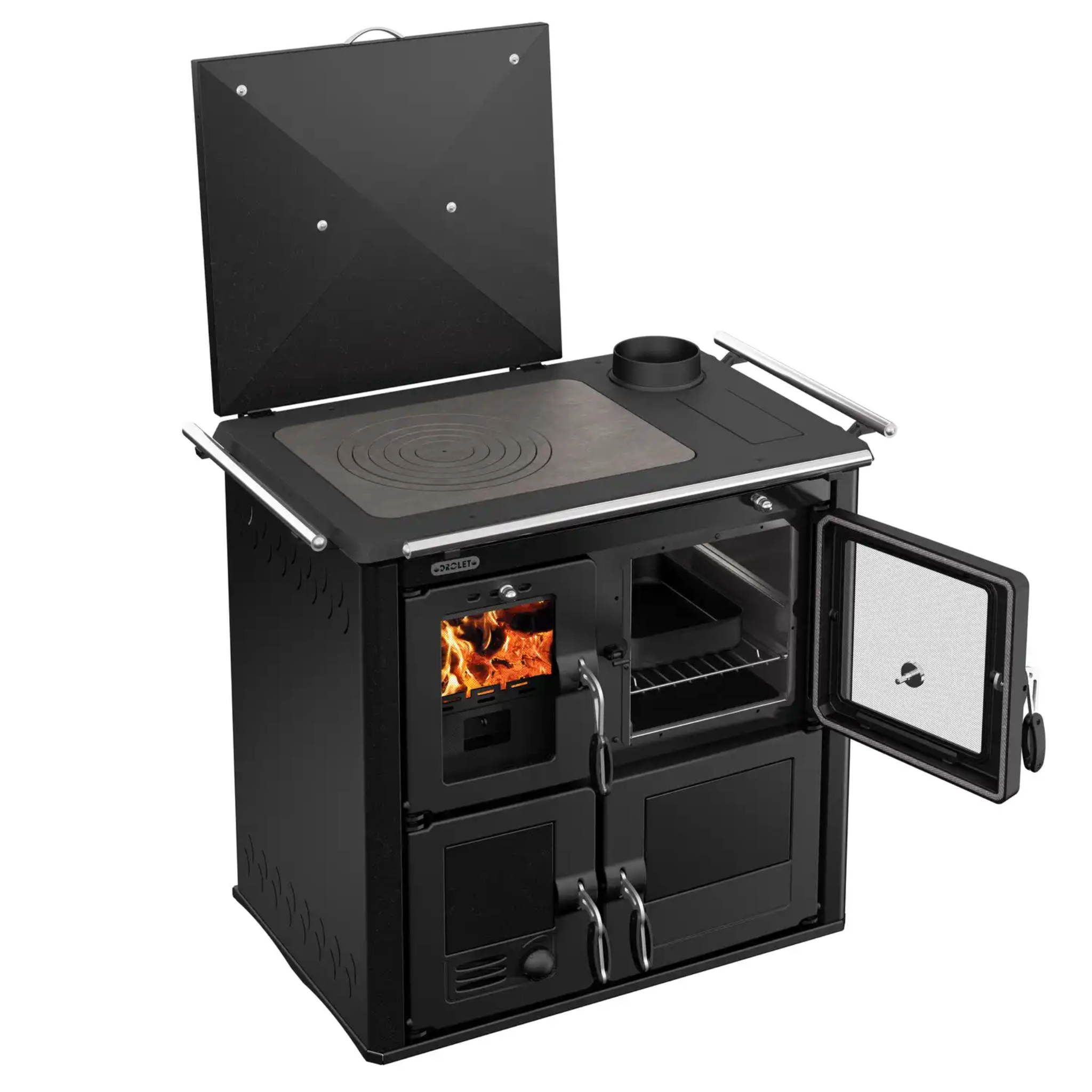
The Drolet Outback Chef hits the sweet spot between affordability and genuine cooking capability. It won’t give you the oven precision of the Kitchen Queen, but it bakes bread, roasts meat, and keeps a pot of soup simmering all day — which is exactly what most off-grid kitchens need. At roughly half the price of premium models, it’s the best entry point we’ve found.
Best for: Budget-conscious homesteaders or anyone setting up a cabin kitchen who needs reliable cooking and heating without a four-figure price tag.
Pros:
– Substantially cheaper than most cookstoves on this list while still delivering real cooking performance
– EPA-certified secondary combustion system burns cleaner and uses less wood
– Compact enough for cabin installs but still accepts 18-inch logs
Cons:
– Oven is smaller than competitors — you may struggle with large roasting pans or multiple bread loaves
– Cooktop has fewer distinct heat zones compared to six-burner models
Pioneer Princess
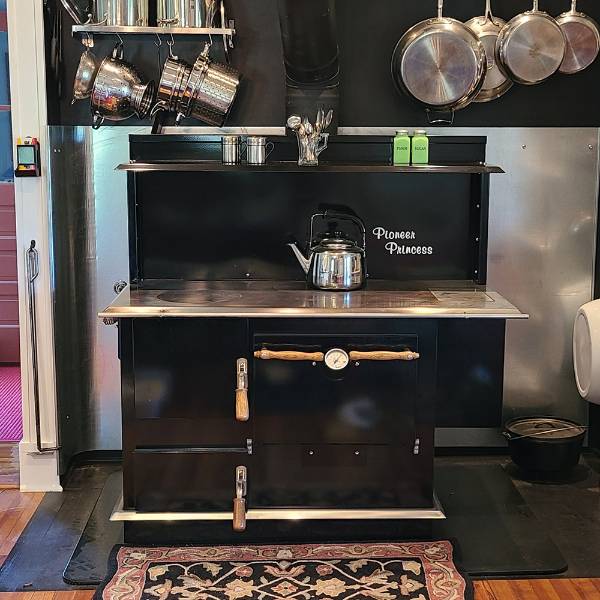
The Pioneer Princess is the cookstove the Amish community has relied on for decades, and that reputation is well-earned. The firebox is enormous — accepting logs up to 24 inches — and the cooktop is large enough to run four or five pots simultaneously with real temperature differentiation across the surface. If you’re feeding a big family or doing serious food preservation (canning season, we’re looking at you), this is the one.
Best for: Large families, homesteads doing regular canning and food preservation, or anyone who needs maximum cooking capacity.
Pros:
– 24-inch firebox is the largest in this roundup — longer burn times and easier loading
– Massive cooktop surface with genuine hot-zone variation from front to back
– Proven track record in off-grid communities spanning multiple decades
Cons:
– Very heavy and very large — requires significant kitchen space and reinforced flooring
– Limited aesthetic options; this is a utilitarian workhorse, not a showpiece
Margin Gem Pac
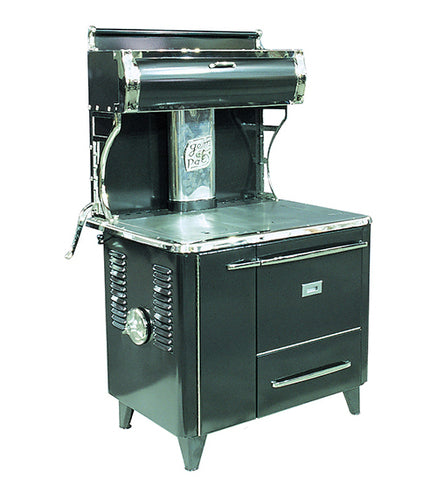
The Margin Gem Pac proves you don’t need a massive stove to get real wood-fired cooking done. At roughly 30 inches wide, it fits into small cabins and tiny houses where the Kitchen Queen or Pioneer Princess simply wouldn’t work. The oven is small but functional, and the cooktop holds two pots comfortably with a warming area to the side.
Best for: Tiny homes, small cabins, or any kitchen where floor space is at a premium but you still want a genuine wood burning cookstove.
Pros:
– Roughly 30-inch footprint fits spaces where full-size cookstoves can’t go
– Cast iron construction retains heat well and provides meaningful space heating for small rooms
– Canadian-made with solid parts availability
Cons:
– Oven capacity is limited — don’t expect to bake a full-size turkey
– Smaller firebox means more frequent reloading during long cook sessions
Nectre N550
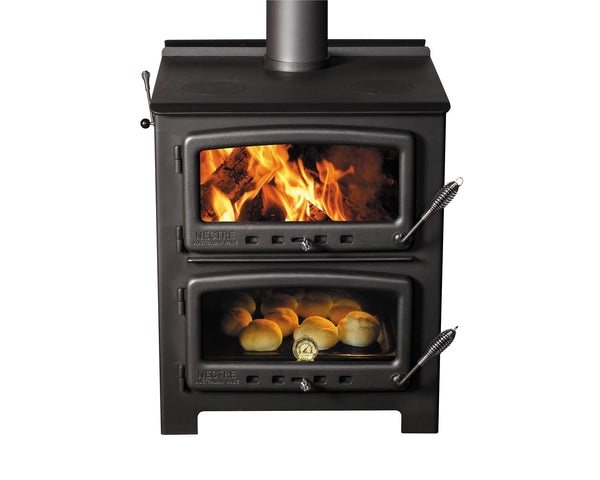
The Nectre N550 is an Australian-designed cookstove that brings a more modern approach to wood-fired cooking. The steel and cast iron construction heats up fast, and the oven is well-insulated enough to maintain baking temperatures even as the fire cycles. It’s a strong option if you want something between the bare-bones budget picks and the premium heirloom models.
Best for: Off-grid homeowners who want a mid-range wood cookstove with modern combustion efficiency and clean lines.
Pros:
– Heats up faster than full cast iron models — useful when you need the oven ready quickly
– Clean, modern aesthetic that works in contemporary cabin builds
– Efficient combustion design means less smoke and better fuel economy
Cons:
– Parts and service can be harder to source in North America compared to domestic brands
– Cooktop surface runs hotter overall with less temperature variation across zones
Heco 520
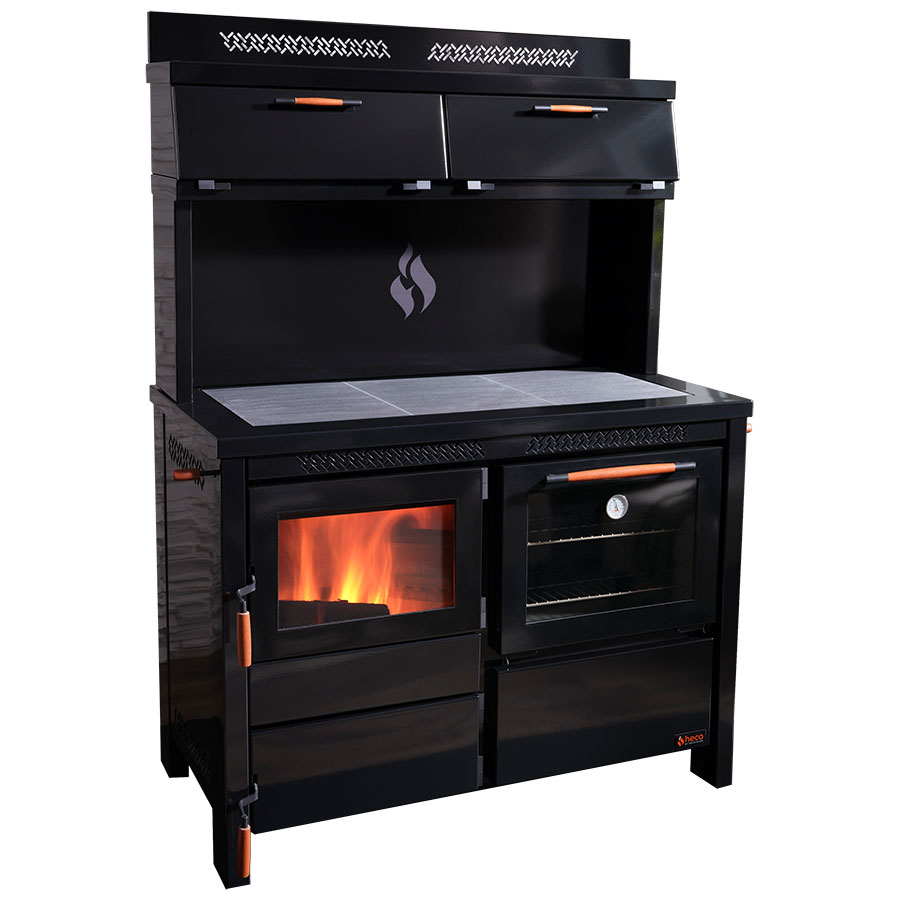
The Heco 520 is a European-style wood cookstove that emphasizes oven performance above all else. If baking is your priority — bread, pastries, roasts — the Heco’s insulated oven chamber holds temperature remarkably well according to owner reports. The cooktop is functional but secondary to the oven design.
Best for: Serious bakers who want the best oven performance from a wood burning cookstove and are willing to prioritize that over cooktop versatility.
Pros:
– Oven insulation and design are optimized for consistent baking temperatures
– European build quality with heavy-gauge steel and cast iron components
– Warming shelf above the cooktop adds useful prep and proofing space
Cons:
– Cooktop heat zones are less differentiated than American-made competitors
– Import pricing and shipping can add significantly to total cost
How We Chose
We started with every wood burning cookstove currently available in North America, then filtered for models with verified EPA certifications (where applicable), documented firebox and oven dimensions, and at least two years of real owner feedback from off-grid forums, homesteading communities, and verified buyer reports. We cross-referenced manufacturer specs with actual user experiences — particularly around oven temperature consistency, firebox loading ease, and long-term durability. Models with limited parts availability or no established service network were deprioritized. We weighted practical cooking performance over aesthetics, but noted design quality where it matters.
Buying Guide: What to Look for in a Wood Burning Cookstove
Firebox Size and Log Length
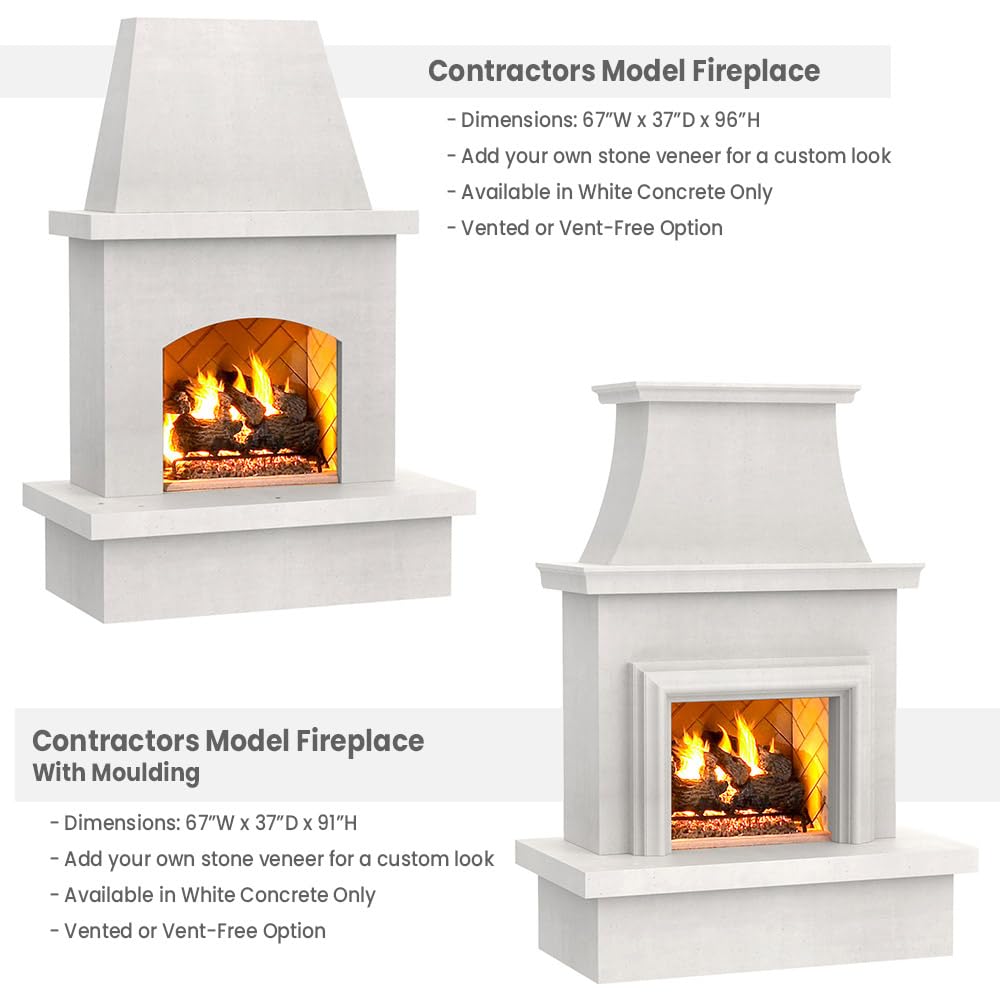
This is the single most important spec that most buyers overlook. A firebox that accepts 22–24 inch logs means you can use standard cordwood without extra splitting, and you’ll get longer burn times between reloads. If the manufacturer doesn’t clearly list maximum log length, that’s a red flag. For daily cooking, you want at least an 18-inch firebox — anything smaller becomes tedious during long meal preps.
Oven Size and Temperature Control

Not all wood cookstove ovens are created equal. Look for insulated oven chambers with a built-in thermometer at minimum. The best models maintain a 25–50°F temperature window during active cooking, while cheaper models can swing 100°F or more. If you plan to bake bread regularly, oven performance should be your top priority after firebox size. Check that the oven dimensions actually fit your standard baking sheets and roasting pans.
Cooktop Heat Zones
A good wood burning cookstove gives you hot, medium, and cool zones across the cooking surface — mimicking the burner control of a gas range. This typically depends on the distance from the firebox and the thickness and material of the cooktop plate. Cast iron tops hold heat longer but respond slower to fire adjustments. Steel tops heat faster but cool quicker. For versatile daily cooking, you want at least three usable temperature zones.
Build Quality and Weight
Wood cookstoves are a long-term investment, and build quality matters enormously. Full cast iron models are the most durable but also the heaviest — often 500–700 lbs. Make sure your floor can handle the weight (including a full load of wood and a pot of water). Look for models with replaceable firebox liners, accessible ash pans, and easily sourced replacement parts. A cookstove that lasts 30 years is only valuable if you can maintain it.
Frequently Asked Questions
What is the best wood burning cookstove for off-grid living?
The Kitchen Queen 480 is the best wood burning cookstove for most off-grid setups. It combines a large firebox, accurate oven, six-burner cooktop, and space heating capability in one unit. For tighter budgets, the Drolet Outback Chef delivers reliable cooking at roughly half the cost.
How much does a wood burning cookstove cost?
Expect to pay between $1,500 and $5,000+ for a quality wood burning cookstove. Budget models like the Drolet Outback Chef fall in the $1,500–$2,500 range, while premium options like the Elmira Fireview or Kitchen Queen 480 run $3,000–$5,000. Installation, chimney, and floor protection add $500–$2,000 on top.
Can you really bake in a wood burning cookstove?
Yes — a quality wood cookstove oven can bake bread, roast meat, and handle pastries. The key is choosing a model with good oven insulation and learning to manage your fire for consistent temperatures. Models like the Heco 520 and Kitchen Queen 480 are specifically praised by owners for oven consistency. There’s a learning curve, but most people get reliable results within a few weeks.
How much wood does a cookstove use per day?
For daily cooking (three meals), expect to burn roughly 30–50 lbs of seasoned hardwood per day depending on the model and how long you keep the fire running. If you’re also using the stove for space heating throughout the day, that number can double. Efficient secondary-combustion models like the Drolet Outback Chef use noticeably less wood than older single-combustion designs.
Do wood burning cookstoves need a special chimney?
Yes. Wood cookstoves require a properly sized and insulated chimney — typically 6-inch double-wall or triple-wall stovepipe, depending on your installation and local codes. Never connect a cookstove to an existing fireplace chimney without consulting a certified installer. Improper chimney setup is the leading cause of performance problems and the primary safety risk with any wood-burning appliance.
The Verdict
For most off-grid kitchens, the Kitchen Queen 480 is the best wood burning cookstove you can buy. It handles daily cooking, baking, and space heating with genuine competence across all three — and the 22-inch firebox means you’re not constantly feeding it. If budget is the primary concern, the Drolet Outback Chef gets you into real wood-fired cooking at a price that won’t derail your homestead budget. Either way, a quality cookstove is one of the smartest investments you can make for a self-sufficient kitchen.