7 Best Heirloom Seed Banks 2026
Finding a reliable heirloom seed bank feels like navigating a minefield of vague variety counts, questionable germination rates, and marketing that promises “survival-ready” without telling you what’s actually in the tin. For homesteaders who need to grow real food — and save seeds year after year — the stakes are too high for mystery packets stuffed with herbs you’ll never plant. We dug into seed counts, variety selections, storage quality, and thousands of verified buyer reports to find the vaults that actually deliver.
Our top pick: Survival Garden Seeds — best overall variety and germination for homestead-scale growing.
Best budget: Open Seed Vault — solid 32-variety starter bank under $30.
Best large collection: Seed Armory Heirloom Seed Bank — 100+ varieties for serious food independence.
Best for beginners: Black Swallow Organic Seed Vault — curated, easy-to-grow selection with planting guides.
Our Picks
Survival Garden Seeds 15,000+ Seed Vault

This is the heirloom seed bank we recommend to most homesteaders. It packs 35 varieties of non-GMO, open-pollinated seeds — heavily weighted toward calorie-dense staples like beans, corn, squash, and tomatoes rather than filler herbs. Germination reports from verified buyers consistently land in the 85–95% range, which tracks with what we’d expect from properly dried and sealed heirloom stock.
Best for: Homesteaders who want a ready-to-plant vault covering a full growing season of real food crops.
Pros:
– 35 varieties focused on high-calorie, high-yield staples — not padded with ornamentals
– Each variety individually packed in resealable mylar with clear planting instructions
– Strong germination rates reported across multiple growing zones (3–10)
Cons:
– Some warm-season varieties (okra, watermelon) won’t perform in short-season zones without starting indoors
– No certified organic option — seeds are non-GMO and open-pollinated but not USDA organic
Open Seed Vault — 15,000 Non-GMO Heirloom Seeds
Off-Grid Insider
Get off-grid guides & gear picks in your inbox — free

The Open Seed Vault hits a price point that’s hard to argue with — 32 varieties of heirloom, open-pollinated seeds for under $30 at typical pricing. The selection leans practical: lettuce, carrots, peppers, tomatoes, beans, and squash all make the cut. It’s not the deepest collection, but for a first seed bank or a backup stash, the value per variety is excellent.
Best for: Budget-conscious homesteaders building their first heirloom seed bank for long-term food security.
Pros:
– Exceptional price-to-variety ratio — one of the lowest cost-per-variety banks available
– Waterproof, resealable storage bag keeps unused seeds viable for multiple seasons
– Straightforward variety mix that covers most kitchen garden essentials
Cons:
– Fewer calorie-dense staples (corn, dry beans) compared to larger vaults
– Seed counts per variety are modest — plan on saving seeds after your first harvest to scale up
Seed Armory Heirloom Seed Bank — 100+ Varieties
If you’re planning for genuine food self-sufficiency — not just a garden supplement — Seed Armory’s flagship vault is the most comprehensive option we found. Over 100 heirloom varieties packed in a military-style ammo can with individual heat-sealed packets. The variety list runs deep: multiple types of tomatoes, peppers, squash, leafy greens, root vegetables, grains, and medicinal herbs. This is a heirloom seed bank for homesteaders who want full-spectrum growing capability from day one.
Best for: Experienced homesteaders or preppers scaling toward complete food independence across multiple growing seasons.
Pros:
– 100+ varieties gives you redundancy and crop rotation flexibility most banks can’t match
– Ammo can storage is durable — waterproof, stackable, rodent-proof
– Includes grains and medicinal herbs that nearly every other seed bank skips
Cons:
– Premium price point — typically $150+ depending on current availability
– The sheer number of varieties can overwhelm newer growers without a planting plan
Black Swallow Organic Heirloom Seed Vault
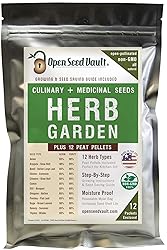
Black Swallow stands out for two things: certified organic seeds and useful planting guides included with each packet. The 20-variety selection is tightly curated for beginner success — fast-germinating, forgiving crops like zucchini, bush beans, radishes, and leaf lettuce. If you’ve never saved heirloom seeds before, this vault removes most of the guesswork.
Best for: First-time homestead gardeners who want organic seeds with clear guidance on what to plant and when.
Pros:
– USDA certified organic — important if you’re building soil biology and avoiding chemical residues
– Each packet includes zone-specific planting instructions and seed-saving tips
– Variety selection is deliberately beginner-friendly with high germination rates
Cons:
– Only 20 varieties — you’ll outgrow this bank quickly if you’re scaling up
– Limited selection of warm-season and long-maturity crops
Patriot Seeds Heirloom Seed Vault — 100% Non-GMO
Patriot Seeds offers a middle-ground vault that balances variety count, seed quantity, and price. Their standard vault runs around 40 varieties with enough seeds per packet to plant a sizable garden plot — not just a raised bed. The focus is squarely on food production: tomatoes, peppers, beans, corn, squash, cucumbers, and root vegetables. Germination feedback from community forums and verified reviews is consistently positive.
Best for: Homesteaders who want a step up from budget banks without the commitment of a 100+ variety mega-vault.
Pros:
– Generous seed counts per variety — enough to plant quarter-acre plots, not just containers
– Vacuum-sealed in mylar with silica packets for long-term storage (5–10 years if kept cool and dry)
– Good balance of warm-season and cool-season crops for year-round growing in moderate zones
Cons:
– Packaging quality varies by batch — some buyers report inconsistent heat seals on inner packets
– No planting guide included; assumes you already know your zone and timing
Baker Creek Heirloom Seeds — Homesteader Collection
Baker Creek (Rareseeds) has been the gold standard in the heirloom seed community for over two decades, and their curated collections reflect that reputation. While they don’t sell a single sealed “vault,” their homesteader and survival garden collections bundle 20–30 varieties of rare, open-pollinated heirlooms you won’t find in mass-market banks. If genetic diversity and unusual landrace varieties matter to you, Baker Creek is where serious seed savers shop.
Best for: Experienced growers who value genetic diversity, rare varieties, and a proven seed company with deep heirloom expertise.
Pros:
– Access to thousands of rare heirloom varieties — many unavailable from any other U.S. source
– Exceptional germination rates backed by decades of seed-saving reputation
– Strong community and educational resources for seed saving and crop planning
Cons:
– Collections aren’t sealed in long-term survival packaging — you’ll need to repackage for multi-year storage
– Individual packet pricing adds up quickly if you’re building a large bank variety by variety
Seeds for Generations Heirloom Seed Bank

Seeds for Generations packages their vault specifically for long-term storage — triple-layer mylar, oxygen absorbers, and a sealed bucket designed to sit in your root cellar for years. The 35-variety selection covers the core homestead crops, and they publish full germination test results on their site, which is more transparency than most competitors offer. This is the bank to buy if you want a true “set it and forget it” backup seed supply.
Best for: Preppers and homesteaders prioritizing multi-year shelf stability and verified germination data.
Pros:
– Best-in-class packaging for long-term storage — sealed bucket with oxygen absorbers rated for 5+ years
– Published germination test results for every variety in the vault
– All seeds are non-GMO, non-hybrid, and fully open-pollinated for seed saving
Cons:
– Variety count (35) is middle of the pack — adequate but not comprehensive
– Premium pricing relative to seed count; you’re paying for storage quality
How We Chose
We started with every heirloom seed bank and survival seed vault available on Amazon, direct-to-consumer seed company sites, and homesteading forums. We narrowed the field by eliminating any product that didn’t clearly list its full variety lineup — if a company won’t tell you exactly what’s in the package, that’s a red flag. From there, we cross-referenced germination reports from verified buyers, homesteading subreddits, and permaculture community forums. We weighted our recommendations toward banks that prioritize calorie-dense, high-yield staples over variety count padding, because a homesteader planting for food security needs beans, corn, and squash more than five types of basil.
Buying Guide: What to Look for in a Heirloom Seed Bank
Variety Selection — Quality Over Quantity
A bank advertising “50 varieties!” means nothing if half of them are herbs and flowers. Look for heavy representation of calorie-dense staples: dry beans, sweet corn, winter squash, potatoes (if included as tubers), tomatoes, and root vegetables. These are the crops that actually feed a family through winter. Herbs and greens are nice, but they’re supplements, not sustenance.
Storage and Packaging
How seeds are packaged determines whether they’ll germinate in three years or turn to dust. The best heirloom seed banks for homesteaders use individually heat-sealed mylar packets with silica gel or oxygen absorbers inside a secondary container (ammo can, sealed bucket, or heavy-duty resealable bag). Avoid banks that ship seeds in paper envelopes inside a cardboard box — those have a shelf life measured in months, not years. Store any seed bank in a cool, dark, dry location; a root cellar at 40–50°F is ideal.
Open-Pollinated vs. Hybrid — Why It Matters for Homesteaders
Every seed in your bank should be open-pollinated (OP), meaning you can save seeds from your harvest and replant them year after year with consistent results. Hybrid seeds (F1) produce vigorous first-generation plants but their offspring are unpredictable — useless for long-term food independence. All of our picks are 100% open-pollinated heirlooms. If a seed bank doesn’t explicitly state this, move on.
Zone Compatibility
No single seed bank is perfect for every climate. A vault heavy on long-season crops (watermelon, okra, sweet potatoes) will underperform in Zone 3–4. Before buying, check the full variety list against your USDA hardiness zone and frost dates. The best banks include varieties that span a range of maturity times — early, mid, and late season — giving you flexibility regardless of your growing window.
FAQ
What is an heirloom seed bank and why do homesteaders need one?
An heirloom seed bank is a curated collection of open-pollinated, non-hybrid seeds packaged for long-term storage. Homesteaders need them because heirloom seeds can be saved and replanted season after season — unlike hybrid or GMO seeds, which don’t breed true. A good seed bank gives you food security independence from commercial seed suppliers.
How long do heirloom seeds last in storage?
Most properly packaged heirloom seeds remain viable for 3–5 years when stored in cool, dry, dark conditions. Some hardy varieties like beans, corn, and squash can push beyond 5 years with ideal storage. Germination rates decline gradually over time — seeds don’t just “die” on a specific date, but you’ll want to test a small sample before planting older stock.
What’s the difference between heirloom seeds and regular seeds?
Heirloom seeds are open-pollinated varieties that have been passed down through generations — typically 50+ years. “Regular” seeds from big-box stores are often F1 hybrids bred for commercial agriculture traits like uniform ripening and shipping durability. Heirlooms prioritize flavor, adaptability, and the ability to save seeds — which is exactly what homesteaders need for long-term self-sufficiency.
How many seed varieties do I need to feed a family of four?
Plan on 15–25 well-chosen varieties to cover a family of four through a full growing season. Focus on calorie-dense crops: dry beans (2–3 varieties), corn, winter squash, potatoes, tomatoes, and root vegetables. Add leafy greens, peppers, and cucumbers for nutrition and variety. A 30–40 variety bank gives you comfortable redundancy and room for crop rotation.
Should I buy organic heirloom seeds for my homestead?
Organic certification matters most if you’re building healthy soil biology or selling at farmers’ markets where organic labeling has value. For pure food security and self-sufficiency, the more important factors are that seeds are open-pollinated, non-GMO, and have strong germination rates. Certified organic seeds cost more and the selection is narrower — we recommend prioritizing variety quality and seed viability over the organic label unless you have a specific reason to require it.
Our Verdict
For most homesteaders, the Survival Garden Seeds 15,000+ Seed Vault is the best heirloom seed bank to start with — it nails the balance of variety count, calorie-dense crop selection, germination reliability, and price. If you’re scaling toward full food independence and want the deepest variety list available, step up to the Seed Armory 100+ Variety Bank. And if you’re just getting started and want to keep costs low, the Open Seed Vault is the smartest first buy — get growing, start saving seeds, and expand from there.