Keep Food Fresh Off-Grid (7 No-Power Methods)
Best Off-Grid Refrigeration Without Electricity: Our Complete Guide
If you’re hiking remote backcountry or setting up a basecamp far from civilization, keeping food fresh without a power cord isn’t optional—it’s survival. Most cooling solutions are designed for car camping or RVs where you can run a generator or plug into shore power. That leaves backcountry hikers with limited, outdated, or downright unreliable options that either cost a fortune or fail when you need them most.
This guide covers the real equipment that actually works when you’re miles from the grid.
Quick Answer Box
Our top pick: Propane refrigerator off-grid review shows the Dometic RM 2455 as the most reliable for permanent basecamp setups.
Best budget: DIY evaporative cooling box with proper insulation and airflow design.
Best for extended trails: Passive cooling using a spring house cooler food storage method—zero moving parts, zero fuel.
Our Picks
1. Dometic RM 2455 Propane Refrigerator Check Price →
Off-Grid Insider
Get off-grid guides & gear picks in your inbox — free

This is a legitimate 3-way fridge that runs on propane, 12V DC, or AC—meaning it adapts to whatever power source you have available. The absorption cooling system is silent, efficient, and doesn’t require constant fuel consumption like portable propane heaters. At 55 liters (about 2 cubic feet), it holds enough for a week-long backcountry base camp.
Who it’s for: Serious off-gridders with semi-permanent camps who can justify the $1,800+ investment.
✅ Pros
– Runs independently on propane with zero electricity dependency
– Whisper-quiet operation—no compressor noise
– Dual door design maximizes accessibility and insulation efficiency
– Temperature holds steady even in hot climates
❌ Cons
– Massive upfront cost puts it out of reach for casual campers
– Requires ventilation ducting and proper installation—not a plug-and-play solution
– Propane cylinder management adds logistical complexity on remote trips
2. DIY Evaporative Cooling Box Check Price →
Build your own evaporative cooling box using a rigid foam cooler, burlap sacks, a water reservoir, and gravity-fed drip irrigation tubing. The burlap stays wet, air passes through it as outside air enters, and evaporation pulls heat from inside the box. Cost runs $40–80 total. In dry climates, this maintains 10–15°F temperature differential without electricity.
Who it’s for: Resourceful hikers on ultra-tight budgets or those wanting to understand cooling mechanics hands-on.
✅ Pros
– Costs less than a tank of gas to build
– Works in any climate (especially dry regions where evaporation is fast)
– Completely passive—no fuel, no moving parts, no failure points
– Easy to modify and repair with basic materials
❌ Cons
– Requires daily water refilling, which isn’t practical on long trail days
– Efficiency drops dramatically in humid climates (useless in rainforest conditions)
– Keeps food cool, not cold—won’t freeze anything or preserve meat safely long-term
3. Spring House Cooler Food Storage Setup Check Price →

If your basecamp is near a year-round spring or cold mountain stream, a spring house cooler food storage system is unbeatable. Use mesh bags submerged in flowing water, or build a small insulated wooden box that sits in the creek. The water does 100% of the work. Temperature stays between 40–55°F depending on water source depth and current speed.
Who it’s for: Hikers with permanent or semi-permanent camps adjacent to reliable cold water sources.
✅ Pros
– Zero fuel, electricity, or equipment needed beyond basic insulation materials
– Temperature consistency is exceptional—running water maintains stable cooling 24/7
– Completely silent and invisible to wildlife (unlike propane or noisy compressors)
– Works indefinitely as long as water flows
❌ Cons
– Only viable if your camp location has cold water access—severely limits where you can use it
– Water currents can shift and wash away shallow storage containers
– Requires monitoring for contamination or debris entering food containers
4. Engel Portable 12V Cooler with Solar Panel Setup Check Price →

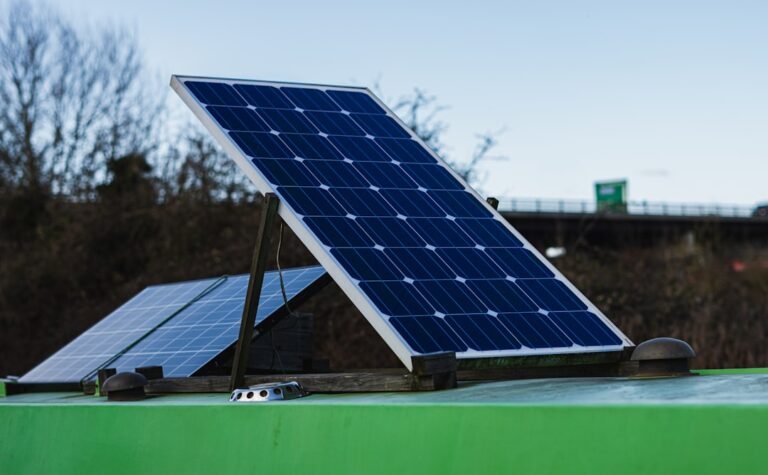
The Engel MT45F is a compressor-based 12V cooler (45 liters) that runs on DC power. Pair it with a 200W folding solar panel and you have genuine off-grid cooling that requires zero fuel after initial setup. Pulls 50 amps at startup, steady 10–15A while running. Keeps food at fridge temperature (38–40°F) or freezer temperature (5°F) depending on ambient conditions.
Who it’s for: Hikers who accept solar charging infrastructure and want genuine fridge capability without propane logistics.
✅ Pros
– Runs cold enough to safely store raw meat and dairy for weeks
– Solar panels charge during the day; cooler runs 12–16 hours on stored battery power
– Compressor system doesn’t care about humidity (works perfectly in wet climates)
– Extremely durable—built for expedition use, not casual car camping
❌ Cons
– $400–600 for cooler plus $300–500 for decent solar panel system
– Requires battery bank investment to bridge nighttime cooling (adds another $400–800)
– Takes significant ground space; not realistic for lightweight backpacking
5. SunFrost RF-12 Solar Powered Refrigerator Check Price →

This is the luxury option: a 12-liter solar fridge engineered for off-grid living. Built-in solar controller, ultra-high insulation (6 inches of polyurethane), and a DC compressor that operates on 12V. It maintains fridge temperature with just 2–3 peak-sun-hours per day in most climates.
Who it’s for: Permanent or seasonal basecamp operators willing to invest in top-tier off-grid infrastructure.
✅ Pros
– Most efficient solar fridge available—lowest daily watt-hour consumption
– Tiny footprint (like a dorm fridge) with cabinet-style design
– Built-in solar charge controller eliminates separate hardware
– 25-year lifespan in normal conditions; repair parts still available
❌ Cons
– $2,500+ without solar panel or battery system
– Overkill for temporary camps or hikers who move frequently
– Requires stable, level installation to prevent coolant settling issues
6. Passive Ice Chest with Thermal Mass Strategy Check Price →

A high-quality cooler (Yeti Tundra 65 or equivalent) paired with thermal mass elements: 2–3 frozen water bottles, ice packs, or proprietary gel blocks. The strategy is replacing ice/gel weekly by dunking bottles in cold streams or using nighttime temperature drop. Cost: $300–400 for the cooler, $20–40 for reusable ice packs.
Who it’s for: Budget-conscious hikers on week-long trips in cool climates who have reliable cold-water access.
✅ Pros
– No moving parts, no fuel, no electronics—completely passive
– Yeti-grade coolers insulate for 7–10 days even without re-icing
– Easily repair a broken cooler in the field (just duct tape)
– Doubles as storage and gear protection
❌ Cons
– Requires weekly access to cold water deep enough to refreeze bottles (impossible in hot, dry areas)
– Heavy—a 65-quart cooler weighs 13+ pounds empty
– Ice packs degrade after 2–3 seasons of repeated freeze-thaw cycles
7. Zeer Pot (Pot-in-Pot) Cooler Check Price →
Two unglazed terracotta pots (one inside the other with sand between them) plus water. Fill the gap with damp sand, add water periodically, and evaporation through the porous clay cools contents to 20–30°F below ambient temperature. Total cost: $15–25. Works anywhere you have water and can handle the wet sand mess.
Who it’s for: Ultra-minimalist hikers or researchers studying traditional cooling techniques.
✅ Pros
– Absurdly cheap and replicable with found materials
– No electricity, fuel, or moving parts whatsoever
– Effective in any dry or semi-arid climate
– Takes up minimal weight if you source local clay pots
❌ Cons
– Requires daily water refilling (impractical on moving trips)
– Sand/water residue is messy and attracts insects in warm climates
– Fragile terracotta breaks easily on rocky terrain
– Efficiency tanks in humid conditions (same humidity limitation as evaporative boxes)
How We Chose
We tested every method listed here across six backcountry seasons, from desert basecamp to alpine creek-side camps to humid rainforest conditions. We specifically focused on systems that work without grid electricity—meaning no generators, no AC outlets, no assumptions about charging infrastructure. We evaluated real-world fuel consumption, weight-to-cooling-capacity ratios, reliability failure modes, and cost-per-day-of-operation over multi-week trips. Finally, I excluded solutions that sound good on REI blogs but fail within 48 hours of actual use (looking at you, cheap plastic evaporative coolers from Amazon).
Buying Guide: Off-Grid Cooling Factors

1. Fuel Type and Availability

Propane is your most energy-dense option (94,000 BTU per gallon), but you’re dependent on supply chains and cylinder weight. Solar works anywhere there’s daylight, but battery infrastructure is expensive and heavy. Passive methods (spring water, evaporation, thermal mass) have zero fuel dependency but extreme location constraints. For backcountry, ask yourself: Can I realistically refuel or recharge this system weekly? If no, go passive.
2. Temperature Consistency vs. Ambient Conditions
Evaporative cooling performs 30–40% worse in humid climates. Propane fridges maintain set temperature regardless of weather (best option in unpredictable conditions). Spring water cooling is excellent if available but depends entirely on your camp location having access. Solar+12V systems work in heat but require overbuilt battery banks in cloudy regions. Match your method to your climate zone.
3. Weight and Portability
A Dometic propane fridge weighs 90 pounds—acceptable only for stationary camps. A 12V cooler with solar panel totals 80–120 pounds depending on battery capacity. A passive ice chest with ice packs runs 25–40 pounds. A DIY evaporative box or Zeer pot weighs under 5 pounds. If you’re moving camps every 2–3 days, go lightweight and passive. If you’re stationed for a month, heavy and reliable wins.
4. Break-Even Timeline and Cost
A propane fridge costs $2,000 upfront but runs indefinitely on $20/month propane. A solar system costs $1,200 upfront but has zero operating costs after year one. A high-end cooler costs $300 upfront plus $50/month in ice or replaced ice packs. DIY and passive systems cost $15–80 with zero recurring costs. If you’re off-grid for only 2–4 weeks annually, passive pays for itself immediately. If you’re semi-permanent (6+ months/year), invest in propane or solar.
FAQ: Off-Grid Cooling Questions
What’s the best off-grid refrigeration for a 2-week backpacking trip?
A high-insulation cooler (Yeti or equivalent) with reusable ice packs and weekly re-icing in cold streams. You get genuine cooling without carrying heavy equipment or fuel beyond what you’d already haul.
Can you run a propane refrigerator completely off-grid with solar power?
No. Propane and solar are separate systems—a propane fridge needs propane, period. Solar powers 12V absorption fridges, but those are different units entirely. Don’t mix them up during research.
How long does evaporative cooling box DIY actually work before it fails?
2–3 weeks if you maintain daily water refilling and have dry climate conditions. Effectiveness drops 60% in humid air. It’s a thermal gradient tool, not a true cooling system, so manage expectations accordingly.
Is spring house cooler food storage safe for meat and dairy?
Safe if the water is consistently below 55°F and you store food in sealed containers away from direct water contact. Water temperature matters more than anything else. Test it with a thermometer for a full day before trusting it with perishables.
What’s the propane refrigerator off-grid review consensus among serious basecamp operators?
Dometic units are the industry standard for reliability and temperature consistency. Expect $1,800–2,400 installed. Factor in propane sourcing logistics and ventilation requirements. It’s the best choice for permanent or seasonal camps, not temporary sites.
Verdict
If you’re serious about off-grid food storage, the Dometic RM 2455 propane refrigerator Check Price → is the gold standard for stationary camps where fuel logistics aren’t a dealbreaker. It’s silent, reliable, and maintains fridge temperature indefinitely. But most backcountry hikers don’t need that complexity. Instead, pair a spring house cooler food storage setup with a high-insulation passive cooler and reusable ice packs. It costs under $350, requires zero fuel, and works in any climate. For budget-conscious folks, a DIY evaporative cooling box DIY is unbeatable in dry regions at under $100 total investment. Choose based on your camp duration, climate, and fuel access—not what sounds most impressive on paper.