Off-Grid Cabin Heating Under $500 (Complete Guide)
Heating a small cabin off-grid without blowing past $500 is a real challenge — and the market doesn’t make it easy. Search for “cheap off-grid heating solutions” and you’ll wade through underpowered electric space heaters (useless without grid power), decorative fireplaces that couldn’t heat a bathroom, and sketchy imported stoves with zero safety certifications. We dug through specs, BTU ratings, fuel costs, and hundreds of verified buyer reports to find heaters that actually work in cabins under 400 square feet — without requiring a second mortgage or a utility hookup.
Our top pick: Guide Gear Outdoor Wood Stove — best all-around budget wood heater off-grid.
Best propane option: Mr. Heater Big Buddy — the most trusted propane space heater off-grid.
Best for tiny spaces: Dickinson Marine Newport P12000 — compact, clean-burning, and made for tight quarters.
Our Picks
Guide Gear Outdoor Wood Stove

This is the budget wood heater off-grid buyers keep coming back to — and for good reason. It delivers solid heat output for cabins up to 500 square feet, accepts 18-inch logs, and typically lands well under $200, leaving room in your budget for stovepipe and a wall pass-through kit.
Best for: Cabin owners who have access to firewood and want the lowest long-term fuel cost.
Pros:
– Accepts full-size firewood up to 18 inches, reducing splitting and prep work
– Heavy-gauge steel construction with a flat cooktop surface for heating water or cooking
– Street price usually between $130–$180, leaving budget for chimney components
Cons:
– No air wash system, so the viewing window (if equipped) soots up fast
– Legs and body are thinner gauge than premium stoves — expect a 3–5 year lifespan with regular use
Mr. Heater Big Buddy MH18B
Off-Grid Insider
Get off-grid guides & gear picks in your inbox — free

The Big Buddy is the default propane space heater off-grid for a reason: 4,000–18,000 BTU on three settings, built-in ODS (oxygen depletion sensor), and tip-over shutoff. It runs on 1-lb canisters or a 20-lb tank with an optional hose, and it lights instantly with no electricity required.
Best for: Cabin users who want push-button heat with no chimney installation, or who need a reliable backup heater alongside a wood stove.
Pros:
– Indoor-rated with ODS and tip-over safety — one of the few propane heaters certified for enclosed spaces
– Three heat settings let you dial output to match conditions and conserve fuel
– Runs on cheap, widely available propane — a 20-lb tank provides roughly 50+ hours on low
Cons:
– At full blast, a 1-lb canister lasts only about 2 hours — bulk tank and hose adapter are practically mandatory
– Produces moisture as a combustion byproduct; ventilation (cracked window) is required to manage condensation

Dickinson Marine Newport P12000
Originally designed for sailboats, this direct-vent propane heater is engineered for small, enclosed spaces where air quality matters. It pulls combustion air from outside and exhausts through a single wall thimble — no interior oxygen consumed. At roughly 5,500 BTU, it handles spaces up to about 250 square feet comfortably.
Best for: Tiny cabins, yurts, or converted sheds under 250 sq ft where clean indoor air and compact footprint are priorities.
Pros:
– Sealed combustion / direct vent means zero indoor oxygen depletion and no moisture buildup
– Extremely compact — mounts on a wall and takes up almost no floor space
– Marine-grade build quality; verified buyers regularly report 10+ years of reliable service
Cons:
– Priced at the top of the $500 budget (~$400–$480), leaving little room for accessories
– 5,500 BTU cap means it struggles in poorly insulated cabins or spaces over 250 sq ft
US Stove US1269E Wood Stove
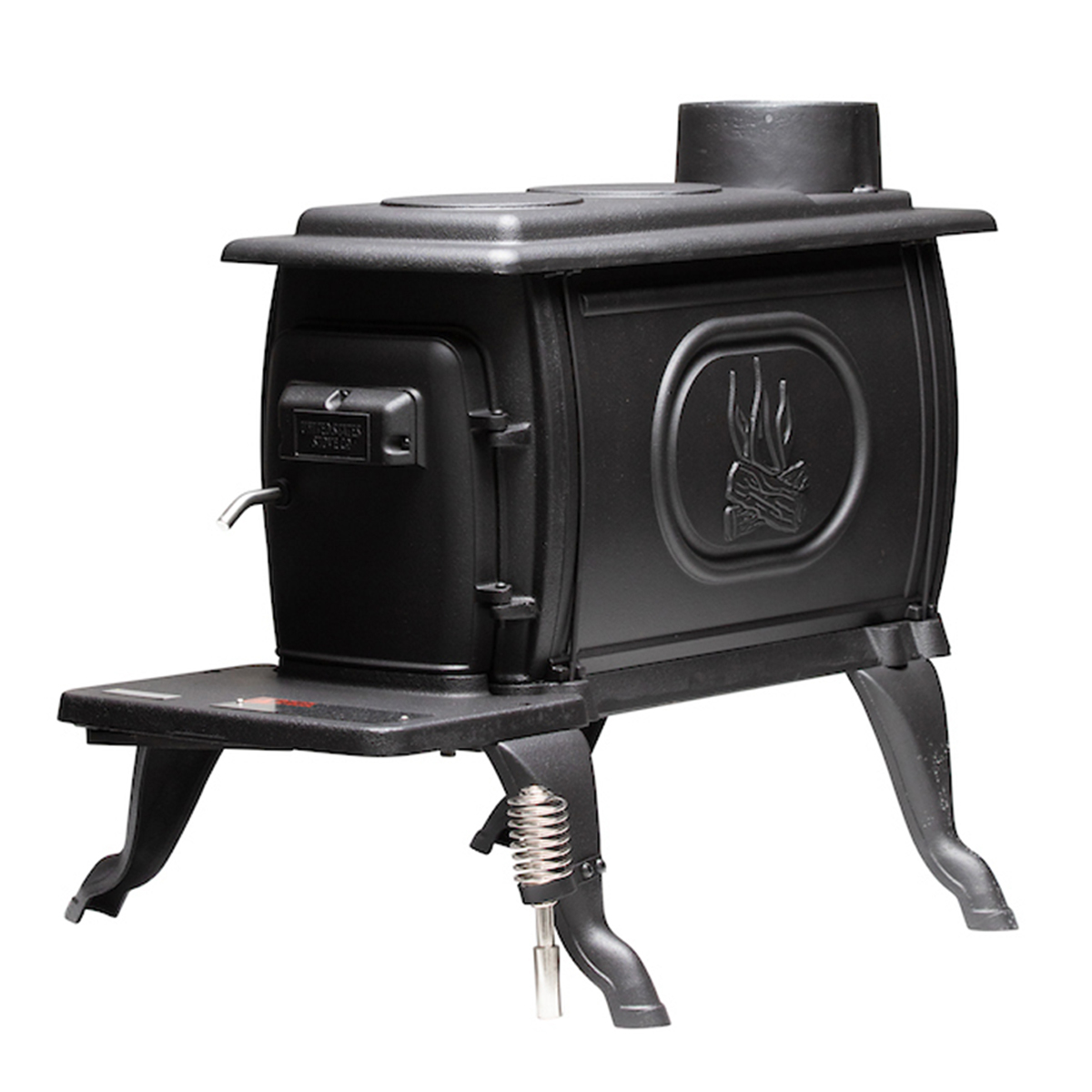
A step up from the Guide Gear in build quality, this EPA-certified stove is rated to heat up to 900 square feet and features a secondary burn system that improves efficiency and reduces creosote buildup. It accepts logs up to 21 inches and has a brick-lined firebox for better heat retention.
Best for: Cabin owners who want a more efficient, longer-lasting budget wood heater off-grid and don’t mind spending closer to the $500 ceiling.
Pros:
– EPA-certified with secondary combustion — burns cleaner and extracts more heat per log
– Brick-lined firebox holds heat longer and protects the steel body, extending stove life
– 21-inch log capacity means less time splitting and more burn time per load
Cons:
– Heavier (~125 lbs) — getting it into a remote cabin takes planning and muscle
– Street price around $350–$450 before stovepipe, which can push total install past $500
Dyna-Glo WK95C8 Convection Kerosene Heater

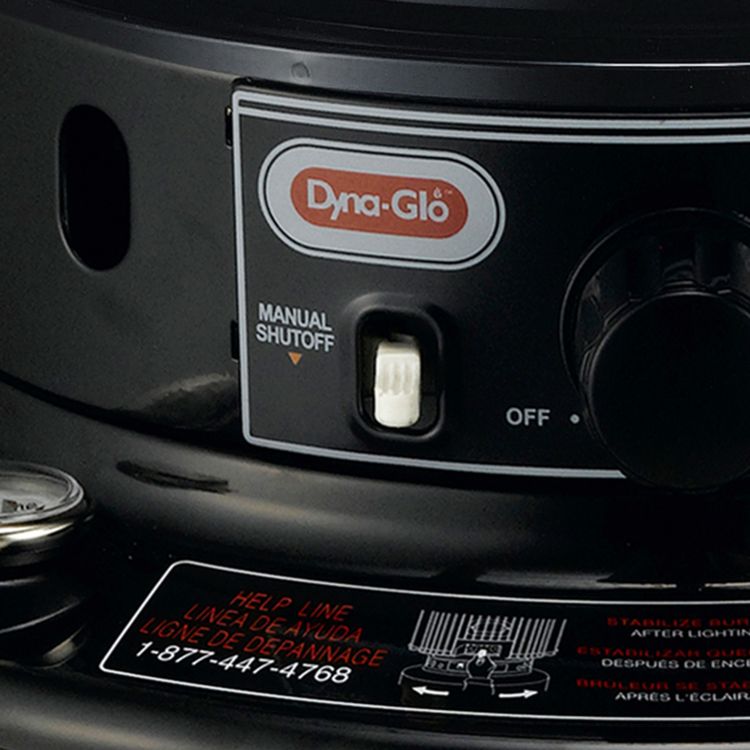
Kerosene is the overlooked middle ground in cheap off-grid heating solutions. This convection heater pushes 23,000 BTU — enough for up to 1,000 square feet — runs without electricity, and lights with a battery-powered igniter. Kerosene stores well, and one fill of the 1.9-gallon tank runs roughly 8–12 hours.
Best for: Cabin owners who want high BTU output without a chimney install, especially as a primary heater for weekend or seasonal use.
Pros:
– 23,000 BTU output heats large or poorly insulated spaces that propane portables can’t handle
– No chimney, no installation — just fill, light, and go
– Kerosene stores indefinitely with stabilizer, making it practical for seasonal cabins
Cons:
– Produces a noticeable kerosene odor, especially during startup and shutdown — not for the smell-sensitive
– Requires adequate ventilation; not sealed-combustion like the Dickinson, so crack a window
Mr. Heater Buddy MH9BX

The smaller sibling of the Big Buddy, the MH9BX delivers 4,000–9,000 BTU and is purpose-built for spaces under 225 square feet. At roughly $80–$100, it’s the cheapest propane space heater off-grid that carries an indoor safety rating. It’s the classic “throw it in the truck” backup heater.
Best for: Very small cabins, hunting blinds, or as a secondary/backup heat source alongside a wood stove.
Pros:
– Under $100, leaving significant budget for fuel, accessories, or a primary heating system
– ODS and tip-over shutoff make it one of the safest budget portable heaters available
– Dead simple — no installation, no power, just screw on a 1-lb cylinder and light
Cons:
– 9,000 BTU max is insufficient as a primary heater in cabins over ~200 sq ft in cold climates
– Same moisture issue as the Big Buddy — propane combustion adds humidity that needs ventilation
Survivor Grizzly Camp Stove
A compact, flat-pack-style wood stove built from heavy-gauge steel that punches above its price. The Grizzly heats spaces up to about 200 square feet and doubles as a cook surface. At around $150–$200, it’s a solid budget wood heater off-grid for very small cabins or as a supplemental source in a larger space.
Best for: Very small cabins, wall tents, or seasonal shelters where a compact wood burner with cooking capability makes sense.
Pros:
– Compact footprint fits in tight spaces where a full-size wood stove won’t work
– Flat top surface is large enough to heat a kettle or cook a one-pot meal
– Lightweight and portable enough to relocate between structures or pack for remote sites
Cons:
– Small firebox requires more frequent feeding — shorter burn times between reloads
– Limited to spaces around 200 sq ft; won’t keep up as a primary heater in a standard-sized cabin
How We Chose
We started with every off-grid-capable heater under $500 available through major U.S. retailers, then filtered by three non-negotiable criteria: operates without grid electricity, carries appropriate safety certifications for its fuel type, and produces enough BTUs to meaningfully heat a space of at least 150 square feet. From there, we cross-referenced manufacturer specs against verified buyer reviews — paying close attention to real-world burn times, durability complaints, and safety incidents. We also factored in total cost of ownership: a $150 stove that needs $200 in chimney parts and $50 in accessories is really a $400 system. Products with fewer than 50 verified reviews or a pattern of safety-related complaints were cut.
Buying Guide: What Actually Matters for Off-Grid Cabin Heating
BTU Output vs. Cabin Size
The single most important number. A rough rule: you need about 20 BTU per square foot in a moderately insulated cabin in a cold climate. A 300 sq ft cabin needs approximately 6,000 BTU for maintenance heating, but more like 10,000–15,000 BTU to recover from a cold start or handle subzero nights. Oversizing slightly is better than undersizing — you can always dial down a stove, but you can’t will more heat from an undersized unit.
Fuel Type and Availability
Wood is free if you have land and a chainsaw, but demands labor, dry storage, and chimney maintenance. Propane is convenient and stores indefinitely but costs money per hour of operation — budget $1.50–$3.00/hour at medium settings for portable heaters. Kerosene splits the difference: high BTU output, long storage life, but odor and ventilation requirements. Pick the fuel that matches your access, budget, and willingness to do maintenance.
Installation Complexity and Total Cost
A “cheap” wood stove becomes expensive fast once you add stovepipe ($40–$80), a wall or roof thimble ($50–$120), heat shielding ($30–$60), and a spark arrestor ($15–$30). Budget the full system, not just the stove. Propane portables and kerosene heaters win here: zero installation, zero chimney cost, and immediate operation. If you’re under $500 all-in and don’t have chimney components already, a propane or kerosene heater may be more practical than wood — even if wood is “free.”
Safety Certifications and Ventilation
Any fuel-burning heater in an enclosed space demands respect. For propane, look for ODS (oxygen depletion sensor) and tip-over shutoff — both the Mr. Heater models above have them. For wood stoves, UL or EPA certification means the stove has been tested to safety and emissions standards. Kerosene heaters should carry UL listing. Regardless of fuel type, every combustion heater in a cabin needs a working carbon monoxide detector. Period. Budget $25 for a battery-operated CO alarm if you don’t already have one — it’s non-negotiable.
FAQ
What is the cheapest way to heat an off-grid cabin?
A budget wood heater off-grid paired with free firewood from your own land is the cheapest long-term solution. Upfront costs run $150–$350 for the stove plus $100–$200 for chimney components, and fuel is essentially free if you cut your own. If you don’t have firewood access, a propane space heater off-grid like the Mr. Heater Buddy at ~$80 is the cheapest entry point, though propane fuel is an ongoing cost.
Can you use a propane heater inside a cabin safely?
Yes, but only models specifically rated for indoor use with an oxygen depletion sensor (ODS). The Mr. Heater Buddy and Big Buddy are both indoor-rated. You still need to crack a window slightly for ventilation and install a battery-operated carbon monoxide detector. Never use outdoor-only propane heaters, construction heaters, or unvented models indoors.
How many BTUs do I need to heat a small off-grid cabin?
For a moderately insulated cabin of 200–400 square feet in a cold climate, plan for 8,000–15,000 BTU. Poorly insulated cabins or extreme cold (below 0°F regularly) may need 20,000+ BTU. A good baseline formula is 20–30 BTU per square foot, adjusted upward for poor insulation, high ceilings, or very cold climates.
Is a wood stove or propane heater better for off-grid heating?

Wood stoves are better for full-time off-grid living because fuel is renewable and free with labor. Propane heaters are better for weekend or seasonal cabins because they require zero installation, zero chimney maintenance, and provide instant push-button heat. Many off-gridders use both — a wood stove as primary and a propane space heater off-grid as backup for when they arrive at a cold cabin or the fire dies overnight.
Do you need a carbon monoxide detector with an off-grid heater?
Absolutely yes, regardless of fuel type. Wood stoves, propane heaters, and kerosene heaters all produce carbon monoxide during combustion. A battery-operated CO detector costs under $25 and is the single most important safety item for any off-grid cabin with combustion heating. Mount it at sleeping height near the bedroom area, not directly next to the heater.
The Verdict
For most small off-grid cabins under 500 square feet, the Guide Gear Outdoor Wood Stove is our top pick — it’s affordable enough to leave budget for a proper chimney install, it accepts real-size firewood, and it delivers enough heat for a small cabin without overcomplicating things. If you want push-button convenience or can’t install a chimney, the Mr. Heater Big Buddy MH18B is the propane space heater off-grid that has earned its reputation — safe, reliable, and powerful enough for spaces up to 400 square feet. Either way, budget $25 for a CO detector and never skip it.